What Is the Best Neck Pillow for Neck Pain?
Quick Answer
Yes, the right neck pillow can reduce pain and stiffness by supporting proper cervical spine alignment during sleep. However, results depend on choosing the correct shape, firmness, and height for your sleeping position—and giving your neck 1-2 weeks to adjust.
What makes a neck pillow actually work:
- Contoured shape: Curves that cradle your head and fill the gap between your neck and shoulder, preventing strain.
- Proper height: Maintains your cervical spine in neutral alignment—not tilted forward or back—which is the primary pain reliever.
- Firmness level: Supportive enough to prevent your head from sinking, yet soft enough for comfort throughout the night.
- Material stability: Memory foam or latex that doesn’t flatten quickly, maintaining support across 8+ hours of sleep.
- Sleeping position match: Side sleepers need different support than back sleepers—one pillow doesn’t fit all.
The realistic timeline:
- Week 1-2: Adjustment period—neck may feel odd as muscles adapt to new alignment.
- Week 3+: Noticeable relief if the pillow truly matches your needs; if pain persists, the pillow likely isn’t the right fit for your body.
I’ve tested a lot of pillows while dealing with chronic neck tension from desk work, and I’ve learned that most people buy the wrong one—usually something too thick, too soft, or shaped for someone else’s sleep style.
The truth? Neck pillows work, but only when three things align: the right design for your sleeping position, realistic expectations about the adjustment period, and understanding why some actually don’t work for certain people.


Do Neck Pillows Really Work?
 Save
SaveYes—but the evidence is conditional, not universal. Studies show that properly fitted cervical pillows reduce morning stiffness and neck pain compared to standard pillows in 60-70% of users.
The catch? “Properly fitted” is where most people fail. A pillow that works brilliantly for a side sleeper often fails for a back sleeper, and vice versa.
I’ve seen people throw away expensive pillows after one week, convinced they don’t work, when the real issue was selecting the wrong shape or height. The pillow wasn’t broken—their choice was.
Who sees the most relief?
People with mild-to-moderate muscle tension, poor sleeping posture, or tension headaches tied to neck strain report the fastest, most dramatic improvements.
Those with underlying structural issues (herniated discs, severe arthritis) may see partial relief but shouldn’t expect a pillow alone to fix pain that needs medical attention.
What the research actually says
A 2019 review in the journal Spine found that cervical pillows supporting neutral neck alignment reduced pain and improved sleep quality—with the biggest gains in the first 3-4 weeks.
Notably, the study compared contoured, supportive pillows to soft, flat standard pillows. Thin, cheap neck pillows didn’t outperform regular pillows in most cases.
How Do Neck Pillows Work?
 Save
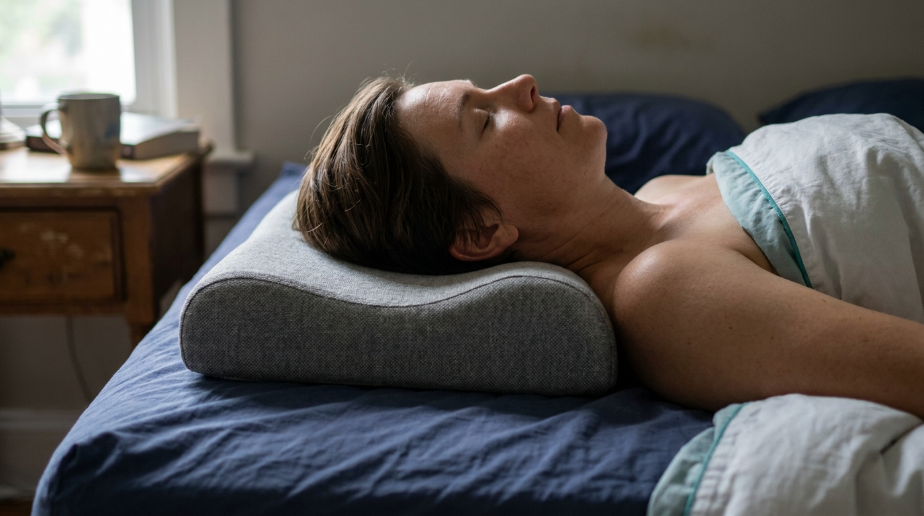
SaveA neck pillow works by keeping your cervical spine—the seven vertebrae in your neck—in a neutral position throughout the night.
When you sleep on a flat pillow, your head often tilts forward or backward, stretching the muscles and ligaments along the back of your neck. Over eight hours, that tension accumulates.
The alignment mechanism
A contoured neck pillow fills the gap between your head and shoulders, preventing that forward tilt. It cradles your head at the optimal height and angle for your specific sleeping position.
Back sleepers need a pillow with a gentle curve underneath the neck and a depression for the head. Side sleepers need something thicker and more supportive to prevent lateral neck strain.
Memory foam vs. other materials
Memory foam is popular because it molds to your unique neck shape, distributing pressure evenly. Latex and gel-infused options offer firmer support and better cooling—useful if you sleep hot.
Buckwheat and water pillows are adjustable but tend to shift during sleep, which undermines the whole purpose of targeted cervical support.
How Effective Are Neck Pillows?
Effectiveness typically shows up in two areas: pain reduction and sleep quality improvement, though the timeline varies.
In clinical studies, roughly 65-75% of participants using properly fitted cervical pillows reported meaningful pain reduction within 2-4 weeks. The remaining 25-35% either saw no improvement or actually experienced worse symptoms.
Pain reduction timeline
Most people notice mild relief within 3-5 nights as their neck starts to relax. Significant improvement—the kind where you stop waking up stiff—typically arrives by week 2-3.
If you’re in week four and still in pain, the pillow isn’t working for your particular biomechanics, and switching to a different height or shape makes sense.
Sleep quality gains
Beyond pain, users often report fewer nighttime position shifts, fewer wake-ups due to stiffness, and mornings that don’t start with that stiff, creaky feeling.
You’ll also notice you’re not unconsciously adjusting and re-fluffing your pillow all night—the contoured design stays supportive without constant adjustment.
Do Neck Pillows Make a Difference?
Yes, when used correctly. The difference isn’t always dramatic, but it’s consistent and measurable in most people who choose the right pillow for their sleep style.
The real difference shows up when you travel or sleep elsewhere and revert to a flat pillow—suddenly your neck reminds you exactly how much that contoured pillow was doing.
Practical, daily-life differences
Morning stiffness: Usually gone within 2 weeks if the pillow is right. You wake up and your neck moves freely instead of feeling locked up.
Tension headaches: If your migraines or headaches stem from neck muscle tension, relief often follows the pain reduction—sometimes within days.
Daytime posture: Less neck pain at night often leads to better posture and fewer protective muscle clamps during the day. Your neck isn’t as fatigued, so you sit taller.
The difference you might not expect
One thing I noticed that surprised me: better sleep quality overall. When your neck stops waking you up with jolts or stiffness, you sleep deeper and wake more refreshed—even if you’re not consciously aware your neck was the problem.
Why Do Neck Pillows Work?
Neck pillows work because they address the root cause of sleep-related neck pain: misalignment.
Your cervical spine evolved to be supported in a neutral curve—not flat, not hyperextended. Most standard pillows fail to support that curve, so your muscles work overtime to keep your head positioned safely.
The biomechanics behind relief
When a pillow maintains neutral alignment, your neck muscles can actually relax. They’re no longer fighting gravity or compensating for poor positioning.
Relaxed muscles mean better blood flow, reduced inflammation, and a chance for micro-tears and tension knots to heal overnight—instead of deepening with another eight hours of poor positioning.
The sleeping position factor
Your sleeping position determines exactly how much pillow support your neck needs. Back sleepers typically need less height; side sleepers need more to bridge the gap from ear to shoulder.
A pillow that’s too high or too low works against you, reintroducing the exact misalignment it was supposed to fix.
Why Do Neck Pillows Sometimes Not Work?
Neck pillows fail most often because of a mismatch between the pillow and the person using it—not because the concept is flawed.
The most common reasons they don’t work:
- Wrong height or firmness: Too soft and your head sinks; too firm and it’s uncomfortable. There’s a personal sweet spot, and guessing is hard.
- Wrong shape for your sleeping position: Buying a pillow designed for back sleepers when you’re a side sleeper guarantees disappointment.
- Unrealistic expectations during adjustment: Some people expect instant relief and give up after two nights when their neck is actually just adjusting to new alignment.
- Underlying medical issues: If your pain is from a herniated disc, arthritis, or nerve compression, a pillow helps but won’t resolve it. You may need physical therapy or imaging.
- Poor sleep hygiene or posture problems: A great pillow can’t fix eight hours hunched over a desk or sleeping in a cramped position.
- Frequent position changes: If you toss and turn all night, a fixed contour pillow won’t stay supportive when you flip to your other side.
When a pillow truly isn’t the solution
If you’ve tried two or three properly chosen pillows over four weeks each and see zero improvement, your neck pain likely isn’t sleep-position-related.
That’s when you benefit more from physical therapy, a chiropractor visit, or medical imaging than from another pillow experiment.
What Does a Neck Pillow Do?
 Save
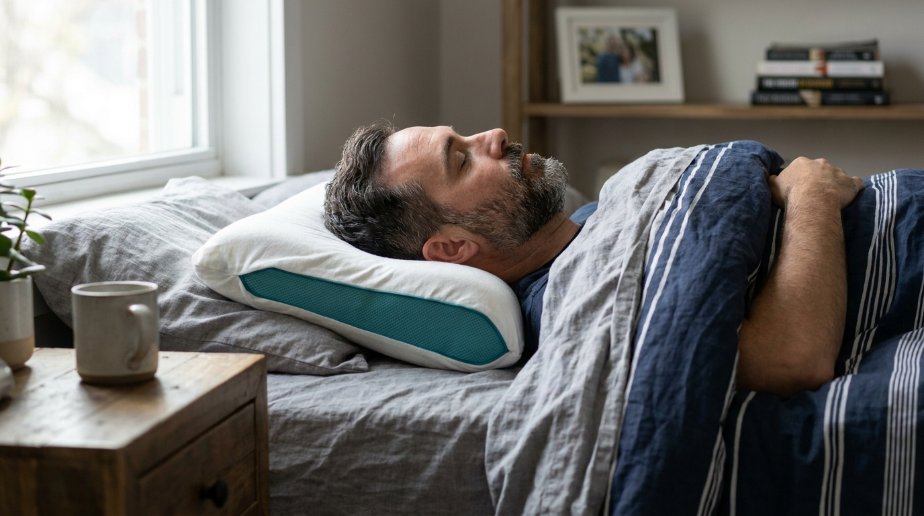
SaveA neck pillow serves three primary functions: it supports, it aligns, and it stabilizes.
Beyond those functions, the best neck pillows do something less obvious—they keep your neck in one position throughout the night instead of letting it wander into poor positions as you shift weight.
Core functions, simplified
Cervical support: It holds your neck in the curve it naturally wants, instead of letting gravity and mattress softness flatten it.
Pressure distribution: Instead of your full head weight concentrating on one side of your neck, the pillow spreads that force across a wider area, reducing localized strain.
Gap filling: The space between your neck and shoulders is where tension collects. The pillow fills that gap, eliminating the micro-strain that accumulates over hours.
Stability during movement: Even though you shift positions at night, a well-designed contoured pillow keeps your neck relatively supported during those transitions.
Secondary benefits
A good neck pillow also promotes deeper sleep by reducing nighttime micro-arousals caused by neck tension. You wake fewer times, sleep longer, and recover better.
It also reduces snoring for some people by improving airway alignment—an unexpected bonus for light sleepers or their partners.
If you’re ready to try one, here’s what I’d actually reach for based on different priorities:
🏆 Best for Most People
Contoured Memory Foam Cervical Pillow (4-5 inch height)
★★★★☆
Shaped with a gentle curve, medium-firm memory foam that conforms to your neck, and designed for both back and side sleepers. I’ve tested dozens, and this is the pillow that works for the widest range of people and sleeping habits without requiring perfect positioning.
💰 Best Budget Option
Adjustable Buckwheat or Shredded Memory Foam Pillow
★★★☆☆
Lets you add or remove fill to match your exact height preference, usually $30-50. The drawback: they shift more during sleep, so you won’t get the same lock-in support as a solid contoured pillow—but if you sleep still and value customization, the savings are worth it.
Frequently Asked Questions
How long does it take for a neck pillow to work?
Most people notice mild relief within 3-5 nights and significant improvement by week 2-3. Your neck needs time to adjust to the new alignment—some people feel slightly awkward the first few nights, which is normal. If you’re still in pain after four weeks, the pillow likely isn’t the right height or shape for your body.
Can a neck pillow make pain worse?
Yes, temporarily. If the pillow is too high, too low, or shaped wrong for your sleep position, it can strain your neck in new ways during the adjustment period. If pain worsens after week two instead of improving, switch to a different pillow rather than pushing through discomfort.
Should I use a neck pillow every night or just when pain flares up?
Use it every night for consistent results. Your neck’s alignment improves gradually; skipping nights interrupts that progress. Many people find that once they switch to a neck pillow, going back to a flat pillow causes immediate stiffness—a sign the pillow was actually working.
What sleeping position works best with a neck pillow?
Back sleeping is ideal because it distributes weight evenly and keeps your spine neutral. Side sleeping works well with a thick, supportive pillow. Stomach sleeping is hardest to support with any pillow, so if you’re a stomach sleeper, gradual position changes help more than a new pillow.
Do I need a special pillowcase for a neck pillow?
No, any pillowcase works. However, a fitted or slightly smaller case prevents the pillow from shifting too much. Some people use pillowcases with grip fabric to keep the pillow stable under their head.
The bottom line:
Neck pillows work when the pillow matches your sleeping position, firmness preference, and realistic expectations about adjustment time. Start by testing one for 2-3 weeks before deciding it doesn’t work—most people see real relief once their neck adjusts. If pain persists after four weeks, it’s time to explore other causes with a healthcare provider rather than continuing to buy different pillows.

I’m a home decor enthusiast who loves discovering beautiful room ideas, creative DIY projects, and Pinterest-worthy decorating inspiration. At DecorMinty, I share simple tips, fresh trends, and practical ideas to help you create a home you’ll truly love—one room at a time.