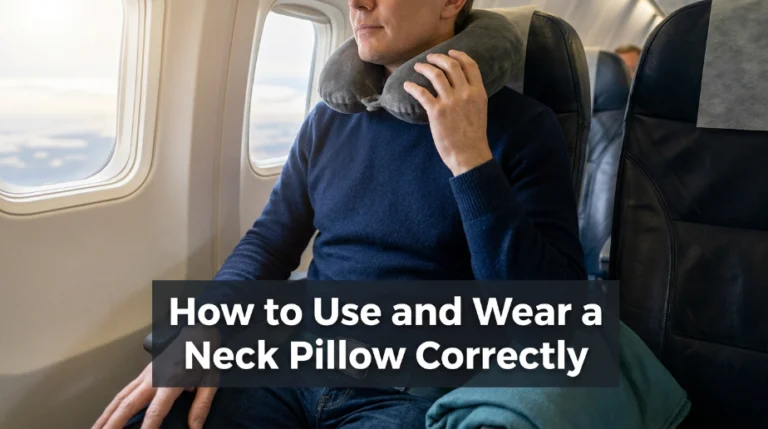
Can You Use a Neck Pillow in a Car? Safety Guide
Quick Answer
Yes, you can use a neck pillow in a car, especially when you’re a passenger on a long trip. The safest choice supports your head without pushing it forward, blocking your view, changing seat-belt fit, or interfering with the vehicle’s head restraint. Before your next trip, learn how to wear a neck pillow correctly.
When a neck pillow makes sense in a car
- Passenger use: A supportive travel pillow can reduce uncomfortable sideways head drop while resting.
- Long road trips: It can make upright sitting more comfortable when the shape fits the seat.
- Thin-back designs: These are less likely to push your head forward against an existing head restraint.
- Seat belt first: The pillow should never sit beneath, redirect, or interfere with the shoulder belt.
- Driver caution: I don’t recommend bulky travel pillows while actively driving because unrestricted head movement matters.
My simple rule
- Use a travel neck pillow for resting as a passenger, not as a substitute for the vehicle’s built-in head restraint.
A comfortable car seat can become surprisingly uncomfortable after several hours. Neck fatigue often appears when your head begins leaning sideways or you stay in one position too long.
I treat a car neck pillow as a comfort accessory, not safety equipment. That distinction helps answer almost every question about where, when, and how to use one.
Definition: A travel neck pillow is a portable cushion or structured support designed to reduce uncontrolled head movement while you rest in an upright seated position.


Is a neck pillow good for the car?
Yes, a neck pillow can be good for car travel when you’re a passenger and the pillow fits your body and seat. It should support your relaxed head without forcing your chin toward your chest.
Long periods of sitting can contribute to neck discomfort. Mayo Clinic also notes that neck pain can worsen when the head stays in one position for a long time, including while driving.
- Better passenger comfort: Side support may reduce the constant muscle effort needed to hold your head upright while resting.
- Less head drop: A structured travel pillow may limit sideways or forward nodding during a passenger nap.
- Useful on long trips: Support can feel more important after several hours than during a short commute.
- Portable support: Travel models can move between cars, planes, buses, and trains.
The important word is fit. A thick pillow behind your neck can make things worse if the vehicle seat already pushes your head forward.
That’s why I prefer designs with little bulk behind the head. You can also read my guide on whether neck pillows really work before deciding whether you need one.
Don’t replace the vehicle’s head restraint
A car’s head restraint serves a different purpose from a soft travel pillow. The head restraint is part of the vehicle’s occupant-protection system.
The Insurance Institute for Highway Safety’s head-restraint information explains why restraint height and distance from the head matter during rear impacts.
- Keep the factory head restraint installed.
- Adjust it according to your vehicle owner’s manual.
- Don’t wedge a large cushion between your back and seat.
- Don’t let a pillow force your head noticeably forward.
I use a simple visual check. If the pillow makes my normal seated posture look obviously different, it’s probably too bulky for that seat.
Which neck pillow is best for the car?
 Save
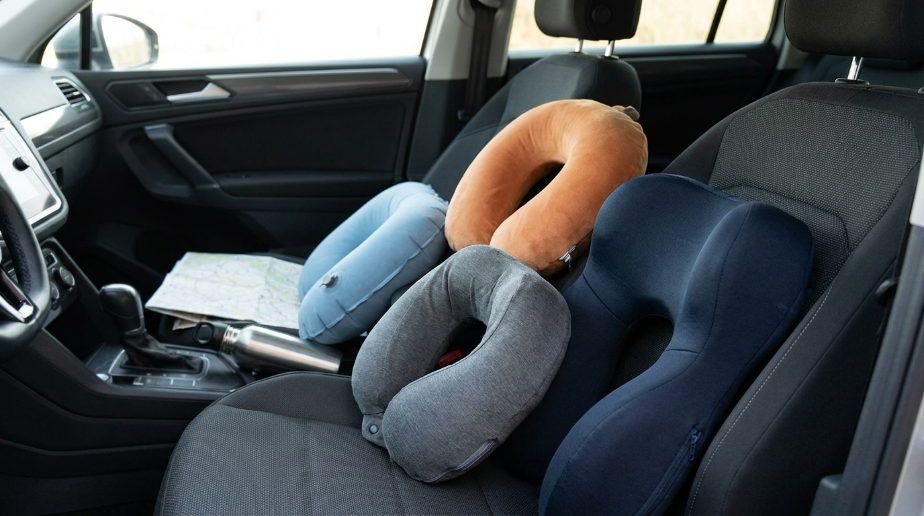
SaveThe best car neck pillow for an adult passenger is supportive, compact, adjustable, and thin behind the head. It should stabilize your head without fighting the vehicle’s existing seat shape.
I would prioritize shape before softness. A plush pillow that pushes your head forward can be less comfortable than a firmer design that fits properly.
| Pillow type | Best car use | Main advantage | Watch for |
|---|---|---|---|
| Thin-back memory foam | Long passenger trips | Strong side support with less rear bulk | May feel warm or too tall on a short neck |
| Wrap-style support | Compact passenger support | Little material behind the head | Can feel restrictive if wrapped too tightly |
| Traditional U-shape | Short passenger naps | Simple and widely available | Thick rear padding may push the head forward |
| Inflatable | Minimal packing space | Adjustable firmness and tiny packed size | Can shift more than structured foam |
Features I look for
- Thin rear profile: The car seat already provides support behind your head.
- Stable side support: This matters when your head naturally leans toward a window.
- Adjustable closure: It helps accommodate different neck lengths and shoulder shapes.
- Washable cover: Road-trip gear gets dirty quickly.
- Easy removal: You should be able to take it off immediately when you no longer need it.
The Cabeau Evolution S3 is one example with a memory-foam core, raised side support, a thin rear section, and seat straps. The Trtl Pillow Plus uses a different approach with an adjustable internal support structure.
For a broader comparison, see my guide to the best travel neck pillow. I also recommend checking how to choose the right neck pillow before buying by brand alone.
Check seat-belt clearance before comfort
Your seat belt should remain properly positioned across your body. A neck pillow isn’t worth using if it causes you to move the shoulder belt away from its intended position.
The NHTSA seat-belt safety guidance emphasizes proper belt use for both drivers and passengers.
- Keep the shoulder belt across the shoulder and chest.
- Don’t place the belt under your arm.
- Don’t run a bulky neck pillow beneath the belt.
- Remove the pillow if it makes normal buckling awkward.
Can you use a neck pillow in a car seat?
Yes for an adult passenger seat, provided the pillow doesn’t interfere with the seat belt or head restraint. For a child’s safety seat, the answer is much more cautious.
I would not add a separate child’s head pillow or positioning cushion unless the car-seat manufacturer specifically allows that accessory with that exact seat.
Adult car seat versus child safety seat
| Situation | Neck pillow? | Main rule |
|---|---|---|
| Adult passenger | Usually reasonable | Keep belt and factory head restraint unobstructed |
| Adult driver | Best avoided | Preserve unrestricted head movement and awareness |
| Child restraint | Only if approved for that seat | Follow the restraint manufacturer’s instructions exactly |
Child-restraint systems depend on precise harness fit and positioning. Adding unapproved padding can change the space between the child, harness, and seat.
The CDC’s child passenger safety guidance recommends using the correct restraint for the child’s age and size and ensuring proper restraint fit.
What about a sleeping child?
A child’s head occasionally leaning while asleep can look uncomfortable. That doesn’t mean an aftermarket head-positioning pillow is automatically safer.
- Check the car-seat manual first.
- Use only inserts supplied or specifically approved by the manufacturer.
- Confirm the harness remains correctly positioned.
- Never place thick padding behind the child’s body.
- Ask a certified child-passenger safety technician when you’re unsure.
This is one area where I would choose restraint instructions over comfort-product marketing every time. Crash protection comes first.
Can you use a neck pillow while driving?
 Save
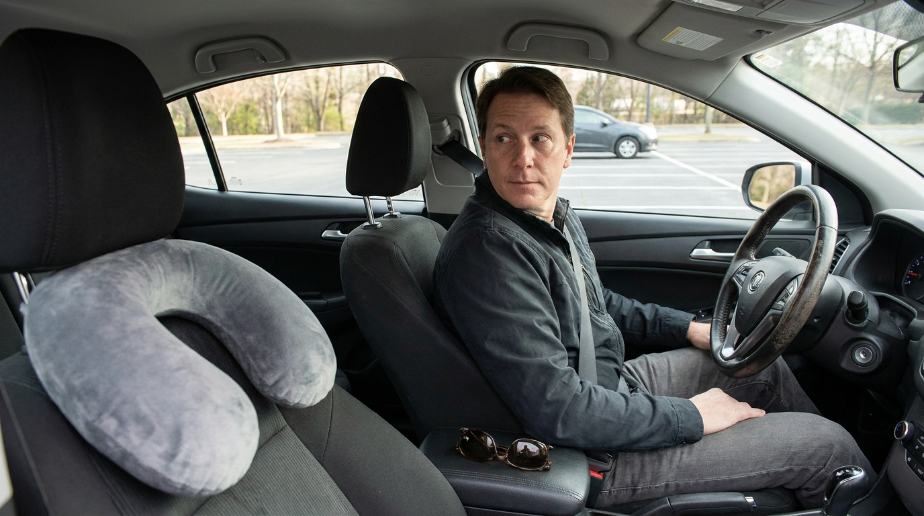
SaveI don’t recommend wearing a bulky travel neck pillow while actively driving. A driver needs easy head rotation, clear sight lines, and unrestricted access to mirrors and blind spots.
A neck pillow that feels comfortable while you’re resting can behave differently when you’re checking traffic. That difference matters.
Why passenger comfort doesn’t equal driver comfort
- Blind-spot checks: Thick side support can resist normal head rotation.
- Mirror checks: A tall pillow may make quick movements feel awkward.
- Peripheral awareness: Anything around the jaw or sides of the head can feel distracting.
- Emergency movement: Drivers should be able to turn naturally without fighting a cushion.
- Posture: Rear padding may push the head farther forward than the seat was designed for.
If your neck gets tired during a long drive, I prefer stopping for a safe break instead of adding more material around the neck. Movement and a seat-position check are more useful while you’re responsible for the vehicle.
Mayo Clinic’s neck-pain guidance also recommends regular movement during long periods of travel and keeping the head centered over the spine.
Adjust the car before adding a pillow
Sometimes the problem isn’t a missing neck pillow. It is a seat that’s too reclined, too far from the wheel, or paired with a poorly positioned head restraint.
- Sit fully back: Keep your back supported by the seat.
- Adjust the seat: Make sure you can comfortably reach the pedals and wheel.
- Position the head restraint: Follow the vehicle manufacturer’s instructions.
- Check your mirrors: Set them after your normal driving position is established.
- Take breaks: Stop safely when stiffness begins building.
My rule is simple: I wouldn’t solve a driver’s mobility problem with an accessory that might reduce mobility further.
Is it safe to wear a neck pillow while driving?
For an active driver, I would generally avoid wearing a conventional U-shaped or restrictive travel pillow. The concern isn’t that every neck pillow is inherently dangerous, but that some designs can limit movement or alter posture.
The safest driving setup is one that lets you turn your head naturally while keeping the seat belt and factory head restraint working as intended.
Remove the pillow if you notice these problems
- Your chin is being pushed toward your chest.
- You can’t comfortably turn far enough for a blind-spot check.
- The pillow presses against your jaw when you rotate your head.
- The shoulder belt no longer lies normally across your chest.
- You feel more distracted after putting the pillow on.
- The pillow changes your normal position against the seatback.
A passenger can accept more head stabilization because that person isn’t controlling the car. Drivers need freedom of movement.
That is also why I separate a travel pillow from a medical cervical collar. If a healthcare professional has prescribed neck support, follow their instructions about driving rather than treating a travel pillow as a substitute.
Is it illegal to wear a neck pillow while driving?
 Save
SaveAs of 2026, I wouldn’t describe neck pillows as categorically illegal for drivers across the United States. I could not identify a blanket federal rule that simply bans wearing an ordinary travel neck pillow while operating a passenger car.
That doesn’t mean every use is automatically legal or safe. State and local traffic rules can differ, and drivers remain responsible for maintaining proper control and visibility.
Why the exact situation matters
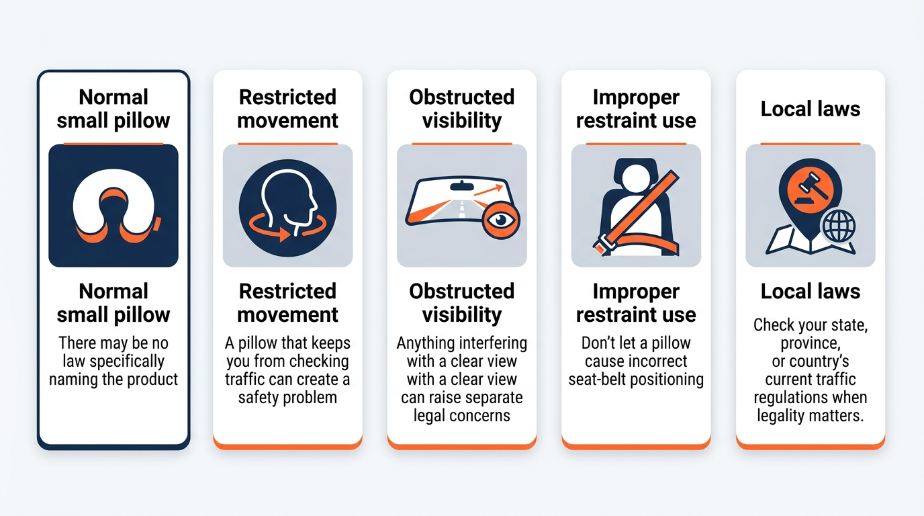
- Normal small pillow: There may be no law specifically naming the product.
- Restricted movement: A pillow that keeps you from checking traffic can create a safety problem.
- Obstructed visibility: Anything interfering with a clear view can raise separate legal concerns.
- Improper restraint use: Don’t let a pillow cause incorrect seat-belt positioning.
- Local laws: Check your state, province, or country’s current traffic regulations when legality matters.
I wouldn’t use “not specifically banned” as the standard for deciding what to wear behind the wheel. Safe vehicle control is the better test.
If you’re only riding as a passenger, the situation is much simpler. Choose a properly fitted travel pillow, buckle normally, and remove the pillow if it pushes your head into an awkward position.
If you’re ready to pick one for passenger road trips, here’s what I’d actually consider:
🏆 Best for passenger naps
Cabeau Evolution S3 Neck Pillow
★★★★☆ 4.4/5
The Evolution S3 uses memory foam, raised side supports, a thin flat back, an adjustable front closure, and Cabeau’s seat-strap system. I like its low rear bulk for upright passenger seats, although I’d keep it off while actively driving.
🎒 Best compact support
Trtl Pillow Plus
★★★★★ 4.8/5
The Trtl Pillow Plus measures about 8.7 × 8.7 × 3.6 inches, weighs about 9 ounces, and lets you adjust support height. I like it for passengers who want less bulk behind the head than a traditional foam horseshoe.
Frequently Asked Questions
Can a passenger sleep with a neck pillow in a car?
Yes. An adult passenger can usually sleep with a properly fitted travel neck pillow as long as the seat belt stays correctly positioned and the pillow doesn’t push the head awkwardly forward.
Can I put a neck pillow behind my head while driving?
I would avoid a thick pillow directly behind your head while driving. It may push your head forward, interfere with the factory head restraint, or change your normal driving posture.
Are car headrest pillows the same as travel neck pillows?
No. Travel neck pillows usually wrap around or support the sides of your neck, while car headrest cushions attach near the vehicle seat. Neither should replace the factory head restraint or interfere with your seat belt.
Can children use travel neck pillows in car seats?
Don’t add a separate pillow, insert, or positioning accessory to a child’s restraint unless the car-seat manufacturer permits it for that exact model. Unapproved padding can change harness fit and the child’s position in the restraint.
Should I use a neck pillow for neck pain during a road trip?
A well-fitted pillow may improve comfort for an adult passenger, but it isn’t treatment for persistent neck pain. Seek medical advice for severe pain, pain after an accident, or symptoms such as weakness, numbness, or tingling.
Bottom line
Neck pillows make the most sense for adult passengers who want extra support during long road trips. Choose a low-bulk design, protect normal seat-belt fit, leave the factory head restraint alone, and skip restrictive travel pillows when you’re the person driving.

I’m a home decor enthusiast who loves discovering beautiful room ideas, creative DIY projects, and Pinterest-worthy decorating inspiration. At DecorMinty, I share simple tips, fresh trends, and practical ideas to help you create a home you’ll truly love—one room at a time.