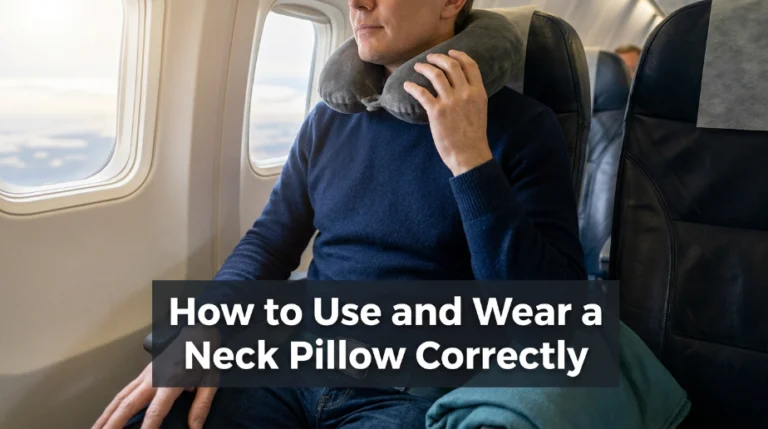
What Is the Best Travel Neck Pillow? Guide
Quick Answer
The best travel neck pillow for most long flights is a supportive model that limits both sideways head drop and forward nodding without pushing your head away from the seat. My overall pick is the Cabeau Evolution S3, while the Trtl Pillow Plus is a stronger choice when compact packing and adjustable support matter most. Before buying, use this guide to choosing the right neck pillow to match the pillow to your neck and sleeping style.
What to look for first
- Head stability: The pillow should limit sideways slumping and forward head drop while you doze.
- Correct fit: It should fill the gap around your neck without forcing your chin upward or forward.
- Seat compatibility: A flat back or seat-anchoring design usually works better against an airplane headrest.
- Packability: Frequent flyers should consider how much carry-on space the pillow uses.
- Washability: A removable or washable cover makes repeated travel much easier.
My simple rule
- Choose support for the direction your head naturally falls when you sleep, rather than buying by brand name alone.
Travel pillows look simple until you try sleeping upright for six, eight, or twelve hours. A soft U-shaped cushion can feel comfortable at first yet provide almost no support once your head begins to drop.
I focus on fit, head stability, heat, and packing size before anything else. Those factors make a bigger practical difference than decorative fabric or oversized cushioning.


What is the best travel neck pillow?
For most travelers, I would choose the Cabeau Evolution S3 because its memory-foam structure combines raised side support, a relatively flat back, an adjustable front clasp, and straps designed to connect with a seat headrest.
That combination tackles one of the biggest problems with ordinary U-shaped pillows: the pillow moves while your head moves in another direction.
What makes a travel neck pillow good?
A travel neck pillow is a portable support designed to stabilize your head and cervical spine while you rest in a seated position. It is different from a bedroom cervical pillow, which is designed for lying horizontally on a mattress.
- Stable support: The pillow should resist collapsing when your head leans into it.
- Neutral positioning: Your neck should not feel sharply bent forward, backward, or sideways.
- Comfortable contact: Firm support should not create painful pressure under your jaw or behind your ears.
- Practical sizing: The pillow must fit your neck, shoulders, seat, and luggage.
- Easy cleaning: Travel gear gets frequent contact with seats, bags, and airport surfaces.
Research on pillows and neck symptoms also suggests that shape and height matter, rather than one pillow design being universally best. You can review the evidence through PubMed’s systematic review of pillow designs.
If you’re wondering whether the category itself is useful, my guide to whether neck pillows really work explains where supportive designs help and where their limits are.
Travel neck pillow types compared
| Type | Best For | Main Strength | Main Trade-Off |
|---|---|---|---|
| Structured memory foam | Long flights | Support on several sides | Bulkier than inflatable designs |
| Scarf-style support | Light packers | Compact structural support | Different feel from a plush pillow |
| Inflatable | Minimal luggage | Tiny packed size | Less plush and may shift |
| Traditional soft U-shape | Short trips | Simple and familiar | May allow forward head drop |
What is the best neck pillow for flying?
 Save
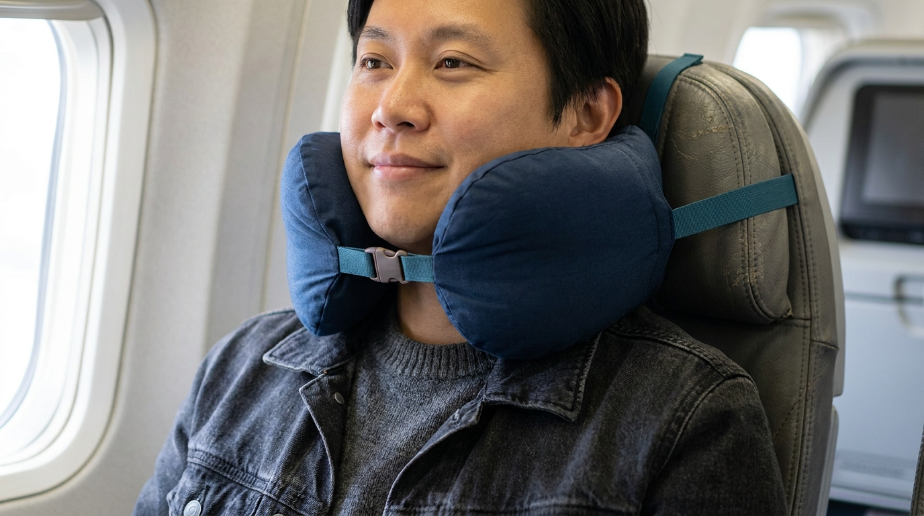
SaveThe best neck pillow for flying should work with an airplane seat rather than simply wrapping soft material around your neck. I prefer designs that keep the back relatively slim and provide firmer support around the sides or chin.
The Cabeau Evolution S3 stands out here because its seat straps can attach around compatible headrests, while its raised side sections support lateral movement.
Run a 30-second fit check
My fastest way to judge a travel pillow is to sit upright against a chair and relax my neck as if I were falling asleep. The pillow should catch my head before I reach an uncomfortable angle.
- Look straight ahead: Your chin should not be pushed toward your chest.
- Lean left and right: Support should engage before your neck bends sharply.
- Relax your jaw: The front closure should feel secure without feeling restrictive.
- Use the seatback: Check that pillow bulk does not force your whole head forward.
General neck-care guidance from Mayo Clinic also emphasizes keeping the head and neck aligned with the body rather than resting in awkward positions.
What is the best neck pillow for long flights?
For a long flight, the best pillow is one you can tolerate for several hours without constantly removing or readjusting it. Support, temperature, seat position, and movement all become more noticeable as flight time increases.
I would again favor a structured pillow such as the Cabeau Evolution S3 when maximum stability matters. For someone who dislikes bulky foam, the Trtl Pillow Plus is a compelling alternative.
Prioritize these features on longer journeys
- Consistent structure: Support should remain useful after hours of pressure.
- Breathability: Warm fabric around the neck can become uncomfortable during extended wear.
- Adjustability: Small fit changes can matter after several hours in the same seat.
- Seatback comfort: Thick material behind your neck may push your posture forward.
- Storage: The pillow should be manageable when you’re eating or moving around the cabin.
A neck pillow should never become an excuse to stay completely motionless for an entire long flight. The CDC’s guidance for long-distance travelers recommends moving your legs regularly and taking breaks from prolonged sitting.
What is the best neck pillow for long-haul flights?
For long-haul flights, I prefer a pillow that gives predictable head control rather than the softest first impression. Long-haul comfort usually depends on reducing repeated head bobbing while still letting you change position.
The right answer can differ if you naturally sleep toward one side. My neck pillow guide by sleeping position can help you identify which support direction suits you better.
Cabeau vs. Trtl for long-haul travel
- Choose Cabeau Evolution S3 if you want 360-degree foam support, raised sides, a front clasp, and seat-anchoring straps.
- Choose Trtl Pillow Plus if you prioritize lower bulk, adjustable support height, and a scarf-style design.
- Choose an inflatable pillow if packing volume matters more than plushness.
- Skip oversized soft pillows if they force your head noticeably forward from the seatback.
As of 2026, there still isn’t one scientifically proven travel-pillow shape that fits everyone. Your neck length, shoulder shape, preferred leaning direction, and airplane seat all change how a pillow feels.
What is the best airplane neck pillow?
The best airplane neck pillow is the one that solves your specific head-drop pattern without creating a second posture problem. For many economy-seat travelers, that means controlling both sideways slump and forward nodding.
This is why I put structured designs ahead of loose, lightly filled U-pillows for regular flying.
Where traditional U-shaped pillows can struggle
- Forward opening: Your chin can still fall into the open space.
- Soft filling: Polyester fill can compress when your head leans against it.
- Bulky back: Excess material behind the neck may move your head away from the headrest.
- Loose sizing: A large opening can allow the pillow to rotate instead of supporting you.
That doesn’t make every U-shaped pillow bad. A structured model with raised sides, a slimmer back, and adjustable closure behaves differently from a basic stuffed cushion.
If you’re unsure whether wearing one is appropriate for you, especially when neck symptoms are already present, see my overview of when neck pillows can be helpful.
What is the most comfortable neck pillow for flying?
The most comfortable neck pillow is not always the softest. A pillow can feel plush for five minutes yet become uncomfortable once your unsupported head starts pulling against your neck muscles.
I define comfort as the point where I can relax without consciously holding my head upright.
Comfort depends on four things
- Support: Enough structure to hold your resting head.
- Pressure: No painful squeezing around the jaw, ears, or shoulders.
- Temperature: Fabric and foam should not make your neck unbearably warm.
- Freedom: You should still be able to adjust position when needed.
Cleveland Clinic advises keeping the head and neck aligned rather than allowing the neck to bend sharply in relation to the rest of the body. Their broader neck-pain guidance also emphasizes posture and regular movement.
For travelers who run hot, a compact scarf-style design may feel less bulky than full memory foam. Others prefer foam because it distributes pressure across more of the neck.
What is the best travel neck pillow for long flights?
 Save
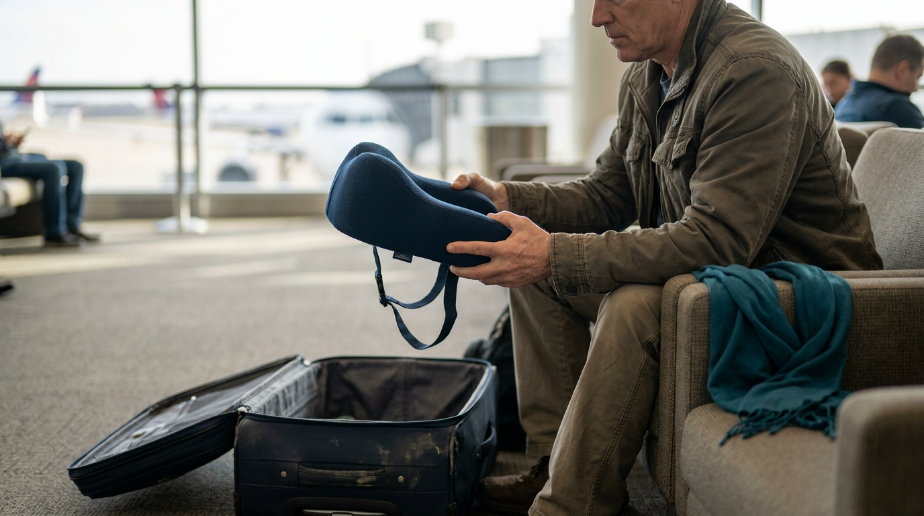
SaveIf I had to choose one travel neck pillow for repeated long flights, I would start with the Cabeau Evolution S3. Its combination of structured memory foam, side support, adjustable closure, seat straps, washable cover, and compressible travel case covers the widest range of practical flight needs.
The Trtl Pillow Plus would be my alternative for travelers who care more about packability and adjustable support height than traditional pillow softness.
My final buying checklist
- Pick your failure point: Does your head fall forward, sideways, or both?
- Check the back thickness: Avoid designs that noticeably push your head away from the seat.
- Test jaw pressure: Secure support should not feel like a tight collar.
- Check adjustability: Closures or height adjustments improve the chance of getting a proper fit.
- Consider your luggage: Foam provides structure, while scarf-style and inflatable models usually pack smaller.
- Confirm cleaning instructions: A removable washable cover is useful for frequent travel.
My rule is simple: fit beats hype. The best-rated travel pillow can still be the wrong pillow if it supports your head in the wrong place.
If you’re ready to choose between two practical options, these are the models I’d compare first:
🏆 BEST OVERALL
Cabeau Evolution S3 Neck Pillow
★★★★☆ 4.4/5
Structured memory foam, raised side supports, an adjustable front clasp, seat straps, and a compressible travel case make this a strong all-around flight pillow. I favor it for long flights because it addresses seat position and head movement instead of relying on cushioning alone.
✈️ BEST FOR LIGHT PACKERS
Trtl Pillow Plus
★★★★★ 4.8/5
The Trtl Pillow Plus uses an internal support system with adjustable height inside a soft, washable scarf-style cover. I like it for carry-on-focused trips because it provides structural support without the bulk of a full foam horseshoe.
Frequently Asked Questions
Are memory foam travel pillows better than inflatable pillows?
Memory foam usually feels more cushioned and provides predictable structure, while inflatable pillows win on packing size and firmness adjustment. Neither is automatically better; choose foam for comfort and structure, or inflatable support when luggage space is your main concern.
Should a travel pillow go behind or in front of your neck?
That depends on the design and your head-drop pattern. Many travelers need more support under the chin or along the sides than directly behind the neck, because too much rear bulk can push the head forward.
Can a travel neck pillow prevent neck pain?
A well-fitted pillow may reduce awkward head positions and resulting muscle strain, but it cannot guarantee that you will avoid neck pain. Persistent pain, numbness, weakness, or symptoms following an injury deserve medical evaluation rather than another pillow purchase.
Is a travel neck pillow worth it for a short flight?
It can be, especially if you plan to sleep or frequently wake with stiffness after seated naps. For a short daytime flight when you remain awake, a bulky pillow may provide little practical value.
How tight should a travel neck pillow be?
It should feel secure enough to support your head without squeezing your neck or making swallowing uncomfortable. If you feel pressure around the throat or jaw, loosen or reposition the pillow rather than tolerating the fit.
Bottom line:
The Cabeau Evolution S3 is my best travel neck pillow for most flyers who want structured support on long flights. Choose the Trtl Pillow Plus when compact packing and adjustable support are higher priorities.
Start with how your head naturally falls when you doze, then pick the design that supports that movement. That’s a much more reliable buying strategy than choosing whichever travel pillow looks softest in a product photo.

I’m a home decor enthusiast who loves discovering beautiful room ideas, creative DIY projects, and Pinterest-worthy decorating inspiration. At DecorMinty, I share simple tips, fresh trends, and practical ideas to help you create a home you’ll truly love—one room at a time.