Can a Neck Pillow Help With Snoring? What to Know
Quick Answer
Yes, a neck pillow may help reduce snoring when it improves your head and neck position, helps you stay on your side, or prevents your head from falling into a position that narrows the airway. However, a pillow cannot fix every cause of snoring, and it should not be treated as a substitute for evaluation or treatment when snoring is linked to obstructive sleep apnea.
Snoring happens when airflow causes tissues in the upper airway to vibrate during sleep. Because body position and head position can change the amount of space available for airflow, the pillow under your head can sometimes make a noticeable difference.
The important distinction is that a neck pillow does not directly “cure” snoring. It can only help when positioning is part of the problem. If your snoring comes mainly from nasal obstruction, alcohol use, excess tissue around the airway, enlarged tonsils, or obstructive sleep apnea, changing pillows alone may have limited effect.


How Can a Neck Pillow Affect Snoring?
 Save
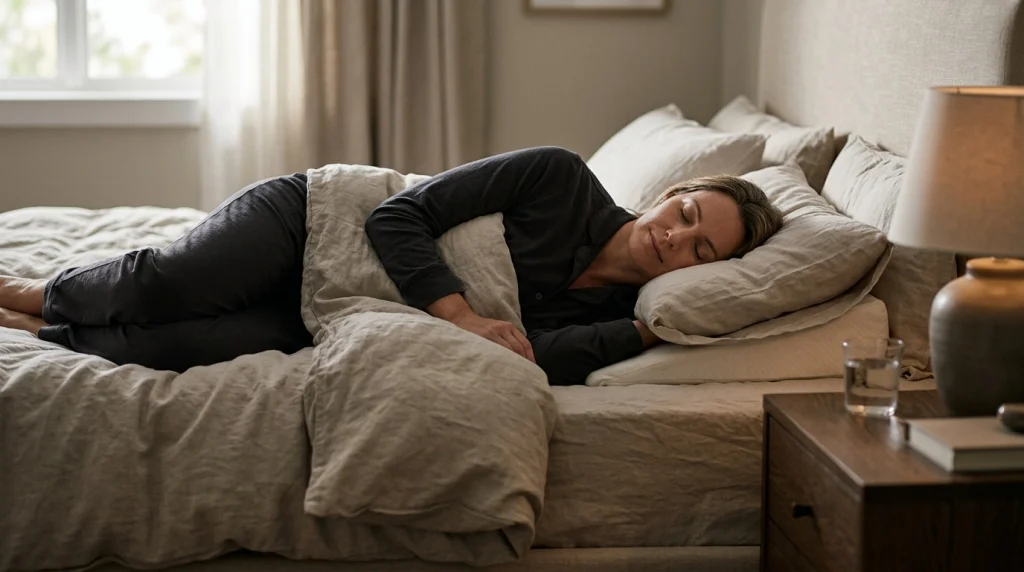
A neck pillow can affect snoring by changing the position of your head, neck, or upper body while you sleep. The goal is not to stretch the neck or force it into a rigid posture. A useful pillow keeps your head comfortably supported without allowing it to tip too far forward, backward, or sideways.
Research on positional approaches supports the basic idea. A small randomized crossover study involving people who snored but did not have obstructive sleep apnea found that a pillow designed to alter head position reduced measured and partner-reported snoring. A later systematic review also found evidence that positional therapy and head-of-bed elevation can reduce snoring in some people.
That does not mean every cervical or travel pillow has the same effect. The result depends on what the pillow actually does to your sleeping position.
It may keep your neck in a more neutral position
A pillow that is too high can push your chin toward your chest. One that is too low may let your head fall backward or sideways. Either situation can create uncomfortable alignment and may affect the space around your upper airway.
A properly fitted neck pillow supports the head without forcing it into an extreme angle. If you are unsure about height or shape, this guide to choosing a neck pillow explains how sleep position, loft, firmness, and body shape affect fit.
It may help you stay off your back
For many people, snoring becomes louder when they sleep on their back. Gravity can allow the tongue and soft tissues to move backward toward the airway. The Mayo Clinic’s snoring guidance specifically lists side sleeping as one strategy that may reduce snoring.
A supportive pillow may make side sleeping more comfortable, which can make it easier to remain in that position. Some positional devices and full-length pillows are designed specifically to discourage back sleeping.
Elevation may help some sleepers
Some people notice less snoring when their head and upper torso are slightly elevated. The important word is upper torso. Simply stacking several pillows beneath the head can bend the neck sharply instead of creating smooth elevation.
A wedge-style setup or an adjustable bed generally creates more even elevation than a tall pile of conventional pillows.
Key Insight
A neck pillow is most likely to help when your snoring changes with sleep position. If you snore mainly on your back but much less on your side, positioning deserves more attention than simply buying a pillow marketed as “anti-snoring.”
Which Type of Neck Pillow Makes the Most Sense?
There is no single pillow shape proven to stop snoring for everyone. Instead of looking for the strongest “anti-snoring” claim, match the pillow to the positioning problem you are trying to solve.
For side sleepers: support the shoulder-to-head gap
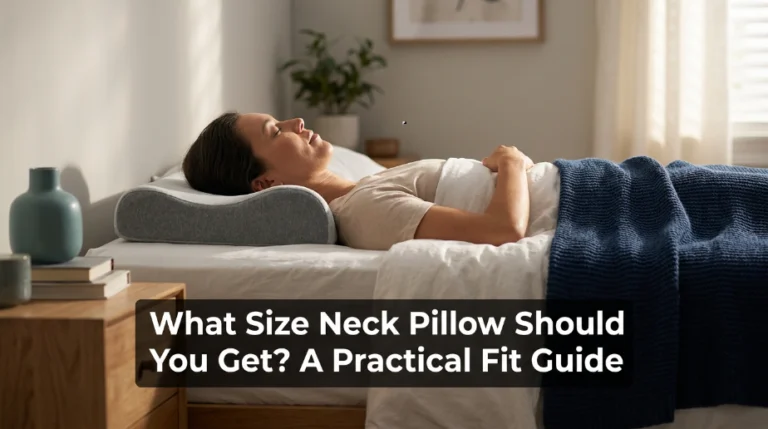
Side sleepers usually need enough pillow height to fill the space between the mattress and the side of the head. If the pillow collapses too much, the head can tilt downward. If it is excessively tall, the head tilts in the opposite direction.
If side sleeping seems to reduce your snoring, prioritize a pillow that makes that position sustainable throughout the night. You can compare the requirements for different positions in this guide to the best neck pillow for your sleeping position.
For back sleepers: avoid excessive neck flexion
If you sleep on your back, a very thick pillow can push your chin down toward your chest. A lower-profile or contoured pillow may feel more natural because the head can rest while the neck receives gentle support.
However, if back sleeping itself makes your snoring much worse, perfecting a back-sleeping pillow may not address the larger positional issue. Trying comfortable side sleeping may be more useful.
For elevation: consider a wedge rather than a tall neck pillow
If your goal is to raise the upper body, a wedge pillow is usually better suited to the job than an aggressively tall cervical pillow. The elevation should occur gradually through the upper torso rather than creating a sharp bend only at the neck.
How to Test Whether Pillow Position Is Affecting Your Snoring
You do not need to change several things at once. A simple comparison can help you determine whether position appears to matter.
- Notice your usual pattern. Ask a sleep partner whether you snore more while lying on your back, or use a basic overnight audio recording only as a rough observation tool.
- Try side sleeping. Use a pillow height that keeps your head comfortably aligned instead of forcing it toward the mattress or ceiling.
- Keep other variables similar. Changing your pillow, alcohol intake, bedtime, nasal treatment, and room conditions simultaneously makes it difficult to know what helped.
- Compare several nights. One quiet night does not prove the pillow solved the problem.
- Check comfort in the morning. Reduced snoring is not a good trade if the setup creates new neck pain, numbness, headaches, or stiffness.
Tip
If your neck pillow helps you remain comfortably on your side and your snoring consistently becomes quieter in that position, the benefit is probably coming from positioning rather than a special material such as memory foam or latex.
When a Neck Pillow Is Unlikely to Be Enough
Snoring has several possible causes, so even excellent sleep positioning cannot address all of them. Nasal congestion, structural narrowing, alcohol or sedative effects, excess body weight, and sleep-disordered breathing can all contribute.
This matters most when snoring may be a sign of obstructive sleep apnea. Sleep apnea involves repeated episodes in which breathing becomes reduced or stops during sleep. A pillow cannot diagnose or reliably treat that condition.
The National Heart, Lung, and Blood Institute lists frequent loud snoring, breathing that starts and stops, and gasping for air among possible nighttime symptoms. Daytime sleepiness, fatigue, dry mouth, morning headaches, and problems with concentration can also occur.
Warning
Do not rely on a neck pillow as the only solution if snoring is accompanied by witnessed breathing pauses, choking or gasping during sleep, marked daytime sleepiness, or other signs of possible sleep apnea. Those symptoms justify medical evaluation even if changing position makes the snoring quieter.
Does Less Snoring Mean the Airway Problem Is Fixed?
No. Snoring volume and sleep apnea severity are not the same measurement. You can snore without having obstructive sleep apnea, and someone with sleep apnea can sometimes have changes in audible snoring without the underlying breathing disorder being adequately controlled.
This is why a pillow should be treated as a positioning aid rather than a diagnostic test. If a pillow makes you quieter but you continue to have witnessed breathing interruptions or significant daytime symptoms, the quieter snoring should not create false reassurance.
Research on positional therapy for positional obstructive sleep apnea also shows this distinction. Positional treatments can improve breathing measurements in appropriately selected patients, but systematic reviews have found continuous positive airway pressure, or CPAP, generally more effective at reducing apnea events. Treatment decisions for diagnosed sleep apnea should therefore be based on proper evaluation rather than snoring volume alone.
What Should You Look for in a Neck Pillow?
 Save
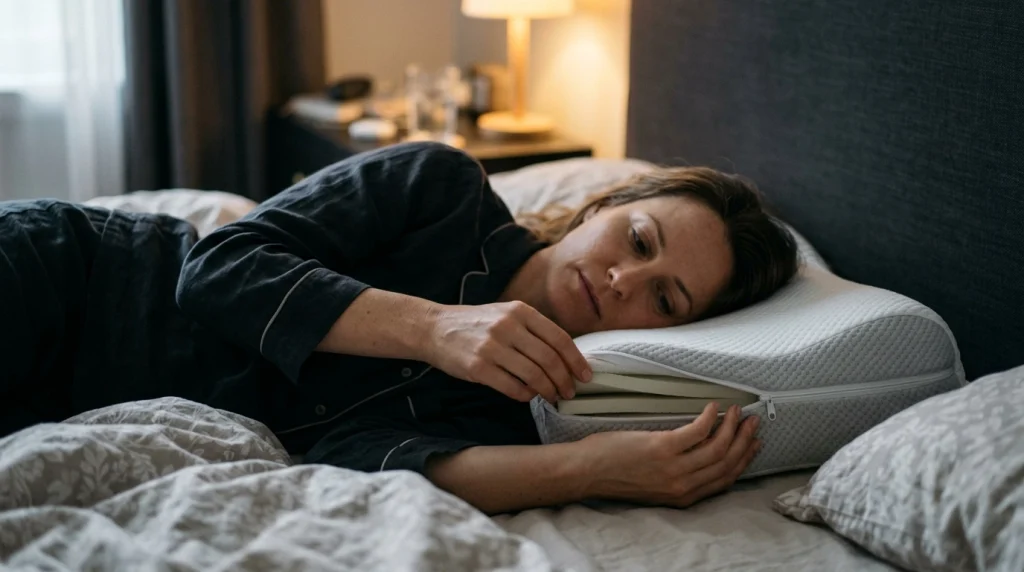
If you want to experiment with pillow positioning, focus on fit rather than marketing language.
- Appropriate loft: The pillow should support your head without pushing it sharply upward or letting it collapse toward the mattress.
- Comfortable side support: This matters if your snoring improves when you avoid sleeping on your back.
- Stable shape: The pillow should maintain useful support rather than flattening immediately.
- Adjustability: Adjustable fill or interchangeable layers can make it easier to fine-tune height.
- No forced neck angle: A dramatic contour is not automatically better.
- Comfort through the night: A pillow that feels supportive for five minutes but causes pressure or stiffness after several hours is not a good fit.
If you plan to sleep with a cervical pillow all night, the guide on whether you can sleep with a neck pillow covers alignment and fit considerations in more detail.
Related Product
Adjustable Cervical Neck Pillow
An adjustable cervical pillow can be useful if you want to fine-tune head and neck support while testing a more comfortable sleeping position. It should be viewed as a positioning aid, not a treatment for sleep apnea.
As an Amazon Associate, we earn from qualifying purchases.
Frequently Asked Questions
Can a travel neck pillow stop snoring while sleeping upright?
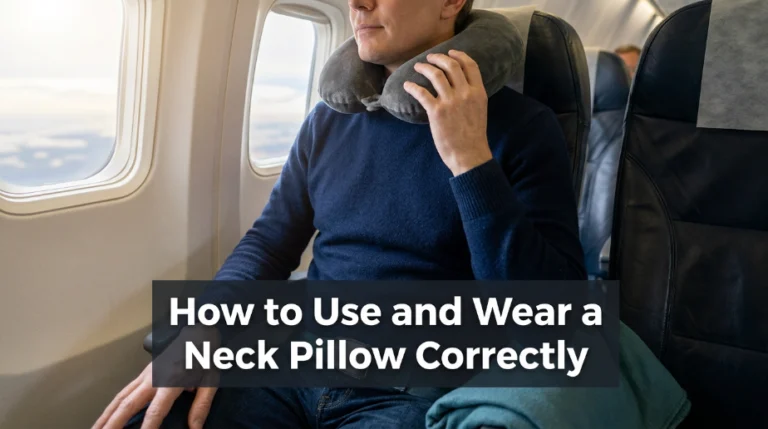
It may help if it prevents your head from dropping into a position that narrows the airway, but an ordinary U-shaped travel pillow is not a proven snoring treatment. Its main purpose is supporting the head and neck while sitting.
Can sleeping without a pillow reduce snoring?
Not necessarily. Removing the pillow may improve alignment for some sleepers and worsen it for others. The useful goal is a comfortable head and neck position, not simply using the thinnest possible pillow.
Is memory foam better than other pillow materials for snoring?
There is no strong evidence that memory foam itself prevents snoring. Height, shape, support, sleep position, and how well the pillow maintains alignment are more relevant than the material label alone.
Can a wedge pillow work better than a cervical pillow?
A wedge may make more sense when your goal is gradual upper-body elevation. A cervical pillow is primarily designed to support the head and neck. They solve different positioning problems, so one is not universally better.
Why do I snore even when sleeping on my side?
Position is only one factor. Nasal obstruction, airway anatomy, alcohol, sedating medications, body weight, and sleep-disordered breathing can also contribute. Persistent side-sleeping snoring therefore does not automatically mean your pillow is wrong.
Should I see a doctor if a new pillow stops most of my snoring?
If snoring was your only issue and you otherwise feel well, improved positioning may be enough to monitor. However, witnessed breathing pauses, choking or gasping, substantial daytime sleepiness, or other possible sleep-apnea symptoms still deserve medical evaluation even if the snoring becomes quieter.
Conclusion
A neck pillow can help with snoring when sleep position is contributing to the problem, especially if better support makes side sleeping easier or keeps your head from falling into an awkward position. The correct pillow is therefore one that improves comfortable positioning rather than one that simply carries an “anti-snoring” label.
If snoring remains frequent, or if it occurs with breathing pauses, gasping, choking, or significant daytime sleepiness, do not rely on a pillow alone. Those signs may point to a sleep-related breathing problem that requires proper evaluation.

I’m a home decor enthusiast who loves discovering beautiful room ideas, creative DIY projects, and Pinterest-worthy decorating inspiration. At DecorMinty, I share simple tips, fresh trends, and practical ideas to help you create a home you’ll truly love—one room at a time.