What Neck Pillow Is Best for Your Sleeping Position?
Quick Answer
The best neck pillow depends on your sleeping position: side sleepers need firmer support with height adjustment, back sleepers benefit from contoured cervical pillows that cradle the neck curve, and stomach sleepers should choose thinner, softer options. For most people, a memory foam cervical pillow offers the right mix of support and adjustability across positions.
Key Criteria to Compare
- Firmness level: Soft pillows suit stomach sleepers, medium-firm for back sleepers, and extra-firm for side sleepers who need lateral support.
- Contour design: Ergonomic curves that follow your neck’s natural alignment reduce pressure points and improve spinal alignment.
- Material composition: Memory foam adapts to your shape, gel adds cooling, latex resists heat buildup, and shredded fill allows height customization.
- Height adjustment: Pillows you can adjust by removing or adding fill match different shoulder widths and sleeping positions better than fixed-height options.
- Cooling properties: Gel-infused or breathable covers help prevent night sweats, especially important if you sleep hot.
- Washability: Removable, machine-washable covers are worth paying extra for—you’ll actually keep the pillow clean.
After years of waking up with neck stiffness and trying more pillows than I care to admit, I’ve learned that the “best” neck pillow isn’t one-size-fits-all. Your sleeping position is the single biggest factor that determines which pillow will actually work for you.
This guide breaks down exactly how to choose a neck pillow based on how you sleep, what features matter most, and which specific types solve different problems.


How Do You Choose a Neck Pillow?
Choosing a neck pillow starts with understanding your primary sleeping position. That one detail shapes everything else—the firmness you need, the height that works, and the materials that will stay comfortable through the night.
Most people sleep in one dominant position, even if they shift around a bit. Identifying whether you’re a side, back, or stomach sleeper is your first decision point.
Start with Your Sleeping Position
Your sleeping position determines how much support your neck actually needs. A pillow that’s perfect for a back sleeper will feel too tall for a stomach sleeper, and side sleepers often need more firmness than back sleepers expect.
Once you know your position, you can narrow down the other features that matter. Side sleepers rarely change their choice after switching to a firmer, taller pillow, while back sleepers often discover that a contoured cervical design changes everything.
Test the Firmness Level
Firmness is personal, but it’s also connected to your position. Stomach sleepers sleep most comfortably on flat, soft pillows that keep their head neutral. Back sleepers prefer medium firmness that supports the neck curve without feeling stiff.
Side sleepers almost always need extra firmness. Your shoulder takes up space when you sleep on your side, so the pillow needs to fill the gap between your shoulder and head with enough support that your neck stays aligned.
What Should You Look for in a Neck Pillow?
Beyond sleeping position, five specific features separate a pillow that actually helps from one that just sits on your bed. These are the things I check first when testing a new pillow.
Support and Alignment
Support means the pillow keeps your neck in a neutral position—not tilted up toward your chin or dropped down toward your shoulder. Your cervical spine (the seven vertebrae in your neck) has a natural curve, and the best pillows follow that curve rather than fight it.
An aligned neck means you wake up without stiffness, can turn your head easily, and don’t feel tension creeping into your shoulders by afternoon. This is the core benefit people are actually paying for when they buy a neck pillow.
Material and Fill Type
 Save
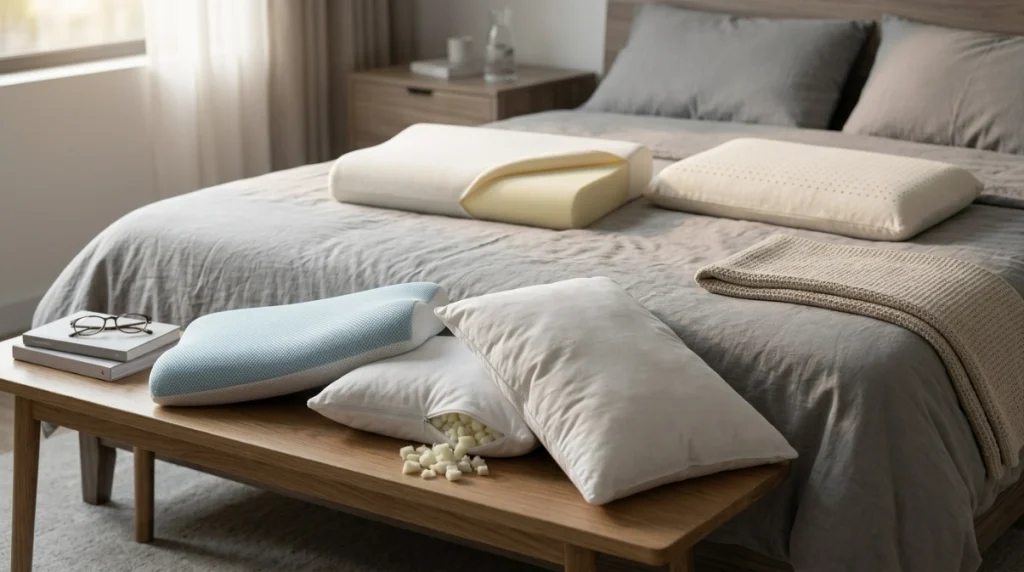
SaveThe material you’re resting your head on for eight hours matters more than most people realize. Here’s what you’ll encounter:
- Memory foam: Molds to your head shape, offers good support, but can trap heat. Best for people who don’t sleep hot and want a pillow that feels customized to their neck.
- Gel-infused foam: Memory foam with cooling gel mixed in. Solves the heat-trapping problem for hot sleepers while keeping the adaptive support.
- Latex: Naturally cooling, bouncy, and durable. Latex feels different from foam—less sink-in, more responsive. Good for hot sleepers who prefer a firmer feel.
- Shredded fill (foam or buckwheat): Lets you add or remove material to customize height. Takes a night or two to settle into place, but adjustability is the trade-off for extra comfort for some people.
- Down or down-alternative: Soft and moldable, but often too soft for real neck support. Better for travel or as a backup pillow than a primary sleep pillow.
Height and Thickness
Pillow height is measured from the base (where it touches the mattress) to the top. For neck pillows, height typically ranges from 3 to 5 inches. Your shoulder width, sleeping position, and mattress firmness all affect which height feels right.
I’ve found that most people underestimate how much height they actually need. Side sleepers often discover that after a week on a taller pillow, they can’t go back to their old one—the difference in morning stiffness is that noticeable.
Breathability and Temperature Regulation
If you wake up with a hot, sweaty pillow, the material wasn’t designed for your body’s heat output. Breathability matters because a pillow that traps heat keeps your head too warm all night, which disrupts sleep quality and makes you toss around more.
Gel-infused foams, latex, buckwheat fill, and pillows with ventilated covers all run cooler than dense memory foam. If you sleep hot, checking the cooling features isn’t optional—it’s the difference between a pillow you’ll actually use and one that sits in the closet.
Cover Quality and Washability
A removable, machine-washable cover keeps your pillow hygienic and extends its life by years. Covers that can’t be washed accumulate dead skin cells, dust mites, and sweat, which is exactly what you’re trying to avoid by upgrading to a better pillow in the first place.
Look for covers made from bamboo-derived rayon or high-quality cotton—they’re softer against your skin and wash without pilling or fading as fast as synthetic blends.
What Makes a Good Neck Pillow?
A good neck pillow does one core job: keeps your cervical spine aligned through the night so you wake up without neck pain or stiffness. Everything else—the brand, the price, the fancy materials—only matters if it serves that goal.
I test whether a pillow is actually good by how I feel the next morning. Do I have neck stiffness? Do I need to crack my neck to loosen up? Did I sleep straight through or keep adjusting the pillow? If the answers are no, yes, and no respectively, it’s working.
Spinal Alignment and Pain Relief
When your neck stays aligned all night, your cervical vertebrae aren’t twisted or compressed. This reduces inflammation in the small joints between vertebrae and prevents the muscle tension that leads to pain the next day.
Pain relief from a better pillow isn’t instant—it usually takes three to seven nights for your muscles to adjust and realize they don’t need to stay tense. But once that clicks, going back to a bad pillow feels impossible.
Support for Different Sleeping Positions
A truly good pillow adjusts to your position (or you adjust the pillow) as you sleep. Some people stay in one position all night. Most of us shift between positions, and the pillow needs to work for your primary position while being decent for your secondary one.
If you’re a side sleeper who occasionally rolls onto your back, you want a pillow that’s tall enough for side sleeping but won’t feel like you’re lying on a brick when you’re on your back for ten minutes.
Durability and Long-Term Performance
A pillow that starts great but flattens after three months isn’t actually good. Durability means the foam doesn’t compress, the shape holds up, and the cooling properties last. Quality pillows maintain their firmness and support for three to five years.
Budget pillows often feel amazing for the first week, then start degrading. The initial feel fades because the foam compresses under your head’s weight every night. This is why reading reviews from people who’ve owned the pillow for six months or longer matters more than first-week hype.
What Kind of Neck Pillow Is Best?
There are four main types of neck pillows, each designed for different needs and sleeping styles. Understanding the differences helps you narrow down your choice before comparing specific brands.
| Pillow Type | Best For | Firmness Range | Typical Price |
|---|---|---|---|
| Contoured cervical | Back sleepers, anyone with neck pain | Medium to firm | $60–$150 |
| Traditional pillow with neck support | Side and back sleepers, people who move around | Medium | $40–$120 |
| Adjustable shredded fill | Anyone wanting to customize height, all positions | Adjustable | $70–$180 |
| Travel/memory foam | Travel, side sleepers, those seeking conforming support | Medium to firm | $30–$80 |
Each type solves a different problem. Contoured cervical pillows are built for back sleepers and people recovering from neck pain. Traditional pillows with memory foam or gel offer balance for multiple positions. Adjustable pillows let you fine-tune height. Travel pillows prioritize portability over support.
Contoured Cervical Pillows
These have a distinctive shape: two bumps on the bottom that cradle your neck, with a central indentation for your head. The design is engineered around your cervical spine’s natural curve.
Contoured cervical pillows excel for back sleepers and anyone with existing neck pain. They’re less versatile for side sleepers because the contour that works perfectly on your back can feel awkward when you roll to your side.
Memory Foam Pillows with Support
These look like traditional pillows but use memory foam or gel-infused foam to add support. They’re more versatile than contoured pillows because they work reasonably well for multiple positions, and they feel more “normal” to people coming from a standard pillow.
The trade-off is slightly less targeted support than a contoured pillow. You get better alignment than a cheap pillow, but not the precision of a purpose-built cervical design.
Adjustable Pillows with Shredded Fill
Pillows filled with shredded foam or buckwheat let you remove material through a zipper to lower the height, or add material to raise it. This adjustability is powerful because you get a pillow that truly fits your unique needs.
The catch is that it takes a night or two for the fill to settle and compress into a comfortable position. Some people love the customization. Others prefer the simplicity of buying a pillow and using it as-is.
What Is a Good Neck Pillow?
A good neck pillow is one that keeps your cervical spine aligned all night, so you wake up without stiffness or pain. Everything else—price, brand, materials—only matters if it achieves that single goal.
In my experience, a good pillow should also feel comfortable from night one. Yes, your neck muscles need a few days to adjust to better alignment, but the pillow itself shouldn’t feel like you’re resting on a rock. Good pillows balance support with comfort.
Comfort Metrics That Matter
I evaluate comfort by testing three things: How does it feel in the first five minutes? How does your neck feel when you wake up? And would you choose it again if you had to rebuy a pillow tomorrow?
A pillow that feels amazing for ten minutes but leaves you stiff in the morning isn’t actually comfortable—it’s just tricking you with temporary softness. Real comfort combines how it feels immediately plus how good you feel afterward.
The Role of Personal Preference
Your personal preference matters, but it’s not the whole story. Many people prefer the feel of pillows that don’t actually support their neck well. Recognizing the difference between “what feels nice” and “what’s good for my neck” is crucial.
This is why people often need two to three nights to adjust to a better pillow. It doesn’t feel quite as immediately soft as their old pillow, so their brain says it’s not as comfortable. But by day five, when the neck stiffness disappears, they realize the new pillow is actually better.
What Is the Best Ergonomic Neck Pillow?
Ergonomic neck pillows are designed to align your cervical spine the way a well-adjusted chair aligns your spine when sitting upright. The goal is neutral positioning—your neck isn’t bent forward, backward, or to the side while you sleep.
An ergonomic pillow achieves this through shape, height, and firmness. The shape follows your neck’s curve. The height keeps your head at the right level relative to your shoulders. The firmness provides support without collapsing under pressure.
Ergonomic Design Features
Look for pillows with contoured bottoms that support both your neck and the base of your skull. The best ergonomic pillows have a slightly firmer center that cradles your neck and softer edges that let your head settle naturally.
Height is critical in ergonomic design. Too tall and your neck bends upward. Too short and your head drops down. For side sleepers, the pillow should fill the space between your shoulder and head completely. For back sleepers, height should match the depth from your shoulders to where your neck naturally ends.
Materials in Ergonomic Pillows
Memory foam dominates the ergonomic pillow market because it adapts to your neck’s exact shape. Gel-infused memory foam adds cooling without sacrificing the adaptive support. High-quality latex provides similar ergonomic benefits with more responsiveness and natural cooling.
The material needs to be firm enough to support your head without compressing completely. Soft materials collapse, which defeats the purpose of ergonomic design. Aim for medium-firm to firm in whatever material you choose.
What Is the Best Orthopedic Neck Pillow?
Orthopedic neck pillows are medical-grade pillows designed to support or rehabilitate specific neck conditions. Unlike general ergonomic pillows, orthopedic pillows are built to address problems like cervical arthritis, degenerative disc disease, or whiplash recovery.
If you have chronic neck pain or a diagnosed condition, an orthopedic pillow may be recommended by a physical therapist or chiropractor. These pillows offer more aggressive support than regular ergonomic pillows because they’re treating an existing problem.
Orthopedic Features and Support
Orthopedic pillows typically have more pronounced contouring and firmer fill than standard ergonomic pillows. Some include additional features like contoured arms or extended side support that provides stability for lateral movement.
The firmness is non-negotiable in orthopedic designs. A soft orthopedic pillow contradicts itself—you can’t have therapeutic support without sufficient firmness to prevent sinking and misalignment.
When to Choose Orthopedic Over Standard Ergonomic
Choose orthopedic if you have diagnosed neck problems, chronic pain, or if a healthcare provider has recommended specific support. If you just want better neck alignment and have no pain history, a quality ergonomic pillow does the job.
Orthopedic pillows cost more because the materials and construction are more specialized. Paying extra for orthopedic features when you don’t need therapeutic support is wasting money on capabilities your neck doesn’t require.
What Is the Best Cervical Neck Pillow?
Cervical neck pillows are specifically designed to support your cervical spine—the seven vertebrae in your neck. Cervical pillows can be ergonomic or orthopedic depending on the level of support, but they all focus on this one anatomical area.
A cervical pillow works by maintaining the natural curve of your cervical spine while you sleep. This curves slightly forward (doctors call this lordosis), and the pillow supports that curve instead of flattening it.
Cervical Support and Alignment
The best cervical pillows provide support both for your neck and for the base of your skull, where your neck connects to your head. This dual support keeps everything aligned without putting pressure on any one spot.
Cervical support differs from general neck support in precision. A regular pillow just tries not to hurt your neck. A cervical pillow actively supports the specific curve of your cervical vertebrae.
Materials for Cervical Pillows
Memory foam is the most common material in cervical pillows because it molds to your cervical curve precisely. Gel-infused versions add cooling. High-density latex offers similar benefits with more durability and responsiveness.
The fill underneath the cervical support area can vary. Some use solid foam, others use shredded fill that allows fine-tuning of support depth. The cervical portion itself needs to be firm enough to maintain its contoured shape.
Sleeping Positions and Cervical Pillows
 Save
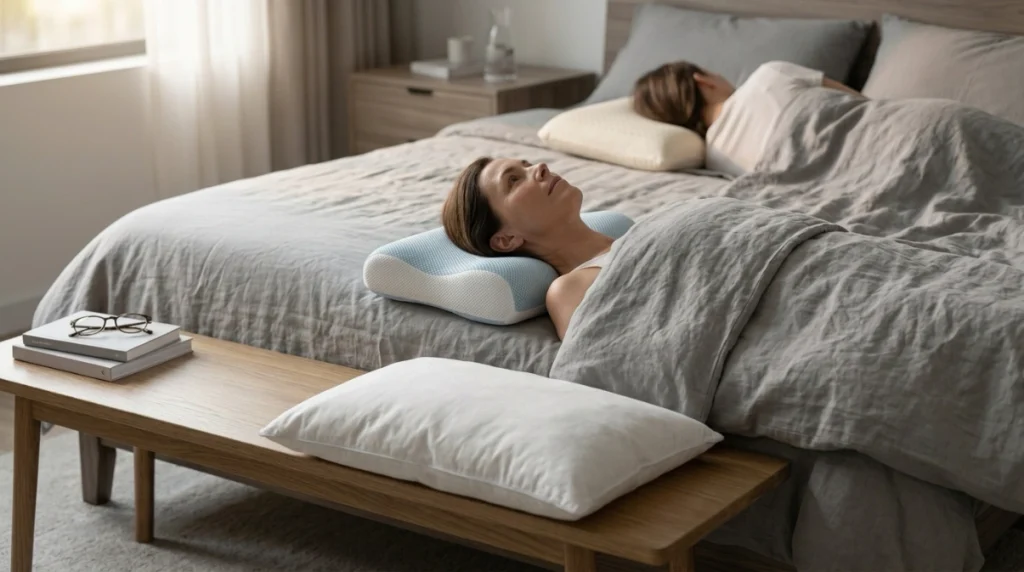
SaveCervical pillows work best for back sleepers because the back position naturally aligns with how the pillow is designed. Side sleepers can use cervical pillows, but the lateral support isn’t as specifically engineered for side sleeping.
Stomach sleepers should avoid cervical pillows entirely. Stomach sleeping already twists your neck, and a cervical pillow designed for back sleeping makes that twist worse by adding height and contour that don’t match your stomach-sleeping position.
If you’re ready to pick one, here’s what I’d actually recommend:
🏆 Best for All Positions
Memory Foam Cervical Support Pillow
★★★★★
Medium-firm memory foam with contoured cervical support, gel-infused for cooling, and a removable washable cover. Works for back and side sleepers, stays cool through the night, and maintains its shape for years. This is the pillow I recommend first because it balances support, comfort, and versatility without requiring you to commit to a fixed sleeping position.
💰 Best Budget Option
Adjustable Shredded Foam Pillow
★★★★☆
Adjustable height by adding or removing shredded foam through a zipper, hypoallergenic fill, and a breathable cover. Takes a night to settle but then adjusts to your exact needs. Better value than fixed-height pillows if you’re willing to customize, and side sleepers especially benefit from being able to raise the height to fill the shoulder gap.
Frequently Asked Questions
How long does it take to get used to a new neck pillow?
Most people need three to seven nights to adjust. Your neck muscles are used to your old pillow’s shape and firmness, so a new pillow feels different at first. By night five, your body has usually adapted and you’ll notice the difference in how you feel. If after two weeks you still can’t adjust, the pillow probably isn’t right for your needs.
Can a neck pillow fix existing neck pain?
A good neck pillow can reduce pain by preventing further strain during sleep, but it’s not a fix for existing conditions. If you have chronic neck pain, see a doctor or physical therapist first. Once you have a diagnosis, a therapist can recommend the right pillow type. Better support helps prevent pain from getting worse, but it doesn’t reverse damage that’s already happened.
Should I use a neck pillow if I sleep on my stomach?
Most neck pillow experts recommend against stomach sleeping with a cervical pillow because stomach sleeping already twists your neck. If you’re a stomach sleeper, choose a thin, soft pillow instead—basically the opposite of a supportive cervical pillow. Better yet, try transitioning to back or side sleeping for better overall spine alignment.
How often should I replace my neck pillow?
Quality neck pillows last three to five years before the foam starts compressing noticeably. Budget pillows often flatten after one to two years. You’ll know it’s time to replace when the pillow no longer provides the support it used to and you wake up with stiffness again. Caring for the cover (washing it regularly) extends the pillow’s life.
What’s the difference between a neck pillow and a travel pillow?
Travel pillows (horseshoe-shaped) are designed for airplanes and cars where you’re sitting upright. Neck pillows are designed for sleeping lying down. They’re different purposes. Travel pillows won’t give you proper support for bed sleeping, and neck pillows are bulky for travel. Use the right tool for the situation.
The Takeaway
The best neck pillow for your sleeping position is one that keeps your cervical spine neutral and comfortable all night. Start by identifying whether you’re a side, back, or stomach sleeper, then choose from the types that actually work for your position—contoured cervical for back sleepers, medium-firm memory foam for side sleepers, and soft traditional pillows for stomach sleepers.
Don’t rush the decision. Spend time testing if possible, read reviews from people who’ve owned the pillow for months (not days), and give yourself a full week to adjust. Once you find one that works, you’ll wonder how you ever slept on anything else.

I’m a home decor enthusiast who loves discovering beautiful room ideas, creative DIY projects, and Pinterest-worthy decorating inspiration. At DecorMinty, I share simple tips, fresh trends, and practical ideas to help you create a home you’ll truly love—one room at a time.