Best Plants for Bedroom Decor: 12 Picks by Light & Style
Quick Answer
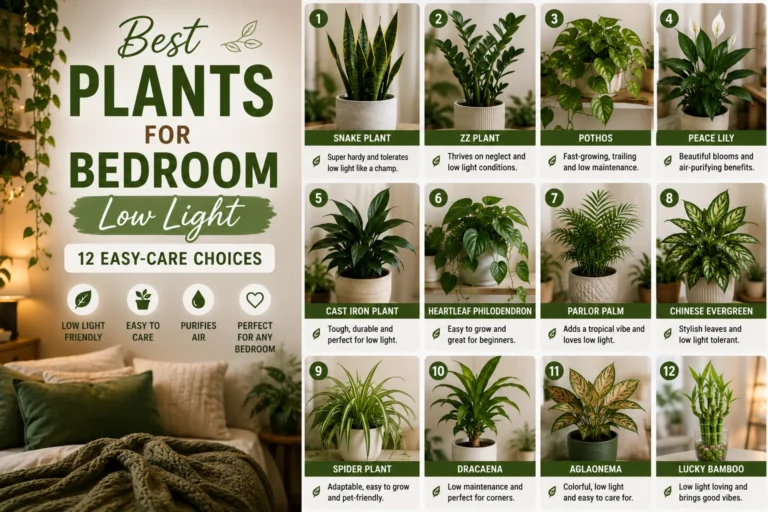
The best plants for bedroom decor are ZZ plant, snake plant, moth orchid, golden pothos, peace lily, spider plant, Monstera deliciosa, rubber plant, parlor palm, Chinese money plant, prayer plant, and heartleaf philodendron because they offer genuinely different shapes, sizes, textures, and display styles while adapting well to common indoor conditions.
Here’s the short version before you scroll further:
- ZZ Plant — glossy structure for dim, modern rooms
- Snake Plant — strong vertical lines with little fuss
- Moth Orchid — long-lasting flowers for a bright nightstand
- Golden Pothos — easy vines for shelves and hangers
- Peace Lily — white spathes with lush dark foliage
- Spider Plant — arching leaves and playful hanging plantlets
- Monstera Deliciosa — dramatic split leaves for statement corners
- Rubber Plant — bold glossy leaves with clean height
- Parlor Palm — soft tropical texture without huge scale
- Chinese Money Plant — round leaves for compact bedside styling
- Prayer Plant — patterned foliage that moves after dark
- Heartleaf Philodendron — soft trailing vines for relaxed decor
The best choice is the plant whose light needs, mature size, watering rhythm, and safety profile fit your actual bedroom. Pick for the space first, then use leaf shape and display style to finish the look.
Our Top Picks at a Glance
Easiest to Care For — ZZ Plant
Best for Low Light — Snake Plant
Most Beautiful Bloom — Moth Orchid
Best for Beginners — Golden Pothos


12 Best Plants for Bedroom Decor by Style and Space
 Save
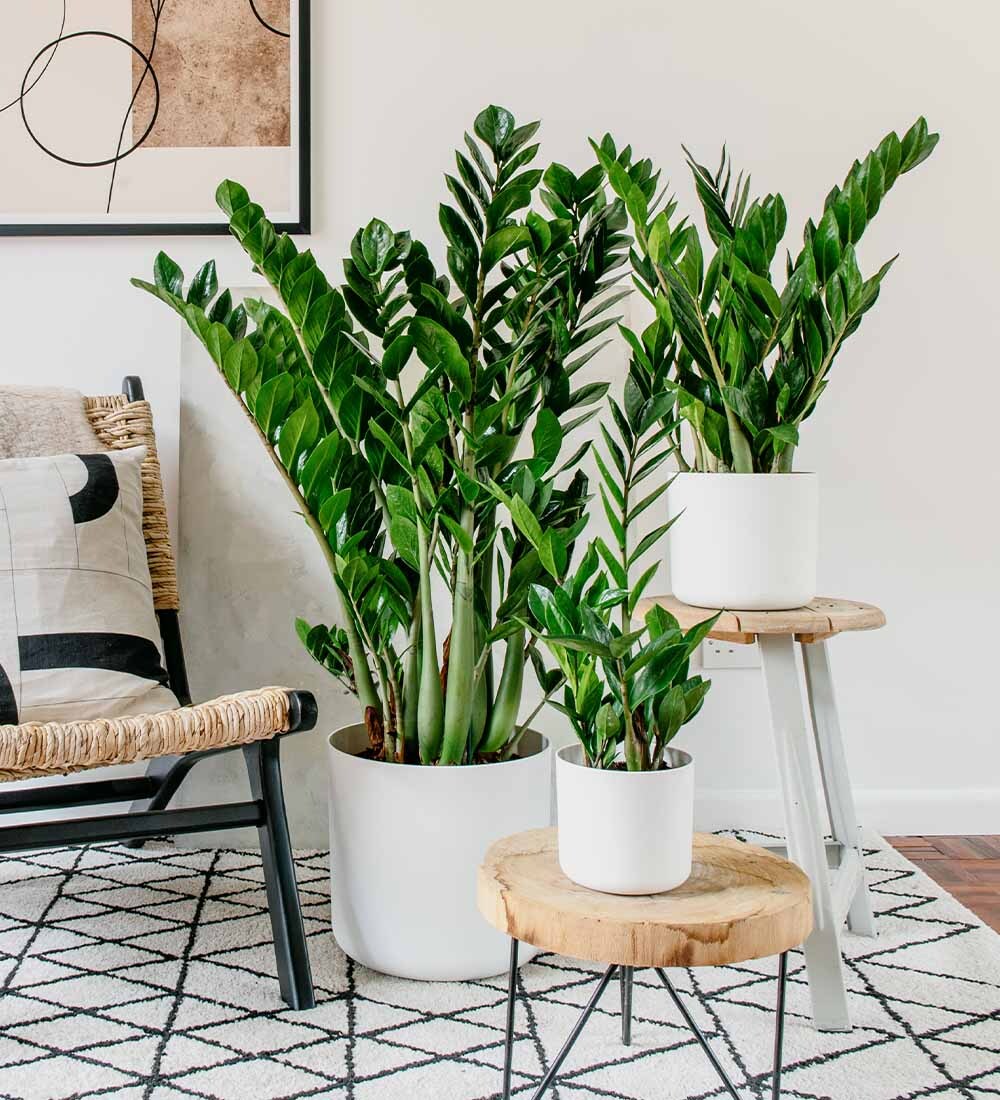
Save#1. ZZ Plant — “The Polished Minimalist”
| Sunlight | Low to bright indirect light |
| Watering | Usually every 2–4 weeks, only after the mix dries fully |
| Pot Size | Snug pot with drainage, one size up when root-bound |
| Care Level | Easy |
| Bloom Time | Rare indoors, grown mainly for foliage |
Zamioculcas zamiifolia comes from tropical Africa and stores water in thick rhizomes, helping its glossy stems handle missed watering.
Low light slows growth; yellowing stems with wet soil usually point to excess moisture.
Repot only when crowded, and keep it away from chewing pets because ingestion can irritate the mouth.
Pros
- Excellent shade tolerance
- Architectural glossy foliage
- Stores water in rhizomes
Watch For
- Root rot in wet mix
- Very slow dark-room growth
- Not safe for chewing pets
#2. Snake Plant — “The Vertical Accent”
| Sunlight | Very low to bright indirect light |
| Watering | Every 2–6 weeks, after the potting mix dries through |
| Pot Size | Snug, sturdy container with drainage |
| Care Level | Easy |
| Bloom Time | Rare indoors |
Dracaena trifasciata, formerly Sansevieria trifasciata, is native to tropical Africa and creates strong vertical lines with stiff leaves.
Weak light slows water use, so let the root zone dry rather than keeping it damp.
Remove damaged leaves at the base, divide crowded clumps, and keep it away from chewing pets.
Pros
- Fits narrow floor spaces
- Handles dry indoor air
- Needs little pruning
Watch For
- Overwatering in low light
- Cold, wet soil
- Pet chewing
#3. Moth Orchid — “The Living Centerpiece”
| Sunlight | Bright indirect light, gentle morning sun |
| Watering | About weekly, when roots turn pale silvery and bark nears dry |
| Pot Size | Clear orchid pot just large enough for the roots |
| Care Level | Moderate |
| Bloom Time | Usually once yearly, flowers may last for months |
Phalaenopsis orchids come from tropical Asia and nearby regions, where many grow as epiphytes, and their arching flowers add color without bulky foliage.
Pale silvery roots usually signal watering time; constantly wet bark raises rot risk.
Repot about every two years into airy orchid bark potting mix. Moth orchids are a pet-friendlier choice.
Pros
- Long-lasting flowers
- Compact footprint
- Pet-friendlier choice
Watch For
- Dense ordinary potting soil
- Water trapped in crown
- Harsh summer sun
#4. Golden Pothos — “The Shelf Softener”
| Sunlight | Low to bright indirect light |
| Watering | Check every 1–2 weeks, water after the upper mix dries |
| Pot Size | Small-to-medium draining pot or hanging basket |
| Care Level | Easy |
| Bloom Time | Rare indoors, grown for foliage |
Epipremnum aureum is a Society Islands vine whose heart-shaped leaves trail neatly from shelves and hanging planters.
Deep shade can fade variegation and stretch stems; brighter filtered light keeps growth fuller.
Prune bare stems, root healthy cuttings, and keep the vines away from pets because chewing irritates the mouth.
Pros
- Flexible trailing display
- Easy stem propagation
- Tolerates reduced light
Watch For
- Leggy dark-room growth
- Soggy potting mix
- Pet toxicity
#5. Peace Lily — “The Soft Contrast”
| Sunlight | Low to bright filtered light, no harsh direct sun |
| Watering | Check weekly, water as the upper mix begins drying |
| Pot Size | Slightly snug draining pot, one size up when crowded |
| Care Level | Moderate |
| Bloom Time | Can flower repeatedly in suitable indoor conditions |
Spathiphyllum species are tropical forest plants with glossy leaves and white spathes that contrast beautifully with pale or wood-toned rooms.
Shade is tolerated, but filtered light improves flowering and the soil should stay lightly moist.
Divide crowded clumps, remove spent stems, and keep the plant away from chewing pets.
Pros
- Flowers in filtered light
- Lush glossy foliage
- Handles some shade
Watch For
- Fewer flowers in darkness
- Waterlogged roots
- Pet chewing
 Save
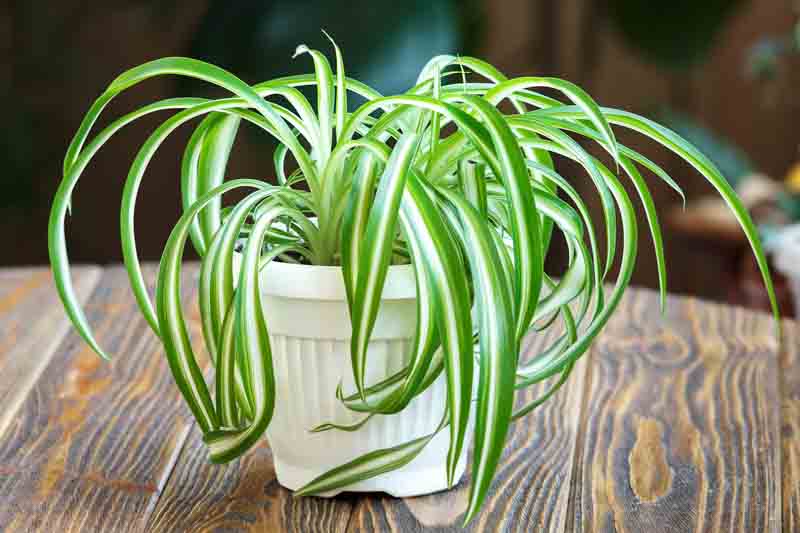
Save#6. Spider Plant — “The Hanging Fountain”
| Sunlight | Medium to bright indirect light, tolerates shade |
| Watering | Check weekly, water when the surface starts to dry |
| Pot Size | Small-to-medium pot or hanging basket with drainage |
| Care Level | Easy |
| Bloom Time | Small white flowers can appear through the year |
Chlorophytum comosum comes from Africa and forms arching leaves plus baby plantlets that suit hanging baskets.
Deep shade can reduce variegation and plantlets, while brown tips often reflect dryness or mineral buildup.
Trim damaged tips and root mature plantlets. The ASPCA lists spider plant as non-toxic to cats and dogs.
Pros
- Decorative plantlets
- Easy propagation
- Pet-friendlier foliage
Watch For
- Brown leaf tips
- Harsh direct sun
- Constantly wet roots
#7. Monstera Deliciosa — “The Statement Leaf”
| Sunlight | Bright indirect light, tolerates some lower light |
| Watering | Usually every 1–2 weeks, after the upper mix partly dries |
| Pot Size | Stable draining pot, one size up when roots fill it |
| Care Level | Moderate |
| Bloom Time | N/A — usually grown indoors for foliage |
Monstera deliciosa is a climbing aroid from Mexico and Central America whose mature leaves develop dramatic splits and holes.
Strong indirect light and climbing support encourage larger, more characteristic foliage.
Train stems onto a moss pole or plant support, prune as needed, and keep it from chewing pets.
Pros
- High-impact foliage
- Useful vertical growth
- Easy stem propagation
Watch For
- Outgrowing small rooms
- Weak growth in deep shade
- Pet toxicity
#8. Rubber Plant — “The Glossy Anchor”
| Sunlight | Bright indirect to partial shade |
| Watering | Check every 1–2 weeks, water after the upper mix dries |
| Pot Size | Stable pot, move up one size as roots fill it |
| Care Level | Moderate |
| Bloom Time | N/A — grown indoors for foliage |
Ficus elastica is native to tropical Asia and develops large, leathery leaves on an upright woody stem.
Partial shade is tolerated, but stronger filtered light supports denser growth; rotate the pot if it leans.
Wipe dusty leaves and prune carefully for height because the milky sap can irritate skin.
Pros
- Bold glossy leaves
- Strong upright form
- Responds well to pruning
Watch For
- Dark-room leaf loss
- Constantly wet soil
- Irritating milky sap
#9. Parlor Palm — “The Quiet Tropical”
| Sunlight | Low to bright filtered light |
| Watering | Usually every 1–2 weeks, after the surface dries slightly |
| Pot Size | Keep slightly snug, repot only when root-bound |
| Care Level | Easy to Moderate |
| Bloom Time | Small yellow flowers are possible with enough light |
Chamaedorea elegans is an understory palm from Mexico and Central America with fine, softly arching fronds.
Low light is manageable, but soggy soil and very dry air can cause problems.
Trim fully brown fronds and repot sparingly. It is commonly listed as non-toxic to cats and dogs.
Pros
- Soft palm texture
- Tolerates lower light
- Pet-friendlier choice
Watch For
- Brown dry-air tips
- Spider mites
- Overwatering
#10. Chinese Money Plant — “The Round-Leaf Accent”
| Sunlight | Bright indirect light |
| Watering | Check weekly, water when the top inch feels dry |
| Pot Size | Compact draining pot, one size up when root-bound |
| Care Level | Easy |
| Bloom Time | Small flowers are possible, foliage is the main feature |
Pilea peperomioides is native to Yunnan, China, and stays compact, with coin-shaped leaves suited to simple bedside styling.
Bright indirect light keeps growth balanced; rotate the pot because new leaves turn toward light.
Separate rooted offsets to make new plants. This species is considered safer around pets and children than many aroids.
Pros
- Compact bedside scale
- Distinct round foliage
- Produces shareable offsets
Watch For
- Leaning toward windows
- Soggy roots
- Harsh direct sun
#11. Prayer Plant — “The Patterned Night Owl”
| Sunlight | Bright indirect light |
| Watering | Check once or twice weekly, keep lightly and evenly moist |
| Pot Size | Draining pot, one size up as the clump spreads |
| Care Level | Moderate |
| Bloom Time | Small flowers can appear, patterned foliage is the attraction |
Maranta leuconeura has patterned leaves that change angle between day and night, adding movement to a tabletop display.
It prefers filtered light, even moisture, and more humidity than ZZ or snake plant.
Trim tired foliage and divide crowded clumps; crispy edges often signal dry air or inconsistent moisture.
Pros
- Highly patterned leaves
- Visible day-night movement
- Good tabletop scale
Watch For
- Low humidity
- Dry root zone
- Direct-sun bleaching
 Save
Save#12. Heartleaf Philodendron — “The Relaxed Trailer”
| Sunlight | Medium to bright indirect light, shade tolerant |
| Watering | Usually every 1–2 weeks, after the upper mix dries slightly |
| Pot Size | Medium draining pot or hanging basket |
| Care Level | Easy |
| Bloom Time | Rare indoors |
Philodendron hederaceum is a tropical climbing aroid with glossy heart-shaped leaves and flexible stems for trailing or training upward.
Lower light is tolerated, but deep shade creates longer gaps between leaves.
Pinch tips for branching, root stem cuttings, and keep the plant away from chewing pets.
Pros
- Soft trailing shape
- Easy to propagate
- Shade tolerant
Watch For
- Leggy deep-shade growth
- Wet-soil root problems
- Pet toxicity
How to Choose the Right Plant for Your Space
Start with your real light, available space, and placement before choosing by appearance.
- Match the real light level — ZZ, snake plant, pothos, and parlor palm tolerate lower light better. Use the University of Minnesota Extension indoor lighting guide to compare indoor light levels.
- Fill the right gap — Try snake plant vertically, pothos on a shelf, Pilea bedside, or Monstera in a floor corner.
- Be realistic about darkness — Low light is not zero light. Compare very dim rooms with our no-direct-sun bedroom plants and low-light bedroom guide.
Common Mistakes to Avoid
Different plants need different routines, even in the same bedroom.
Watering every plant on the same day — ZZ and snake plants may still be wet when a prayer plant needs water. Check each root zone instead of following one calendar.
Using a decorative pot with no drainage — Water trapped at the bottom pushes oxygen out of the root zone and increases rot risk, especially in darker rooms where soil dries slowly.
Putting an orchid in ordinary dense soil — Moth orchid roots need an airy medium. Dense mix stays wet too long and reduces airflow around the roots.
Ignoring pet access when styling shelves — Pothos, philodendron, peace lily, Monstera, ZZ, and snake plant can cause problems if chewed. Check the ASPCA toxic and non-toxic plant database before adding an unfamiliar species.
Choosing only by appearance — A gorgeous plant that needs more light or humidity than your room provides becomes frustrating fast. New growers can also compare our beginner plants for bedroom spaces.
What You’ll Need
Three basics cover most routine bedroom-plant care.
Let excess water leave the root zone instead of collecting inside a cachepot.
Use an airy houseplant mix for soil-grown plants, then customize for species that need extra drainage.
Useful as a second check for soil-grown plants when you are still learning how wet a pot feels.
Signs Your Plant Needs Attention
Watch for these early care clues.
- Long stem gaps — Pothos and philodendron may need stronger indirect light.
- Yellowing with wet soil — Check drainage before adding water.
- Crispy edges — Prayer plant and parlor palm may need steadier moisture or humidity.
- Fading variegation — Patterned foliage can become greener in weaker light.
- No flowers — Peace lily and moth orchid may need brighter filtered light.
If fragrance matters as much as foliage, our guide to fragrant plants for bedroom spaces gives you a different way to narrow the options.
Frequently Asked Questions
Q: What plants are best for a dark bedroom?
A: ZZ plant and snake plant are the strongest starting points here, with pothos and parlor palm also useful when some ambient light reaches the room. A completely dark room still needs a grow light.
Q: Which bedroom plants are safer around cats and dogs?
A: Spider plant, parlor palm, moth orchid, and Chinese money plant are better options to investigate for pet-conscious rooms. Always verify the exact species before buying because common names can be confusing.
Q: Can I put a Monstera in my bedroom?
A: Yes, if the room has bright indirect light and enough floor space for its mature size. Give it a stable pot and climbing support as it gets larger.
Q: Do bedroom plants actually clean the air?
A: Houseplants can remove some pollutants in controlled laboratory settings, but ordinary potted plants do not clean a real room fast enough to replace ventilation. Research summarized by Drexel University found that natural or mechanical air exchange has a much larger effect.
Q: How often should I water plants in a bedroom?
A: There is no reliable one-schedule answer. Check each plant’s soil or root cue because light, temperature, pot size, season, and species all change how quickly water is used.
Q: What is the best small plant for a bedside table?
A: Chinese money plant is a strong compact foliage pick, while moth orchid gives you flowers and prayer plant gives you pattern. Choose among them based on the light and humidity beside the bed.
Final Thoughts
The best bedroom plant fits both your room and routine. Choose structure, trailing softness, flowers, or statement foliage after matching the plant to your light and care habits.
Which plant are you adding to your space first? Save this post to Pinterest so you can come back whenever you need fresh plant inspo!

I’m a home decor enthusiast who loves discovering beautiful room ideas, creative DIY projects, and Pinterest-worthy decorating inspiration. At DecorMinty, I share simple tips, fresh trends, and practical ideas to help you create a home you’ll truly love—one room at a time.