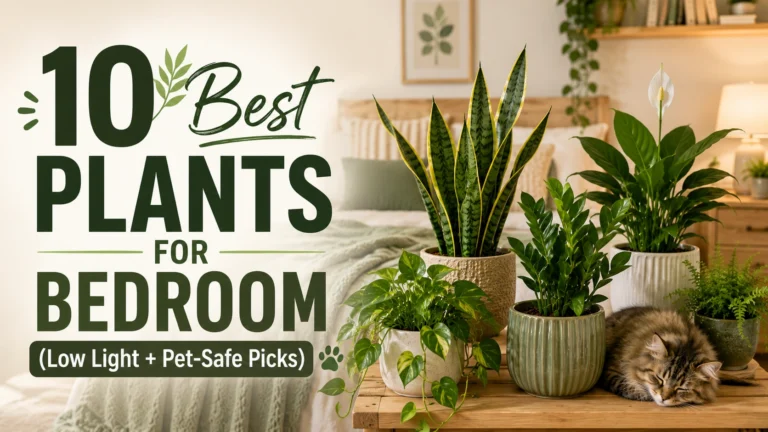
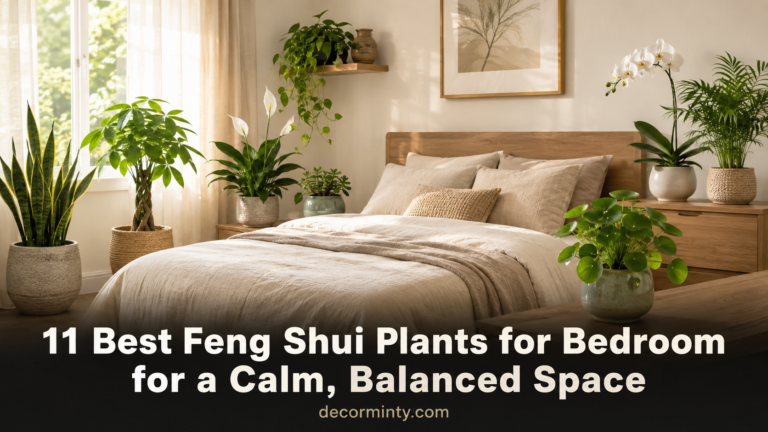
10 Best Low Maintenance Plants for Bedroom (Beginner-Proof)
Quick Answer
The best low maintenance plants for a bedroom are the snake plant, pothos, ZZ plant, peace lily, spider plant, parlor palm, peperomia, Chinese evergreen, calathea, and Philodendron Brazil, and they made this list because each one tolerates the dim, uneven light most bedrooms actually get, forgives an inconsistent watering schedule, and comes recommended by real plant experts for low-light rooms.
Here’s the short version before you scroll further:
- Snake Plant — waters once a month and still won’t die
- Pothos — the fastest-growing trailing vine on this list
- ZZ Plant — survives weeks of total neglect
- Peace Lily — the only one that flowers reliably indoors
- Spider Plant — pet-safe and nearly impossible to kill
- Parlor Palm — pet-safe with a soft, tropical look
- Peperomia — pet-safe and small enough for a nightstand
- Chinese Evergreen — the most pattern variety in one plant
- Calathea — pet-safe but the fussiest about humidity
- Philodendron Brazil — the easiest trailing vine to propagate
The deciding factor usually isn’t which plant filters the most air. It’s whether you have pets in the house, how dark your room actually is, and whether you’ll remember to water on a schedule. Match the plant to those things first, and the extra benefits come along for free.
Our Top Picks at a Glance
Easiest to Care For — ZZ Plant
Best for Low Light — Snake Plant
Most Beautiful Bloom — Peace Lily
Best Pet-Safe Pick — Spider Plant


10 Low Maintenance Plants That Actually Thrive in a Bedroom

#1. Snake Plant (Sansevieria trifasciata) — “The Forgiving One”
| Sunlight | Low to bright indirect light |
| Watering | Every 3-4 weeks, once the soil is completely dry to the touch |
| Pot Size | 6-10 inch pot with drainage |
| Care Level | Easy |
| Bloom Time | N/A — grown for foliage |
The snake plant, also known botanically as Sansevieria trifasciata, is native to West Africa and belongs to the Asparagaceae family. Its stiff, upright leaves give it the nickname mother-in-law’s tongue.
Unlike most houseplants, snake plants use a slower type of photosynthesis that lets them release oxygen at night instead of just during the day. That quirk is part of why they’re so often recommended for bedrooms specifically.
Wipe the leaves down every few weeks so dust doesn’t build up and block light absorption. It’s easiest to propagate through division when you repot, and a well-draining succulent potting mix will keep the roots from sitting in moisture.
Pros
- Survives a month without water
- Grows fine in a windowless corner
- Almost never attracts pests
Watch For
- Mildly toxic to cats and dogs if chewed
- Root rot from overwatering is common
- Grows slowly, so patience is required
#2. Pothos (Epipremnum aureum) — “The No-Fuss Trailer”
| Sunlight | Low to bright indirect light |
| Watering | Every 1-2 weeks, when the top two inches of soil feel dry |
| Pot Size | 6-8 inch pot, ideally with a hanging option |
| Care Level | Easy |
| Bloom Time | N/A — grown for foliage |
Pothos is also called devil’s ivy, largely because it’s nearly impossible to kill and keeps growing even in poor conditions. It’s native to the Solomon Islands and belongs to the Araceae family, the same family as philodendrons.
The heart-shaped leaves droop noticeably when the plant is thirsty, then perk back up within hours of a good watering. That visible feedback loop makes it one of the easiest plants to learn on.
Trim leggy vines back to a healthy leaf node, and drop the cutting straight into water to root a new plant for free. Keep it out of reach of cats and dogs, since the leaves contain calcium oxalate crystals that irritate the mouth if chewed.
Pros
- Tells you exactly when it needs water
- Propagates in a cup of water in weeks
- Grows fast enough to fill a shelf quickly
Watch For
- Toxic to cats and dogs if ingested
- Vines can get leggy without occasional trimming
- Yellow leaves usually mean overwatering
#3. ZZ Plant (Zamioculcas zamiifolia) — “The Indestructible One”
| Sunlight | Low to bright indirect light |
| Watering | Every 3-4 weeks, only once the soil is bone dry |
| Pot Size | 8-10 inch pot with drainage |
| Care Level | Easy |
| Bloom Time | N/A — grown for foliage |
Zamioculcas zamiifolia is native to eastern Africa, where it survives long dry spells by storing water in thick underground rhizomes. That storage system is exactly why it tolerates weeks of neglect without complaint.
Its glossy, dark green leaves reflect what little light reaches them, which is part of why it looks just as good in a dim corner as it does near a window. Growth is slow and steady rather than fast and messy.
Overwatering is really the only way to hurt this plant, so let the soil dry out completely between waterings. Propagate it by placing a single leaf in water or soil, though it can take months to root.
Pros
- Handles being forgotten for weeks
- Glossy leaves add shine to a dark room
- Rarely drops leaves or gets messy
Watch For
- Toxic to pets and mildly irritating to skin
- Very slow growth can feel discouraging at first
- Propagation from a single leaf takes patience
#4. Peace Lily (Spathiphyllum) — “The Drama Queen”
| Sunlight | Low light tolerated, blooms best in bright indirect light |
| Watering | Weekly, or as soon as the leaves start to droop |
| Pot Size | 8-10 inch pot with drainage |
| Care Level | Moderate |
| Bloom Time | Spring through summer, with occasional repeat blooms |
Peace lilies are native to the tropical rainforests of Central and South America and are part of the Araceae family. Their white blooms aren’t technically flowers but modified leaves called spathes.
This is the one plant on the list that gives you an unmistakable heads-up when it’s thirsty. The whole plant droops dramatically, then bounces back to full height within a couple hours of watering.
Snip spent blooms at the base once they turn green to keep the plant looking tidy. Peace lilies are genuinely toxic if chewed by cats, dogs, or kids, so they’re a better fit for pet-free bedrooms.
Pros
- Only plant on this list with reliable blooms
- Droops visibly before it’s ever in real danger
- Tolerates lower light than most flowering plants
Watch For
- Toxic to pets and children if chewed
- Won’t flower much in a very dark corner
- Brown leaf tips often mean tap water minerals
#5. Spider Plant (Chlorophytum comosum) — “The Pet-Safe Icon”
| Sunlight | Moderate to bright indirect light |
| Watering | Weekly, keeping soil lightly moist but never soggy |
| Pot Size | 6-8 inch pot, hanging baskets work well |
| Care Level | Easy |
| Bloom Time | Small white flowers can appear on mature plants |
The spider plant is native to coastal regions of South Africa and belongs to the Asparagaceae family, the same one as the snake plant. It’s confirmed non-toxic to cats and dogs, which makes it one of the safest picks here.
Given enough light, a mature spider plant sends out long stems tipped with tiny plantlets that look like little spiders dangling from the mother plant. Those plantlets are the plant’s natural way of propagating itself.
Snip a plantlet once it has small root nubs and set it in water or soil to start a new plant for free. A hanging basket lets the trailing plantlets show off without taking up nightstand space.
Pros
- Confirmed non-toxic to cats and dogs
- Produces free baby plants on its own
- Bounces back quickly from missed waterings
Watch For
- Brown leaf tips from fluoride or chlorine in tap water
- Needs more consistent moisture than snake plant or ZZ
- Can outgrow a small pot within a year or two
#6. Parlor Palm (Chamaedorea elegans) — “The Gentle Giant”
| Sunlight | Low to bright indirect light |
| Watering | Weekly, letting the top inch of soil dry between waterings |
| Pot Size | 8-12 inch pot with drainage |
| Care Level | Easy |
| Bloom Time | N/A — grown for foliage |
The parlor palm is native to the rainforest floor of southern Mexico and Guatemala, which is exactly why it’s so comfortable in the low light of a bedroom. It’s a true palm, unlike many plants that just borrow the name.
Its feathery fronds grow slowly and evenly, so it rarely needs pruning or shaping like faster-growing plants do. Average home humidity is enough, though it appreciates a touch more if your bedroom runs dry in winter.
Rotate the pot every few weeks so it grows evenly toward the light instead of leaning to one side. It’s confirmed safe for cats and dogs, making it one of the better palm-style picks for pet households.
Pros
- Non-toxic to cats and dogs
- Adapts well to low, indirect bedroom light
- Rarely needs pruning or repotting
Watch For
- Slow growth means a small plant stays small a while
- Brown tips can appear in very dry winter air
- Needs a pot with real drainage to avoid root rot
#7. Peperomia (Peperomia obtusifolia) — “The Nightstand Regular”
| Sunlight | Low to medium indirect light |
| Watering | Every 2-3 weeks, letting the soil dry out between waterings |
| Pot Size | 4-6 inch pot |
| Care Level | Easy |
| Bloom Time | N/A — grown for foliage |
Peperomia obtusifolia, also called baby rubber plant, belongs to the pepper family Piperaceae and stores water in its thick, semi-succulent leaves. That storage ability is what makes it so forgiving of an irregular watering schedule.
Too much direct sun will scorch its waxy leaves, so a spot a few feet back from a window suits it better than a sunny sill. Its compact, upright habit makes it one of the few plants small enough for an actual nightstand.
Wipe the leaves occasionally to keep them glossy and let them properly absorb light. The entire Peperomia genus is considered non-toxic to cats and dogs, so it’s a safe pick even on a low shelf.
Pros
- Non-toxic to cats and dogs
- Small enough for tight nightstand space
- Semi-succulent leaves forgive missed waterings
Watch For
- Direct sun can scorch the waxy leaves
- Overly moist soil invites fungus gnats
- Slow growth means limited size payoff over time
#8. Chinese Evergreen (Aglaonema) — “The Pattern Collector”
| Sunlight | Low to bright indirect light |
| Watering | Every 1-2 weeks, when the top two inches of soil are dry |
| Pot Size | 6-10 inch pot with drainage |
| Care Level | Easy |
| Bloom Time | N/A — grown for foliage |
Chinese evergreen belongs to the Araceae family and comes from the tropical understories of Southeast Asia, where it grows beneath a full forest canopy. That native habitat is exactly why it tolerates a bedroom that only gets filtered window light.
Varieties range from solid deep green to leaves splashed with silver, pink, or cream, so you can pick one that matches your decor rather than settling for plain foliage. Many houseplant guides also credit it with air-filtering benefits similar to other Araceae family members.
A sheer curtain between the plant and a bright window prevents the leaves from scorching. Propagate by dividing the plant at the roots when you repot it every couple of years.
Pros
- Wide range of leaf colors and patterns
- Genuinely thrives in low, filtered light
- Dense growth habit fills a corner nicely
Watch For
- Mildly toxic to cats and dogs if chewed
- Direct sun fades or scorches patterned leaves
- Dislikes cold drafts near a window in winter
#9. Calathea (Calathea Vittata or similar) — “The Showy Perfectionist”
| Sunlight | Low to medium indirect light |
| Watering | Weekly, keeping soil evenly moist but never soggy |
| Pot Size | 6-8 inch pot with drainage |
| Care Level | Moderate |
| Bloom Time | N/A — grown for foliage |
Calatheas are commonly called prayer plants because their leaves fold upward at night and open flat again during the day, a movement tied to their natural light cycle in the wild. They’re part of the Marantaceae family, native to the tropical forests of Brazil.
This is the most demanding plant on the list, mostly because it wants steady humidity rather than the drier air a heated or air-conditioned bedroom often has. A small humidifier or a pebble tray nearby makes a real difference.
Skip tap water if yours is heavily chlorinated, since calatheas are sensitive to it and can develop crispy brown edges. It’s confirmed non-toxic to cats and dogs, which is a big part of why it’s worth the slightly extra effort.
Pros
- Non-toxic to cats and dogs
- Some of the boldest leaf patterns of any houseplant
- Genuinely happy in low to medium light
Watch For
- Sensitive to chlorinated tap water
- Needs more humidity than most plants on this list
- Curling leaves usually signal low humidity, not thirst
 Save
Save#10. Philodendron Brazil (Philodendron hederaceum) — “The Easy Trailer”
| Sunlight | Low to bright indirect light |
| Watering | Every 1-2 weeks, when the top inch of soil is dry |
| Pot Size | 6-8 inch pot, hanging baskets work well |
| Care Level | Easy |
| Bloom Time | N/A — grown for foliage |
Philodendron Brazil is a variety of Philodendron hederaceum, native to the rainforests of Central and South America, and part of the same Araceae family as pothos. Its heart-shaped leaves carry a distinctive lime-green stripe down the center.
The vines grow quickly once settled in and will trail attractively over the edge of a shelf or dresser. It tends to lean toward whatever light source is nearby, so rotating the pot keeps the growth even on all sides.
Cuttings root easily in a jar of water within a couple of weeks, making it one of the simplest plants to multiply for free. Like pothos, it’s toxic to cats and dogs if chewed, so keep it up on a shelf pets can’t reach.
Pros
- Fast, attractive trailing growth
- Easy to propagate from a simple cutting
- Distinctive striped leaves stand out visually
Watch For
- Toxic to cats and dogs if chewed
- Leans toward light unless rotated regularly
- Can get leggy without occasional trimming
Basic Care Tips for Beginners
A few habits make the difference between a thriving bedroom jungle and a string of sad, dying plants.
- Check the soil before you water, not the calendar. Stick a finger an inch or two into the soil. If it’s still damp, wait a few more days before watering again.
- Match the pot to the plant’s actual growth rate. A pot that’s too large holds excess moisture the roots can’t use, which is one of the fastest ways to cause rot in slow growers like the ZZ plant or snake plant.
- Use a pot with a drainage hole, always. Standing water at the bottom of a decorative pot with no outlet is one of the most common reasons a low-maintenance plant still dies.
Common Mistakes to Avoid
These mistakes account for most of the dead plants beginners deal with.
Watering on a fixed schedule instead of checking the soil first — Snake plants and ZZ plants need far less water in winter than summer, so a rigid weekly schedule slowly drowns their roots regardless of the season.
Choosing a plant based on looks alone, without checking light needs — A peace lily bought for its blooms will sit green and flowerless for months in a bedroom that only gets filtered light from a curtain.
Letting decorative pots trap water at the bottom — A pothos or Philodendron Brazil left sitting in an inch of unseen water at the base of a cachepot will develop root rot even if you’re watering correctly on top.
Placing pet-toxic plants where a curious cat can reach them — Snake plants and peace lilies are often set on low nightstands, exactly where a cat that jumps on the bed can easily take a bite.
Ignoring humidity for moisture-loving plants like calathea — A calathea kept in a dry, air-conditioned bedroom will develop crispy brown leaf edges even with perfectly timed watering.
Signs Your Plant Needs Attention
Most bedroom plants tell you exactly what’s wrong, once you know what to look for.
- Drooping or wilting leaves — Usually means it’s thirsty. Peace lilies and pothos both do this dramatically, then recover within hours of a good watering.
- Yellowing leaves, especially lower ones — More often a sign of overwatering than underwatering. Let the soil dry out fully before watering again.
- Brown, crispy leaf tips or edges — Usually points to low humidity or mineral buildup from tap water, common with spider plants and calatheas.
- Leggy, stretched-out growth with fewer leaves — A sign the plant isn’t getting enough light and is reaching toward whatever it can find.
What You’ll Need
A short list of basics that make caring for any plant on this list genuinely easier.
Prevents the standing water that causes most root rot
Removes the guesswork of checking soil dryness by feel alone
Keeps humidity-loving plants like calathea from crisping up
Make Overwatering Nearly Impossible
A moisture meter takes the guesswork out of the number one mistake on this list: watering on a schedule instead of checking what the soil actually needs. Push the probe in before you reach for the watering can, and you’ll know in seconds whether it’s really time.
Frequently Asked Questions
Q: What is the easiest plant to keep alive in a bedroom?
A: The ZZ plant and snake plant are generally the most forgiving, since both tolerate low light and only need water once every three to four weeks.
Q: Which bedroom plants are safe for cats and dogs?
A: Spider plant, parlor palm, peperomia, and calathea are all confirmed non-toxic to cats and dogs, making them the safer choice for pet-owning households.
Q: Do bedroom plants actually improve sleep or air quality?
A: Some houseplants, including the ones on this list, are commonly cited for air-filtering qualities, and having greenery in a room is often linked to a more calming environment, though a single plant won’t dramatically change your air quality on its own.
Q: Can low light plants survive with no windows at all?
A: Snake plants, ZZ plants, and pothos can survive in very low light, but “low light” still isn’t “no light.” A nearby lamp or occasional natural light is important for long-term health.
Q: How many plants is too many for one bedroom?
A: There’s no strict limit, but keep airflow and light access in mind. If plants are crowding each other or blocking a window, it’s time to relocate a few to another room.
Q: Why do my plant’s leaves keep turning yellow?
A: Yellowing is most often a sign of overwatering rather than underwatering. Let the soil dry out fully before the next watering and check that the pot has proper drainage.
Final Thoughts
You don’t need a green thumb to fill your bedroom with plants that actually thrive there. Pick one or two from this list based on your light and pets, and let the rest of your space grow from there.
Which plant are you adding to your space first? Save this post to Pinterest so you can come back whenever you need fresh plant inspo!

I’m a home decor enthusiast who loves discovering beautiful room ideas, creative DIY projects, and Pinterest-worthy decorating inspiration. At DecorMinty, I share simple tips, fresh trends, and practical ideas to help you create a home you’ll truly love—one room at a time.