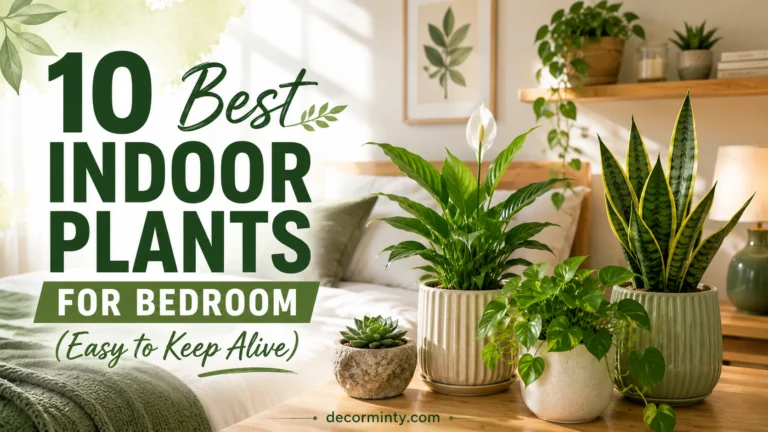
10 Best Plants for Bedroom (Low Light + Pet-Safe Picks)
Quick Answer
The best plants for a bedroom are the snake plant, pothos, ZZ plant, peace lily, spider plant, heartleaf philodendron, Chinese evergreen, Boston fern, aloe vera, and Phalaenopsis orchid, and they made this list because each one tolerates the dim, uneven light most bedrooms actually get, forgives an inconsistent watering schedule, and brings a genuinely different look and care level to the room.
Here’s the short version before you scroll further:
- Snake Plant — survives near-total neglect and releases oxygen overnight
- Pothos — grows fast in almost any light, but keep it from curious cats
- ZZ Plant — stores water in its stems, so it wants to be forgotten
- Peace Lily — the only plant here that tells you it’s thirsty by drooping
- Spider Plant — one of the few on this list that’s fully pet-safe
- Heartleaf Philodendron — a trailing vine that’s nearly impossible to kill
- Chinese Evergreen — the most shade-tolerant option with colorful leaves
- Boston Fern — lush and full, but it needs humidity to stay happy
- Aloe Vera — wants a sunny windowsill instead of a dark corner
- Phalaenopsis Orchid — the one flower on this list that reliably reblooms indoors
The deciding factor usually isn’t which plant looks nicest in a photo. It’s whether you have pets in the house, how dark your room actually is, and whether you’ll remember to water on a schedule. Match the plant to those three things first, and everything else falls into place.
Our Top Picks at a Glance
Easiest to Care For — ZZ Plant
Best for Low Light — Snake Plant
Most Beautiful Bloom — Phalaenopsis Orchid
Best for Beginners — Pothos


10 Best Plants for a Bedroom
#1. Snake Plant (Sansevieria trifasciata) — “The Forgiving One”
| Sunlight | Low to bright indirect light, tolerates near-dark corners |
| Watering | Every 2 to 4 weeks, only once the soil is completely dry to the touch |
| Pot Size | Snug pot, only slightly larger than the root ball |
| Care Level | Easy |
| Bloom Time | Rare and unpredictable indoors — grown mainly for foliage |
The snake plant is native to West Africa, where it survives long dry seasons by storing water in its thick, upright leaves. Botanically it’s Sansevieria trifasciata, part of the Asparagaceae family, and it’s one of the seven plants that showed up in NASA’s original 1989 Clean Air Study.
Here’s the thing that makes it perfect for a bedroom. It uses a photosynthesis process called CAM, which means it absorbs carbon dioxide and releases oxygen at night instead of during the day, the opposite of most houseplants.
Repot it only every two to three years, since it actually prefers being a little rootbound. If you have curious pets, keep in mind the ASPCA lists snake plant as mildly toxic to cats and dogs, so a sturdy ceramic pot with drainage on a high shelf works well.
Pros
- Can go weeks without water and still look sharp
- Sculptural, upright shape fits tight corners
- Genuinely thrives in a windowless bedroom
Watch For
- Mildly toxic if pets chew the leaves
- Mushy, yellowing leaves signal overwatering, the main killer
- Slow grower, so don’t expect fast size changes
#2. Pothos (Epipremnum aureum) — “The Overachiever”
| Sunlight | Low to bright indirect light |
| Watering | Every 1 to 2 weeks, once the top inch of soil feels dry |
| Pot Size | Small to medium hanging basket or tabletop pot |
| Care Level | Easy |
| Bloom Time | N/A — grown for foliage |
Pothos is native to the Solomon Islands and belongs to the Araceae family, the same group that includes philodendron and peace lily. It’s also sold as devil’s ivy, a nickname it earned because it’s nearly impossible to kill and stays green even in low light.
Watch the leaves for your cue. They go slightly matte and start to soften right before the plant needs water, which is easier to spot than checking soil with your finger every day.
It roots so easily in plain water that propagating a single cutting into three new plants takes about a month. The ASPCA does list pothos as toxic to cats and dogs, so trailing it from a high shelf keeps both the plant and your pet safer.
Pros
- Grows fast enough to see progress within weeks
- Propagates for free, so one plant becomes many
- Available in variegated patterns for extra visual interest
Watch For
- Toxic to cats and dogs if chewed
- Can get leggy without occasional pruning
- Variegated types fade to solid green in low light
#3. ZZ Plant (Zamioculcas zamiifolia) — “The Low-Maintenance Icon”
| Sunlight | Low to bright indirect light, never direct sun |
| Watering | Every 2 to 4 weeks, only after the soil dries out completely |
| Pot Size | Well-draining pot with drainage holes, medium size |
| Care Level | Easy |
| Bloom Time | N/A — grown for foliage |
Native to East Africa, the ZZ plant grows from thick underground rhizomes that work like a built-in water tank. That’s the real reason it survives weeks of neglect better than almost any other houseplant.
Its waxy, dark green leaves also reflect light beautifully, which is why it photographs so well in styled bedroom shots. But don’t mistake the shine for a sign it wants more water.
The single biggest mistake with ZZ plants is watering on a fixed schedule instead of checking the soil. It’s also worth knowing the ASPCA lists it as mildly toxic to pets, so keep it out of reach if you have a chewer.
Pros
- Genuinely thrives on being forgotten for weeks
- Glossy leaves add polish without any styling effort
- Rarely attracts pests compared to other houseplants
Watch For
- Very slow growth, so patience is required
- Mildly toxic to pets and children if chewed
- Root rot sets in fast if the pot lacks drainage
#4. Peace Lily (Spathiphyllum) — “The Elegant Bloomer”
| Sunlight | Low to medium indirect light, tolerates fluorescent light |
| Watering | About once a week, keeping soil evenly moist but not soggy |
| Pot Size | Medium pot with good drainage |
| Care Level | Easy to Moderate |
| Bloom Time | Spring through fall, with brighter light producing more blooms |
Peace lily, or Spathiphyllum, is native to the tropical rainforests of Central and South America. Its white curved bloom isn’t actually a flower petal but a modified leaf called a spathe, wrapped around the true flower spike at its center.
What makes it the friendliest plant on this list for beginners is how dramatically it communicates thirst. The leaves droop noticeably within a day of drying out, then perk back up within hours of a good drink.
A moisture meter can take the guesswork out of that cycle if you’d rather not rely on wilting leaves. Both the ASPCA and Poison Control list peace lily as toxic to pets and humans if chewed, due to calcium oxalate crystals.
Pros
- One of the only easy-care plants on this list that flowers
- Wilting leaves make watering timing obvious
- Handles dim, low-window bedrooms well
Watch For
- Toxic to pets and children if ingested
- Brown leaf tips often signal tap water minerals
- Needs more consistent watering than the others on this list
#5. Spider Plant (Chlorophytum comosum) — “The Pet-Safe Classic”
| Sunlight | Bright to medium indirect light, tolerates lower light too |
| Watering | Every 7 to 10 days, once the top inch of soil is dry |
| Pot Size | Medium hanging basket to let stolons trail freely |
| Care Level | Easy |
| Bloom Time | Small white flowers on trailing stems, mostly spring |
Chlorophytum comosum is native to coastal South Africa and belongs to the Asparagaceae family. It’s one of the most-cited plants from NASA’s 1989 Clean Air Study, alongside snake plant and pothos.
The real charm here is watching it produce spiderettes, the small plantlet clones that dangle from long, wiry stems once the plant matures. Each one roots in a glass of water within a couple of weeks, so a single spider plant can multiply into a whole shelf of them.
Unlike most plants on this list, the ASPCA confirms spider plant is fully non-toxic to both cats and dogs. Fluoridated tap water is its one real weakness, since it causes brown leaf tips over time.
Pros
- Fully non-toxic, a rare trait on this list
- Propagates easily into free new plants
- Forgives irregular watering without much drama
Watch For
- Brown, crispy tips from fluoride in tap water
- Variegated leaves fade if light gets too dim
- Cats sometimes chew the leaves out of curiosity
#6. Heartleaf Philodendron (Philodendron hederaceum) — “The Trailing Charmer”
| Sunlight | Low to bright indirect light |
| Watering | Weekly, once the top inch of soil dries out |
| Pot Size | Small to medium pot, hanging or on a shelf |
| Care Level | Easy |
| Bloom Time | N/A — grown for foliage |
Heartleaf philodendron is native to the rainforests of Central America and the Caribbean, where it climbs tree trunks using aerial roots. Its heart-shaped leaves gave it the common name, and it’s part of the same Araceae family as pothos and peace lily.
People often confuse it with pothos at a glance, but the leaves are thinner and slightly more heart-shaped, and new growth tends to emerge in a soft, papery sheath. It’s genuinely one of the fastest houseplants to root from a simple stem cutting in water.
Trim it back whenever a vine gets leggy, and use the cutting to start a new pot for free. The ASPCA lists it as toxic to cats and dogs, so a hanging spot works best if pets are around.
Pros
- Trails beautifully from a bookshelf or headboard
- Roots in water within a couple of weeks
- Tolerates missed waterings without dramatic damage
Watch For
- Toxic to pets and children if chewed
- Vines can get leggy without occasional trimming
- Easy to confuse with pothos when buying online
#7. Chinese Evergreen (Aglaonema) — “The Colorful Shade-Lover”
| Sunlight | Low to medium light, darker green varieties tolerate the most shade |
| Watering | Every 7 to 10 days, once the top few inches of soil feel dry |
| Pot Size | Medium pot, sized up gradually as it grows |
| Care Level | Easy |
| Bloom Time | N/A — grown for foliage |
Chinese evergreen is native to the monsoon forests of Southeast Asia and New Guinea, where long dry spells follow months of rain. That native pattern is exactly why it forgives an inconsistent watering routine so well indoors.
Its leaves come in patterns ranging from deep solid green to silver, pink, and cream variegation depending on the cultivar. As a rule, the more colorful the leaf pattern, the more light that particular variety needs to hold its color.
Propagate it through stem cuttings or by dividing an overgrown clump at the base. The ASPCA lists Chinese evergreen as toxic to cats, dogs, and horses, so keep it away from pets that like to nibble.
Pros
- One of the most shade-tolerant plants available
- Leaf patterns add color without needing flowers
- Handles a forgetful watering schedule well
Watch For
- Toxic to pets and horses if ingested
- Sensitive to temperatures below 50°F
- Variegated types fade to green in low light over time
#8. Boston Fern (Nephrolepis exaltata) — “The Lush Humidifier”
| Sunlight | Bright, indirect light, away from direct sun |
| Watering | Keep soil evenly moist, never letting it fully dry out |
| Pot Size | Medium hanging basket with peat-based potting mix |
| Care Level | Moderate |
| Bloom Time | N/A — grown for foliage |
Boston fern’s botanical name is Nephrolepis exaltata, and it’s popular for its arching, feathery fronds that soften a room instantly. It became a Victorian-era parlor staple and has stayed a houseplant favorite ever since.
Unlike the other easy-care plants on this list, it genuinely wants humidity above 50 percent to avoid crispy, browning frond tips. Grouping it near other plants or running a small cool-mist humidifier nearby makes a real difference.
Divide the root ball in spring if it outgrows its pot, replanting the sections separately. The ASPCA confirms Boston fern is non-toxic to both cats and dogs, making it one of the safer choices here.
Pros
- Non-toxic, so it’s safe around pets and kids
- Adds a soft, lush texture other plants can’t match
- Boosts room humidity, which can ease dry winter air
Watch For
- Fronds brown and drop quickly if air is too dry
- Not the best fit for a dry, poorly ventilated bedroom
- Needs more frequent watering than most plants on this list
#9. Aloe Vera — “The Multitasker”
| Sunlight | Bright, direct to indirect light on a sunny windowsill |
| Watering | Every 2 to 3 weeks, letting soil dry out fully between waterings |
| Pot Size | Shallow, wide pot with a well-draining cactus or succulent mix |
| Care Level | Easy |
| Bloom Time | Rare indoors, mainly in mature plants with strong light |
Aloe vera is native to the Arabian Peninsula and thrives on exactly the kind of dry, sunny conditions that would stress most other bedroom plants. This is the one plant on this list that genuinely needs a bright windowsill rather than a shaded corner.
Like the snake plant, it uses CAM photosynthesis, so it also releases oxygen at night, and its thick leaves store water in a clear gel. That gel is the reason people keep aloe on hand for minor kitchen burns or sunburns.
Propagate it by separating the small offset pups that sprout at the base of a mature plant. The ASPCA lists aloe vera as toxic to cats and dogs, since the plant’s compounds can cause vomiting or diarrhea if eaten.
Pros
- Practical gel can soothe minor burns
- Releases oxygen overnight like snake plant
- Produces free offset pups to share or repot
Watch For
- Toxic to cats and dogs if ingested
- Needs far more direct light than most on this list
- Mushy, translucent leaves mean it’s been overwatered
#10. Phalaenopsis Orchid — “The Graceful Centerpiece”
| Sunlight | Bright indirect light, an east-facing window is ideal |
| Watering | Every 1 to 2 weeks, letting roots dry between soakings |
| Pot Size | Clear pot with orchid bark instead of regular potting soil |
| Care Level | Moderate |
| Bloom Time | Long-lasting blooms for 2 to 4 months, often winter into spring |
The moth orchid is native to the humid forests of Southeast Asia, where it grows attached to tree bark rather than rooted in soil. That’s exactly why it needs chunky orchid bark mix instead of standard potting soil at home.
Its roots are meant to dry out and breathe between waterings, which is why clear pots are so popular. They let you see root color and judge moisture without disturbing the plant.
To trigger a second bloom cycle, snip the spent flower spike above a node and expose the plant to slightly cooler nighttime temperatures for a few weeks. The ASPCA lists Phalaenopsis orchid as non-toxic to cats and dogs, a rare combination of elegance and pet safety.
Pros
- Non-toxic and safe around curious pets
- Blooms last for months at a time
- Makes an elegant, long-lasting gift plant
Watch For
- Rebloom timing can be unpredictable for beginners
- Standard potting soil suffocates the roots
- Needs steadier attention than the low-maintenance plants above
How to Choose the Right Plant for Your Space
The ten plants above span a wide range of light needs, so picking the right one starts with an honest look at your room.
- Check your actual light, not your assumption — a bedroom with one small window facing north gets very different light than a room with a large south-facing window. Snake plant, ZZ plant, and Chinese evergreen handle the darkest corners, while aloe vera and orchid want a bright windowsill.
- Factor in your pets before your decor — spider plant, Boston fern, and Phalaenopsis orchid are the only three on this list confirmed non-toxic by the ASPCA. If pets roam freely, start there.
- Match care level to your actual schedule — if you travel often or tend to forget watering day, ZZ plant and snake plant are built for that. Peace lily and Boston fern want a more consistent routine.
- Think about size and growth habit — trailing plants like pothos and philodendron work well on high shelves, while upright plants like snake plant and ZZ plant suit floor corners or dressers.
Common Mistakes to Avoid
These mistakes account for most of the dead plants beginners deal with.
Watering on a fixed schedule instead of checking the soil first — a ZZ plant watered every Sunday regardless of soil condition is the fastest route to rhizome rot. Stick a finger two inches into the soil and only water when it comes out dry.
Placing a low-light plant in direct sun to make it grow faster — snake plant and Chinese evergreen leaves scorch and bleach in harsh direct sun they were never built to handle. More light isn’t automatically better for shade-adapted species.
Choosing a pot with no drainage hole — decorative pots without drainage trap excess water at the roots. This is a major reason ZZ plants and peace lilies develop root rot even when the watering frequency was otherwise correct.
Ignoring humidity needs for humidity-loving plants — a Boston fern placed near a heating vent in a dry bedroom will brown and drop fronds within weeks. Group it with other plants or add a small humidifier nearby instead.
Skipping the pet toxicity check before buying — pothos, philodendron, peace lily, Chinese evergreen, and aloe vera are all toxic to cats and dogs to some degree. Check the ASPCA database before bringing a new plant into a home with curious pets.
Signs Your Plant Needs Attention
Most bedroom plants tell you exactly what’s wrong if you know what to look for.
- Yellowing, mushy leaves — almost always overwatering. Let the soil dry out fully before watering again, and check the pot has drainage.
- Brown, crispy leaf edges — usually low humidity or mineral buildup from tap water. This is especially common with spider plant and Boston fern.
- Drooping or wilting foliage — often thirst, particularly with peace lily. Give it water and watch it recover within a few hours.
- Leggy, stretched-out growth — a sign the plant isn’t getting enough light and is reaching toward whatever it can find. Move it closer to a window or trim it back.
Make Overwatering Nearly Impossible
A self-watering planter removes the guesswork behind the number one mistake on this list. It draws water up from a reservoir only as the plant actually needs it, which is especially useful for peace lily and Boston fern.
Frequently Asked Questions
Q: Do plants in the bedroom really help you sleep better?
A: Research from the National Library of Medicine suggests indoor plants can lower heart rate and body temperature, both of which support relaxation. The effect on sleep quality is modest, but many people find the calming presence of greenery genuinely helpful at bedtime.
Q: Which plants release oxygen at night instead of during the day?
A: Snake plant and aloe vera both use CAM photosynthesis, which means they absorb carbon dioxide and release oxygen overnight rather than during daylight hours. That’s the opposite pattern of most houseplants.
Q: Do bedroom plants actually clean the air?
A: NASA’s 1989 Clean Air Study did find that certain houseplants removed VOCs in sealed test chambers. Later research, including from Drexel University, found the effect is much smaller in a normal home with regular ventilation, so treat it as a bonus rather than the main reason to buy a plant.
Q: Which of these plants are safe if I have cats or dogs?
A: Spider plant, Boston fern, and Phalaenopsis orchid are confirmed non-toxic by the ASPCA. The rest, including pothos, philodendron, peace lily, and Chinese evergreen, carry some level of toxicity if chewed.
Q: Can a bedroom plant survive with no natural light at all?
A: Snake plant and ZZ plant are the most tolerant of very low light, but even they need some ambient light to stay healthy long term. A small grow light is a reasonable backup for a truly windowless room.
Q: How many plants should I put in one bedroom?
A: There’s no strict rule, but two to four plants is a comfortable starting point for most bedrooms. Start small, see how your specific light and routine suit them, then add more once you know what thrives.
Final Thoughts
Bringing greenery into your bedroom doesn’t have to mean becoming a plant expert overnight. Start with one or two that match your actual light and lifestyle, and let your confidence grow from there.
Which plant are you adding to your space first? Save this post to Pinterest so you can come back whenever you need fresh plant inspo!

I’m a home decor enthusiast who loves discovering beautiful room ideas, creative DIY projects, and Pinterest-worthy decorating inspiration. At DecorMinty, I share simple tips, fresh trends, and practical ideas to help you create a home you’ll truly love—one room at a time.