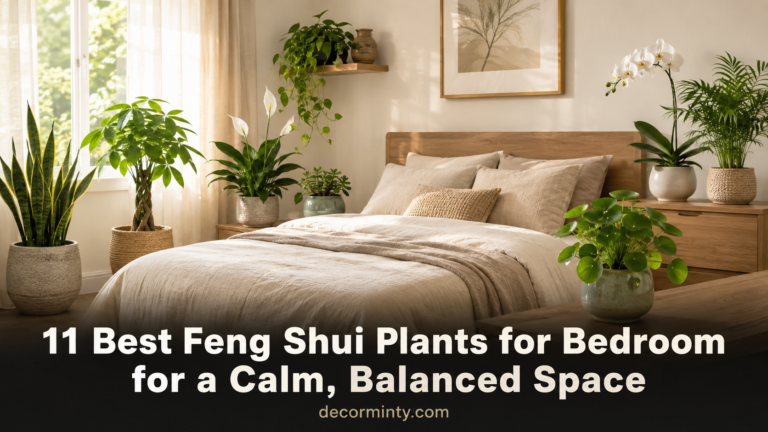
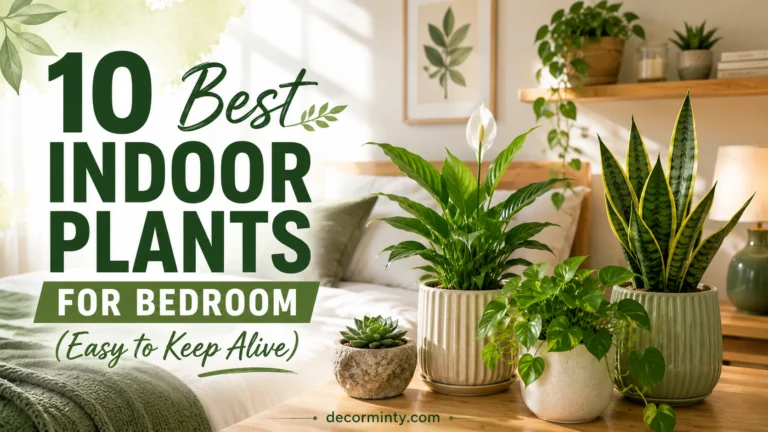
10 Best Air Purifying Plants for Your Bedroom (Low Light + Pet-Safe Picks)
Quick Answer
The best air purifying plants for a bedroom are the snake plant, golden pothos, peace lily, spider plant, ZZ plant, Boston fern, areca palm, Chinese evergreen, English ivy, and African violet, and they made this list because each one tolerates the low, uneven light most bedrooms actually get, forgives an inconsistent watering schedule, and was documented removing common household toxins in NASA’s original 1989 Clean Air Study or later peer-reviewed research.
Here’s the short version before you scroll further:
- Snake Plant — thrives in near-total neglect and dim corners
- Golden Pothos — trailing vine that forgives forgotten waterings
- Peace Lily — the only one that visibly droops when thirsty
- Spider Plant — completely pet-safe and nearly impossible to kill
- ZZ Plant — stores its own water reserve for weeks at a time
- Boston Fern — lush and pet-safe, but wants real humidity
- Areca Palm — the large, pet-safe statement plant
- Chinese Evergreen — patterned foliage built for dim bedrooms
- English Ivy — a top NASA performer, but toxic to pets
- African Violet — the only one that blooms nearly year-round
The deciding factor usually isn’t which plant filters the most air. It’s whether you have pets in the house, how dark your bedroom actually is, and whether you’ll remember to water on a schedule. Match the plant to those three things first, and the rest of the benefits come along for free.
Our Top Picks at a Glance
Easiest to Care For — ZZ Plant
Best for Low Light — Snake Plant
Most Beautiful Bloom — African Violet
Best for Beginners — Golden Pothos


10 Air Purifying Plants Worth Bringing Into Your Bedroom

#1. Snake Plant (Sansevieria trifasciata) — “The Nearly Indestructible One”
| Sunlight | Low to bright indirect light |
| Watering | Every 2-3 weeks, only once the soil is completely dry |
| Pot Size | 6-10 inch, and it’s happy being a little pot-bound |
| Care Level | Easy |
| Bloom Time | N/A — grown for foliage |
Also called mother-in-law’s tongue, the snake plant belongs to the Asparagaceae family and originates from the dry, rocky regions of West Africa. That tough origin story explains why it shrugs off the kind of neglect that kills other houseplants.
Unlike most plants, it uses a type of photosynthesis that releases oxygen at night instead of during the day, which is part of why it’s been a bedroom favorite for so long. Its stiff, upright leaves also make it one of the few plants that genuinely looks intentional in a minimalist room.
Wipe dust off the leaves every few weeks so they can keep doing their job, and repot only every couple of years since crowded roots don’t bother it. If you share your bedroom with a cat or dog, keep in mind it’s mildly toxic if chewed, according to the ASPCA’s toxic plant database. A simple live snake plant in a heavy ceramic pot is a good starting point if you don’t already own one.
Pros
- Survives weeks of forgotten watering
- One of the strongest performers in the original NASA study
- Structural, sculptural look fits almost any decor
Watch For
- Mildly toxic to cats and dogs if chewed
- Rots quickly if the soil stays wet
- Grows slowly, so don’t expect fast size changes
#2. Golden Pothos (Epipremnum aureum) — “The Effortless Trailer”
| Sunlight | Low to bright indirect light |
| Watering | When the top inch of soil feels dry to the touch |
| Pot Size | 6-8 inch, in a hanging pot or on a shelf |
| Care Level | Easy |
| Bloom Time | N/A — grown for foliage |
Golden pothos is native to the Society Islands of French Polynesia and belongs to the Araceae family, the same family that gives us peace lilies and philodendrons. It was one of the plants that stood out in NASA’s original clean air research, prized for how quickly it grows and how much leaf surface it puts out.
Its trailing vines can stretch several feet given time, which makes it a natural pick for a high shelf where the leaves can cascade down. It’s genuinely one of the easiest plants to propagate, too.
Snip a stem below a node, drop it in a glass of water, and you’ll usually see roots within a couple of weeks. Trim back leggy vines to encourage fuller growth, and keep it away from pets since it’s toxic if chewed, per the ASPCA database referenced above.
Pros
- Grows fast, so mistakes are easy to trim away
- Propagates easily in a jar of water
- Available in gold, jade, and marbled varieties
Watch For
- Toxic to cats and dogs if ingested
- Vines can get leggy without occasional trimming
- Variegated leaves fade to solid green in very low light
#3. Peace Lily (Spathiphyllum) — “The Flowering Overachiever”
| Sunlight | Low to medium indirect light |
| Watering | Weekly, keeping soil lightly moist — the leaves droop visibly when it’s thirsty |
| Pot Size | 8-10 inch |
| Care Level | Moderate |
| Bloom Time | Spring through fall, with white flowers |
The peace lily is native to the tropical rainforests of Central and South America and belongs to the Araceae family. It’s one of the few plants on this list grown as much for its flowers as its foliage, with elegant white spathes that can appear on and off for months.
Here’s what makes it genuinely useful for beginners: it tells you exactly when it needs water. The leaves droop dramatically when the soil dries out, then perk back up within hours of a good drink, which takes the guesswork out of watering.
Wipe the leaves occasionally to keep them glossy, and deadhead spent blooms at the base to encourage new ones. This is one to skip if you have pets or small children in the house, since it’s toxic if ingested.
Pros
- Visibly signals when it needs water
- Produces real flowers, not just foliage
- Tolerates dimmer bedrooms better than most flowering plants
Watch For
- Toxic to pets and humans if chewed or eaten
- Brown leaf tips if watered with hard tap water over time
- Won’t bloom well in a truly dark room
#4. Spider Plant (Chlorophytum comosum) — “The Pet-Safe Classic”
| Sunlight | Bright indirect light, tolerates medium light |
| Watering | Weekly, once the top inch of soil dries out |
| Pot Size | 6-8 inch, works well in a hanging basket |
| Care Level | Easy |
| Bloom Time | N/A — grown for foliage and trailing “spiderettes” |
Spider plants belong to the Asparagaceae family and have been a bedroom staple for decades, thanks to their arching, striped leaves. A 2014 study in Air Quality, Atmosphere and Health found that spider plants can help take up and break down particulate matter in the air, not just gaseous VOCs like most plants on this list.
As it matures, it sends out long stems tipped with baby plantlets, sometimes called spiderettes, which is a fun quirk to watch unfold and gives you free new plants to propagate. It genuinely doesn’t ask for much beyond a regular watering rhythm.
Snip off the plantlets once they’ve grown a few inches and root them in water or soil to multiply your collection. This is one of the few plants here that’s non-toxic to cats and dogs, according to the ASPCA, though a curious cat may still chew on the leaves out of interest.
Pros
- Completely non-toxic to cats and dogs
- Produces free baby plants on its own
- Handles inconsistent watering without much drama
Watch For
- Brown leaf tips from fluoridated tap water
- Needs occasional trimming once plantlets pile up
- Fades in very low light over time

#5. ZZ Plant (Zamioculcas zamiifolia) — “The Drought-Proof Minimalist”
| Sunlight | Low to bright indirect light |
| Watering | Every 2-3 weeks, letting the soil dry out fully |
| Pot Size | 6-8 inch |
| Care Level | Easy |
| Bloom Time | N/A — grown for foliage |
The ZZ plant is native to eastern Africa and belongs to the Araceae family. Its thick, potato-like rhizomes sit just under the soil and store water, which is exactly why it can go weeks without a drink and still look glossy and healthy.
Its waxy, dark green leaflets reflect what little light reaches them, which is part of why it photographs so well in low-light bedroom corners. New growth emerges as pale, almost yellow-green shoots before darkening, so don’t mistake that for a problem.
Dust the leaves occasionally and resist the urge to water it more than it needs, since overwatering is the one thing that reliably harms this plant. Keep it out of reach of pets, since the leaves and rhizomes are toxic if chewed.
Pros
- Stores its own water reserve in its rhizomes
- Naturally glossy leaves without any leaf-shine products
- Tolerates the darkest bedroom corners
Watch For
- Toxic to cats and dogs if chewed
- Very slow grower, so patience is required
- Rhizomes rot fast in soggy, poorly-draining soil
#6. Boston Fern (Nephrolepis exaltata) — “The Humidity Lover”
| Sunlight | Medium, indirect light — avoid direct sun |
| Watering | Keep soil consistently moist, and mist between waterings |
| Pot Size | 8-10 inch hanging basket |
| Care Level | Moderate |
| Bloom Time | N/A — grown for foliage |
The Boston fern is native to tropical regions around the world and is one of the plants that showed up repeatedly in early air-quality research, credited with removing formaldehyde, xylene, and toluene from sealed test air. It’s also one of the few ferns that adapts reasonably well to indoor life.
Its arching, feathery fronds give a bedroom instant texture that flat-leafed plants can’t match. That lushness comes with a real requirement, though: this plant wants humidity, and dry heating-season air will turn its fronds crispy and brown fast.
A pebble tray under the pot or a nearby humidifier makes a real difference here. The genuinely good news for pet owners is that Boston ferns are non-toxic to both cats and dogs, making this one of the safer choices on the list.
Pros
- Non-toxic to cats and dogs
- Adds lush texture unlike anything else on this list
- Well documented for removing multiple VOCs
Watch For
- Fronds crisp up fast in dry indoor air
- Needs more frequent watering than most on this list
- Sheds small leaflets, so it’s a bit messier
#7. Areca Palm (Dypsis lutescens) — “The Statement Piece”
| Sunlight | Bright, indirect light |
| Watering | Weekly, keeping soil evenly moist but never soggy |
| Pot Size | 10-14 inch floor planter |
| Care Level | Moderate |
| Bloom Time | N/A — rarely flowers indoors, grown for its fronds |
The areca palm is native to Madagascar and is often sold as a cluster of several stems planted together, which is what gives it that full, tropical look right out of the pot. It was one of the species included in NASA’s original testing and is regularly cited for its ability to add humidity to a room through its large leaf surface.
Because it grows several feet tall, it works best as a floor plant that fills an awkward empty corner rather than a tabletop accent. It’s genuinely one of the better choices if you want size and presence without the toxicity concerns of a plant like the peace lily.
Feed it with a diluted liquid fertilizer during spring and summer, and watch for brown leaf tips, which usually mean the air is too dry or the water has too many minerals. It’s non-toxic to cats and dogs, so it’s a solid pick if you share the bedroom with pets.
Pros
- Non-toxic to cats and dogs
- Fills large empty corners with real presence
- Adds noticeable humidity to a dry bedroom
Watch For
- Needs more consistent light than most on this list
- Prone to brown tips from tap water minerals
- Takes up real floor space as it matures
#8. Chinese Evergreen (Aglaonema) — “The Low-Light Specialist”
| Sunlight | Low to medium light |
| Watering | Let the top 1-2 inches of soil dry between waterings |
| Pot Size | 6-8 inch |
| Care Level | Easy to Moderate |
| Bloom Time | Occasional small greenish flowers, grown mainly for foliage |
Chinese evergreen is native to the tropical forests and understories of Southeast Asia, which explains why it’s so comfortable in the dim light of a windowless corner. It belongs to the Araceae family, and breeders have developed varieties with pink, silver, and red patterned leaves that add real color without needing a flower.
One quirk worth knowing: darker green varieties tolerate lower light than the pink or red ones, since the extra pigment in variegated leaves needs more light to photosynthesize efficiently. That’s a genuinely useful detail if your bedroom only gets filtered light through a curtain.
Rotate the pot occasionally so it grows evenly on all sides, and keep it away from cold drafts near a window in winter. It’s mildly toxic to pets if chewed, so keep that in mind if you have a curious cat.
Pros
- One of the best true low-light options here
- Patterned leaves add color without flowers
- Slow, manageable growth needs little pruning
Watch For
- Mildly toxic to cats and dogs if chewed
- Sensitive to cold drafts near windows
- Variegated types need more light than solid green ones
#9. English Ivy (Hedera helix) — “The Original Air-Scrubber”
| Sunlight | Bright to medium indirect light |
| Watering | Keep soil lightly moist, watering once the top inch dries out |
| Pot Size | 6-8 inch hanging basket |
| Care Level | Moderate |
| Bloom Time | N/A — grown for foliage |
English ivy is native to Europe and western Asia and belongs to the Araliaceae family. In NASA’s original testing, it stood out as one of the strongest performers, removing nearly every category of volatile organic compound the researchers tracked.
What most people don’t know is that it can be trained to climb a small trellis instead of just trailing, giving it a completely different look than the typical hanging pot. It’s also more sensitive to dry indoor air than people expect, and spider mites tend to move in when humidity drops too low.
A weekly misting or occasional shower under lukewarm water helps keep both the foliage and pests in check. This is a plant to keep well away from pets and small children, since all parts are toxic if ingested.
Pros
- One of NASA’s top-performing plants for VOC removal
- Can be trained to climb or trail
- Fast-growing, so it fills a shelf quickly
Watch For
- Toxic to pets and humans if ingested
- Attracts spider mites in dry indoor air
- Needs regular trimming to avoid a tangled look
#10. African Violet (Saintpaulia) — “The Colorful Bloomer”
| Sunlight | Bright, indirect light — no direct sun |
| Watering | Keep evenly moist, watering from the bottom to avoid wet leaves |
| Pot Size | 4-6 inch, often self-watering |
| Care Level | Moderate to Advanced |
| Bloom Time | Nearly year-round with enough bright, indirect light |
African violets are native to the humid forests of Tanzania and Kenya and belong to the Gesneriaceae family, distinct from most other plants on this list. They’re the only genuinely reliable bloomer here, capable of producing purple, pink, or white flowers on and off for most of the year.
Their fuzzy leaves are surprisingly particular about water contact. Cold water or drops left sitting on the foliage cause permanent brown spots, which is why most growers water from the bottom or use a self-watering pot instead.
Deadhead spent blooms to encourage new ones, and feed with a diluted African violet fertilizer every few waterings during active growth. The genuinely good news is that they’re non-toxic to cats and dogs, so color-loving pet owners don’t have to choose between blooms and safety.
Pros
- Blooms nearly year-round in the right light
- Non-toxic to cats and dogs
- Compact size fits a nightstand or windowsill
Watch For
- Water on the leaves causes permanent brown spots
- Needs consistently bright light to keep blooming
- Fussier than any other plant on this list
How to Choose the Right Plant for Your Space
The biggest mistake people make with this list is picking based on looks alone. Start with what your bedroom actually gives you, not what you wish it gave you.
- Measure your real light, not your assumed light — a bedroom with one small, curtained window is low light no matter how sunny it feels standing there in the afternoon. Snake plant, ZZ plant, and Chinese evergreen are built for that reality.
- Factor in pets before anything else — several plants on this list, including the peace lily, pothos, and English ivy, are toxic if chewed. Spider plant, Boston fern, areca palm, and African violet are the safer routes if pets sleep in the room.
- Match care level to your actual habits, not your intentions — if you’ve killed plants before, start with something that punishes neglect less severely, like a ZZ plant or snake plant, before working up to a fussier peace lily or African violet.
Common Mistakes to Avoid
These mistakes account for most of the dead plants beginners deal with.
Watering on a fixed schedule instead of checking the soil first — a snake plant watered every Sunday regardless of soil moisture will eventually rot from the roots up. Stick a finger two inches into the soil and only water when it’s genuinely dry, since watering needs shift with the seasons and the light in the room.
Letting the pot sit in its own drainage water — a peace lily left standing in a saucer of runoff will develop root rot within weeks, even though the top of the soil looks dry. Empty the saucer within thirty minutes of watering, every time.
Placing a light-hungry plant in the darkest available corner — an African violet or areca palm pushed into a dim bedroom nook will stretch, pale, and eventually stop growing. Match the plant to the actual light reading of the spot, not the spot you’d prefer to fill.
Skipping the pet toxicity check before buying — bringing home a golden pothos without checking that it’s toxic to cats is a common and preventable regret. Cross-reference any plant against the ASPCA’s toxic plant list before it enters a room your pet sleeps in.
Ignoring mineral buildup from tap water over time — a spider plant or areca palm watered exclusively with hard tap water for months will develop crusty white deposits and browning leaf tips. Flushing the soil with plain water every few months prevents this from building up.
What You’ll Need
None of these are strictly required, but each one solves a specific problem that comes up again and again with bedroom plants.
Takes the guesswork out of exactly when a snake plant or ZZ plant is actually dry
Prevents the standing water that causes most beginner root rot
Supports blooms on the peace lily and African violet through their growing season
Signs Your Plant Needs Attention
Most bedroom plants give you a warning before they’re in real trouble. Here’s what to watch for.
- Yellowing lower leaves — usually points to overwatering rather than underwatering, especially on a peace lily or areca palm. Let the soil dry out further than usual before the next watering.
- Brown, crispy leaf tips — a common sign of low humidity or mineral buildup from tap water, particularly on spider plants and Boston ferns. Try filtered water and a humidity tray before assuming the worst.
- Drooping that doesn’t bounce back after watering — on a peace lily, this is normal and self-correcting. On most other plants on this list, persistent droop after watering points to root rot rather than thirst.
Make Overwatering Nearly Impossible
A self-watering planter takes the guesswork out of the number one mistake on this list. It draws water up from a reservoir as the soil dries, which is especially useful for a peace lily or African violet that punishes both too much and too little water.
Frequently Asked Questions
Q: Do air purifying plants actually clean the air in a real bedroom?
A: They genuinely absorbed measurable amounts of VOCs in NASA’s sealed test chambers, but real bedrooms have far more airflow than a sealed lab. A couple of plants will help a little and look great, but they’re not a substitute for ventilation or an air purifier if air quality is a serious concern.
Q: Is it safe to keep plants in the bedroom overnight?
A: Yes, for the vast majority of people. Most plants release small amounts of carbon dioxide at night, but the amount is negligible in a normal-sized room. Snake plants are even a popular pick specifically because they release oxygen overnight instead of during the day.
Q: How many plants would I actually need for noticeably cleaner air?
A: NASA’s original researchers suggested roughly one plant per 100 square feet for measurable results, but later analysis found real homes would need far more than that to see a meaningful difference. Two or three plants are still worthwhile for humidity, mood, and decor, just don’t expect them to replace ventilation.
Q: Which of these plants are safe if I have cats or dogs?
A: Spider plant, Boston fern, areca palm, and African violet are all non-toxic to cats and dogs according to the ASPCA. Snake plant, pothos, peace lily, ZZ plant, Chinese evergreen, and English ivy are toxic in some degree and are better suited to pet-free bedrooms.
Q: What’s the single easiest plant on this list for someone who’s killed every plant they’ve owned?
A: The ZZ plant or snake plant. Both store water internally, tolerate low light, and are far more likely to suffer from overwatering than neglect, which flips the usual failure mode for beginners.
Q: Can any of these plants really thrive in a bedroom with almost no natural light?
A: Snake plant, ZZ plant, and Chinese evergreen are the most tolerant of dim conditions, though “low light” still means some ambient daylight, not total darkness. A room with zero windows will eventually cause even these to decline without a grow light.
Final Thoughts
There’s no single “best” plant on this list, only the one that fits your light, your pets, and how honest you are about your own watering habits. Start with one or two, see how they settle in, and build from there.
Which plant are you adding to your space first? Save this post to Pinterest so you can come back whenever you need fresh plant inspo!

I’m a home decor enthusiast who loves discovering beautiful room ideas, creative DIY projects, and Pinterest-worthy decorating inspiration. At DecorMinty, I share simple tips, fresh trends, and practical ideas to help you create a home you’ll truly love—one room at a time.