11 Best Feng Shui Plants for Bedroom for a Calm, Balanced Space
Quick Answer
The best feng shui plants for bedroom spaces include snake plant, golden pothos, moth orchid, money tree, lucky bamboo, peace lily, jade plant, rubber plant, parlor palm, spider plant, and Chinese money plant because they combine attractive living greenery with practical indoor-growing habits and traditional associations with growth, balance, abundance, or peaceful energy.
Here’s the short version before you scroll further:
- Snake Plant — toughest choice for dimmer, low-maintenance bedrooms.
- Golden Pothos — cascading growth softens shelves and empty corners.
- Moth Orchid — elegant flowers bring a softer visual mood.
- Money Tree — a classic symbol of prosperity and growth.
- Lucky Bamboo — compact traditional choice for small surfaces.
- Peace Lily — glossy leaves and white blooms suit calm rooms.
- Jade Plant — rounded succulent leaves echo abundance symbolism.
- Rubber Plant — bold rounded foliage creates a grounded focal point.
- Parlor Palm — soft fronds work especially well around pets.
- Spider Plant — forgiving, pet-friendly greenery for hanging displays.
- Chinese Money Plant — coin-shaped leaves fit compact bedroom styling.
Your best choice depends more on bedroom light, available space, pets, and your watering habits than on symbolism alone. In feng shui terms, a healthy, thoughtfully placed plant is generally more desirable than choosing a symbolic plant that struggles in the room.
Our Top Picks at a Glance
Easiest to Care For — Snake Plant
Best for Low Light — Golden Pothos
Most Beautiful Bloom — Moth Orchid
Best for Beginners — Money Tree


11 Feng Shui Plants That Work Beautifully in a Bedroom
 Save
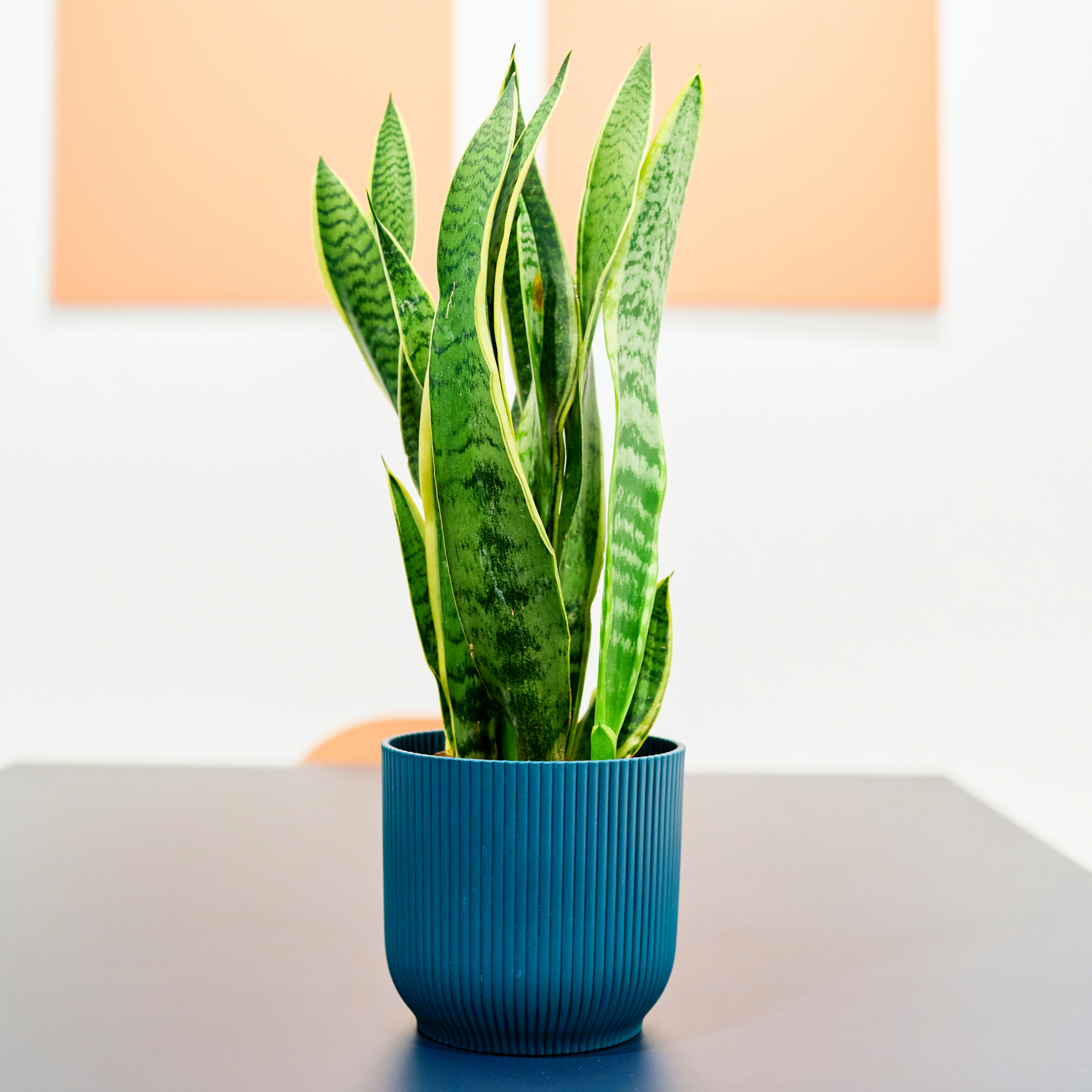
Save#1. Snake Plant (Dracaena trifasciata) — “The Quiet Survivor”
| Sunlight | Bright indirect light is ideal, but it tolerates shade |
| Watering | Let the potting mix dry well before watering again |
| Care Level | Easy |
| Bloom Time | Rarely flowers indoors |
Dracaena trifasciata comes from tropical Africa and grows from underground rhizomes. Its strong vertical leaves make it a popular feng shui choice when you want visual structure and an upward-growth theme.
Its biggest advantage is tolerance. A bedroom that isn’t flooded with window light can still suit it, although growth will usually be stronger in brighter indirect light.
Overwatering is the real danger, so use a free-draining mix and never leave the roots sitting in water. A stable ceramic pot with drainage is useful because taller specimens can become top-heavy.
Pros
- Handles irregular watering well
- Fits narrow bedroom corners
- Long-lived with simple care
Watch For
- Root rot from frequent watering
- Harsh afternoon sun can scorch leaves
- Toxic if chewed by cats or dogs
#2. Golden Pothos (Epipremnum aureum) — “The Graceful Trailer”
| Sunlight | Bright indirect light preferred, tolerates low light |
| Watering | Water after the potting mix has partly dried |
| Care Level | Easy |
| Bloom Time | Rarely flowers indoors |
Epipremnum aureum is a tropical vine from the Society Islands. Its heart-shaped leaves and trailing habit create a softer silhouette than stiff upright plants, making it easy to work into a restful bedroom.
Pothos survives for long periods in low light, though stronger indirect light helps maintain attractive variegation. Letting its vines trail from a dresser or high shelf also keeps the floor uncluttered.
Trim long bare stems to encourage a fuller plant, and root healthy cuttings in water if you want more plants. Keep pothos away from pets because its calcium oxalate crystals can irritate the mouth if chewed.
Pros
- Excellent trailing form
- Tolerates lower indoor light
- Easy to propagate from cuttings
Watch For
- Overwatering can cause root rot
- Variegation fades in very low light
- Toxic to cats and dogs if eaten
#3. Moth Orchid (Phalaenopsis) — “The Soft Statement”
| Sunlight | Low to bright filtered light, avoid strong direct sun |
| Watering | Usually around weekly, allowing the medium to dry somewhat |
| Care Level | Moderate |
| Bloom Time | Varies, with individual flower displays lasting for weeks |
Phalaenopsis orchids originate across tropical and subtropical Asia and northeastern Australia. Their arching stems and rounded flowers provide the softer shapes often favored when creating a gentle, romantic bedroom atmosphere.
The roots need both moisture and air. A bark-based medium is much safer than dense ordinary potting soil because water can drain freely around the roots.
Repot after flowering when the growing medium begins breaking down. A bark-based orchid potting mix helps maintain the drainage these plants need, and Phalaenopsis orchids are considered non-toxic to cats and dogs.
Pros
- Long-lasting flower display
- Compact footprint
- Pet-friendly plant choice
Watch For
- Roots sitting in water
- Dense, poorly aerated potting mixes
- Strong direct afternoon sunlight
#4. Money Tree (Pachira aquatica) — “The Prosperity Classic”
| Sunlight | Bright indirect light |
| Watering | Keep moderately and evenly moist without waterlogging |
| Care Level | Easy to Moderate |
| Bloom Time | Indoor plants rarely flower |
Pachira aquatica is native from Mexico into northern South America, where wild plants grow much larger than the braided specimens sold for homes. The commercial name “money tree” is closely tied to its long-standing good-luck and prosperity symbolism.
A bedroom specimen prefers steady conditions. Leaf drop can occur when the root zone becomes too dry, so this isn’t quite as drought-tolerant as snake plant or jade.
Give it bright light and enough room for its canopy without crowding the bed. It is listed as non-toxic to cats and dogs, although pets still shouldn’t be encouraged to chew houseplants.
Pros
- Strong prosperity association
- Attractive palm-like foliage
- Generally pet-friendly
Watch For
- Leaf drop when kept too dry
- Overly dark bedroom corners
- Braids can hide stem problems

#5. Lucky Bamboo (Dracaena sanderiana) — “The Compact Symbol”
| Sunlight | Bright indirect light or partial shade |
| Watering | Keep soil moist, or change chlorine-free water regularly |
| Care Level | Easy |
| Bloom Time | Rarely blooms indoors |
Despite the name, lucky bamboo isn’t true bamboo. Dracaena sanderiana comes from tropical Africa and became popular as a decorative plant because its canes can be arranged in compact upright forms.
You can grow it in soil or clean water. If you choose water culture, chlorine-free water and regular changes help prevent poor water quality from becoming a problem.
Remove yellowing foliage and keep the container clean. Place lucky bamboo beyond the reach of pets because Dracaena sanderiana can cause problems when cats or dogs ingest it.
Pros
- Uses very little surface space
- Strong good-fortune association
- Can grow without conventional soil
Watch For
- Poor-quality standing water
- Direct sun scorching foliage
- Toxicity to cats and dogs
#6. Peace Lily (Spathiphyllum) — “The Calm Bloomer”
| Sunlight | Lower light tolerated, bright filtered light preferred |
| Watering | Let the soil dry slightly, but don’t leave it wilted |
| Care Level | Easy to Moderate |
| Bloom Time | Can flower repeatedly in suitable indoor conditions |
Spathiphyllum species come from tropical forest environments in the Americas and Southeast Asia. Their glossy leaves and white spathes create a restrained look that fits bedrooms designed around quiet, natural colors.
Peace lilies like more consistent moisture than succulents. Bright filtered light can encourage better growth and flowering, while strong direct sun should be avoided.
Trim faded flower stalks near the base and remove damaged foliage. The plant contains insoluble calcium oxalates, so keep it away from cats and dogs that chew leaves.
Pros
- Elegant white flower display
- Tolerates filtered indoor light
- Glossy foliage suits calm decor
Watch For
- Dry soil for extended periods
- Strong direct sunlight
- Toxicity if pets chew it
#7. Jade Plant (Crassula ovata) — “The Slow Builder”
| Sunlight | Bright light, including some gentle direct sun |
| Watering | Let soil become nearly dry between thorough waterings |
| Care Level | Easy |
| Bloom Time | Mature plants may flower, but indoor blooming is uncommon |
Crassula ovata is a South African succulent with thick, rounded leaves and woody stems as it matures. Those coin-like leaves are one reason jade has become closely linked with prosperity and steady accumulation symbolism.
This isn’t the best choice for a truly dark bedroom. Give it strong light and resist the urge to water merely because the surface looks dry.
Use a fast-draining succulent mix and reduce watering during slower winter growth. A well-draining succulent potting mix can help, and pet owners should know jade is considered toxic to cats and dogs.
Pros
- Needs infrequent watering
- Classic abundance symbolism
- Develops an attractive miniature-tree form
Watch For
- Root rot from wet soil
- Weak growth in dark rooms
- Toxicity to cats and dogs
#8. Rubber Plant (Ficus elastica) — “The Grounded Statement”
| Sunlight | Bright indirect light or partial shade |
| Watering | Water regularly, allowing some drying between waterings |
| Care Level | Easy to Moderate |
| Bloom Time | Rarely flowers indoors |
Ficus elastica is a tropical tree with oversized, glossy leaves and an upright growth habit. Indoors it remains far smaller than in nature, yet it can still become a substantial piece of living bedroom decor.
Choose it when you want one strong plant rather than several small pots. Stable light and temperature are helpful because ficus plants can react poorly to abrupt changes and cold drafts.
Wipe the broad leaves occasionally and prune the leading stem if you want bushier growth. Its milky sap can irritate skin, so wash your hands after pruning and keep the plant away from pets that chew foliage.
Pros
- Large rounded leaves
- Works as a single focal plant
- Can be pruned to control shape
Watch For
- Cold drafts and sudden changes
- Leaf loss from excess watering
- Irritating milky sap
#9. Parlor Palm (Chamaedorea elegans) — “The Gentle Canopy”
| Sunlight | Bright indirect light, with good tolerance of low light |
| Watering | Let the soil dry slightly between waterings |
| Care Level | Easy |
| Bloom Time | Small flowers can appear on mature plants |
Chamaedorea elegans is an understory palm native to Mexico and Central America. Its narrow arching leaflets give it a softer visual presence than large, stiff-leaved tropical plants.
It handles indoor light remarkably well and grows slowly, which is helpful when you don’t want a bedroom plant quickly taking over its corner. Avoid keeping the root zone constantly wet.
Repot only when needed rather than automatically moving it into larger containers. Parlor palm is considered non-toxic to cats and dogs, making it one of the stronger options for pet-owning bedrooms.
Pros
- Soft, graceful foliage
- Tolerates dimmer interiors
- Pet-friendly choice
Watch For
- Persistently soggy soil
- Cold air from vents or windows
- Spider mites in dry conditions
#10. Spider Plant (Chlorophytum comosum) — “The Easy Multiplier”
| Sunlight | Medium to bright indirect light, tolerates shade |
| Watering | Keep moderately moist, reducing water during winter |
| Care Level | Easy |
| Bloom Time | Small white flowers appear on long stems |
Chlorophytum comosum comes from regions of Africa and is famous for producing plantlets on long arching stems. That cascading growth can bring movement to an otherwise bare bedroom shelf or hanging planter.
Spider plants are adaptable, although direct intense sun can scorch the leaves. Brown tips may also appear when the plant is stressed by dry conditions or mineral-heavy water.
Once the hanging plantlets develop roots, they can be separated and potted. The species is considered non-toxic to cats and dogs, although hanging it high also protects the decorative plantlets from curious paws.
Pros
- Very easy to propagate
- Great for hanging containers
- Non-toxic to cats and dogs
Watch For
- Leaf-tip browning
- Direct sun scorch
- Waterlogged roots
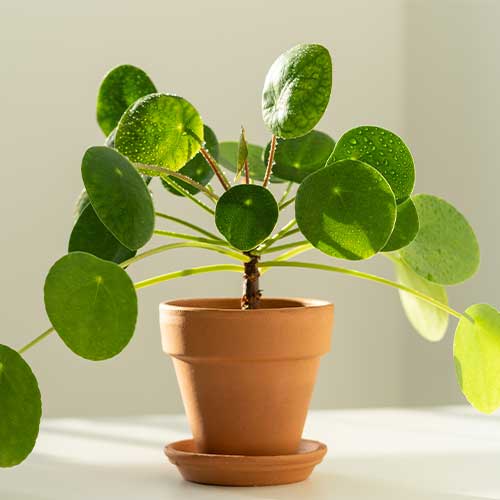
#11. Chinese Money Plant (Pilea peperomioides) — “The Coin Collector”
| Sunlight | Bright indirect light |
| Watering | Keep moderately moist in well-drained potting mix |
| Care Level | Easy |
| Bloom Time | May produce small spring flowers, but indoor flowering is uncommon |
Pilea peperomioides originates from southwestern China and stays comparatively compact, usually around a foot tall. Its round, peltate leaves resemble coins, making it an obvious fit for abundance-focused decorating.
Give the pot bright indirect light and rotate it periodically if growth starts leaning toward the window. Leggy stems are often a sign that the plant wants stronger light.
Pilea produces offsets around the base that can be separated and replanted. It is considered safe for pets and children, giving it an advantage over jade, pothos, lucky bamboo, and peace lily.
Pros
- Compact bedroom size
- Distinctive coin-shaped leaves
- Pet-friendly and easy to propagate
Watch For
- Leggy growth in weak light
- Root rot from overwatering
- Cold drafts and heat vents
How to Choose the Right Feng Shui Plant for Your Bedroom
Start with the bedroom you actually have rather than choosing only by symbolic meaning. A healthy plant that suits your light and routine makes far more sense than forcing a traditional choice into poor conditions.
- Match the plant to your window light — Snake plant, pothos, parlor palm, and peace lily tolerate less light than jade. Jade and Chinese money plant will look stronger when they receive brighter conditions.
- Consider visual energy — Rounded leaves on jade, money tree, rubber plant, and Pilea can create a softer impression. Taller sword-shaped snake plant foliage gives stronger vertical structure.
- Think about pets first — Orchid, money tree, parlor palm, spider plant, and Chinese money plant are among the safer choices on this list. The ASPCA toxic and non-toxic plant database is useful when checking a plant’s scientific name before bringing it home.
- Leave breathing room — One attractive, healthy plant often feels calmer than packing every surface with pots. Keep walkways, nightstands, and the area around your bed visually uncluttered.
Basic Care Tips for Bedroom Plants
Bedrooms create a few special plant-care challenges because curtains, furniture, heating, and air-conditioning can all change the conditions around a plant.
- Check the soil before watering — Never assume every plant needs water on the same day. Succulents such as jade and snake plant should dry far more between waterings than peace lily.
- Use drainage — A decorative cachepot is fine, but don’t leave the inner nursery pot standing in collected water. Root problems are far easier to prevent than reverse.
- Keep leaves clean — Dust dulls broad leaves and makes the plant look neglected. Wipe rubber plant, pothos, peace lily, and snake plant foliage gently with a damp cloth.
- Respect each plant’s real light requirement — Bedroom-friendly does not mean no-light friendly. The NC State Extension plant guidance for spider plants is a good example of how reliable care resources describe light, watering, propagation, and common problems.
Common Mistakes to Avoid
Most bedroom plant problems come from mismatching the plant to the room or caring for every species the same way.
Watering on a fixed calendar — Bedroom temperature, season, pot size, and light all affect drying speed. Check the soil first, especially with snake plant and jade.
Putting a bright-light plant in a dark corner — Jade and Pilea may survive for a while but can stretch or weaken when light is consistently inadequate.
Choosing symbolism before pet safety — Lucky bamboo, jade, pothos, peace lily, and snake plant should not be placed where a curious cat or dog can chew them.
Leaving water trapped inside decorative pots — Roots deprived of air can rot even when the plant’s foliage initially looks healthy. Always empty excess drainage water.
Keeping stressed plants for feng shui symbolism — Traditional feng shui places value on healthy living growth, so a declining plant works against the atmosphere you’re trying to create. Diagnose it, relocate it, or replace it.
For an example of verified species-specific guidance, the Missouri Botanical Garden’s snake plant profile covers its light tolerance, drainage needs, propagation, mature size, and overwatering risk.
What You’ll Need
You don’t need a shelf full of gadgets. A few practical basics make bedroom plant care much easier.
Useful as a second check when you’re unsure whether deeper soil is still moist.
Drainage holes reduce the chance of water collecting around sensitive roots.
Useful during active growth when your individual plant’s care instructions call for feeding.
Take the Guesswork Out of Overwatering
Checking moisture instead of watering by habit addresses one of the biggest mistakes in this roundup. A simple soil moisture meter can help you investigate deeper soil before reaching for the watering can, although your finger and the plant’s normal care requirements should still guide the final decision.
Frequently Asked Questions
Q: Are plants good feng shui in a bedroom?
A: Feng shui traditions differ on bedroom plants because plants represent living, active Wood energy while bedrooms emphasize rest. If you use them, moderation, healthy growth, uncluttered placement, and suitability to the room are sensible priorities.
Q: What is the best feng shui plant for positive energy in a bedroom?
A: Money tree is a strong choice when prosperity symbolism matters, while orchid offers a softer romantic look. Snake plant works better when easy care and a narrow footprint are your priorities.
Q: Where should I place a feng shui plant in my bedroom?
A: Choose a location where the plant receives the light it actually needs without obstructing your path or crowding the bed. A window-side dresser, distant corner, shelf, or floor position often works better than a busy nightstand.
Q: Is snake plant good for bedroom feng shui?
A: Snake plant is commonly used for its strong upright growth and low-maintenance character. Some feng shui interpretations prefer softer rounded foliage in sleeping spaces, so choose the shape that feels calm rather than visually aggressive to you.
Q: How many plants should I keep in my bedroom?
A: There is no scientific ideal number. From a practical and feng shui-inspired design perspective, one or two healthy plants often create greenery without making a bedroom feel crowded or overly active.
Q: Which bedroom feng shui plants are better for homes with pets?
A: Money tree, Phalaenopsis orchid, parlor palm, spider plant, and Chinese money plant are among the pet-friendlier choices here. Always verify the exact botanical name because common plant names can refer to different species.
Final Thoughts
The best feng shui plant is one that fits both your intentions and the real conditions in your bedroom. Match light and watering needs first, then use shape, symbolism, size, and placement to create the mood you want.
A thriving money tree, orchid, palm, pothos, or Pilea will usually feel far more uplifting than a struggling plant chosen only because a feng shui list told you to buy it.
Which plant are you adding to your space first? Save this post to Pinterest so you can come back whenever you need fresh plant inspo!

I’m a home decor enthusiast who loves discovering beautiful room ideas, creative DIY projects, and Pinterest-worthy decorating inspiration. At DecorMinty, I share simple tips, fresh trends, and practical ideas to help you create a home you’ll truly love—one room at a time.