Best Indoor Plants for Bedroom and Living Room: 12 Picks
Quick Answer
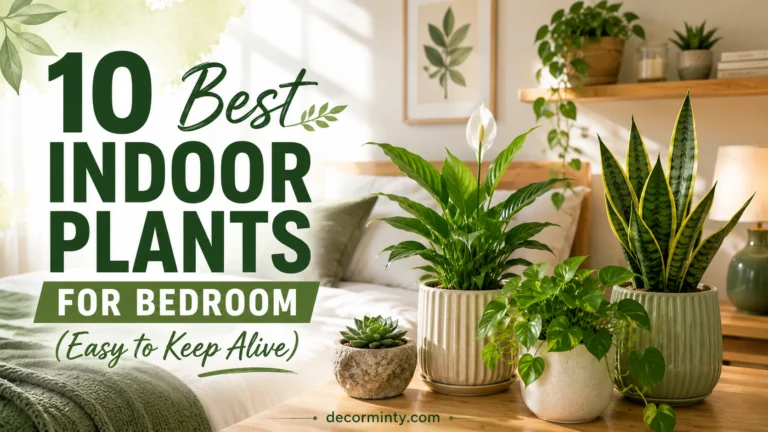
The best indoor plants for bedroom and living room spaces include snake plant, ZZ plant, peace lily, golden pothos, heartleaf philodendron, spider plant, cast iron plant, parlor palm, Chinese evergreen, rubber plant, Monstera deliciosa, and Boston fern because together they cover realistic indoor light levels, different watering habits, compact corners, shelves, and larger statement spaces.
Here’s the short version before you scroll further:
- Snake Plant — Upright and forgiving when watering gets forgotten.
- ZZ Plant — Glossy foliage for unusually dim indoor spots.
- Peace Lily — Elegant white blooms with clear thirst signals.
- Golden Pothos — Fast trailing growth that’s easy to trim.
- Heartleaf Philodendron — Soft heart-shaped vines for shelves.
- Spider Plant — Cascading plantlets and flexible placement.
- Cast Iron Plant — Slow-growing survivor for shady corners.
- Parlor Palm — Soft palm texture without direct sun.
- Chinese Evergreen — Patterned foliage in a compact shape.
- Rubber Plant — Bold glossy leaves for brighter corners.
- Monstera Deliciosa — Dramatic split leaves that command space.
- Boston Fern — Lush fronds that reward higher humidity.
Your best choice depends less on which plant looks prettiest online and more on your actual window light, watering habits, available floor space, and whether curious pets can reach the leaves.
Our Top Picks at a Glance
Easiest to Care For — Snake Plant
Best for Low Light — ZZ Plant
Most Beautiful Bloom — Peace Lily
Best for Beginners — Golden Pothos


12 Best Indoor Plants for Bedrooms and Living Rooms
 Save
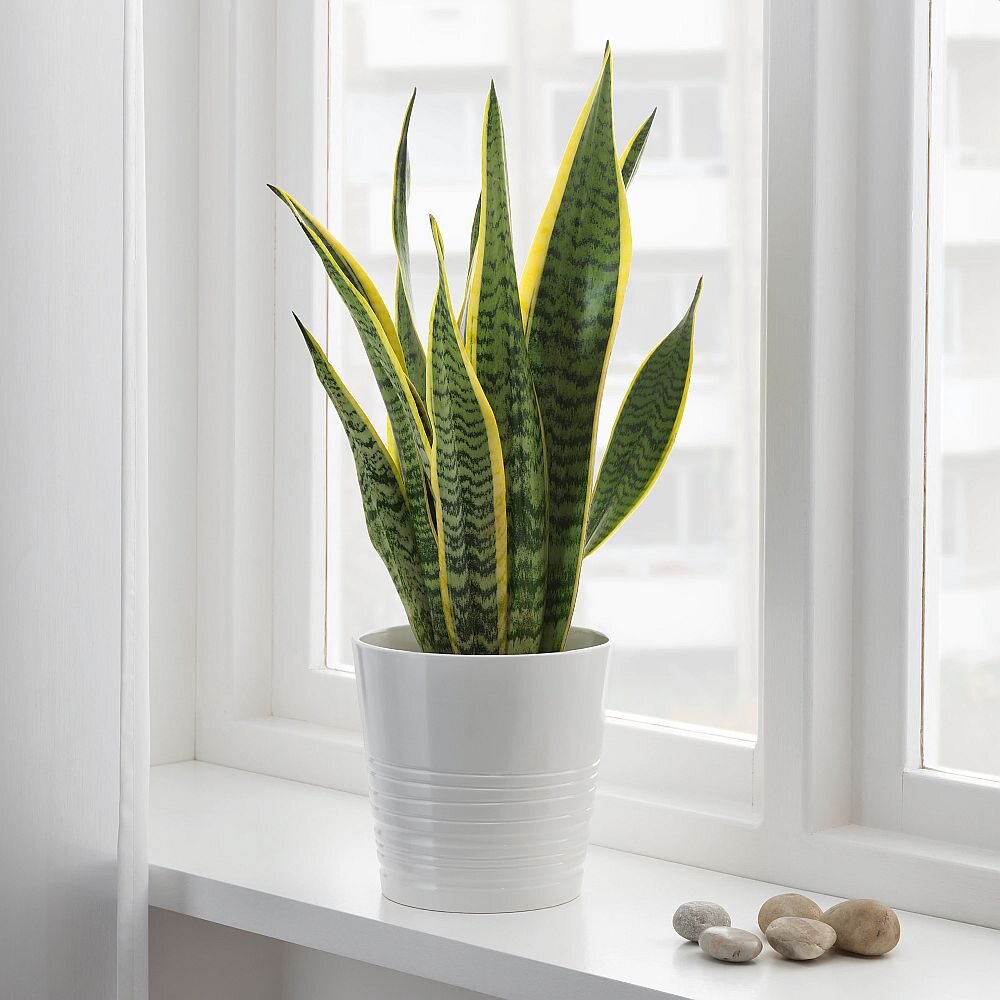
Save#1. Snake Plant — “The Forgetful Waterer’s Favorite”
| Sunlight | Low to bright indirect light |
| Watering | Let the potting mix dry well before watering again |
| Pot Size | Snug pot, move up about 1–2 inches when root-bound |
| Care Level | Easy |
| Bloom Time | Rare indoors, grown mainly for foliage |
Dracaena trifasciata, formerly widely sold as Sansevieria trifasciata, is an African member of the asparagus family. Its thick, upright leaves store moisture and give it a remarkably small footprint for its visual height.
The easiest watering cue is dry soil rather than a calendar. Its fleshy roots and leaves are far more forgiving of a missed watering than constantly damp potting mix.
Remove damaged leaves at soil level and divide crowded clumps when repotting. Keep it away from pets that chew foliage because ingestion can cause problems.
Pros
- Handles lower indoor light
- Tolerates missed watering
- Vertical growth saves floor space
Watch For
- Root rot in constantly wet soil
- Cold, damp winter conditions
- Pet access to chewable leaves
#2. ZZ Plant — “The Dim-Corner Specialist”
| Sunlight | Low to bright indirect light, avoid harsh direct sun |
| Watering | Water after the potting mix has dried thoroughly |
| Pot Size | Snug container, about 1–2 inches wider when repotting |
| Care Level | Easy |
| Bloom Time | Rare indoors, grown for foliage |
Zamioculcas zamiifolia is a tropical African aroid with thick underground rhizomes that store water. Those reserves help explain why a healthy ZZ plant can handle dry spells better than many leafy houseplants.
Its glossy shoots tolerate surprisingly low light, although growth becomes faster and fuller in brighter indirect light.
Divide mature rhizomes during repotting rather than continually moving the plant into oversized containers. Its tissues contain irritating compounds, so keep it out of reach of pets and young children who chew plants.
Pros
- Excellent tolerance of dim rooms
- Rhizomes store water
- Naturally glossy architectural foliage
Watch For
- Wet soil around the rhizomes
- Scorch from strong direct sun
- Chewing by pets or children
#3. Peace Lily — “The Blooming Signal Plant”
| Sunlight | Medium to bright indirect light for best flowering |
| Watering | Water when the upper soil begins to dry, never keep soggy |
| Pot Size | Slightly snug, move up about 1–2 inches when needed |
| Care Level | Moderate |
| Bloom Time | Most readily in brighter indirect light, with possible repeat blooms indoors |
Peace lilies belong to the tropical aroid genus Spathiphyllum. Their familiar white “flowers” are showy spathes surrounding the smaller true flowers.
The foliage often droops noticeably when the plant gets too dry, giving you a useful visual cue, but repeated severe wilting still stresses the plant.
Remove spent flower stems near the base and wipe broad leaves when dust builds up. Keep this calcium-oxalate-containing plant away from pets that like to nibble foliage.
Pros
- Produces elegant white spathes
- Shows visible thirst cues
- Fits medium-light indoor spaces
Watch For
- Fewer flowers in deep shade
- Root problems in soggy soil
- Toxicity if foliage is chewed
#4. Golden Pothos — “The Easy Trailing Classic”
| Sunlight | Bright indirect light best, some shade tolerated |
| Watering | Water when roughly the top inch feels dry |
| Pot Size | About 1–2 inches wider than the root mass when repotting |
| Care Level | Easy |
| Bloom Time | N/A — grown for foliage indoors |
Epipremnum aureum is an aroid vine originating from the Society Islands. Indoors, its heart-shaped leaves and trailing stems make it especially useful where you want greenery above furniture.
Low light can keep the plant alive, but brighter indirect light generally supports denser growth and stronger golden variegation.
Trim long bare sections just above a node and root healthy stem cuttings to make new plants. Pothos contains calcium oxalates, so place trailing vines beyond the reach of pets that chew leaves.
Pros
- Easy stem propagation
- Works beautifully on shelves
- Tolerates some lower light
Watch For
- Reduced variegation in dim rooms
- Root rot from constant moisture
- Pet access to trailing foliage
#5. Heartleaf Philodendron — “The Soft-Leaf Climber”
| Sunlight | Medium indirect light best, lower light tolerated |
| Watering | Water after the upper layer begins to dry |
| Pot Size | Move up about 1–2 inches when roots crowd the pot |
| Care Level | Easy |
| Bloom Time | N/A — grown primarily for foliage indoors |
Philodendron hederaceum is a tropical evergreen aroid that naturally wants to climb or trail. Indoors, its flexible stems can spill from a shelf or be trained upward for larger foliage.
It prefers lightly moist conditions without staying saturated, making the feel of the upper potting mix a better guide than watering on the same weekday.
Pinch long stems to encourage a fuller appearance and propagate healthy nodes in water or potting mix. Like other common philodendrons, it should be kept away from pets that chew plants.
Pros
- Can trail or climb
- Responds well to pruning
- Easy to propagate from nodes
Watch For
- Sparse growth in very dim spots
- Saturated soil around roots
- Chewing by curious pets
:max_bytes(150000):strip_icc()/GettyImages-823655632-85c0768e6cb74bfcad51021a7ed92d5b.jpg) Save
Save#6. Spider Plant — “The Baby-Maker”
| Sunlight | Medium to bright indirect light, some shade tolerated |
| Watering | Water as the upper soil starts to dry, not while soggy |
| Pot Size | Slightly snug pot, about 1–2 inches larger when repotting |
| Care Level | Easy |
| Bloom Time | Small white flowers may precede plantlets indoors |
Chlorophytum comosum comes from tropical and southern parts of Africa and belongs to the asparagus family. Its arching leaves eventually frame long stems bearing small flowers and baby plantlets.
Brown tips don’t automatically mean the whole plant is failing because mineral salts, dry air, and inconsistent moisture can all contribute.
Once a plantlet develops roots, you can separate and pot it to make another plant. The ASPCA lists spider plants as non-toxic to cats and dogs, which makes them a useful option for many pet-conscious rooms.
Pros
- Produces easy-to-root plantlets
- Flexible about indoor light
- ASPCA-listed as non-toxic
Watch For
- Brown tips from salts or stress
- Leaf scorch in harsh sun
- Root problems in waterlogged mix
#7. Cast Iron Plant — “The Shade Survivor”
| Sunlight | Low or filtered indirect light, avoid direct sun |
| Watering | Water after the upper soil dries, less often in winter |
| Pot Size | Keep fairly snug, moving up one pot size when crowded |
| Care Level | Easy |
| Bloom Time | N/A — grown for foliage indoors |
Aspidistra elatior is an East Asian rhizomatous perennial famous for enduring shade and neglect. Its long, dark-green leaves create a calm backdrop without the visual busyness of a trailing plant.
Growth is naturally slow, so don’t mistake a quiet month for failure or compensate with extra water and fertilizer.
Divide an established clump when the rhizomes become crowded and wipe dust from older leaves. The ASPCA lists cast iron plant as non-toxic to cats and dogs.
Pros
- Excellent shade tolerance
- Handles occasional neglect
- ASPCA-listed as non-toxic
Watch For
- Naturally slow growth
- Bleaching in direct sunlight
- Waterlogging around rhizomes
#8. Parlor Palm — “The Quiet Palm”
| Sunlight | Bright indirect light best, lower light tolerated |
| Watering | Water after the surface dries slightly |
| Pot Size | Repot sparingly, usually one size larger |
| Care Level | Easy |
| Bloom Time | Rarely significant indoors, grown for foliage |
Chamaedorea elegans is a Central American palm that stays manageable indoors compared with many larger palm species. Mature indoor specimens can form a soft, feathery screen without needing direct sunlight.
It prefers its root zone to dry slightly between waterings, and a slightly snug container is better than frequent repotting.
Trim fully brown fronds at their base instead of cutting healthy green leaflets for shape. Parlor palm is listed by the ASPCA as non-toxic to cats and dogs.
Pros
- Classic palm look indoors
- Tolerates lower light
- ASPCA-listed as non-toxic
Watch For
- Spider mites in dry conditions
- Soggy soil around roots
- Cold indoor drafts
#9. Chinese Evergreen — “The Patterned Workhorse”
| Sunlight | Diffuse indirect light, greener forms tolerate lower light |
| Watering | Water when the top few centimeters begin to dry |
| Pot Size | About 1–2 inches wider when repotting |
| Care Level | Easy |
| Bloom Time | Occasional aroid flowers, mainly grown for foliage |
Aglaonema species are tropical Asian and New Guinean aroids prized for broad patterned leaves. Green cultivars are especially useful when your room doesn’t have enough light for more demanding variegated plants.
More colorful pink, red, or heavily variegated forms usually look their best with stronger filtered light than plain-green cultivars.
Remove yellowing lower leaves and reduce watering as growth slows in cooler months. Chinese evergreen contains irritating compounds and should stay out of reach of plant-chewing pets.
Pros
- Many decorative foliage patterns
- Green types tolerate lower light
- Compact enough for smaller rooms
Watch For
- Cold temperatures and drafts
- Waterlogged potting mix
- Pet access to foliage
#10. Rubber Plant — “The Glossy Statement Tree”
| Sunlight | Bright indirect light or partial shade |
| Watering | Water when the upper 1–2 inches have dried |
| Pot Size | Stable container about 1–2 inches wider when repotting |
| Care Level | Moderate |
| Bloom Time | Rare indoors, grown for foliage |
Ficus elastica is a member of the fig family, Moraceae, with thick, glossy leaves and milky latex sap. Indoors it can become a substantial upright specimen, yet pruning lets you control its height.
Rubber plants appreciate brighter rooms than snake plants or ZZ plants, so a living-room position near filtered window light is usually a better fit.
Prune above a node to encourage branching and wear gloves if you’re sensitive to the sticky latex sap. Avoid sudden cold drafts and repeated moves once you’ve found a position where it grows well.
Pros
- Large glossy leaves
- Pruning controls indoor size
- Strong floor-plant presence
Watch For
- Leaf drop after environmental stress
- Root trouble from overwatering
- Irritating sticky latex sap
#11. Monstera Deliciosa — “The Living-Room Showstopper”
| Sunlight | Medium to bright indirect light |
| Watering | Water after the upper quarter of the mix begins drying |
| Pot Size | Stable pot roughly 2 inches wider when repotting |
| Care Level | Moderate |
| Bloom Time | Rare indoors, primarily grown for foliage |
Monstera deliciosa is a climbing aroid native from Mexico into Central America. Mature leaves can develop the famous splits and holes called fenestrations when the plant receives suitable light and climbing support.
A Monstera can eventually become several feet wide indoors, so it’s better for an open living-room corner than a cramped bedside table.
Give climbing stems support with a moss pole for Monstera and propagate only from stem sections containing a node. Keep foliage away from pets because the plant contains irritating calcium oxalate crystals.
Pros
- Iconic mature leaf shape
- Can grow vertically on support
- Propagates from stem nodes
Watch For
- Large mature footprint
- Scorch in direct sunlight
- Toxicity if chewed
 Save
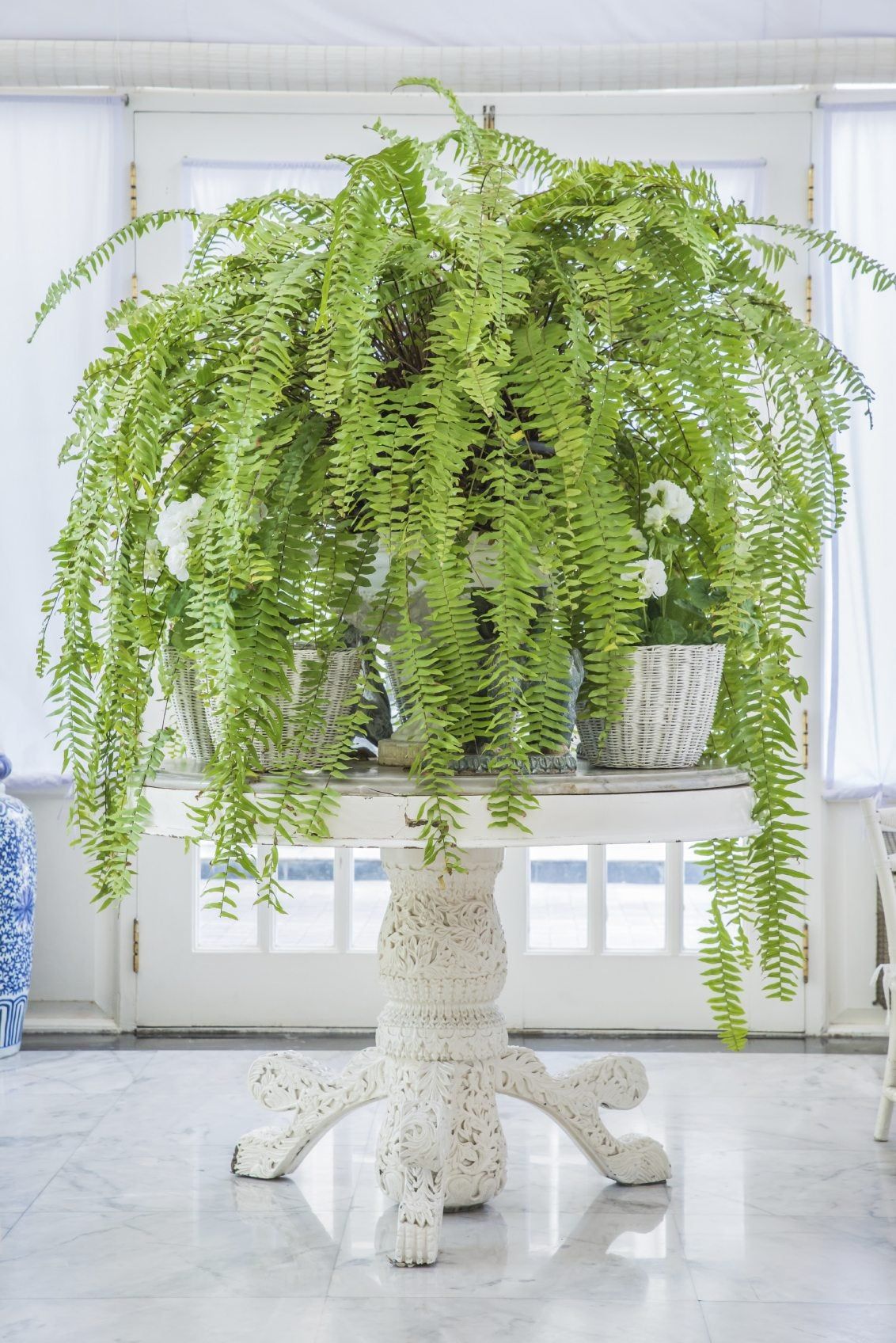
Save#12. Boston Fern — “The Humidity Lover”
| Sunlight | Bright filtered or indirect light |
| Watering | Keep evenly moist and water as the surface begins to dry |
| Pot Size | Hanging or standard pot about 1–2 inches wider when needed |
| Care Level | Moderate |
| Bloom Time | N/A — ferns reproduce by spores |
Nephrolepis exaltata is a fern native to tropical and subtropical parts of the Americas. Its arching fronds make a full hanging basket or soft pedestal plant without relying on flowers.
Unlike snake plants and ZZ plants, Boston ferns dislike drying out completely and appreciate consistently humid air around their fronds.
If indoor heating makes the air very dry, a small cool-mist humidifier for plants can help maintain a more suitable environment. The ASPCA lists Boston fern as non-toxic to cats and dogs.
Pros
- Dense cascading fronds
- Excellent hanging-basket form
- ASPCA-listed as non-toxic
Watch For
- Crisping in very dry air
- Stress if soil dries completely
- Pests favored by stressed plants
How to Choose the Right Plant for Your Space
Your room’s actual light should make the first cut. The Royal Horticultural Society’s houseplant selection guidance also emphasizes matching plants to the conditions you can realistically provide.
- For genuinely dim rooms — Start with ZZ plant, snake plant, cast iron plant, or a greener Chinese evergreen. If bedroom light is your biggest challenge, compare more plants for low-light bedrooms before buying.
- For bright indirect windows — Rubber plant, Monstera, pothos, spider plant, and peace lily have more room to show stronger growth.
- For small footprints — Snake plant grows vertically, while pothos and heartleaf philodendron let you move greenery onto shelves.
- For large empty corners — Monstera, rubber plant, and parlor palm add enough scale to balance sofas and larger furniture.
Where to Place Each Plant in Your Home
Think about both light and how you move through the room. A beautiful plant in the wrong location becomes harder to care for and easier to bump, overwater, or ignore.
- Near a bedroom window — Peace lily, spider plant, pothos, or heartleaf philodendron work well where the light is bright but filtered. For more bedroom-specific combinations, see these best plants for bedrooms.
- Farther from the window — ZZ plant, snake plant, cast iron plant, and green Chinese evergreen are stronger candidates, although no houseplant can live indefinitely without usable light.
- Beside a living-room sofa — Rubber plant, parlor palm, or Monstera gives the room enough height and visual weight to feel intentional.
- In homes with pets — Start by checking every plant individually against the ASPCA toxic and non-toxic plant database. Spider plant, cast iron plant, parlor palm, and Boston fern are among the more pet-conscious options in this roundup.
Common Mistakes to Avoid
Most indoor-plant trouble starts when care follows a fixed routine instead of what the plant and soil are actually showing you.
Watering every plant on the same weekly schedule — Snake and ZZ plants need their mix to dry far more than a Boston fern does. Check the soil first instead of assuming seven days means every pot is thirsty.
Treating low light as no light — A ZZ plant may tolerate a dim corner, but it still needs usable light for photosynthesis. Windowless rooms need supplemental grow lighting rather than a tougher plant.
Using decorative pots without drainage — Excess water trapped around roots reduces oxygen and encourages root problems. N.C. Cooperative Extension’s indoor plant care guidance identifies overwatering as one of the most common houseplant problems.
Buying a high-maintenance plant for a low-maintenance lifestyle — Boston fern needs more consistent moisture and humidity than cast iron, snake, or ZZ plants. If simplicity matters most, these low-maintenance bedroom plants give you more forgiving options.
Choosing by an “air-purifying” label alone — A plant’s light, moisture, size, and safety fit will matter every day. Treat air-quality marketing as a bonus rather than a reason to place the wrong species in the wrong room.
What You’ll Need for Healthier Indoor Plants
You don’t need a shelf full of gadgets. A few basics solve the care problems that show up most often in bedrooms and living rooms.
Drain holes give excess water somewhere to escape instead of pooling around roots.
Use a fresh houseplant mix rather than dense outdoor garden soil in containers.
A controlled stream makes it easier to water the soil without soaking furniture or foliage.
Make Overwatering Harder From Day One
If you repeatedly keep snake plants, ZZ plants, or pothos too wet, a breathable terracotta pot with a real drainage hole can make excess moisture easier to manage. It doesn’t replace checking the soil, but it removes one common beginner obstacle.
Frequently Asked Questions
Q: What are the best indoor plants for a low-light bedroom?
A: ZZ plant, snake plant, cast iron plant, and greener Chinese evergreen cultivars are among the strongest choices here. They’ll tolerate lower light, but none should be kept permanently in complete darkness.
Q: Can indoor plants survive in a bedroom with no windows?
A: Not indefinitely without another usable light source. If the room has no natural light, use an appropriate grow light rather than relying on a plant’s “low-light” label.
Q: Which plants on this list are better choices for homes with cats or dogs?
A: The ASPCA lists spider plant, cast iron plant, parlor palm, and Boston fern as non-toxic to cats and dogs. Still discourage pets from chewing any houseplant, and confirm the exact species before bringing a new plant home.
Q: How often should I water bedroom and living-room plants?
A: There isn’t one correct weekly schedule. Snake and ZZ plants need much more drying time than Boston fern, so check the soil and the specific plant’s moisture preference before watering.
Q: What is the best large indoor plant for a living-room corner?
A: Monstera deliciosa is excellent when you have enough width and vertical support. Rubber plant offers a more upright silhouette, while parlor palm creates a softer, feathery look.
Q: Is a snake plant or ZZ plant easier for beginners?
A: Both are forgiving, especially if you sometimes forget to water. Choose snake plant for narrow vertical spaces and ZZ plant when your main challenge is a particularly dim indoor location.
Final Thoughts
The best indoor plants for bedroom and living room spaces are the ones that match the home you actually have. Start with light, available space, pet safety, and your normal watering habits, then choose the foliage style you love.
If indoor air quality is part of your plant search, you can also explore DecorMinty’s air-purifying plants for bedrooms, while remembering that plants complement rather than replace good ventilation.
Which plant are you adding to your space first? Save this post to Pinterest so you can come back whenever you need fresh plant inspo!

I’m a home decor enthusiast who loves discovering beautiful room ideas, creative DIY projects, and Pinterest-worthy decorating inspiration. At DecorMinty, I share simple tips, fresh trends, and practical ideas to help you create a home you’ll truly love—one room at a time.