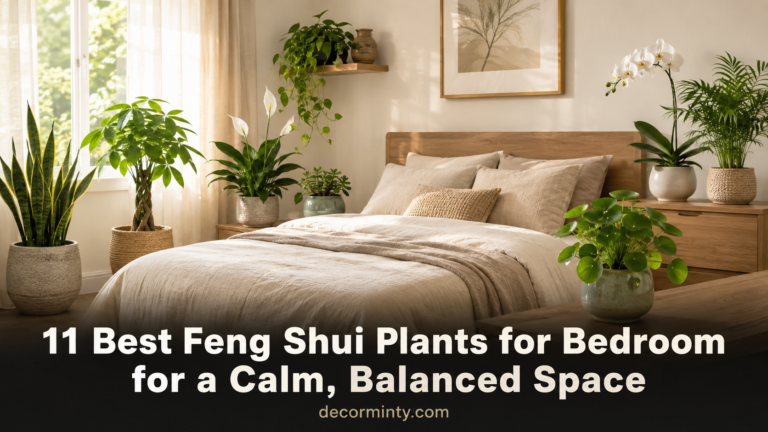
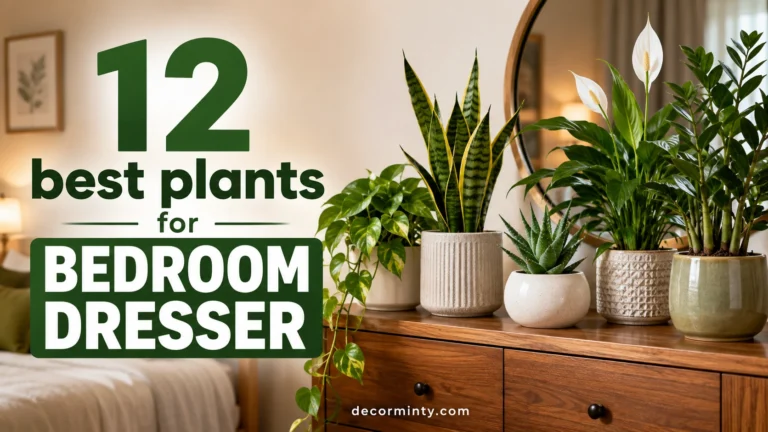
10 Best Plants for Bedroom Air, Ranked by How Hard They Are to Kill
Quick Answer
The best plants for bedroom air are the snake plant, golden pothos, ZZ plant, peace lily, spider plant, Chinese evergreen, parlor palm, Boston fern, aloe vera, and lavender, and they made this list because each one tolerates realistic bedroom conditions, forgives an inconsistent watering schedule, and has a documented, verifiable reason for being called a good bedroom plant.
Here’s the short version before you scroll further:
- Snake Plant — converts CO2 to oxygen overnight, thrives in nearly any light
- Golden Pothos — nearly impossible to kill, but mildly toxic to pets
- ZZ Plant — stores its own water reserves, thrives on neglect
- Peace Lily — the only plant on this list that visibly tells you it’s thirsty
- Spider Plant — the pet-safe pick when the others are off the table
- Chinese Evergreen — patterned foliage that actually gets more colorful in shade
- Parlor Palm — a real palm that never outgrows a small bedroom
- Boston Fern — lush and pet-safe, but the pickiest about humidity
- Aloe Vera — doubles as a burn remedy, but needs real sun and isn’t pet-safe
- Lavender — the fragrant option, and the only true high-maintenance plant here
The deciding factor usually isn’t which plant claims to filter the most air. It’s whether you have pets, how much real light your bedroom window lets in, and whether you’ll remember to water on a schedule — match the plant to those three things first, and everything else falls into place.
Our Top Picks at a Glance
Easiest to Care For — ZZ Plant
Best for Low Light — Snake Plant
Most Beautiful Bloom — Peace Lily
Best for Beginners — Golden Pothos


The 10 Best Plants for a Healthier, Greener Bedroom
#1. Snake Plant (Dracaena trifasciata) — “The Overachiever”
| Sunlight | Low to bright indirect light; tolerates dim corners far from a window |
| Watering | Every 2-4 weeks; let the soil dry out completely between waterings |
| Pot Size | 6-10 inch pot with drainage holes |
| Care Level | Easy |
| Bloom Time | N/A — grown for foliage, though mature plants occasionally send up small fragrant flower spikes |
The snake plant, botanically Dracaena trifasciata (long sold as Sansevieria trifasciata), is native to tropical West Africa and belongs to the asparagus family. It was one of the species included in NASA’s 1989 Clean Air Study, a chamber experiment that looked at whether common houseplants could help remove certain indoor pollutants.
Here’s why it’s a genuine standout for bedrooms specifically: unlike most plants, it continues taking in carbon dioxide overnight instead of only during the day. That quirk is exactly why it’s earned a reputation as a nightstand favorite.
Wipe the leaves occasionally to keep them dusty and photosynthesizing well, and repot only once the roots crowd the container, usually every two to three years. A live snake plant in a well-draining pot is genuinely one of the hardest houseplants to accidentally kill.
Pros
- Survives weeks of neglect without dropping leaves
- One of the few plants that tolerates truly low light
- Upright form takes up almost no floor space
Watch For
- Overwatering causes mushy, collapsing leaves fast
- Mildly toxic to cats and dogs if chewed
- Grows slowly, so don’t expect a dramatic size change
#2. Golden Pothos (Epipremnum aureum) — “The Low-Maintenance Icon”
| Sunlight | Low to bright indirect light; grows faster in brighter spots |
| Watering | Weekly, or once the top inch of soil feels dry to the touch |
| Pot Size | 6-8 inch hanging pot or shelf planter |
| Care Level | Easy |
| Bloom Time | N/A — grown for foliage; rarely flowers indoors |
Pothos, sometimes called devil’s ivy because it’s nearly impossible to kill, is a trailing vine native to the Solomon Islands’ Society Islands region and now grown worldwide as a houseplant. It was also part of NASA’s original clean air research, and its heart-shaped, gold-flecked leaves make it one of the most recognizable plants in any Pinterest bedroom feed.
What makes pothos so forgiving is its vine habit. It’ll trail off a shelf toward a light source on its own, so you don’t have to guess whether you’ve placed it correctly.
Snip a trailing stem below a node any time it gets leggy, and root the cutting in a jar of water to start a second plant for free. Because pothos contains calcium oxalate crystals, keep it up on a wall-mounted shelf or hanging planter if cats or dogs share the room.
Pros
- Grows quickly and forgives missed waterings
- Propagates for free in a glass of water
- Trailing vines soften shelves and headboards
Watch For
- Toxic to cats and dogs if chewed on
- Yellow leaves usually mean overwatering, not underwatering
- Can grow leggy and sparse without occasional trimming
#3. ZZ Plant (Zamioculcas zamiifolia) — “The Forgiving One”
| Sunlight | Low to bright indirect light; genuinely tolerates near-dark corners |
| Watering | Every 2-3 weeks, only once the soil is completely dry |
| Pot Size | 6-10 inch pot with good drainage |
| Care Level | Easy |
| Bloom Time | N/A — grown for foliage |
The ZZ plant, or Zamioculcas zamiifolia, hails from the dry grasslands of eastern Africa, from Kenya down to South Africa. Its thick underground rhizomes work like a built-in water tank, which explains why it shrugs off missed waterings that would kill most other houseplants.
Those same rhizomes are what let it sit in a dim corner for weeks without any real light and still push out new, glossy, waxy-looking leaves.
Resist the urge to water on a fixed schedule; check the soil with a finger instead, and only water once it’s bone dry. Because the ZZ plant contains calcium oxalate crystals, it’s worth pairing it with a plant stand that keeps it out of reach of curious pets.
Pros
- Genuinely thrives on neglect and low light
- Glossy leaves look intentional, not sparse
- Rarely bothered by pests
Watch For
- Toxic to cats and dogs if ingested
- Grows slowly, so patience is required
- Rhizomes rot quickly in a pot without drainage holes
#4. Peace Lily (Spathiphyllum) — “The Communicator”
| Sunlight | Low to medium indirect light; blooms more with brighter light |
| Watering | Weekly; the leaves droop visibly right before it needs water |
| Pot Size | 6-10 inch pot with drainage |
| Care Level | Moderate |
| Bloom Time | Spring through fall, with white hood-shaped flowers |
Peace lilies belong to the genus Spathiphyllum, native to the tropical rainforests of Central and South America, which explains why they crave humidity and consistent moisture. They were another species tested in NASA’s original clean air research, and their white blooms are actually modified leaves called spathes, not true petals.
This is the one plant on the list that genuinely tells you what it needs. When it’s thirsty, the whole plant droops dramatically within a day, then perks back up within hours of watering.
Wipe dust off the broad leaves periodically so they can photosynthesize efficiently, and deadhead spent blooms at the base once they turn brown. Peace lilies contain calcium oxalate crystals that irritate a pet’s mouth, so this one is best kept in a room without curious cats.
Pros
- Elegant white blooms most low-light plants can’t offer
- Wilts visibly before real damage occurs, so it’s forgiving of small mistakes
- Tolerates lower light better than most flowering houseplants
Watch For
- Toxic to cats and dogs if chewed
- Brown leaf tips usually signal tap water minerals or dry air
- Needs more consistent watering than most plants on this list
#5. Spider Plant (Chlorophytum comosum) — “The Pet-Safe Pick”
| Sunlight | Bright, indirect light; tolerates medium light too |
| Watering | Weekly, once the top inch of soil dries out |
| Pot Size | 6-8 inch hanging basket or shelf pot |
| Care Level | Easy |
| Bloom Time | Occasional small white flowers on trailing stems, any season |
The spider plant, Chlorophytum comosum, is native to coastal regions of South Africa and gets its name from the little plantlets, or “spiderettes,” that dangle off long runners once the parent plant matures. It’s one of the few genuinely popular bedroom plants that the ASPCA lists as non-toxic to both cats and dogs.
Those spiderettes are also a built-in propagation method: snip one off, set it in water or soil, and it roots on its own within a couple of weeks.
Trim any brown, papery leaf tips with clean scissors, and flush the soil with distilled water occasionally if your tap water is heavily chlorinated or fluoridated. Because it’s genuinely pet-safe, it’s one of the easiest recommendations for a shared bedroom.
Pros
- Non-toxic to cats and dogs
- Propagates itself for free via spiderettes
- Fast-growing, so it fills out a hanging basket quickly
Watch For
- Brown tips are common with tap water or dry air
- Needs more light than snake plants or ZZ plants
- Trailing spiderettes need room to hang or drape
#6. Chinese Evergreen (Aglaonema) — “The Colorful Camouflage”
| Sunlight | Low to medium indirect light; darker varieties tolerate dimmer rooms |
| Watering | Every 1-2 weeks; let the top couple inches of soil dry between waterings |
| Pot Size | 6-8 inch pot with drainage |
| Care Level | Easy |
| Bloom Time | N/A — grown for its patterned foliage |
Aglaonema, commonly called Chinese evergreen, is native to the tropical forests of Southeast Asia and the Philippines and belongs to the same family as pothos and peace lily. What sets it apart is its foliage: pink, silver, and cream variegation that shows up even in a dim north-facing room.
Counterintuitively, the darker-leaved varieties handle low light better than the brightly variegated ones, since more green surface area means more chlorophyll to work with.
Rotate the pot every few weeks so growth doesn’t lean toward the light on one side, and fertilize lightly during spring and summer only. It contains calcium oxalate crystals, so keep it up on a shelf if pets share the room.
Pros
- Colorful foliage without needing bright light
- Resistant to most common houseplant pests
- Compact growth habit suits small nightstands
Watch For
- Toxic to cats and dogs if ingested
- Dislikes cold drafts near windows or doors
- Curling leaves usually mean the air is too dry
#7. Parlor Palm (Chamaedorea elegans) — “The Gentle Giant Impersonator”
| Sunlight | Low to medium indirect light |
| Watering | Weekly; keep soil lightly moist but never soggy |
| Pot Size | 8-10 inch floor pot |
| Care Level | Easy |
| Bloom Time | N/A — occasionally produces small yellow flower clusters on mature indoor plants |
The parlor palm, Chamaedorea elegans, is native to the rainforest floor of southern Mexico and Guatemala, where it evolved to grow in dappled shade under a forest canopy. That native habitat is exactly why it does something few real palms can: it genuinely tolerates a low-light bedroom corner.
It grows slowly and rarely outgrows a small room, staying somewhere between two and four feet tall even after years indoors.
Mist the fronds occasionally to keep spider mites away, and rinse the leaves under a shower head every few months to clear dust. The ASPCA lists it as non-toxic to cats and dogs, which makes it a rare pet-safe way to bring real height into a bedroom.
Pros
- Non-toxic to cats and dogs
- Adds real height without needing bright light
- Stays compact for years, so it rarely needs repotting
Watch For
- Prone to spider mites in dry indoor air
- Soggy soil leads to root rot quickly
- Slow grower, so don’t expect fast size changes
#8. Boston Fern (Nephrolepis exaltata) — “The Humidity Lover”
| Sunlight | Medium, indirect light; avoid direct sun, which scorches the fronds |
| Watering | 2-3 times a week; soil should stay consistently moist, never dry |
| Pot Size | 8-10 inch hanging basket or pot |
| Care Level | Moderate |
| Bloom Time | N/A — a fern that reproduces by spores, not flowers |
The Boston fern, Nephrolepis exaltata, is a variety that emerged from tropical swamp regions of the Americas, which is why it craves humidity most bedrooms simply don’t have. Unlike many plants on this list, it’s completely non-toxic to cats and dogs, according to the ASPCA.
Its fronds droop and turn crispy fast in dry, heated bedroom air during winter, which is the single biggest reason people give up on this plant.
Set the pot on a tray of pebbles and water, or run a small humidifier nearby, and mist the fronds a few times a week. A small humidifier genuinely solves most of the frustration people have with this plant.
Pros
- Non-toxic to cats and dogs
- Lush, full texture unlike anything else on this list
- Adds gentle humidity back into a dry bedroom
Watch For
- Dry heating or AC air causes crispy, browning fronds
- Needs more frequent watering than most bedroom plants
- Not a good fit for a hands-off plant owner
#9. Aloe Vera — “The Multitasker”
| Sunlight | Bright, direct to indirect light; needs a genuinely sunny window |
| Watering | Every 2-3 weeks; let the soil dry out fully, like a cactus |
| Pot Size | 6-8 inch pot with excellent drainage |
| Care Level | Easy |
| Bloom Time | Rarely blooms indoors; produces tall orange-yellow flower spikes when it does |
Aloe vera is a succulent that most likely originated on the Arabian Peninsula, though it’s now naturalized across warm climates worldwide. It’s the exception to the “low light” theme running through this list, since it actually needs a genuinely bright, sunny bedroom window to thrive.
The gel inside its thick leaves has a long history of topical use for minor skin irritation, which is why so many people keep one on a sunny sill within arm’s reach.
Snap off a lower leaf near the base whenever you need fresh gel, and let the cut end callous over before using it. The ASPCA lists aloe vera as toxic to cats and dogs, so this one belongs on a high, sunny shelf rather than the floor if pets are around.
Pros
- Doubles as a practical remedy for minor burns
- Extremely drought-tolerant once established
- Architectural, sculptural look on a sunny sill
Watch For
- Toxic to cats and dogs if ingested
- Won’t survive in a genuinely dark bedroom
- Overwatering rots the roots faster than almost any plant here
#10. Lavender (Lavandula) — “The Fragrant Sleep Aid”
| Sunlight | At least 6 hours of direct, bright light daily |
| Watering | Every 1-2 weeks; let the soil dry out between waterings |
| Pot Size | 8-10 inch pot with excellent drainage |
| Care Level | Moderate to advanced indoors |
| Bloom Time | Late spring through summer, with fragrant purple flower spikes |
Lavender, genus Lavandula, is native to the rocky, sun-drenched hillsides of the Mediterranean, and that origin explains almost everything about how it behaves indoors. It’s the one plant here where the scent, not the leaves, is the whole point.
Indoor lavender is genuinely the hardest plant on this list to keep alive long-term, since most bedroom windows can’t match the hours of direct sun it evolved for outdoors.
Trim spent flower spikes back after they fade to encourage a second, smaller bloom, and use a fast-draining potting mix rather than standard potting soil. Lavender is considered pet-friendly in small amounts, though large quantities can still cause stomach upset in cats and dogs.
Pros
- Genuinely calming scent, unlike any foliage plant on this list
- Beautiful purple blooms in the growing season
- Relatively pet-friendly compared to most flowering houseplants
Watch For
- Struggles badly without a genuinely sunny window
- Overwatering or standard potting soil causes root rot fast
- Not a realistic pick for a low-light bedroom
Basic Care Tips Every Beginner Should Know
Most bedroom plant deaths come down to a handful of habits, not bad luck. The University of Florida’s IFAS Extension recommends starting with genuinely low-maintenance species if you’re new to houseplants, which is exactly why easy-care picks lead this list.
- Check the soil before you water, every time — stick a finger an inch or two into the pot. Dry means water. Even slightly damp means wait a few more days. This one habit prevents more plant deaths than anything else on this list.
- Match the pot to the plant’s actual size — a container that’s too large holds excess moisture around the roots far longer than the plant can use, which is a common cause of root rot in beginners’ first plants.
- Wipe the leaves down monthly — dust blocks light from reaching the leaf surface, which slows a plant’s ability to photosynthesize. A damp cloth once a month keeps foliage plants like pothos and snake plant working efficiently.
- Rotate the pot every couple of weeks — plants lean toward their light source, so a quarter turn now and then keeps growth even instead of lopsided.
Common Mistakes to Avoid
These mistakes account for most of the dead plants beginners deal with.
Watering on a fixed schedule instead of checking the soil first — a peace lily and a snake plant have completely different water needs, so watering both every Sunday will overwater one of them. Check the soil moisture before every watering, not the calendar.
Choosing a pot with no drainage hole — a decorative pot without a hole traps excess water at the roots with nowhere to go, which suffocates the roots and leads to rot within weeks, even for hardy plants like the ZZ plant.
Placing a low-light plant directly in a sunny south-facing window — plants like the parlor palm and Chinese evergreen evolved under a forest canopy, and direct afternoon sun through glass can scorch their leaves within a single day.
Ignoring humidity for moisture-loving plants — a Boston fern in a dry, heated bedroom during winter will crisp up no matter how often you water it, because the problem is dry air, not dry soil.
Skipping the pet-toxicity check before buying — plants like pothos, peace lily, and aloe vera are common causes of vet visits for curious cats and dogs. Always check a plant’s toxicity before it comes home if pets share the room.
Where to Place Each Plant in Your Bedroom
The right spot depends on how much real light that corner of your room actually gets.
- Nightstand or dresser top — the snake plant, ZZ plant, and Chinese evergreen all handle the low, indirect light most bedside spots get, and none of them mind being a few feet from any window.
- Hanging basket or high shelf — pothos and spider plants both trail beautifully from above, and keeping them up and out of reach also solves most pet-safety concerns.
- Floor corner, away from foot traffic — the parlor palm’s slow, upright growth makes it a natural floor plant that won’t get knocked over or outgrow the space.
- Directly on a sunny windowsill — aloe vera and lavender are the two plants on this list that genuinely need direct sun, so they belong nowhere else but the brightest window in the room.
Signs Your Plant Needs Attention
Catching these signals early is usually the difference between a quick fix and a dead plant.
- Drooping or wilting leaves — for a peace lily, this almost always means it’s thirsty and needs water right away. For most other plants on this list, check the soil first, since wilting can also signal overwatering.
- Yellow leaves — this is the classic sign of overwatering, especially on pothos and snake plants, since soggy roots can’t absorb oxygen properly.
- Brown, crispy leaf tips — usually points to low humidity or mineral buildup from tap water, which is especially common with spider plants and Boston ferns.
- Slow or stalled growth during spring and summer — during the active growing season, this often means the plant needs more light or a light feeding of fertilizer, not more water.
Make Overwatering Nearly Impossible
Since watering on autopilot instead of checking the soil is the single most common mistake on this list, a simple moisture meter takes the guesswork out of every single plant here. Push the probe into the soil, check the reading, and skip the watering can if it’s still damp.
Frequently Asked Questions
Q: Do plants really improve air quality in a bedroom?
A: NASA’s original 1989 chamber study found several houseplants could absorb certain pollutants in a sealed test environment. Later research suggests you’d need far more plants than most bedrooms could hold to noticeably change real-world air quality, so think of the benefit as modest rather than a substitute for ventilation.
Q: Is it bad to sleep in a room with plants?
A: No. Most plants release a small amount of carbon dioxide at night through respiration, but the amount is negligible compared to a sleeping person. A few healthy houseplants in a normal-sized bedroom pose no risk to sleep quality.
Q: What’s the single best low-light plant for a bedroom?
A: The snake plant is usually the top recommendation, since it tolerates near-total darkness, needs watering only every few weeks, and continues taking in carbon dioxide overnight instead of just during the day.
Q: How many plants should I keep in a bedroom?
A: There’s no strict rule, but two to four plants sized to your room is a comfortable starting point. Focus on plants that fit the light your room actually gets rather than the total number.
Q: Are any of these plants safe for cats and dogs?
A: Yes. Spider plants, parlor palms, and Boston ferns are all listed as non-toxic to cats and dogs by the ASPCA. Snake plants, pothos, ZZ plants, peace lilies, Chinese evergreen, and aloe vera are all mildly to moderately toxic if chewed, so keep those up on a shelf if pets have access to the room.
Q: Why do my bedroom plants keep dying even though I water them?
A: Overwatering, not underwatering, is the most common cause of death for beginner houseplants. Check the soil moisture with a finger before watering, and make sure every pot has a drainage hole so excess water can actually escape.
Final Thoughts
You don’t need a green thumb to fill your bedroom with plants that genuinely thrive there. Start with one or two of the easiest picks on this list, like the snake plant or pothos, and let your confidence grow before adding something fussier like lavender or a fern.
Once you’ve matched a plant to your actual light and lifestyle, the rest of the care nearly takes care of itself.
Which plant are you adding to your space first? Save this post to Pinterest so you can come back whenever you need fresh plant inspo!

I’m a home decor enthusiast who loves discovering beautiful room ideas, creative DIY projects, and Pinterest-worthy decorating inspiration. At DecorMinty, I share simple tips, fresh trends, and practical ideas to help you create a home you’ll truly love—one room at a time.