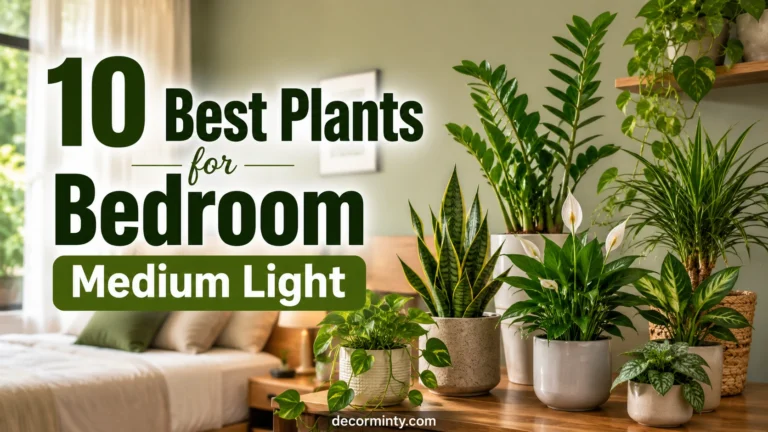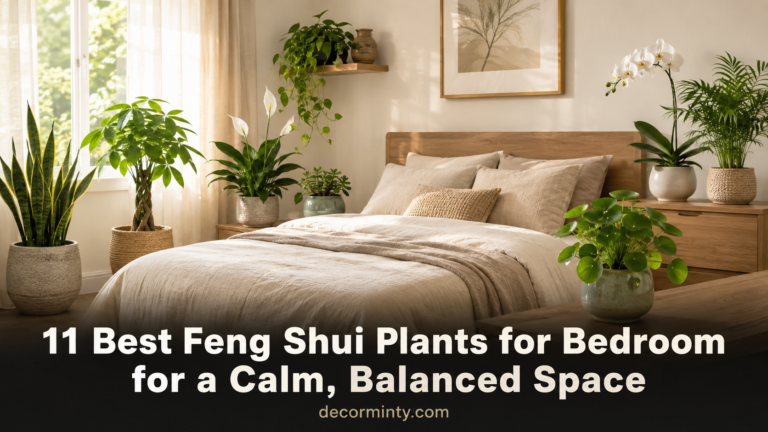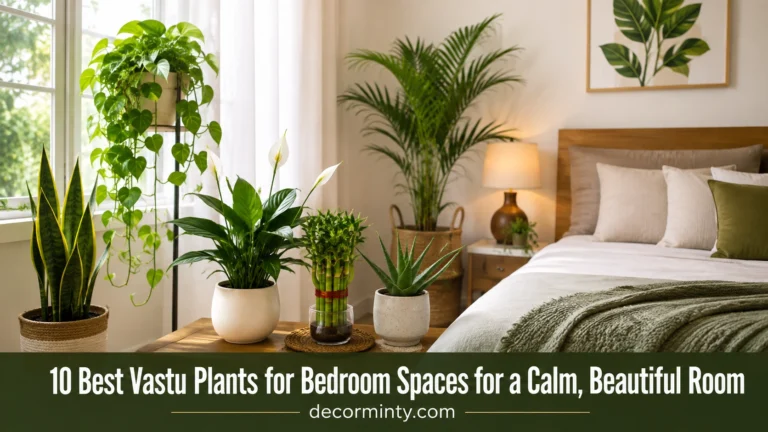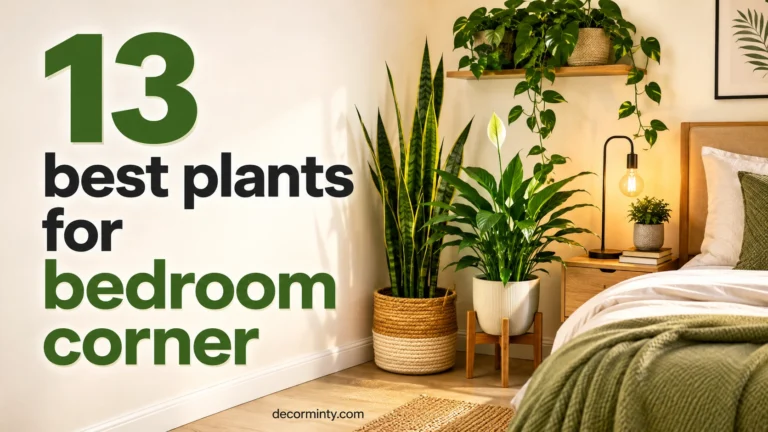
best plants for bedroom dresser: 12 Easy, Stylish Picks
Quick Answer
The best plants for bedroom dresser surfaces are ZZ plant, snake plant, moth orchid, baby rubber plant, Chinese money plant, golden pothos, African violet, prayer plant, nerve plant, wax plant, spider plant, and zebra haworthia because they offer compact footprints plus choices for dim, medium, and bright indirect bedroom light.
Here’s the short version before you scroll further:
- ZZ Plant — Handles missed waterings better than most.
- Snake Plant — Upright shape saves valuable dresser space.
- Moth Orchid — Long-lasting flowers for brighter bedrooms.
- Baby Rubber Plant — Glossy foliage stays compact and tidy.
- Chinese Money Plant — Round leaves create a modern look.
- Golden Pothos — Trailing vines soften dresser edges beautifully.
- African Violet — Compact flowering option that can rebloom.
- Prayer Plant — Patterned leaves move noticeably after dark.
- Nerve Plant — Tiny footprint with dramatic colorful veins.
- Wax Plant — Waxy vines suit bright dresser corners.
- Spider Plant — Arching leaves produce easy-to-share plantlets.
- Zebra Haworthia — Tiny succulent for your brightest spot.
Choose by light first, then by how often you realistically water. A compact plant that matches your bedroom conditions will stay attractive far longer than a trendy plant placed where it cannot thrive.
Our Top Picks at a Glance
Easiest to Care For — ZZ Plant
Best for Low Light — Snake Plant
Most Beautiful Bloom — Moth Orchid
Best for Beginners — Baby Rubber Plant
12 Bedroom Dresser Plants That Fit Without Taking Over
 Save
Save#1. ZZ Plant — “The Forget-Me-Friendly One”
| Sunlight | Bright indirect light to low natural light |
| Watering | Usually 1-2 times monthly, after the mix dries thoroughly |
| Pot Size | 6-8 inches for a young tabletop plant |
| Care Level | Easy |
| Bloom Time | Rare indoors, small flowers may appear in late summer |
Zamioculcas zamiifolia, often called Zanzibar gem, comes from eastern Africa and stores water in thick underground rhizomes. That storage system explains why it handles dry stretches so well.
Its glossy stems stay upright, giving you height without sending vines across perfume bottles or lamps. Slow growth in lower light also helps it remain manageable.
Let the potting mix dry before watering again. Yellowing stems can signal excessive moisture, and the plant should be kept away from pets or children who might chew it.
Pros
- Tolerates lower light
- Stores water in rhizomes
- Clean upright silhouette
Watch For
- Root rot from wet soil
- Slow growth in dim rooms
- Not pet-safe if eaten
#2. Snake Plant — “The Space Saver”
| Sunlight | Bright indirect light, with good tolerance for lower light |
| Watering | Allow soil to dry between waterings; much less in winter |
| Pot Size | 6-8 inches for compact or young plants |
| Care Level | Easy |
| Bloom Time | Rare indoors |
Snake plant, now classified as Dracaena trifasciata, is native to tropical Africa and grows in tight upright clumps. Compact cultivars work especially well where dresser depth is limited.
The thick leaves tolerate dry air and irregular watering better than many tropical foliage plants. Growth becomes slower in low light, but the plant can remain attractive.
Use fast-draining soil and empty the saucer after watering. Constantly wet roots are the main danger, and chewing the leaves can also cause problems for pets.
Pros
- Very small footprint
- Handles dry indoor air
- Tolerates low light
Watch For
- Overwatering
- Root rot in poor drainage
- Pet ingestion
#3. Moth Orchid — “The Bedroom Showpiece”
| Sunlight | Bright filtered light, often near east or west windows |
| Watering | Water after the airy growing medium dries slightly |
| Pot Size | Usually a snug 4-6 inch orchid pot |
| Care Level | Moderate |
| Bloom Time | Usually once yearly, with long-lasting blooms |
Phalaenopsis orchids naturally grow attached to trees in warm tropical forests, so their roots need air rather than dense garden soil. The flowers can remain decorative for weeks.
Look at the roots and growing medium rather than watering by calendar. An airy orchid pot with drainage helps prevent trapped moisture.
After flowering, keep providing filtered light and normal care rather than discarding the plant. With suitable conditions, another flower spike can develop later.
Pros
- Long flower display
- Compact leafy base
- Elegant vertical shape
Watch For
- Dense waterlogged soil
- Harsh direct sun
- Poor root aeration
#4. Baby Rubber Plant — “The Polished One”
| Sunlight | Bright indirect light, with some low-light tolerance |
| Watering | Water after the upper soil has dried |
| Pot Size | 4-6 inches for a compact plant |
| Care Level | Easy |
| Bloom Time | Insignificant cream flower spikes |
Peperomia obtusifolia is a tropical American member of the pepper family with thick, glossy leaves. Its naturally bushy growth makes it especially suitable as a desktop or dresser plant.
The fleshy foliage stores some moisture, so wet soil is more dangerous than a short dry spell. Variegated forms generally appreciate brighter indirect light.
Trim an overly long stem above a node to keep the shape dense. Stem or leaf cuttings can also be used to propagate new plants.
Pros
- Naturally compact habit
- Thick glossy foliage
- Easy to prune
Watch For
- Wet potting mix
- Cold drafts
- Direct sun scorch
#5. Chinese Money Plant — “The Modern Minimalist”
| Sunlight | Bright indirect light |
| Watering | Keep moderately moist without leaving soil soggy |
| Pot Size | 4-6 inches for most tabletop plants |
| Care Level | Easy to Moderate |
| Bloom Time | Rare indoors, grown mainly for foliage |
Pilea peperomioides comes from the Yunnan region of southern China and normally stays around 8-12 inches tall and wide. Its circular leaves create a clean sculptural look.
Rotate the pot periodically because stems lean toward the strongest light. That simple habit keeps the plant from looking one-sided on a dresser.
Small offsets, often called pups, develop around established plants and can be separated for propagation. Avoid jumping into an oversized pot when repotting.
Pros
- Compact mature size
- Distinct round leaves
- Produces easy offsets
Watch For
- One-sided growth
- Harsh direct sun
- Soggy soil
 Save
Save#6. Golden Pothos — “The Easy Trailer”
| Sunlight | Bright indirect light, but tolerates lower light |
| Watering | Allow the potting mix to dry between waterings |
| Pot Size | 4-6 inches for a compact trailing plant |
| Care Level | Easy |
| Bloom Time | Rarely flowers indoors |
Epipremnum aureum is an adaptable tropical vine valued for glossy green leaves splashed with yellow. A dresser edge lets the stems cascade instead of occupying more surface space.
Lower light usually means slower growth and less dramatic variegation. Bright indirect light gives you fuller, more colorful growth without exposing leaves to harsh sun.
Prune long vines back to a node whenever they become untidy. Cuttings root readily, but keep pothos away from pets and children who might chew its calcium-oxalate-containing foliage.
Pros
- Attractive trailing shape
- Easy to prune
- Handles varied light
Watch For
- Long untidy vines
- Less variegation in dim light
- Pet toxicity if chewed
#7. African Violet — “The Compact Bloomer”
| Sunlight | Bright filtered light |
| Watering | Keep mix lightly moist, never waterlogged |
| Pot Size | About 3-5 inches for many standard plants |
| Care Level | Moderate |
| Soil pH | About 6.2-6.5 |
| Bloom Time | Can bloom several times yearly with good care |
African violet, now commonly classified as Streptocarpus ionanthus, is native to eastern Africa. Its rosette form keeps both foliage and flowers inside a small tabletop footprint.
Bright filtered light supports repeat flowering. Keep water from sitting around the crown, and use room-temperature water when possible.
A self-watering African violet pot can help maintain steadier moisture if used carefully. Remove faded blooms to keep the plant neat.
Pros
- Very compact form
- Repeat flowering potential
- Many flower colors
Watch For
- Overwatering
- Cold water on foliage
- Too little light for blooms
#8. Prayer Plant — “The Night Mover”
| Sunlight | Diffused or bright indirect light |
| Watering | Keep evenly moist during active growth, slightly drier in winter |
| Pot Size | 4-6 inch pot for a young plant |
| Care Level | Moderate |
| Bloom Time | Small, insignificant flowers may appear |
Maranta leuconeura is a Brazilian tropical plant famous for patterned leaves that lift into a more upright position after dark. It stays relatively low rather than growing into a tall floor plant.
Its biggest difference from ZZ or snake plant is moisture preference. Prayer plant prefers more consistent moisture and dislikes very dry air.
Trim brown or damaged leaves at the base and keep the plant away from heating or cooling vents. Division is a common way to propagate an established clump.
Pros
- Decorative patterned leaves
- Low spreading habit
- Visible night movement
Watch For
- Dry room air
- Cold drafts
- Waterlogged crowns
#9. Nerve Plant — “The Tiny Drama Queen”
| Sunlight | Bright to medium indirect light |
| Watering | Keep lightly moist; dramatic wilting signals dryness |
| Pot Size | 3-5 inches because roots are shallow |
| Care Level | Moderate |
| Bloom Time | Summer flowers are insignificant and uncommon indoors |
Fittonia albivenis comes from tropical South America and usually stays only a few inches tall. Pink, white, or red veins provide color without needing flowers.
Fittonia is famous for collapsing dramatically when it gets too dry, then often recovering after watering. Don’t repeatedly push it to that point because chronic drought stresses the plant.
Pinch stem tips to keep growth dense and compact. Its shallow roots make a small pot practical, which is useful when dresser space is tight.
Pros
- Very low-growing
- Bright leaf veining
- Works under artificial light
Watch For
- Rapid wilting when dry
- Direct sun scorch
- Root rot if saturated
#10. Wax Plant — “The Patient Trailer”
| Sunlight | Medium to bright indirect light |
| Watering | Allow the fast-draining mix to dry well between waterings |
| Pot Size | 4-6 inches, and slightly rootbound is acceptable |
| Care Level | Easy to Moderate |
| Bloom Time | Variable indoors, flowering improves with adequate light |
Hoya carnosa, called wax plant or porcelain flower, comes from parts of Asia and Australia. Thick waxy leaves run along vines that can spill gently from a dresser edge.
The plant stores more moisture in those leaves than its tropical appearance suggests. Experienced growers often allow the mix to become fairly dry before watering.
Don’t constantly repot a healthy hoya because it tolerates a snug root system. Mature plants may eventually produce clusters of star-shaped flowers when light and care are suitable.
Pros
- Waxy attractive foliage
- Tolerates snug pots
- Potential fragrant blooms
Watch For
- Slow flowering
- Overwatering
- Too little light for blooms
#11. Spider Plant — “The Cascade Maker”
| Sunlight | Medium to bright indirect light, with shade tolerance |
| Watering | Water when the top 1-2 inches feel dry |
| Pot Size | 6-8 inches for a manageable tabletop plant |
| Care Level | Easy |
| Bloom Time | Small white flowers may form before plantlets |
Chlorophytum comosum is an adaptable African houseplant known for arching striped leaves. Mature plants develop long stems carrying small flowers and baby plantlets.
Those arching leaves need more horizontal room than a ZZ or snake plant. Choose this one when your dresser has a clear corner where foliage can spill outward.
Plantlets can be rooted to make new plants. Brown tips can develop from water-quality issues, dry conditions, or accumulated salts, so trim damaged tips if necessary.
Pros
- Produces baby plants
- Adaptable light needs
- Graceful striped foliage
Watch For
- Brown leaf tips
- Spreading mature size
- Waterlogged roots
 Save
Save#12. Zebra Haworthia — “The Tiny Survivor”
| Sunlight | Bright indirect light; some lower-light tolerance |
| Watering | Allow the potting mix to dry between waterings |
| Pot Size | 3-5 inches for a single rosette or small clump |
| Care Level | Easy |
| Bloom Time | Late spring to summer under good conditions |
Haworthiopsis attenuata is a South African succulent that forms small star-shaped rosettes marked with raised white bands. Its compact form makes it one of the easiest plants to fit beside everyday dresser items.
It prefers bright indirect light but is less demanding of intense sun than many desert-looking succulents. Allow the soil to dry before watering again.
Offsets form around mature plants and can be divided. NC State also identifies zebra haworthia as non-toxic to pets and humans, making it worth considering in pet-owning homes.
Pros
- Extremely compact
- Drought tolerant
- Non-toxic to pets
Watch For
- Overwatering
- Faded markings in poor light
- Harsh direct sun
How to Choose the Right Plant for Your Bedroom Dresser
Dresser space creates different challenges from a windowsill or floor corner. Focus on available light, plant width, and what else needs to stay on the surface.
- Measure light before choosing — A dresser across the room from a window receives far less useful light than one directly beside it. The University of Illinois Extension houseplant lighting guide explains how quickly indoor light changes with window direction and distance.
- Protect usable surface space — Upright ZZ and snake plants give you height without wide vines. Fittonia, African violet, and haworthia work when the available footprint is genuinely tiny.
- Use trailing plants deliberately — Pothos and hoya are most attractive near an open dresser edge. Keep vines away from drawers, charging cables, candles, and frequently moved objects.
- Match moisture needs to your habits — Forgetful waterers are better suited to ZZ, snake plant, hoya, or haworthia. Prayer plant and fittonia need more regular attention.
Basic Care Tips for Bedroom Dresser Plants
You don’t need a complicated routine. A few consistent habits prevent most dresser-plant problems.
- Check the soil before watering — Different plants dry at different speeds. The University of Minnesota advises letting the plant and soil guide watering instead of relying only on a calendar.
- Choose drainage over appearance alone — Decorative cachepots are fine, but the inner plant pot should drain freely. Empty trapped water after each thorough watering.
- Rotate plants that lean — Pilea, orchids, and other plants near one-sided window light may begin leaning. A small periodic rotation keeps growth more balanced.
- Keep leaves away from vents — Hot or cold moving air can dry foliage quickly. Prayer plants and fittonia are particularly unhappy beside strong HVAC airflow.
Common Mistakes to Avoid
Most dresser-plant failures come from a handful of placement and watering mistakes.
Treating low-light tolerant as no-light tolerant — Plants still need light for photosynthesis. A ZZ or snake plant may survive dim conditions, but a dark dresser with essentially no usable light requires supplemental lighting.
Watering every plant on the same weekday — Fittonia and prayer plant prefer more consistent moisture than ZZ or haworthia. Checking soil first prevents both drought stress and root rot.
Moving a small plant into an oversized pot — Excess potting mix stays wet longer than a compact root system can use it. Increase container size gradually instead.
Letting drainage water sit on the dresser — Trapped water can damage both plant roots and furniture finishes. Use a waterproof saucer and empty it after watering.
Ignoring pet toxicity when choosing placement — Pothos and several other popular houseplants can cause irritation when chewed. Check the ASPCA houseplant safety guidance before putting an unfamiliar plant within reach.
What You’ll Need
A few practical supplies make dresser plants easier to manage without cluttering the room.
Lets excess water escape instead of collecting around the roots.
Protects the dresser finish from drainage and condensation.
Useful when your dresser receives too little natural window light.
Protect Your Dresser and Your Plant’s Roots
A small planter with drainage plus a matching saucer directly solves two common problems above: waterlogged soil and drainage water reaching your furniture. Choose a size that leaves only modest extra space around the root ball.
Frequently Asked Questions
Q: What is the best plant for a bedroom dresser with low light?
A: ZZ plant and snake plant are two of the strongest choices because both tolerate lower indoor light. They still need usable natural or artificial light and should not be kept in complete darkness.
Q: Can I put a plant on a dresser away from the window?
A: Yes, if enough ambient light reaches that spot. When the dresser is deep inside a dark bedroom, a compact grow light is more reliable than expecting a low-light plant to survive without adequate light.
Q: What size plant pot works best on a dresser?
A: Many tabletop plants fit comfortably in 4-8 inch pots. Choose the container according to the root ball rather than the furniture alone, and normally increase only one pot size when repotting.
Q: Which bedroom dresser plant is a good option around pets?
A: Zebra haworthia is identified by NC State Extension as non-toxic to pets and humans. Always verify the exact species before buying, especially if your cat or dog regularly chews plants.
Q: Do bedroom plants noticeably clean the air?
A: Houseplants can remove some compounds under controlled research conditions, but ordinary room ventilation greatly outweighs the effect of a few potted plants. Choose these plants primarily for decor and enjoyment.
Q: What flowering plant looks best on a bedroom dresser?
A: Moth orchid is excellent when you want tall, elegant flowers, while African violet is better when you want a low compact plant. Both need enough filtered light to flower well.
Final Thoughts
The best dresser plant isn’t automatically the easiest or most popular one. Pick a plant whose light needs, mature width, and watering style actually fit your bedroom.
A ZZ or snake plant is hard to beat for simplicity, while African violet, moth orchid, fittonia, or hoya can add more color and personality when you have the right conditions.
Which plant are you adding to your space first? Save this post to Pinterest so you can come back whenever you need fresh plant inspo!

I’m a home decor enthusiast who loves discovering beautiful room ideas, creative DIY projects, and Pinterest-worthy decorating inspiration. At DecorMinty, I share simple tips, fresh trends, and practical ideas to help you create a home you’ll truly love—one room at a time.