12 Best Snake Plants for Bedroom Spaces That Look Beautiful
Quick Answer
The best snake plants for bedroom spaces include Laurentii, Hahnii, Bantel’s Sensation, Moonshine, Black Gold, Black Coral, Whitney, Golden Flame, Silver Queen, Black Robusta, Cylindrical Snake Plant, and Whale Fin Snake Plant because they combine upright or compact growth with drought tolerance and relatively simple indoor care.
Here’s the short version before you scroll further:
- Laurentii — Classic yellow edges for an empty floor corner.
- Hahnii — Compact rosette that fits small nightstands.
- Bantel’s Sensation — Narrow white-striped leaves with extra visual height.
- Moonshine — Silvery foliage for minimalist and neutral bedrooms.
- Black Gold — Dark leaves framed by bright gold margins.
- Black Coral — Deep green foliage for moodier bedroom palettes.
- Whitney — Subtle edge variegation without a flashy look.
- Golden Flame — Bold yellow-green new growth adds instant color.
- Silver Queen — Soft silver-green coloring suits calm interiors.
- Black Robusta — Broad dark leaves with muted horizontal banding.
- Cylindrical Snake Plant — Rounded spear-like leaves create sculptural texture.
- Whale Fin Snake Plant — Huge paddle-shaped leaves make a dramatic statement.
Your best choice depends more on available light, floor or tabletop space, and your decorating style than on finding one universally superior variety. Match those factors first, then keep the roots on the dry side instead of watering by the calendar.
Our Top Picks at a Glance
Easiest to Care For — Laurentii
Best for Low Light — Hahnii
Most Beautiful Bloom — Bantel’s Sensation
Best for Beginners — Moonshine


12 Best Snake Plants for Bedroom Spaces
 Save
Save#1. Laurentii Snake Plant — “The Bedroom Classic”
| Sunlight | Bright indirect light is ideal, but it tolerates lower light |
| Watering | Water only after the potting mix has dried, less often in winter |
| Pot Size | Keep snug, move up only 1 to 2 inches when root-bound |
| Care Level | Easy |
Dracaena trifasciata ‘Laurentii’ is the familiar yellow-edged form of snake plant. Its tall, stiff foliage gives you greenery without taking over much floor space.
The leaves store water, so dry soil is much safer than constantly moist soil. Lower light slows growth, which also means the pot stays wet longer.
Remove damaged leaves at the base and repot only when necessary. A heavy terracotta pot with drainage can help stabilize a tall specimen.
Pros
- Narrow upright footprint
- Distinct yellow-edged foliage
- Tolerates occasional missed watering
Watch For
- Wet soil and root rot
- Scorch from intense afternoon sun
- Pet access to chewable foliage
#2. Hahnii Snake Plant — “The Nightstand Natural”
| Sunlight | Bright light to partial shade, adaptable to lower light |
| Watering | Let the growing mix dry before watering again |
| Pot Size | A snug pot with drainage, enlarged only when filled |
| Care Level | Easy |
| Bloom Time | Occasional indoor flowering, grown mainly for foliage |
‘Hahnii’ forms a short rosette rather than the tall swords you may picture when you hear snake plant. Silver-grey bands break up its dark green leaves.
That low profile is excellent beside a bed or on a dresser where a tall plant would feel awkward. It still needs some usable light even though it handles shade better than many houseplants.
Division or removal of offsets is the easiest way to propagate it. Avoid leaving water trapped in the rosette or sitting around the roots.
Pros
- Compact rosette form
- Useful for tabletop styling
- Adapts to softer bedroom light
Watch For
- Water trapped in rosette
- Slow growth in deep shade
- Toxicity if eaten
#3. Bantel’s Sensation — “The Pinstripe Statement”
| Sunlight | Bright light is preferred, some shade is tolerated |
| Watering | Dry to medium, reduce watering through winter |
| Pot Size | Snug, stable pot with free drainage |
| Care Level | Easy |
| Bloom Time | Rare indoors, slightly fragrant white flowers are possible |
‘Bantel’s Sensation’ stands out for creamy white vertical stripes against grey-green leaves. Mature foliage can become tall while remaining relatively narrow.
The stronger variegation looks clearest when the plant receives useful indirect light. An overly dark location may keep it alive but won’t show it at its best.
Divide established clumps when they become crowded. Keep the growing mix free draining, especially during slower winter growth.
Pros
- Distinct vertical striping
- Tall without sprawling
- Rare fragrant flowers possible
Watch For
- Loss of visual impact in deep shade
- Overwatering during winter
- Mealybugs on stressed plants
#4. Moonshine Snake Plant — “The Minimalist”
| Sunlight | Adaptable to lower light, brighter indirect light supports stronger color |
| Watering | Wait until the mix is dry before watering thoroughly |
| Pot Size | Slightly snug container with drainage |
| Care Level | Easy |
‘Moonshine’ replaces the usual dark green pattern with pale silvery-grey foliage and narrow darker margins. That softer coloring works especially well with white, beige, grey, and light-wood bedrooms.
It handles subdued light, although brighter indirect light generally produces stronger growth and better coloration. Dryness between waterings remains important.
Use a coarse, free-draining medium rather than dense garden soil. Repot only after the roots have substantially filled their container.
Pros
- Unusual silver foliage
- Simple drought-tolerant routine
- Works with minimalist decor
Watch For
- Constantly damp compost
- Weak color in unsuitable conditions
- Cold bedroom drafts
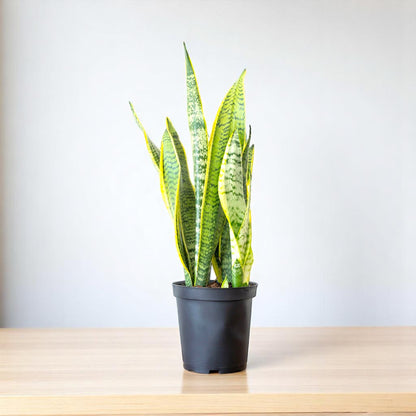
#5. Black Gold Snake Plant — “The High-Contrast One”
| Sunlight | Bright indirect light preferred, some shade tolerated |
| Watering | Allow mix to dry before watering again |
| Pot Size | Snug pot with drainage |
| Care Level | Easy |
‘Black Gold’ combines very dark green leaves with bright golden edging. The contrast makes it a stronger decorating element than an all-green snake plant.
Give it useful indirect light if maintaining the variegated look matters to you. Water less often when light levels and growth slow.
Division is useful when mature clumps become crowded. Wipe dusty leaves gently so the dark surfaces keep their clean appearance.
Pros
- Strong gold edging
- Architectural upright habit
- Low watering demand
Watch For
- Poor drainage
- Very dark placement
- Chewing pets
#6. Black Coral Snake Plant — “The Moody One”
| Sunlight | Bright indirect light to partial shade |
| Watering | Infrequent, after the potting mix dries |
| Pot Size | Stable container kept relatively snug |
| Care Level | Easy |
‘Black Coral’ is valued for deep green foliage marked with lighter horizontal patterning. It brings texture into charcoal, walnut, industrial, or earthy bedrooms without looking busy.
Its drought tolerance comes from thick succulent foliage, not from an ability to live forever without light. Place it where daylight reaches the leaves.
Cut damaged leaves cleanly near the base rather than trimming them halfway. Always empty standing water from decorative cachepots.
Pros
- Rich dark coloration
- Slim vertical form
- Forgiving watering needs
Watch For
- Saturated soil
- No-light corners
- Cold windows in winter
#7. Whitney Snake Plant — “The Subtle Variegate”
| Sunlight | Bright indirect light preferred, some shade tolerated |
| Watering | Water after the growing medium has dried |
| Pot Size | Close-fitting pot with drainage holes |
| Care Level | Easy |
‘Whitney’ has dark green foliage bordered by pale and darker green variegation. Its quieter pattern works when you want texture without bright yellow margins.
Growth is slow enough to make it manageable in a bedroom. More light usually means more active growth, so adjust watering to the actual drying rate.
Keep foliage clean and watch leaf bases for softness, a warning sign that conditions may be staying too wet.
Pros
- Refined edge pattern
- Controlled growth
- Easy-care foliage plant
Watch For
- Soft leaf bases
- Large moisture-holding pots
- Pet access
#8. Golden Flame Snake Plant — “The Bright Accent”
| Sunlight | Bright conditions preferred, some shade tolerated |
| Watering | Dry to medium, with reduced winter watering |
| Pot Size | Stable pot only slightly larger than root mass |
| Care Level | Easy |
| Bloom Time | Rare indoors |
‘Golden Flame’ produces green foliage with yellow-green vertical patterning, and new leaves can emerge strongly yellow. Mature plants can develop an attractive vase-like outline.
That vivid color makes it useful in bedrooms that need one warm accent. Give it brighter indirect light rather than hiding it in the darkest corner.
It slowly forms pups that can eventually be divided. Avoid frequent small drinks of water that keep the root zone continually moist.
Pros
- Bold yellow-green growth
- Moderate indoor size
- Slow colony formation
Watch For
- Dim placement
- Wet winter soil
- Harsh hot sun
#9. Silver Queen Snake Plant — “The Soft Neutral”
| Sunlight | Bright indirect light, with some shade tolerance |
| Watering | Allow mix to become dry before rewatering |
| Pot Size | Snug container with reliable drainage |
| Care Level | Easy |
‘Silver Queen’ carries silver-green leaves marked with lighter horizontal banding. It gives you the architectural shape of a snake plant with a less saturated color palette.
Place it close enough to a window to receive indirect daylight. The farther it sits from useful light, the slower the potting mix will dry.
Use drainage holes and resist upgrading to an oversized decorative planter. Extra wet mix around a small root system is unnecessary.
Pros
- Soft silver-green look
- Matches neutral bedrooms
- Minimal routine
Watch For
- Oversized pots
- Standing water
- Deep windowless placement
#10. Black Robusta Snake Plant — “The Deep Green Anchor”
| Sunlight | Bright indirect light to partial shade |
| Watering | Dry between waterings, reduce further in winter |
| Pot Size | Heavy, close-fitting pot with drainage |
| Care Level | Easy |
‘Black Robusta’ has broad dark green leaves crossed by muted grey-green banding. Its foliage can reach a useful floor-plant scale without creating a wide canopy.
The rhizomes slowly produce new growth, so the clump expands rather than shooting upward indefinitely. Let the plant tell you when it needs water by checking the growing medium.
Repot when the root mass becomes genuinely crowded. A sturdy container is worthwhile as the leaf mass becomes heavier.
Pros
- Broad dark foliage
- Slow spreading habit
- Low maintenance
Watch For
- Root rot from excess water
- Top-heavy containers
- Spider mites or mealybugs
#11. Cylindrical Snake Plant — “The Living Sculpture”
| Sunlight | Brightly lit position, with protection from harsh afternoon sun |
| Watering | About every two weeks in summer and monthly in winter as a general guide, only when dry |
| Pot Size | Stable container with free-draining succulent mix |
| Care Level | Easy |
Dracaena angolensis, formerly widely sold as Sansevieria cylindrica, comes from southern tropical Africa. Its rounded spear-like leaves immediately separate it from flat-leaved snake plants.
It appreciates a brighter position than the darkest bedroom corner. The cylindrical leaves are succulent, so generous drying time between waterings is normal.
A gritty succulent mix helps excess moisture leave the roots quickly. Keep it above cold-window temperatures during winter.
Pros
- Distinct cylindrical leaves
- Slow-growing sculptural form
- Drought tolerant
Watch For
- Soggy potting mix
- Sudden intense sunlight
- Cold temperatures
 Save
Save#12. Whale Fin Snake Plant — “The Statement Leaf”
| Sunlight | Bright indirect light preferred, some lower light tolerated |
| Watering | Water thoroughly, then allow substantial drying |
| Pot Size | Shallow, stable pot with excellent drainage |
| Care Level | Easy |
| Bloom Time | Rare indoors |
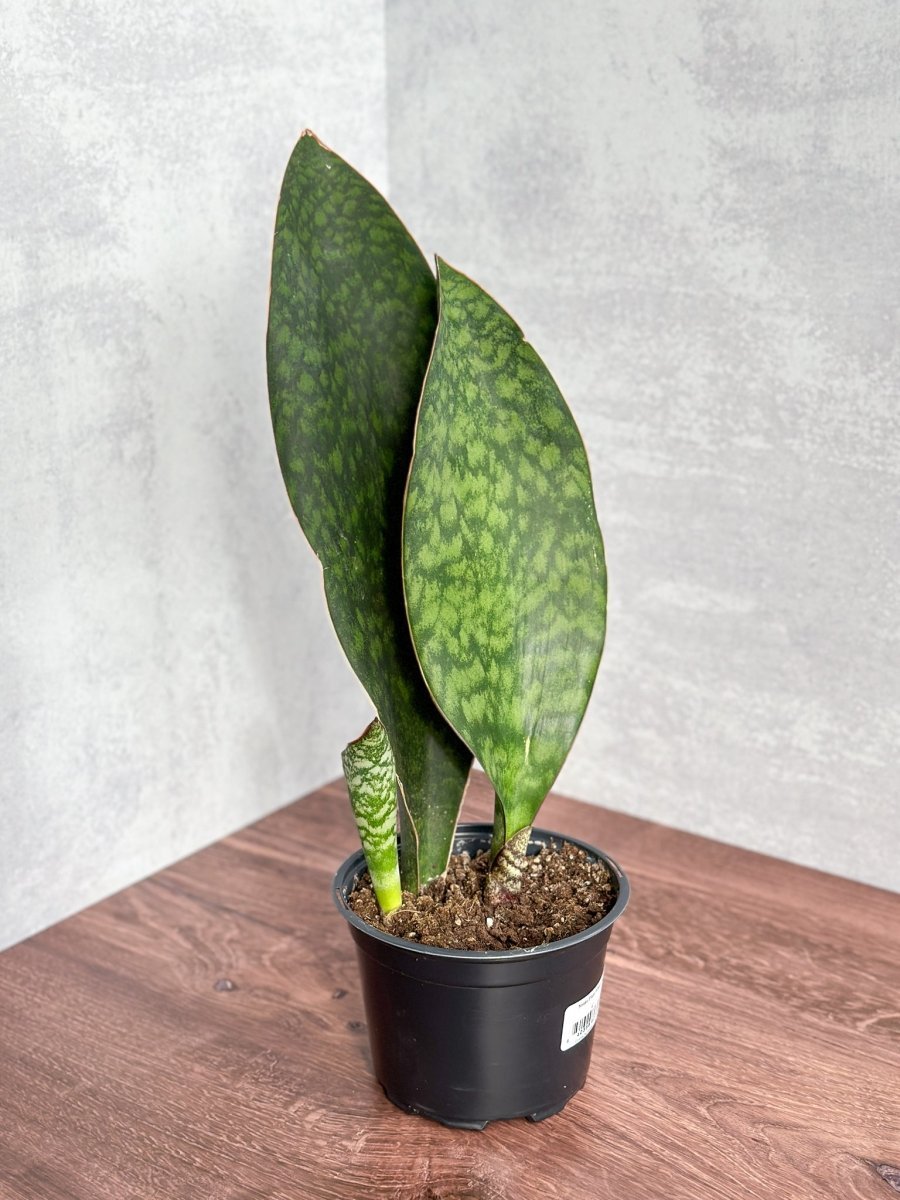
Dracaena masoniana comes from the Democratic Republic of the Congo and is often called Whale Fin or Mason’s Congo snake plant. Individual leaves can become exceptionally broad compared with ordinary snake plants.
One or two large leaves can provide more visual impact than a crowded cluster of smaller foliage. Bright indirect light supports its slow, steady growth.
The plant has relatively shallow roots, so a shallow stable pot makes practical sense. Avoid overwatering and protect the leaves from scorching afternoon sun.
Pros
- Extra-wide statement foliage
- Slow growth suits bedrooms
- Needs little routine maintenance
Watch For
- Top-heavy large leaves
- Root rot from excess water
- Toxicity if ingested
How to Choose the Right Snake Plant for Your Bedroom
Start with the space you actually have rather than buying the most dramatic variety first. You can also compare these choices with our broader guide to the best plants for a bedroom.
- For a nightstand or dresser — Hahnii is easier to fit because its leaves form a compact rosette rather than tall swords.
- For an empty floor corner — Laurentii, Bantel’s Sensation, and Black Robusta give you vertical height without a wide canopy.
- For softer bedroom colors — Moonshine and Silver Queen blend naturally with white, cream, grey, and pale wood.
- For stronger visual drama — Whale Fin, Cylindrical, Black Gold, and Golden Flame work better as statement plants.
If your bedroom receives only modest natural light, compare your conditions with our guide to the best plants for bedroom low light. Low-light tolerance is useful, but it doesn’t mean a plant can thrive indefinitely in a room with no usable light.
Basic Snake Plant Care Tips for Beginners
Snake plants are forgiving once you understand one rule: excessive moisture is usually more dangerous than forgetting a watering. The North Carolina Extension Gardener Plant Toolbox describes Dracaena trifasciata as a drought-tolerant succulent houseplant and documents many of the cultivars included above.
- Check the potting mix first — Don’t water because a certain number of days has passed. Wait for the mix to dry before adding more water.
- Use drainage holes — Water needs a clear way out of the container. Empty decorative outer pots after watering.
- Give the plant real daylight — Snake plants tolerate shade, but the Royal Horticultural Society growing guide notes that they generally perform better in brighter positions.
- Keep the pot relatively snug — Snake plants don’t need a huge jump in container size. Oversized pots hold more damp growing medium around the roots.
New to indoor plants altogether? Our guide to the best beginner plants for bedroom spaces can help you compare snake plants with other low-fuss options.
Common Snake Plant Mistakes to Avoid
Most bedroom snake plant problems come from the growing conditions, not from a lack of complicated care.
Watering on a fixed weekly schedule — A pot in a darker bedroom may dry much more slowly than one beside a bright window. Rewatering wet mix deprives roots of the air they need and encourages rot.
Assuming low light means no light — Hahnii and Moonshine can tolerate subdued conditions, but a closed, windowless corner cannot provide the light needed for normal plant growth.
Moving into an oversized pot — Extra potting mix stays damp after the small root system has taken up what it needs. Move up gradually instead.
Leaving water inside a decorative cachepot — A nursery pot may drain perfectly while its roots still sit in runoff hidden inside the outer planter.
Putting snake plants within reach of chewing pets — Snake plants contain saponins and should be kept away from pets that chew foliage. The ASPCA lists snake plant as toxic to dogs and cats.
If pet safety is one of your main deciding factors, compare your options with our guide to bedroom plant choices and indoor plant considerations before bringing a new plant home.
What You’ll Need for Healthy Bedroom Snake Plants
You don’t need a shelf full of specialty products. A few basics make the biggest difference.
A fast-draining mix reduces the time roots sit in excess moisture.
Drainage holes let excess irrigation water escape instead of pooling around roots.
Useful as a secondary check if you’re still learning how quickly different pots dry.
Make Overwatering Much Harder
The most useful purchase isn’t a complicated fertilizer. A properly sized planter with real drainage directly addresses the biggest care problem in this roundup by letting extra water leave the root zone.
Frequently Asked Questions
Q: Which snake plant is best for a bedroom?
A: Laurentii is a strong all-around choice because its upright form uses little floor space and its care is straightforward. For smaller surfaces, Hahnii is easier to fit.
Q: Which snake plant is best for a small bedroom?
A: Hahnii is one of the easiest choices for limited space because it forms a compact rosette. It can sit on a dresser or bedside surface instead of occupying floor space.
Q: Can snake plants grow in a dark bedroom?
A: They tolerate relatively low light, but low light isn’t the same as no light. A bedroom with no usable daylight needs supplemental plant lighting if you want a living snake plant to grow normally.
Q: How often should I water a bedroom snake plant?
A: Don’t rely on one fixed schedule. Water after the potting mix has dried, and expect a plant in a cooler or darker bedroom to need water less frequently.
Q: Are snake plants safe around cats and dogs?
A: No. Snake plants contain saponins and can cause gastrointestinal symptoms if eaten, so keep them away from pets that chew houseplants.
Q: Should a snake plant sit beside the bed or near a window?
A: Prioritize suitable light over keeping it physically close to the bed. A dresser, floor spot, or table within useful indirect daylight is usually a better choice than a dark bedside corner.
Final Thoughts
The best snake plants for bedroom spaces are the ones that fit your light and your available surface area. Choose Hahnii for small spaces, Laurentii for classic floor styling, Moonshine for a softer modern look, or Whale Fin when you want one dramatic leaf to do the decorating.
Whichever variety you choose, resist the urge to fuss over it. Good drainage, useful daylight, and patience between waterings matter far more than an elaborate care routine.
Which snake plant are you adding to your space first? Save this post to Pinterest so you can come back whenever you need fresh plant inspo!

I’m a home decor enthusiast who loves discovering beautiful room ideas, creative DIY projects, and Pinterest-worthy decorating inspiration. At DecorMinty, I share simple tips, fresh trends, and practical ideas to help you create a home you’ll truly love—one room at a time.