12 Best Cat Safe Plants for Bedroom Spaces That Fit Your Light
Quick Answer
The best cat safe plants for bedroom spaces include cast iron plant, parlor palm, moth orchid, spider plant, baby rubber plant, African violet, rattlesnake plant, Boston fern, friendship plant, wax plant, areca palm, and holiday cactus because each is listed as non-toxic to cats and offers a different balance of light tolerance, size, foliage, flowers, and care needs.
Here’s the short version before you scroll further:
- Cast Iron Plant — exceptionally tolerant of dim rooms.
- Parlor Palm — graceful palm that handles lower light.
- Moth Orchid — longest-lasting showy flowers on this list.
- Spider Plant — fast-growing and beginner friendly.
- Baby Rubber Plant — compact, glossy, and drought tolerant.
- African Violet — compact color for brighter bedrooms.
- Rattlesnake Plant — dramatic patterned leaves that move nightly.
- Boston Fern — soft texture for humid rooms.
- Friendship Plant — small footprint with textured foliage.
- Wax Plant — trailing growth with fragrant flower clusters.
- Areca Palm — airy statement plant for bright rooms.
- Holiday Cactus — colorful seasonal blooms without sharp spines.
Your best choice depends more on the bedroom’s actual light, available floor or shelf space, and your watering habits than on looks alone. Non-toxic also doesn’t mean edible, so discourage repeated chewing because any plant material can still upset a cat’s stomach.
Our Top Picks at a Glance
Easiest to Care For — Cast Iron Plant
Best for Low Light — Parlor Palm
Most Beautiful Bloom — Moth Orchid
Best for Beginners — Spider Plant


12 Best Cat Safe Plants for Bedroom Spaces
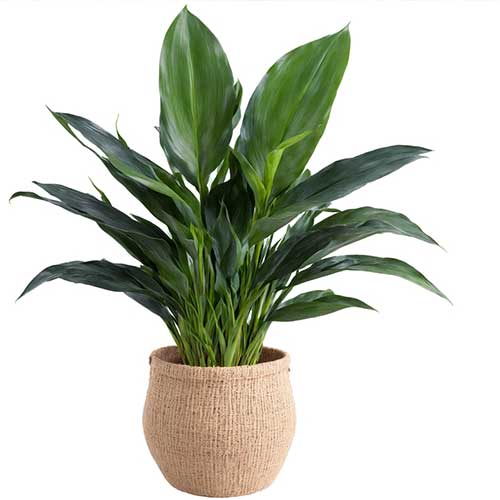
#1. Cast Iron Plant — “The Hard-to-Kill Classic”
| Sunlight | Low to bright indirect light; avoid harsh sun |
| Watering | Water after the upper soil dries; less in winter |
| Pot Size | Snug pot; move up one size when rootbound |
| Care Level | Easy |
| Bloom Time | Rare and inconspicuous indoors; grown for foliage |
Aspidistra elatior is an evergreen perennial from East Asia known for handling shade better than most decorative houseplants.
Its leathery leaves grow slowly, so missing an occasional watering is usually less troublesome than keeping the soil constantly wet.
Remove damaged leaves at soil level and repot only when the roots have filled the container.
Pros
- Excellent shade tolerance
- Handles missed waterings
- Strong upright foliage
Watch For
- Slow growth
- Soggy soil
- Leaf scorch in direct sun
#2. Parlor Palm — “The Shady-Room Palm”
| Sunlight | Low to bright indirect light |
| Watering | Let the soil dry slightly before watering again |
| Pot Size | Keep slightly rootbound; size up only as needed |
| Care Level | Easy |
| Bloom Time | Small flowers may appear on mature plants |
Chamaedorea elegans comes from the rainforests of southern Mexico and Central America, where it naturally grows beneath taller vegetation.
That understory habit helps explain why it copes with bedroom light levels that would frustrate many larger palms.
Trim only fully brown fronds and keep it away from heating vents that can dry its leaf tips.
Pros
- Handles lower light
- Slow, manageable growth
- Elegant narrow fronds
Watch For
- Dry leaf tips
- Spider mites in dry air
- Waterlogged roots
#3. Moth Orchid — “The Long-Blooming Showstopper”
| Sunlight | Bright indirect light; an east window works well |
| Watering | Water thoroughly as bark nears dry, then drain completely |
| Pot Size | Snug slotted orchid pot around the root mass |
| Care Level | Moderate |
| Bloom Time | Often once yearly; individual displays can last for months |
Phalaenopsis orchids are tropical epiphytes from Asia and northern Australia, growing with airy roots rather than in dense garden soil.
Healthy roots often turn silvery as the medium dries, giving you a useful visual cue instead of a rigid watering calendar.
Repot about every couple of years into fresh orchid bark potting mix when the old medium begins breaking down.
Pros
- Long flower display
- Compact footprint
- Visible root cues
Watch For
- Dense regular potting soil
- Water sitting in the crown
- Hot direct sun
 Save
Save#4. Spider Plant — “The Beginner’s Confidence Booster”
| Sunlight | Medium to bright indirect light; tolerates lower light |
| Watering | Water when the top 1 to 2 inches feel dry |
| Pot Size | Snug pot; move up one size when crowded |
| Care Level | Easy |
| Bloom Time | Small white flowers may appear on mature plants |
Chlorophytum comosum is a southern African perennial famous for producing arching stems covered with baby plantlets.
Those plantlets make propagation unusually simple, while the fleshy roots give the plant some resilience when watering isn’t perfect.
A hanging planter with drainage can also keep the tempting dangling leaves farther from an enthusiastic cat.
Pros
- Easy plantlet propagation
- Flexible light tolerance
- Fast visual payoff
Watch For
- Brown leaf tips
- Cats chewing dangling leaves
- Constantly wet soil
#5. Baby Rubber Plant — “The Compact Glossy One”
| Sunlight | Bright indirect light; tolerates lower light |
| Watering | Let the upper potting mix dry before watering |
| Pot Size | Small pot with drainage; size up when rootbound |
| Care Level | Easy |
| Bloom Time | Cream flower spikes can appear on mature plants |
Peperomia obtusifolia is a tropical South American plant with thick, water-storing leaves and a naturally compact growth habit.
Its leaves help it cope with short dry spells, while prolonged wet soil is much more likely to cause trouble.
Pinch back stretched stems to keep the plant bushy, and root healthy stem cuttings when you want another pot.
Pros
- Small-space friendly
- Tolerates brief dryness
- Glossy sturdy leaves
Watch For
- Root rot from overwatering
- Leggy growth in deep shade
- Cold drafts
#6. African Violet — “The Tiny Flower Factory”
| Sunlight | Bright to moderate indirect light |
| Watering | Water as the surface begins to dry; avoid saturation |
| Pot Size | Small, shallow pot with good drainage |
| Care Level | Moderate |
| Bloom Time | Can flower repeatedly year-round in good conditions |
African violets are commonly sold under the familiar Saintpaulia name, although modern botanical classification places them within Streptocarpus.
They stay compact and can bloom repeatedly when they receive steady indirect light without harsh afternoon sun.
Remove spent flowers and damaged leaves promptly, and avoid leaving the crown waterlogged.
Pros
- Frequent colorful blooms
- Tiny footprint
- Easy leaf propagation
Watch For
- Cold water on foliage
- Crown rot
- Too little light for blooming
#7. Rattlesnake Plant — “The Living Pattern”
| Sunlight | Medium to bright indirect light |
| Watering | Keep evenly moist but never soggy |
| Pot Size | One size larger when roots fill the pot |
| Care Level | Moderate to Advanced |
| Bloom Time | Flowers are uncommon indoors |
Goeppertia insignis, also sold as Calathea lancifolia, comes from southeastern Brazil and belongs to the prayer plant family.
Its patterned leaves naturally change position between day and night, giving the plant an unusually animated presence.
Keep humidity steady, remove crisp leaves at the base, and protect it from cold or dry air.
Pros
- Striking leaf pattern
- Nightly leaf movement
- Compact upright form
Watch For
- Low humidity
- Crispy edges
- Waterlogged soil
 Save
Save#8. Boston Fern — “The Soft Green Cloud”
| Sunlight | Bright indirect or filtered light |
| Watering | Keep consistently moist; don’t let the root ball fully dry |
| Pot Size | Roomy draining pot or hanging basket |
| Care Level | Moderate |
| Bloom Time | N/A — ferns reproduce by spores |
Boston fern is a classic form of Nephrolepis exaltata, prized for arching fronds rather than flowers.
Unlike drought-tolerant options on this list, it performs best when its root zone stays evenly moist and the surrounding air isn’t overly dry.
Cut old brown fronds near the base and rotate the basket occasionally for balanced growth.
Pros
- Lush arching texture
- Excellent hanging form
- No flowers to manage
Watch For
- Dry indoor air
- Soil drying completely
- Messy dropped leaflets
#9. Friendship Plant — “The Textured Mini”
| Sunlight | Bright indirect light |
| Watering | Water as the upper mix begins to dry; reduce in winter |
| Pot Size | Small draining pot suited to its compact roots |
| Care Level | Easy to Moderate |
| Bloom Time | Small flowers may appear, but foliage is the main feature |
Pilea involucrata is a compact Central and South American plant known for deeply textured, often bronze-toned leaves.
It appreciates warmth and humidity, yet its small size makes it much easier to place than a large fern or palm.
Pinch growing tips for a fuller shape and propagate trimmed stems in a moist, airy medium.
Pros
- Compact growth
- Distinct textured leaves
- Easy stem propagation
Watch For
- Cold drafts
- Dry crispy foliage
- Harsh direct sunlight
#10. Wax Plant — “The Patient Trailer”
| Sunlight | Bright indirect light |
| Watering | Let the airy mix dry between waterings |
| Pot Size | Snug pot with excellent drainage |
| Care Level | Easy to Moderate |
| Bloom Time | Mature plants can produce fragrant flower clusters |
Hoya carnosa is a climbing or trailing tropical plant with thick waxy leaves and fragrant clusters of star-shaped flowers.
Its epiphytic habits favor an airy root zone, so letting the mix partly dry is safer than constantly keeping it wet.
Avoid cutting old flower spurs after blooming because established plants can flower again from them.
Pros
- Tolerates some drying
- Trailing or climbing habit
- Fragrant mature blooms
Watch For
- Slow establishment
- Overwatering
- Poor flowering in dim light
#11. Areca Palm — “The Airy Statement Plant”
| Sunlight | Bright indirect light |
| Watering | Keep lightly moist, allowing the surface to dry slightly |
| Pot Size | Stable floor pot; repot only when roots become crowded |
| Care Level | Moderate |
| Bloom Time | Flowers are uncommon indoors |
Dypsis lutescens, also called areca or golden cane palm, is native to Madagascar and develops clusters of feathery fronds.
It needs considerably more light than a parlor palm, making it a better match for a bedroom with a bright filtered window.
Remove fully brown fronds and watch for spider mites when indoor heating makes the air dry.
Pros
- Strong statement shape
- Soft feathery foliage
- Fills empty corners well
Watch For
- Needs more floor space
- Dry-air pests
- Soggy roots
 Save
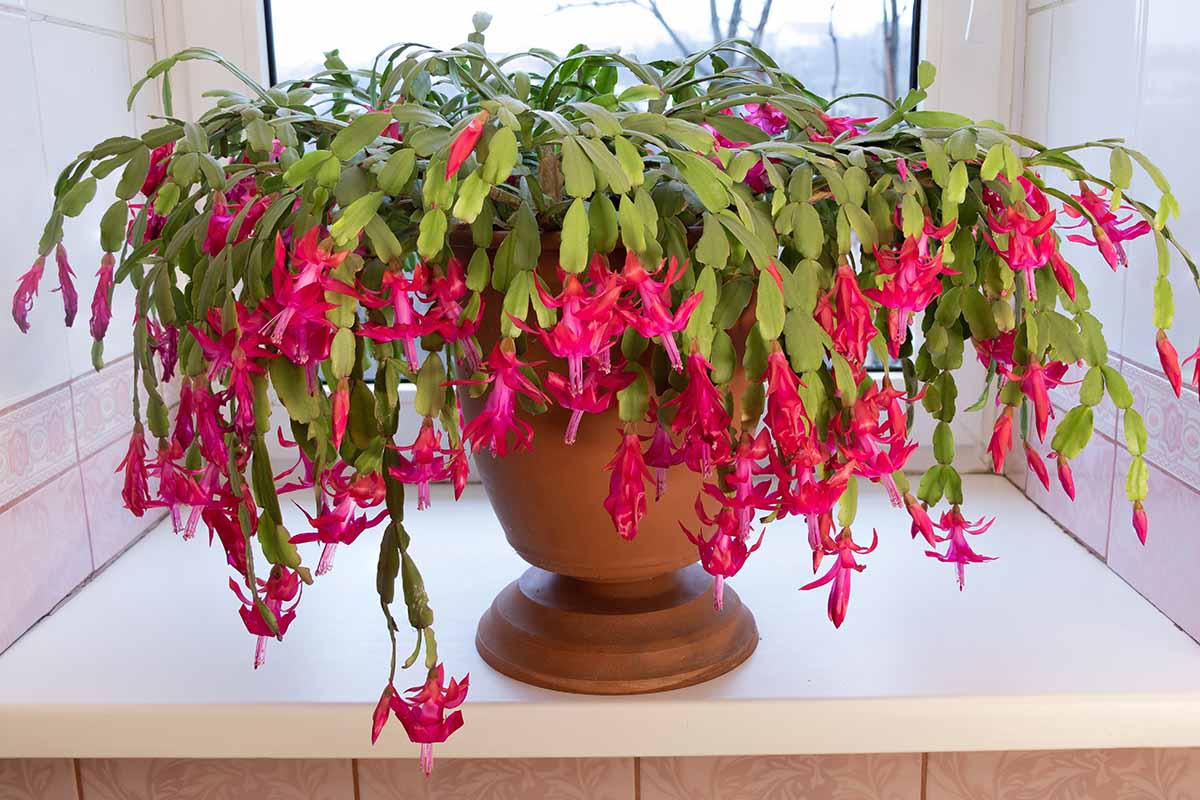
Save#12. Holiday Cactus — “The Winter Color Surprise”
| Sunlight | Bright indirect light; protect from hot direct sun |
| Watering | Water when the top inch feels dry |
| Pot Size | Snug draining pot; it tolerates being slightly potbound |
| Care Level | Easy to Moderate |
| Bloom Time | Typically late fall or winter, depending on type |
Schlumbergera species come from Brazilian forest habitats, so these holiday cacti prefer conditions very different from desert cacti.
Cooler temperatures and long, uninterrupted nights help trigger flower buds, which is why a bedroom can suit them surprisingly well.
Propagate healthy stem segments after flowering, and don’t rush to repot because slightly crowded roots are usually fine.
Pros
- Showy seasonal flowers
- No desert-cactus spines
- Easy stem propagation
Watch For
- Too much summer sun
- Overwatering
- Night light disrupting buds
How to Choose the Right Cat Safe Plant for Your Bedroom
Start with the room you actually have, not the plant photo you like most. Our guide to the best plants for bedroom spaces can help you compare other placement factors too.
- Match the light first — Cast iron plant and parlor palm are better candidates for dimmer rooms, while areca palm, Hoya, African violet, and holiday cactus reward brighter indirect light.
- Check the botanical identity — Common names can be misleading, so confirm a plant against the ASPCA’s toxic and non-toxic plant list before bringing an unfamiliar variety home.
- Think about your cat’s habits — A non-toxic plant can still be chewed, knocked over, or dug up. Hanging pots and stable heavy planters can make shared spaces easier to manage.
Basic Care Tips for Beginners
Most houseplant problems become easier once you stop treating every plant the same. If you’re just starting, these beginner-friendly bedroom plants offer more ideas with forgiving care needs.
- Use the soil as your watering cue — Check moisture with your finger before reaching for the watering can. The Smithsonian Gardens houseplant care guidance also emphasizes proper light, drainage, and avoiding routine overwatering.
- Give excess water somewhere to go — A drainage hole matters because roots need both moisture and oxygen. Decorative cachepots work best when the inner nursery pot can drain freely.
- Choose easier plants when life is busy — Cast iron plant, spider plant, baby rubber plant, and parlor palm are easier to forgive than moisture-sensitive ferns. You can also explore more low-maintenance indoor plants for bedrooms.
Common Mistakes to Avoid
These mistakes cause more problems than choosing the “wrong” cat-safe plant.
Watering on a fixed calendar — Potting mix dries at different speeds with changing light, temperature, pot size, and season. Checking the soil first prevents many cases of root stress.
Calling a dark room “low light” — Low-light tolerant plants still need usable light. A windowless bedroom generally needs a suitable grow light rather than a tougher plant.
Treating non-toxic as edible — A cat-safe classification doesn’t make leaves a snack. The Clemson Extension pet-safe houseplant guide recommends choosing verified species, while repeated chewing should still be discouraged.
Ignoring dry bedroom air — Boston fern and rattlesnake plant are much less forgiving of low humidity than cast iron plant or baby rubber plant. Heating and air conditioning can make that difference more noticeable.
What You’ll Need
You don’t need a shelf full of gadgets. A few basics solve the most common bedroom plant-care problems.
Helps excess water escape instead of collecting around roots.
Creates a lighter root zone for many common foliage plants.
Useful for humidity-loving ferns and prayer-family plants in dry homes.
Make Overwatering Less Likely From Day One
The easiest fix for the overwatering mistake above is a pot that lets excess water escape. A properly sized planter with drainage won’t replace checking the soil, but it gives wet roots a much better chance to recover.
Frequently Asked Questions
Q: Are cat-safe plants completely harmless if my cat eats them?
A: Not necessarily. A plant can be classified as non-toxic and still cause vomiting or stomach upset if your cat chews or swallows enough plant material.
Q: What is the best cat-safe plant for a low-light bedroom?
A: Cast iron plant and parlor palm are two of the strongest choices on this list. Both tolerate lower indoor light better than bright-light plants such as areca palm.
Q: Is a spider plant safe for cats?
A: Spider plant is listed as non-toxic to cats by the ASPCA. Its long dangling leaves can still invite chewing, so a hanging location is often practical.
Q: Which cat-safe bedroom plants have flowers?
A: Moth orchid, African violet, Hoya, and holiday cactus are the strongest flowering choices here. Each needs brighter indirect light than the most shade-tolerant foliage plants.
Q: Can I keep cat-safe plants in a bedroom with no windows?
A: Not successfully for the long term without supplemental light. Even plants described as low-light tolerant still need enough light to photosynthesize and maintain healthy growth.
Q: How can I stop my cat from digging in bedroom plant pots?
A: Start with a stable pot and place smaller plants on shelves or in secure hanging planters. Giving your cat approved enrichment such as cat grass can also make houseplants less interesting.
Final Thoughts
The best cat safe plants for bedroom spaces aren’t all the same. Pick a cast iron plant or parlor palm for forgiving greenery, choose an orchid or African violet for flowers, or try a Boston fern or rattlesnake plant when you can provide extra humidity.
Match the plant to your light and routine first, then place it where both you and your cat can live with it comfortably.
Which plant are you adding to your space first? Save this post to Pinterest so you can come back whenever you need fresh plant inspo!

I’m a home decor enthusiast who loves discovering beautiful room ideas, creative DIY projects, and Pinterest-worthy decorating inspiration. At DecorMinty, I share simple tips, fresh trends, and practical ideas to help you create a home you’ll truly love—one room at a time.