12 Best Plants for Bedroom Safe for Dogs: Beautiful Pet-Safe Picks
Quick Answer
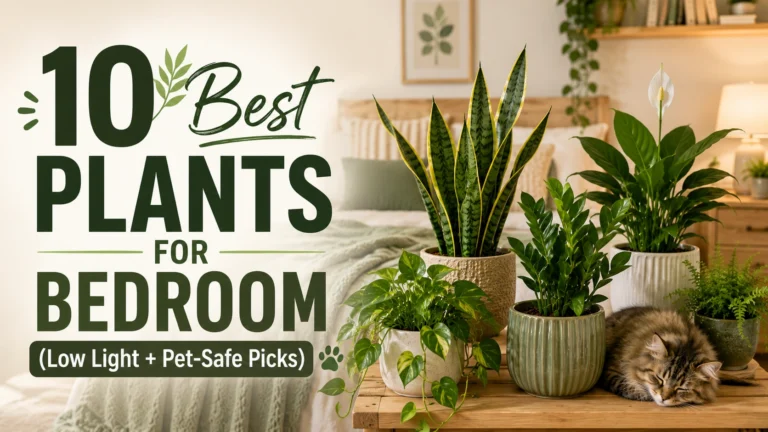
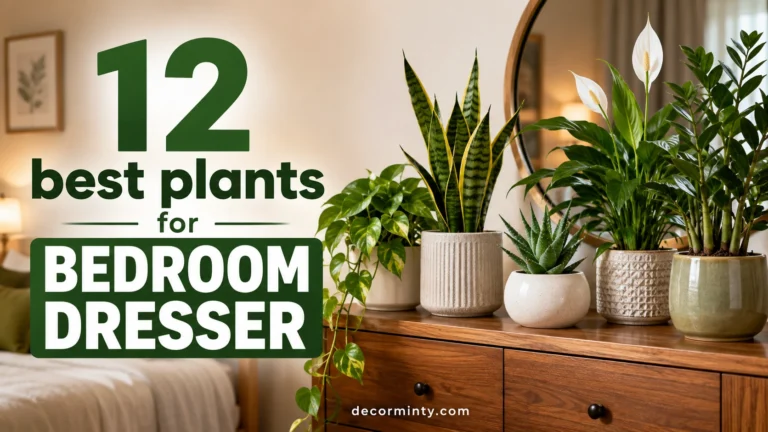
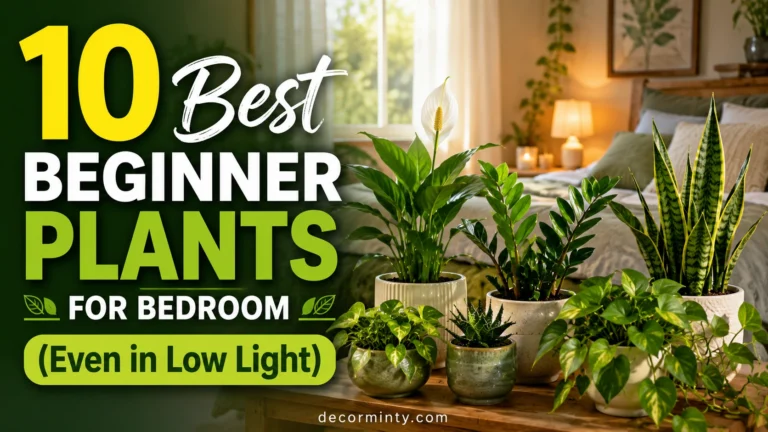
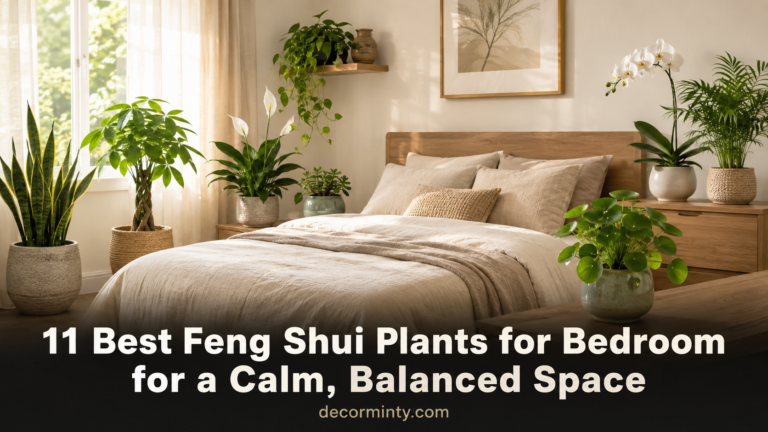
The best plants for bedroom safe for dogs include cast iron plant, parlor palm, Phalaenopsis orchid, spider plant, baby rubber plant, watermelon peperomia, Chinese money plant, rattlesnake calathea, Boston fern, African violet, money tree, and ponytail palm because these choices are considered non-toxic to dogs while covering a useful range of bedroom light levels, sizes, and care needs.
Here’s the short version before you scroll further:
- Cast Iron Plant — Best choice for genuinely dim bedrooms.
- Parlor Palm — Gives low-light rooms a taller tropical look.
- Phalaenopsis Orchid — Long-lasting flowers without intense sunlight.
- Spider Plant — Forgiving, fast-growing, and easy to propagate.
- Baby Rubber Plant — Compact glossy foliage for nightstands.
- Watermelon Peperomia — Bold striped leaves in a tiny footprint.
- Chinese Money Plant — Round leaves and easy offset propagation.
- Rattlesnake Calathea — Dramatic foliage but higher humidity needs.
- Boston Fern — Lush texture for consistently humid bedrooms.
- African Violet — Small flowering option for bright windows.
- Money Tree — Upright statement plant for indirect light.
- Ponytail Palm — Excellent for forgetful waterers with sunny rooms.
Start with your bedroom’s real light level, then consider humidity, available floor space, and how often you want to water. Non-toxic plants are safer choices around dogs, but it’s still smart to discourage chewing because any plant material can upset a sensitive stomach.
Our Top Picks at a Glance
Easiest to Care For — Cast Iron Plant
Best for Low Light — Parlor Palm
Most Beautiful Bloom — Phalaenopsis Orchid
Best for Beginners — Spider Plant
12 Dog-Safe Plants That Work Beautifully in Bedrooms
 Save
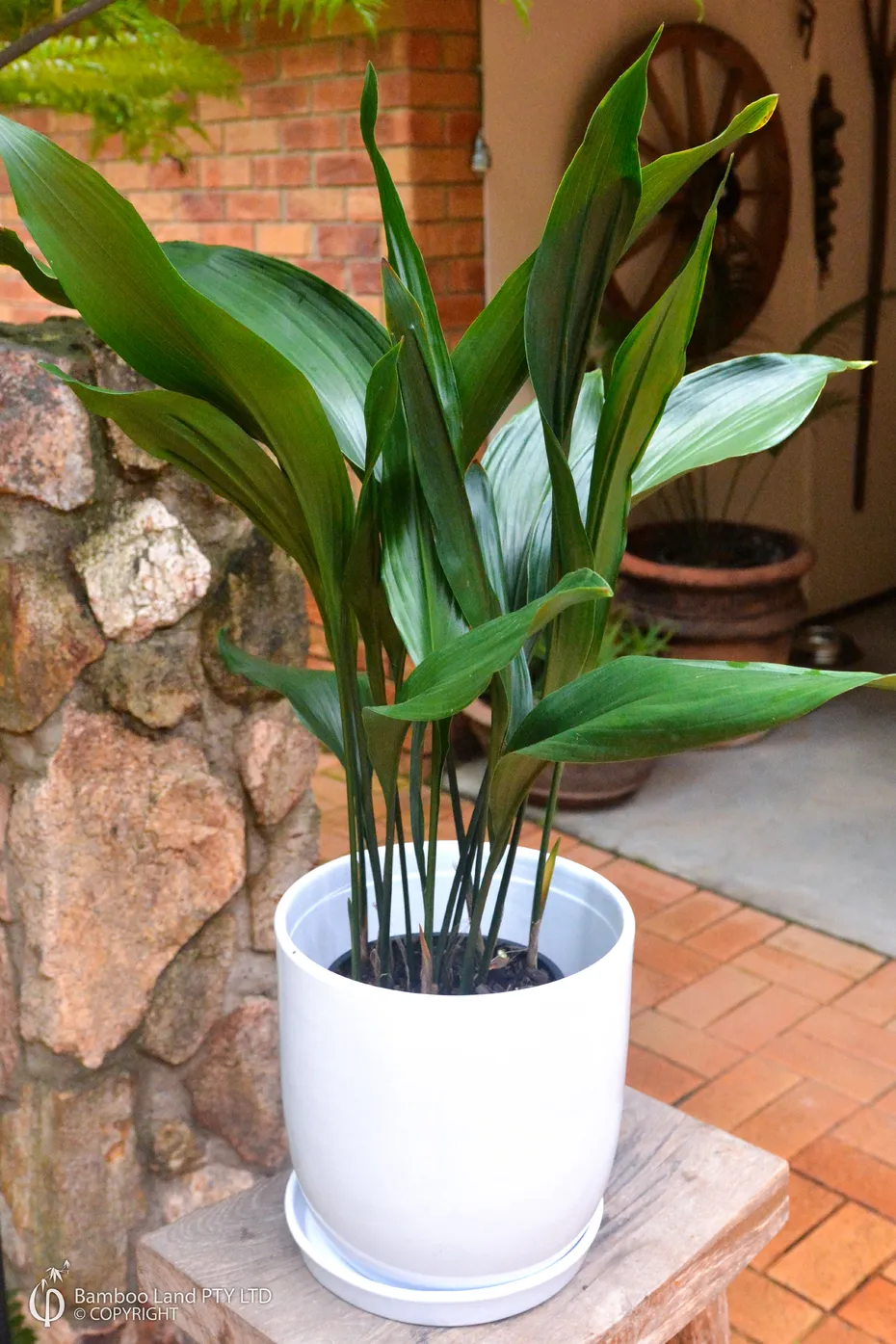
Save#1. Cast Iron Plant — “The Low-Light Survivor”
| Sunlight | Low to medium indirect light, avoid strong direct sun |
| Watering | Water after the upper soil begins drying, less in winter |
| Pot Size | Snug container with drainage, move up one size when rootbound |
| Care Level | Easy |
| Bloom Time | Flowers are uncommon and insignificant indoors |
Aspidistra elatior comes from Japan and grows naturally as an understory plant. Its broad upright leaves tolerate much less light than many decorative houseplants.
It also handles occasional dry soil better than moisture-loving tropicals. Direct sun is actually a bigger concern because strong rays can bleach its leaves.
Remove dusty or damaged leaves near the base and avoid constantly wet soil. Division is the simplest way to propagate an established plant.
Pros
- Handles deep shade better than most houseplants
- Slow growth means less frequent repotting
- Tolerates occasional missed watering
Watch For
- Direct sunlight can bleach foliage
- Soggy soil can encourage root problems
- Growth is naturally slow
#2. Parlor Palm — “The Quiet Tropical”
| Sunlight | Bright indirect light preferred, low light tolerated |
| Watering | Let the soil dry slightly between waterings |
| Pot Size | Keep fairly snug and repot only when necessary |
| Care Level | Easy |
| Bloom Time | Small flowers may appear on mature plants |
Chamaedorea elegans is an understory palm native to southern Mexico and northern Central America. Indoors, its narrow arching fronds bring height without requiring intense sunlight.
Overwatering is the main mistake to avoid. Allow the mix to dry slightly, and protect the plant from cold drafts around windows or air vents.
This palm grows slowly and generally dislikes unnecessary repotting. That makes it a useful long-term bedroom floor plant.
Pros
- Tolerates lower indoor light
- Adds height without a huge footprint
- Slow-growing and low maintenance
Watch For
- Overwatering in dim rooms
- Cold drafts near windows
- Very slow growth
#3. Phalaenopsis Orchid — “The Long-Lasting Bloomer”
| Sunlight | Low to medium indirect light, east or west windows work well |
| Watering | Allow the airy growing medium to dry slightly before watering again |
| Pot Size | Small ventilated orchid pot suited closely to the root mass |
| Care Level | Moderate |
| Bloom Time | Usually flowers about once a year, depending on hybrid |
Phalaenopsis orchids naturally grow on trees in warm tropical forests, so their roots need excellent airflow. They are among the easiest orchids to adapt to normal indoor conditions.
Use bark or another airy orchid medium rather than dense garden soil. A slotted orchid pot can help excess water drain and air reach the roots.
After blooming, follow the plant’s growth rather than repeatedly watering on a calendar. Avoid letting the pot sit in standing water.
Pros
- Flowers can remain attractive for weeks
- Compact footprint
- Works in normal household temperatures
Watch For
- Dense soil suffocates orchid roots
- Standing water encourages root problems
- Flowering needs adequate light

#4. Spider Plant — “The Forgiving One”
| Sunlight | Medium indirect light preferred, deeper shade tolerated |
| Watering | Keep moderately moist but allow some drying between waterings |
| Pot Size | Snug draining pot or hanging basket |
| Care Level | Easy |
| Soil pH | Approximately 6.0 to 8.0 |
| Bloom Time | Small flowers may develop before plantlets form |
Chlorophytum comosum comes from parts of tropical and southern Africa and is famous for producing baby plantlets on arching stems. Those plantlets make propagation unusually simple.
The plant tolerates some drought and shade, although medium indirect light usually gives better growth. Strong direct sunlight can damage its strap-like foliage.
Trim brown tips with clean scissors and divide or root plantlets as needed. A hanging planter with drainage showcases its cascading shape while keeping the pot out of a curious dog’s path.
Pros
- Very easy to propagate
- Tolerates varied light
- Works beautifully in hanging baskets
Watch For
- Leaf-tip browning from water quality
- Harsh direct sunlight
- Overwatering during winter
#5. Baby Rubber Plant — “The Compact Glossy One”
| Sunlight | Bright indirect light, non-variegated plants tolerate lower light |
| Watering | Water after the top layer of mix dries |
| Pot Size | Compact draining pot, upsize gradually |
| Care Level | Easy |
| Bloom Time | Small flower spikes may appear, foliage is the main attraction |
Peperomia obtusifolia is a South American member of the pepper family. Thick, glossy leaves give it a polished look that suits compact bedroom furniture.
Its semi-succulent foliage makes constantly wet soil a poor match. Bright indirect light is ideal, although green forms can tolerate lower light for extended periods.
Pinch back long stems if you want a fuller plant. Stem cuttings are also an easy way to create new plants.
Pros
- Compact enough for small surfaces
- Thick leaves tolerate brief dry periods
- Easy to propagate from cuttings
Watch For
- Wet soil can damage roots
- Direct sun can scorch leaves
- Variegated types need brighter light
#6. Watermelon Peperomia — “The Pattern Maker”
| Sunlight | Bright indirect light |
| Watering | Water when the top of the soil feels dry |
| Pot Size | Small draining pot, this species tolerates being somewhat pot-bound |
| Care Level | Easy |
| Bloom Time | Cream-colored spikes may appear |
Peperomia argyreia, commonly called watermelon peperomia, is native to Brazil. Its waxy silver-green striped leaves look remarkably similar to watermelon rind.
The plant dislikes both waterlogged and extremely dry soil. Wilting can signal that it has become too dry, while consistently wet soil raises the risk of root rot.
Repot only when necessary because this small plant performs well in a snug container. Leaf or division propagation can produce new plants.
Pros
- Distinctive striped foliage
- Fits very small bedroom surfaces
- Doesn’t require frequent repotting
Watch For
- Root rot from overwatering
- Wilting from very dry soil
- Cold drafts
#7. Chinese Money Plant — “The Modern Minimalist”
| Sunlight | Bright indirect light |
| Watering | Check the soil and water after the upper layer dries |
| Pot Size | Choose a pot roughly 1 to 2 inches wider than the root mass when repotting |
| Care Level | Easy |
| Bloom Time | Primarily grown indoors for foliage |
Pilea peperomioides is instantly recognizable by its round leaves held on long stems. Its clean shape makes it particularly suited to modern or minimalist bedrooms.
The plant often produces offsets, sometimes called pups, around its base. These can be separated and potted to create new plants.
Rotate the pot occasionally if growth starts leaning toward the window. Repot gradually rather than jumping to an oversized container that stays wet for too long.
Pros
- Distinct round foliage
- Produces easy-to-separate offsets
- Compact upright shape
Watch For
- Leggy growth in inadequate light
- Oversized pots staying wet
- Uneven growth toward windows
 Save
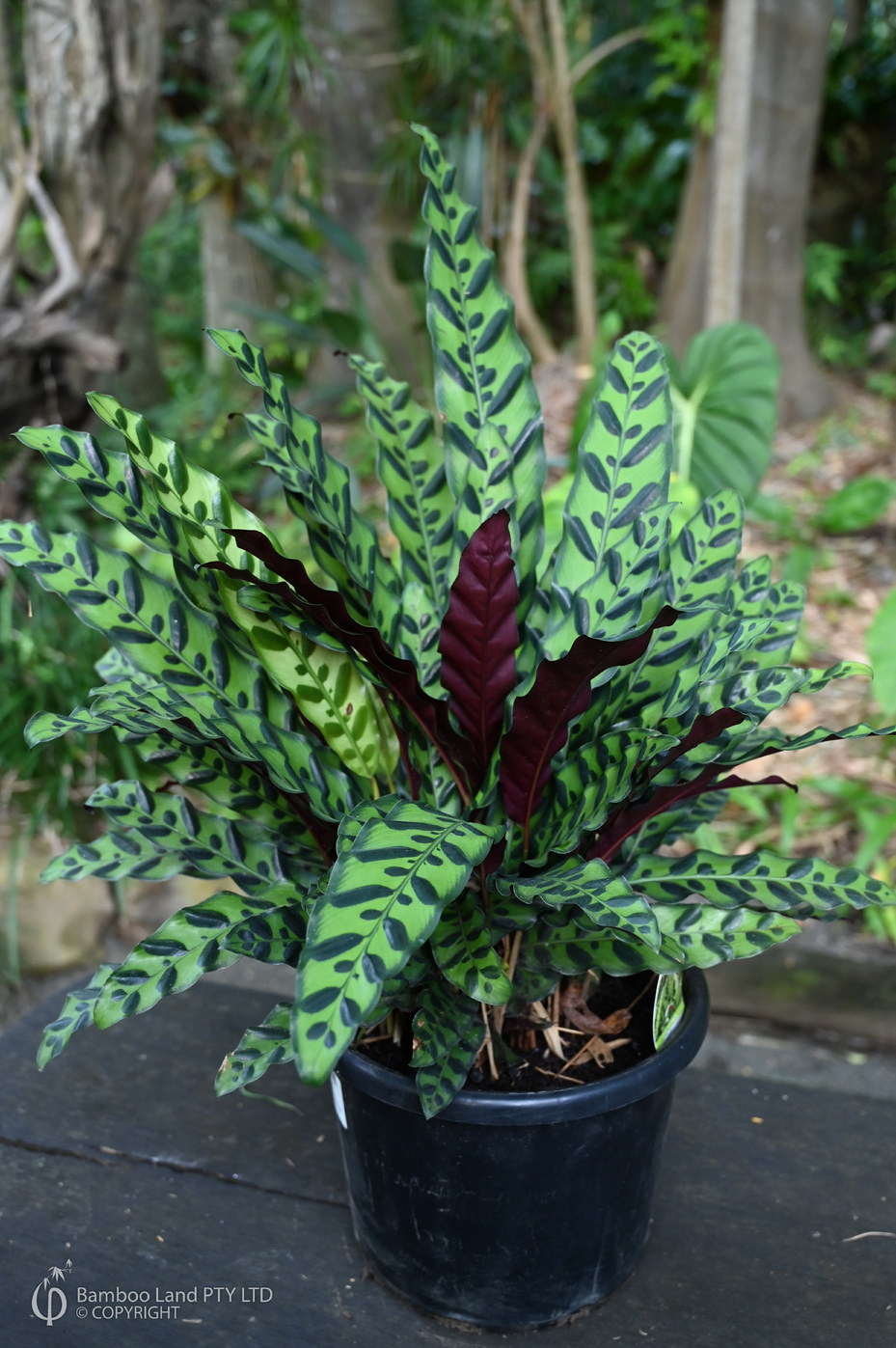
Save#8. Rattlesnake Calathea — “The Statement Foliage”
| Sunlight | Limited sun to bright shade |
| Watering | Keep consistently moist but never soggy |
| Pot Size | Draining container only slightly larger than the root mass |
| Care Level | Moderate to Advanced |
| Bloom Time | Flowers are rare indoors |
Goeppertia insignis, formerly sold as Calathea lancifolia, comes from southeastern Brazilian rainforests. Long patterned leaves have deep purple undersides and fold upward during the evening.
This plant needs more humidity than the easier choices above. Dry air, drafts, or inconsistent moisture can quickly show up as curled or browned foliage.
Keep the soil moist without leaving it soggy and wipe dusty foliage gently. Division is the practical propagation method for mature plants.
Pros
- Exceptional patterned foliage
- No strong direct sun required
- Leaves move noticeably between day and night
Watch For
- Low humidity causes browning
- Soggy soil causes root rot
- Sudden temperature changes
#9. Boston Fern — “The Humidity Lover”
| Sunlight | Bright indirect light, some shade tolerated |
| Watering | Keep soil moist and avoid letting it dry completely |
| Pot Size | Roomy hanging basket or container with reliable drainage |
| Care Level | Moderate |
| Bloom Time | N/A — ferns reproduce by spores |
Nephrolepis exaltata is native to tropical and subtropical parts of the Americas. Its arching fronds can reach several feet, making it one of the fullest options on this list.
Humidity matters. Dry indoor air may invite crispy foliage and pests such as spider mites, while overly wet winter soil can create root problems.
Don’t mistake the regular brown or black spore structures underneath healthy fronds for insects. Remove genuinely dead fronds at their base.
Pros
- Creates a lush cascading display
- Handles indirect light well
- Works in hanging baskets
Watch For
- Soil drying completely
- Low indoor humidity
- Spider mites in very dry conditions
#10. African Violet — “The Small-Space Bloomer”
| Sunlight | Bright indirect light, north or east exposure works well |
| Watering | Keep mix moist but not soggy and avoid standing water |
| Pot Size | Small draining container suited to its fine root system |
| Care Level | Easy to Moderate |
| Soil pH | About 6.2 to 6.5 |
| Bloom Time | Can bloom several times per year with proper care |
African violets, commonly listed as Saintpaulia ionantha, originated in eastern Africa. Their small rosettes and colorful flowers make them excellent for bedrooms where floor space is limited.
They have fine roots and need a light, well-draining mix. Root rot from excessive water is one of the most common causes of plant loss.
Remove faded flowers and dead leaves gently. Keep cold water off the fuzzy leaves because persistent droplets can leave spots.
Pros
- Can bloom repeatedly indoors
- Excellent for small surfaces
- Available in many flower colors
Watch For
- Root rot from soggy soil
- Water spots on fuzzy leaves
- Weak flowering in inadequate light
#11. Money Tree — “The Vertical Statement”
| Sunlight | Bright indirect light or partial shade |
| Watering | Water after the upper soil begins to dry and drain completely |
| Pot Size | Stable draining pot sized gradually as the plant grows |
| Care Level | Moderate |
| Bloom Time | Houseplants are unlikely to flower |
Pachira aquatica comes from tropical parts of Mexico, Central America, and South America. Indoors, it usually stays far smaller than trees growing in its native wet habitats.
Although it appreciates moisture and humidity, standing water around the roots is a problem. Leaf drop can occur when the plant becomes excessively dry.
Its upright structure works well where you want greenery without wide trailing stems. Stem cuttings are one method of propagation.
Pros
- Provides vertical visual impact
- Prefers indirect light
- Works as a floor or tabletop plant
Watch For
- Root rot from standing water
- Leaf drop from severe dryness
- Strong direct sun can scorch leaves
 Save
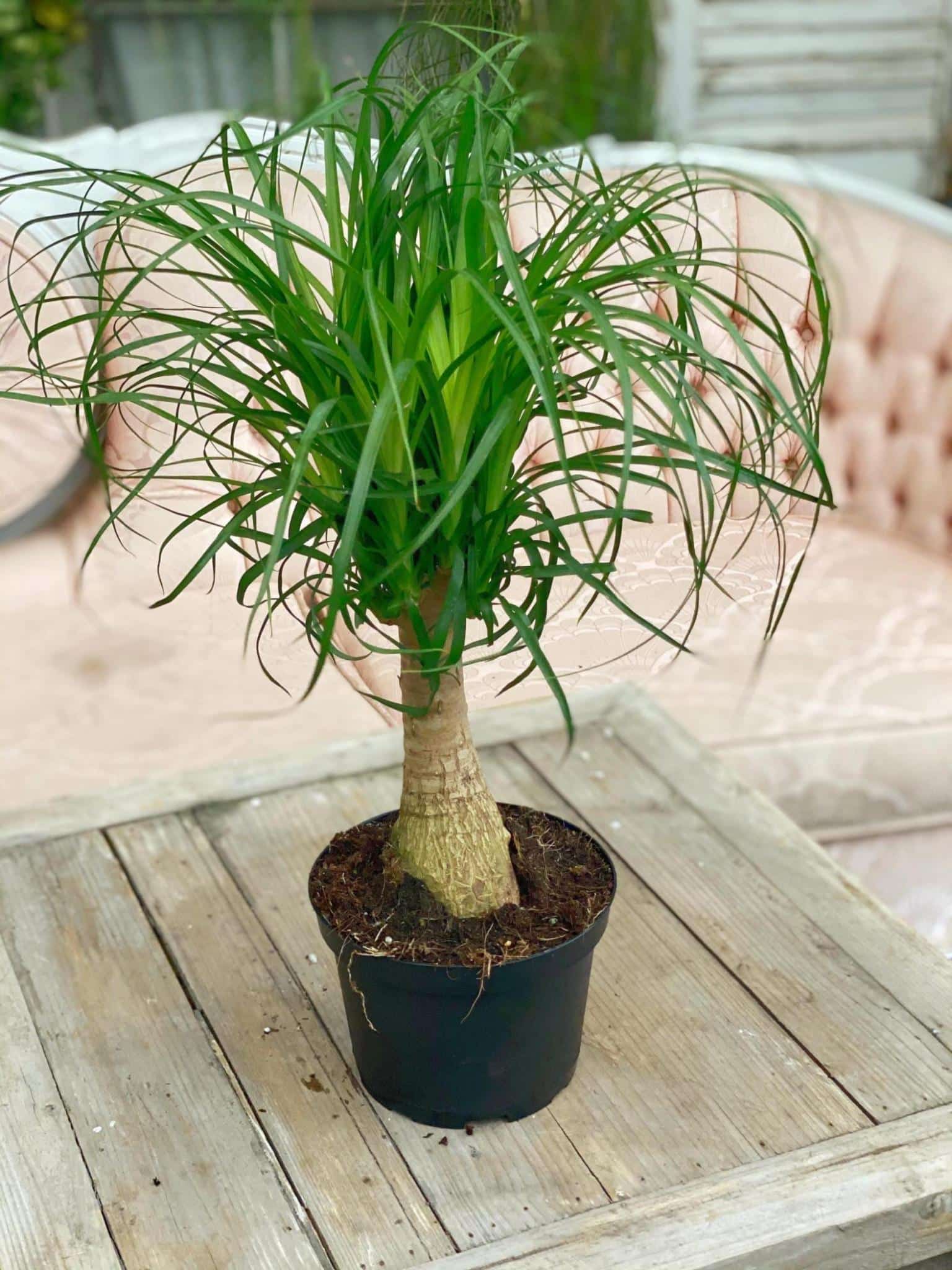
Save#12. Ponytail Palm — “The Forgetful Waterer’s Favorite”
| Sunlight | Bright light with a sunny window preferred |
| Watering | Water deeply, then allow the soil to dry before watering again |
| Pot Size | Well-draining container only modestly larger than the root ball |
| Care Level | Easy |
| Bloom Time | Rarely flowers as a houseplant |
Beaucarnea recurvata is native to Mexico and isn’t a true palm. Its swollen trunk, called a caudex, stores water and supports long cascading leaves.
This adaptation makes ponytail palm far more drought tolerant than Boston fern or calathea. It also handles heated indoor air surprisingly well.
Give it fast drainage and cut watering dramatically during slower winter growth. The bigger risk is usually too much water, not too little.
Pros
- Excellent drought tolerance
- Handles dry heated air
- Slow-growing and distinctive
Watch For
- Needs more light than shade-loving choices
- Excess water can cause rot
- Growth is naturally slow
How to Choose the Right Dog-Safe Plant for Your Bedroom
Dog safety comes first, but it isn’t the only factor. Check a plant's identity carefully because similar common names can belong to completely different species.
- Confirm toxicity before buying — Compare the scientific name on the plant label with the ASPCA’s toxic and non-toxic plant list for dogs. Don’t rely only on a common name.
- Match the plant to your window — Cast iron plants and parlor palms handle lower light better, while African violets, orchids, and ponytail palms benefit from brighter positions.
- Think about your dog’s habits — A floor plant may be fine with a dog that ignores greenery, while hanging or elevated plants make more sense for an enthusiastic chewer or digger.
- Be realistic about humidity — Boston ferns and rattlesnake calatheas need more consistent moisture than peperomias or ponytail palms.
Basic Care Tips for a Dog-Friendly Bedroom
A healthy plant is easier to maintain and less likely to drop damaged leaves around the room. Your bedroom environment should guide the routine.
- Use the soil instead of a calendar — Lower-light rooms dry more slowly, so check the potting mix before adding more water.
- Provide drainage — Containers should release excess water instead of leaving roots submerged. The University of Illinois Extension recommends moving up only about one pot size when repotting rather than placing a small plant in a huge container.
- Keep dropped material cleaned up — Even non-toxic plants aren’t intended to be dog snacks. The University of Minnesota Extension’s guidance on houseplants and pets recommends choosing pet-safe plants while still managing access.
- Watch changing light levels — A spot that is bright in summer may become quite dim in winter. Move the plant or supplement its light when growth becomes weak.
Common Mistakes to Avoid
Most problems come from mismatching the plant with the room rather than choosing the wrong decorative style.
Watering every plant on the same schedule — A Boston fern needs much steadier moisture than a ponytail palm. Treating them alike can leave one crispy and the other waterlogged.
Calling any bedroom location “low light” — Low light still means enough light for photosynthesis. A windowless room generally requires a suitable grow light.
Moving a small plant into an oversized pot — Excess potting mix can remain wet long after the roots use available moisture, increasing the risk of root rot. The Illinois Extension houseplant guide recommends increasing container diameter gradually.
Assuming non-toxic means edible — A dog can still experience digestive upset after chewing significant amounts of ordinary plant material. Prevent chewing when possible.
Buying a humidity lover for very dry air — Boston ferns and rattlesnake calatheas can develop brown foliage when indoor air stays dry. Pick a tougher plant or increase humidity instead.
What You’ll Need
You don’t need a shelf full of equipment. A few basics make it much easier to provide consistent care.
Good drainage reduces the chance of waterlogged roots.
Useful for moisture-loving calatheas and Boston ferns.
Clean cuts make removing dead leaves and flower stems easier.
Stop Guessing When Your Bedroom Plants Need Water
Overwatering is one of the easiest mistakes to make in a lower-light bedroom because soil dries more slowly. A simple soil moisture meter can provide an extra reference point, although you should still check the soil and follow each plant’s individual needs.
Frequently Asked Questions
Q: What are the best dog-safe plants for a low-light bedroom?
A: Cast iron plant and parlor palm are two of the strongest options. Both tolerate lower indoor light better than flowering plants that need a brighter window.
Q: Are spider plants safe for dogs?
A: Yes. Spider plant, Chlorophytum comosum, is listed as non-toxic to dogs, although you should still discourage your dog from chewing large amounts of foliage.
Q: Are orchids safe to keep in a bedroom with dogs?
A: Phalaenopsis orchids are considered non-toxic to dogs. They also adapt well to normal household temperatures when provided suitable indirect light and an airy growing medium.
Q: Can a dog still get sick from a non-toxic plant?
A: Yes. Non-toxic means the plant isn’t known for the dangerous toxic principles associated with poisonous species, but eating plant material can still cause digestive upset in some dogs.
Q: Which dog-safe bedroom plant needs the least water?
A: Ponytail palm is the strongest choice here for infrequent watering. Its swollen trunk stores water, so the soil should be allowed to dry between deep waterings.
Q: How can I stop my dog from digging in bedroom plant pots?
A: Start by placing smaller plants on stable elevated furniture or using secure hanging planters. You can also cover accessible soil appropriately and keep loose fallen leaves cleaned up.
Final Thoughts
The best bedroom plant isn’t simply the prettiest dog-safe option. Choose one whose light, watering, size, and humidity needs actually match the room you have.
For darker bedrooms, start with cast iron plant or parlor palm. For brighter rooms, spider plant, African violet, orchid, peperomia, or ponytail palm gives you plenty of room to match your preferred style.
Which plant are you adding to your space first? Save this post to Pinterest so you can come back whenever you need fresh plant inspo!

I’m a home decor enthusiast who loves discovering beautiful room ideas, creative DIY projects, and Pinterest-worthy decorating inspiration. At DecorMinty, I share simple tips, fresh trends, and practical ideas to help you create a home you’ll truly love—one room at a time.