How to Clean a Bed Pillow by Fill Type
Quick Answer
Yes, but the fill decides the method. Down, feather, cotton and polyester pillows can usually be machine-washed on a gentle cycle with a little mild detergent and an extra rinse. Memory foam, latex and buckwheat pillows cannot go in the washer; wash their covers and spot-clean the core instead. Dry the pillow completely through the centre before it goes back on the bed.
A pillow looks clean under its case long after it stops being clean inside. Night after night it absorbs sweat, body oil, dead skin and dust, and that build-up turns a white pillow yellow and makes it smell stale. The answer is in two places: the care label, and the fill inside.
Check the Care Label and the Fill First
Find the care label, usually a small tag sewn into a side seam, before water touches the pillow. If it says machine washable, follow its temperature and cycle. If it says spot clean only, do not immerse the whole pillow. If it says dry clean only, take it to a professional.
If the label has faded, identify the fill by feel. Press the pillow flat and let go: down, feather and polyester spring back quickly, while memory foam and latex hold the dent longer. When in doubt, treat an unidentified foam-like pillow as non-washable and spot-clean it.
| Fill type | Machine wash? | Best method | Drying |
|---|---|---|---|
| Down or feather | Usually yes | Gentle cycle, cool water, mild detergent, extra rinse | Low or no heat with dryer balls |
| Polyester or down alternative | Usually yes | Gentle cycle, warm water, small amount of detergent | Low heat with dryer balls |
| Cotton | Usually yes | Gentle cycle, cool or warm water as the label allows | Low heat, then air until the core is dry |
| Memory foam | No | Wash the removable cover; spot-clean the foam | Air dry flat, away from direct heat |
| Latex | No | Wash the cover; spot-clean gently | Air dry flat, out of direct sun |
| Buckwheat hulls | Casing only | Empty the hulls, wash the casing, air the hulls | Dry the casing fully before refilling |
Check the ticking for tears before any wash: a split seam lets fill escape and clog the pump. Mend a small tear or use a mesh laundry bag. Remove the pillowcase and protector; those wash separately.
How to Machine-Wash a Bed Pillow
 Save
For down, feather, cotton and polyester pillows whose label allows machine washing, the usual mistakes are too much detergent, washing one pillow alone, or stopping drying while the centre is still damp.
- Pre-treat visible stains. Dab the stain with a little mild liquid detergent, working from the outside inward, and leave it for 10 to 15 minutes.
- Wash two pillows at a time. A single wet pillow slumps to one side and throws the load off balance; two pillows keep the machine steady.
- Choose a gentle cycle and the right water temperature. Use cool water for down and feather, because high heat can damage the down. Use warm water for polyester and down alternative. A front-loader is gentler than a top-loader with a central agitator; with an agitator, place the pillows upright around it.
- Use far less detergent than usual. Pillow filling traps soap easily. WebMD’s pillow-cleaning guide recommends about half the detergent of a normal load, and for polyester one tablespoon of mild liquid detergent is often enough.
- Run an extra rinse. Detergent residue left in feathers or fibre fill makes the pillow clump and feel stiff, so the extra rinse is not optional. If the machine has an extended spin, use it to remove as much water as possible.
Hot water can help with dust mites, but it also damages down and shrinks cotton, so the label wins. Avoid chlorine bleach unless the label clearly says it is safe; it weakens fabric and can make yellowing worse.
How to Clean Memory Foam, Latex and Other Pillows That Cannot Be Washed
Memory foam and latex pillows should not go in a washing machine or a dryer. Agitation can break the foam apart, and a solid foam block absorbs water and takes days to dry through, which is exactly the condition mildew needs. The same applies to most buckwheat and wool pillows: the fill itself is not washed, only the casing.
Remove the cover and wash it on a gentle cycle. While it washes, vacuum both sides of the foam or latex core with an upholstery attachment. For smells, sprinkle baking soda over the surface, leave it for a few hours, then vacuum it off.
For stains, spot-clean with a cloth dampened in a mild detergent solution. Blot with a second cloth dampened in plain water, and do not soak the foam. Air dry flat in a ventilated room, away from direct heat and, for latex, out of direct sun. A memory foam pillow follows the same spot-clean-only logic. For buckwheat, empty the hulls, air them, wash the casing cold, and refill only when fully dry.
Warning
Never put a solid memory foam or latex pillow in the washer or dryer, and never use high heat on foam. The damage is not always visible at once: the foam can tear internally, lose its shape and support, and trap moisture that turns musty days later.
How to Remove Yellow Stains and Smells
 Save
Yellowing has a simple cause: sweat and body oil seep through the pillowcase over months and oxidise in the fill. It signals that the pillow has gone too long without a deep clean, and the longer it sits, the harder it is to lift.
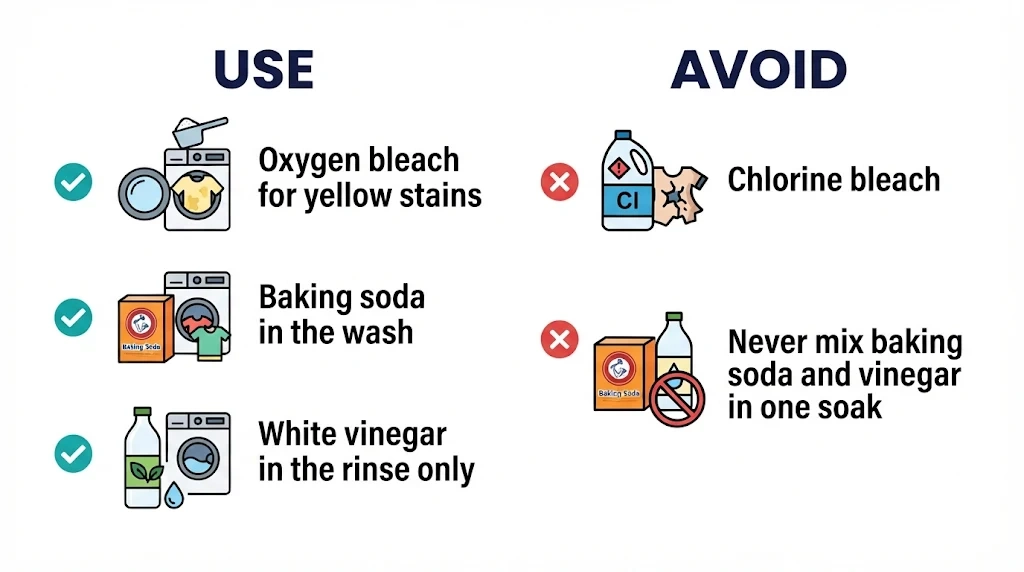
For washable pillows, the most effective stain treatment is oxygen bleach, sold as a powdered laundry booster, dissolved in warm water if the label allows it. It breaks down the discoloured compounds without the fibre damage of chlorine bleach. Add it to the wash with a little mild detergent and half a cup of baking soda, run the gentle cycle, and add an extra rinse. For heavy yellowing, soak for one to two hours first.
Most cleaning guides get one detail wrong: baking soda and white vinegar should not be mixed in the same soak. Baking soda is a base and vinegar is an acid, so they neutralise each other. Used separately, both work: baking soda belongs in the wash, where it helps detergent work and absorbs odour, and vinegar belongs in the rinse, where it dissolves detergent residue.
For smells on pillows that cannot be washed, use the baking-soda-and-vacuum method above, plus airing outdoors. A pillow that still smells musty after a full wash and dry usually has a damp core, and the fix is drying, not more detergent.
How to Dry a Bed Pillow Completely
Drying is where pillow cleaning most often fails. A pillow can feel dry on the surface while the centre is still damp, and a damp core is how mildew starts. The dryer sensor cannot be trusted here: it measures surface moisture, not dampness inside. A pillow is not dry until the centre is dry.
For machine-washable pillows, tumble dry on low heat with dryer balls or tennis balls, which break up clumps and keep the fill lofted. Check every 30 to 45 minutes and fluff it by hand. Down pillows need the longest: two or three low-heat cycles are normal.
After the dryer, let the pillow cool for an hour, then press deeply into the centre. If it feels cool and damp inside, run another low cycle or hang it out until dry all the way through. Foam and latex pillows must always air dry flat, never in the dryer. Test dryness after cooling: warmth masks dampness.
How Often to Clean a Bed Pillow, and How to Keep It Clean Longer
Wash a machine-washable bed pillow at least twice a year. Tom’s Guide recommends every three to six months, and WebMD gives the same minimum, rising to quarterly for people who eat in bed, sleep with pets or sweat heavily. Allergy sufferers should clean more often, roughly every one to two months. Wash pillowcases weekly.
Between deep cleans, fluff the pillow daily, air it outdoors once a month, and wash the protector every one to two months. A zippered pillow protector catches most of the sweat and oil that would otherwise reach the fill.
When to Replace a Bed Pillow Instead of Cleaning It
 Save
Cleaning has a limit. Most pillows should be replaced every one to two years, according to WebMD, although higher-quality pillows can last up to five years. Age alone is not the test; support is.
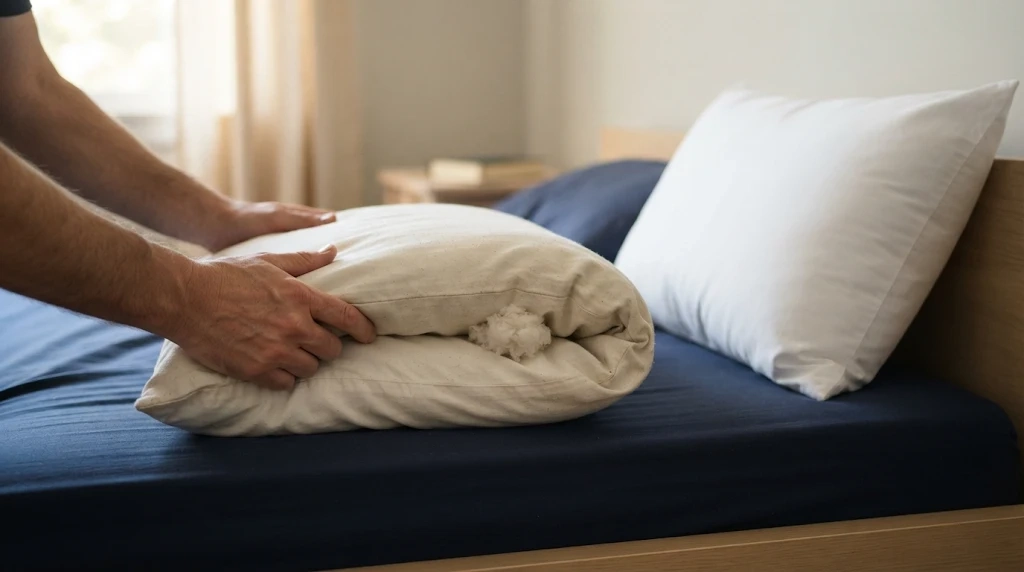
Try the fold test: fold the pillow in half, hold it for 30 seconds, then let go. If it springs back, it still has life in it. If it stays folded, the fill has lost its resilience and no washing will restore it. Other signs are lumps that will not break up, a flat spot in the middle, and a smell that survives a full wash and dry.
Allergies getting worse despite regular cleaning is another signal, as dust mites build up again quickly in an old pillow. A flat pillow also changes neck alignment, and choosing between a firm or soft pillow for neck pain is only meaningful once the pillow still holds its shape. Our guide to washing and cleaning a neck pillow safely covers the same fill-by-fill logic for neck pillows.
Related Product
Pillow Protector
A zippered pillow protector catches sweat and oil before they reach the fill, so the pillow stays cleaner between washes and yellows far more slowly.
As an Amazon Associate, we earn from qualifying purchases.
Frequently Asked Questions
Can you put a bed pillow in the washing machine?
Most down, feather, cotton and polyester pillows can be machine-washed on a gentle cycle if the care label allows it. Wash two at a time with a small amount of mild detergent and an extra rinse. Memory foam, latex and buckwheat pillows cannot go in the machine.
How often should you clean a bed pillow?
Deep-clean a bed pillow at least twice a year, and every three to six months is a better target. Clean more often if you sweat heavily, sleep with pets, eat in bed or have allergies. Wash the pillowcase weekly.
Why do bed pillows turn yellow?
Yellowing comes mainly from sweat and body oil seeping through the pillowcase and oxidising in the fill over months. It is common and usually treatable with an oxygen-bleach wash.
Can you wash a memory foam pillow?
No, a solid memory foam pillow should not be machine-washed or submerged. Wash its removable cover instead, vacuum the foam, spot-clean stains with a damp cloth and mild detergent, and air dry it flat.
How do you get the smell out of a bed pillow?
For washable pillows, a full wash with an extra rinse followed by complete drying usually removes the smell. For foam pillows, sprinkle baking soda over the surface, leave it for a few hours, vacuum it off, and air the pillow outdoors.
How do you know when a bed pillow needs replacing?
Fold it in half for 30 seconds and let go. If it stays folded instead of springing back, it has lost its support. Persistent lumps, a flat centre and a smell that will not lift are the other clear signs.
Conclusion
Cleaning a bed pillow comes down to one decision: identify the fill, then use the method that fill allows. Washable down, feather, cotton and polyester pillows take a gentle cycle, little detergent and an extra rinse, followed by low-heat drying until the centre is truly dry. Foam, latex and buckwheat pillows stay out of the machine and get a washed cover, a vacuum and a spot clean instead. Treat yellow stains with oxygen bleach, keep baking soda and vinegar in separate stages, and use a protector so the next clean lasts longer. When a pillow stays folded or smelly after a proper clean, replace it.

I’m a home decor enthusiast who loves discovering beautiful room ideas, creative DIY projects, and Pinterest-worthy decorating inspiration. At DecorMinty, I share simple tips, fresh trends, and practical ideas to help you create a home you’ll truly love—one room at a time.