How to Wash a Bed Pillow: Machine, Hand Wash and Drying
Quick Answer
Yes, most bed pillows can be washed, but the fill decides how. Down, feather, polyester and down-alternative pillows can usually go in the machine on a gentle cycle with a little mild detergent. Solid memory foam and latex pillows cannot: wash the cover and spot-clean the core. Check the label, wash two at a time, add an extra rinse, and dry the pillow completely through the centre.
A pillow looks clean under a fresh pillowcase, but it is not. Night after night it collects sweat, skin oils, drool, hair products and dead skin cells, and that mix is what dust mites feed on. Washing it removes much of that build-up and restores loft.
Check the Care Label First, Then Identify the Fill
Every pillow has a care label sewn into a seam, giving the fill, the maximum wash temperature, and whether it can be tumble-dried. If it says dry clean only or shows a crossed-out wash tub, follow it.
If the label is missing, squeeze the pillow. A solid, springy block is memory foam or latex. Loose fill that shifts is polyester, down alternative, cotton, down or feather. A pillow with a zip-off shell is often shredded foam: the shell washes, the inner fill usually does not. Knowing what pillows are made of helps, because the same fills behave the same way in water.
Before washing, remove the pillowcase and protector and inspect the seams. A small split can empty fill into the drum, so mend it or use a mesh laundry bag. Spot-treat visible stains first. A stain set by hot water or a hot dryer is much harder to lift later.
Which Bed Pillows Can Go in the Washing Machine?
 Save
Most loose-fill bed pillows wash well. Solid foam does not, because agitation tears it and a soaked foam block dries so slowly that mildew can start first. Buckwheat hulls should never be washed: empty them out, wash the casing, and air the hulls.
| Fill | Machine wash? | Water and cycle | Drying |
|---|---|---|---|
| Polyester / down alternative | Usually yes | Warm, gentle | Low heat, dryer balls |
| Down | Usually yes | Cool or warm, delicate | Low or no heat, several cycles |
| Feather | Usually yes | Cool or warm, delicate | Low or no heat, several cycles |
| Cotton | Usually yes | Warm, gentle | Low heat, dryer balls |
| Solid memory foam | No | Spot-clean only | Air dry flat, no heat |
| Latex | No | Spot-clean only | Air dry flat, out of direct sun |
| Buckwheat hulls | No | Wash casing only | Air the hulls in the sun |
The table is a starting point, not a substitute for the label. Some down pillows are dry-clean only, and some shredded-foam pillows are machine-washable even though a solid foam pillow is not. When they disagree, the label wins. Down is the soft cluster beneath a bird’s outer feathers, while feather fill includes quills, so feather pillows feel firmer and heavier. Both wash the same way, but hot water can damage down. The Sleep Foundation’s guide to washing down and feather pillows gives the same rule: delicate cycle, mild detergent, extra rinse and spin, and low or no heat.
How to Machine-Wash a Bed Pillow, Step by Step
Machine washing works for down, feather, polyester, down-alternative and cotton pillows when the label allows it. The method below adapts the logic from our guide on how to wash and clean a neck pillow safely for a larger bed pillow.
- Strip and inspect. Remove the case and protector, check seams for rips, and spot-treat stains.
- Wash two at a time. Two pillows on opposite sides keep the load balanced, so water and detergent circulate evenly. A single wet pillow slumps to one side. If you only have one pillow, add a couple of towels.
- Load it the right way. In a front-loader, lay the pillows flat. In a top-loader with a central agitator, stand them upright around it so they do not wrap around it and tear. A front-loader or agitator-free top-loader is gentler.
- Use very little detergent. A small amount of mild liquid detergent is enough. For polyester, about one tablespoon is plenty. Too much soap stays trapped in thick fill and causes clumping. Powder can lodge in the filling, so liquid is safer.
- Pick the water temperature by fill. Cool or warm water for down and feather; warm for polyester and cotton. No hot water on down.
- Choose a gentle or delicate cycle. Short, gentle agitation cleans without tearing seams.
- Run an extra rinse and spin. Thick filling holds soap, so one rinse is rarely enough. The extra spin also shortens drying time.
Skip fabric softener and bleach unless the label allows them: both coat or weaken fibres.
How to Hand-Wash a Bed Pillow
Hand washing suits a pillow that feels too fragile for the machine, one that will not fit in the drum, or a household without one. Fill a clean tub with cool or warm water and a little mild detergent. Submerge the pillow, press it under until soaked, and squeeze gently so the soapy water reaches the centre. Drain, refill, and rinse until the water runs clear. Press the water out between two clean towels. Do not wring or twist it. A hand-washed pillow holds more water, so allow extra drying time.
How to Clean Memory Foam and Latex Pillows
Solid memory foam and latex pillows should never go in a washing machine or tumble dryer. Agitation breaks the foam apart, and a soaked foam block is slow to dry and prone to mildew inside. Most removable covers wash normally, so check that label separately.
Vacuum the surface with an upholstery attachment. For a stain, mix a little mild detergent with lukewarm water, dip a clean white cloth in it, wring it until damp, and dab gently. Do not scrub hard, or the foam may crumble, and do not soak the area. For odour, sprinkle baking soda over the surface, leave it for 30 minutes, then vacuum it off. Air the pillow flat in a well-ventilated room, away from direct heat, for at least 24 hours. Some shredded-foam pillows are an exception if the label says so. Foam construction varies widely, as our guide to the best memory foam neck pillow options shows.
Tip
A zippered pillow protector is the cheapest way to wash less often. Wash it with your sheets, and the pillow underneath stays cleaner for months.
How to Dry a Bed Pillow Completely
 Save
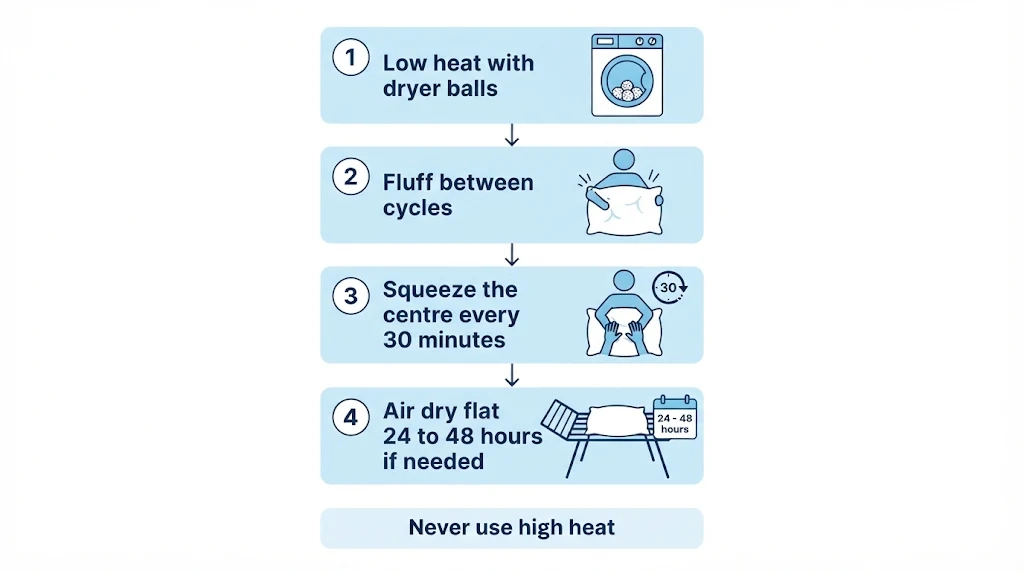
Drying decides whether the wash was worth doing. A pillow that feels dry on the surface but is damp in the centre will grow mildew, smell musty, and clump. Consumer Reports warns against trusting a dryer’s auto-dry sensor: it reads surface moisture and stops while the inside is still wet. Use a timed cycle instead.
For machine-washable pillows, tumble dry on low heat with two or three wool dryer balls or clean tennis balls in clean socks. They knock the filling apart, stop clumping, and let air circulate through the core. For down and feather, use low or no heat over several cycles, fluffing between cycles. Expect an hour or more, longer for down. Every 30 minutes, reshape the pillow and squeeze the centre. Cold, heavy spots are still wet.
Air drying is the only option for foam and latex. Lay the pillow flat on a drying rack in a well-ventilated area, turning and fluffing it every few hours. Avoid direct sunlight on down, and keep foam out of direct heat. Air drying can take 24 to 48 hours. Do not use the pillow until the centre is dry and there is no musty smell when you squeeze it hard.
Warning
High heat is the most common drying mistake. It can scorch feathers, melt synthetics, and break down foam. If the pillow still feels damp, run another low-heat cycle.
How Often Should You Wash a Bed Pillow?
Wash a machine-washable bed pillow every three to six months, the range recommended by both the Sleep Foundation and Consumer Reports. Wash every two to three months if you sweat heavily, have allergy symptoms, use heavy hair or face products, eat in bed, or share the bed with a pet. Wash the pillowcase weekly, and a protector every two to four weeks.
Feather pillows can be washed less often, around once or twice a year, because frequent washing wears the fill faster. Between washes, fluff the pillow daily and air it on a dry, breezy day every month or so. When a pillow stays flat or lumpy after fluffing, fails the fold test, or smells musty even after a full wash and a complete dry, replace it. Polyester pillows usually last one to two years, while down and feather pillows last one to three years.
Common Mistakes That Ruin a Bed Pillow
 Save
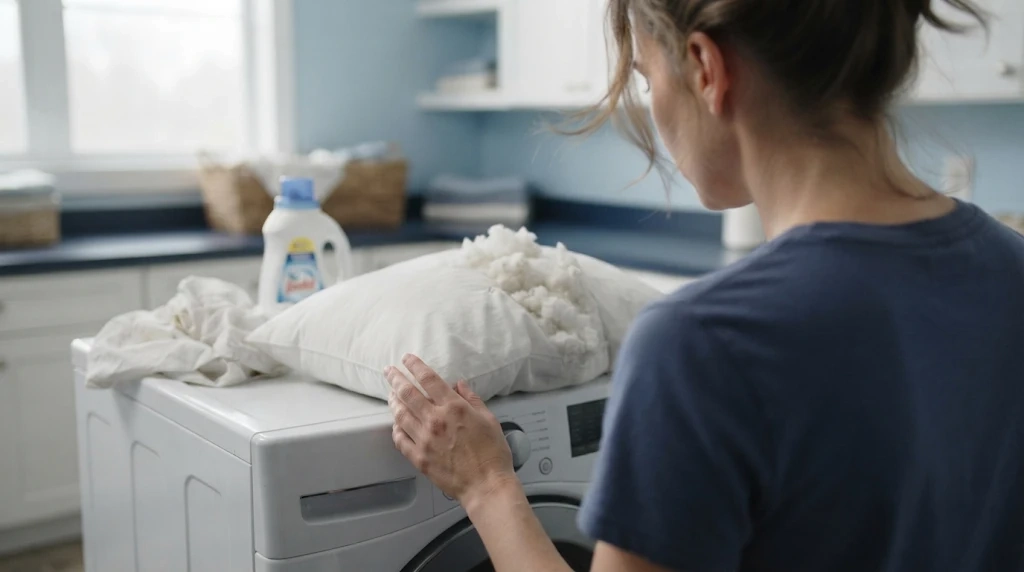
Most ruined pillows are not ruined by the wash itself, but by one avoidable choice before or after it. Washing foam in the machine breaks it apart, too much detergent causes clumping, skipping the extra rinse leaves soap behind, and washing one pillow alone unbalances the drum. High heat scorches feathers and melts synthetics, and stopping while the centre is damp lets mildew grow. Ignoring the label is the root mistake: a dry-clean-only pillow, a shredded-foam pillow, and a solid-foam pillow can look identical from the outside. If a pillow comes out lumpy, tumble it again on low heat with dryer balls. The same steps apply to smaller pillows, as covered in our guide on how to wash and clean a neck pillow.
Related Product
Wool Dryer Balls
Wool dryer balls break up clumps, shorten drying time, and help the fill dry evenly.
As an Amazon Associate, we earn from qualifying purchases.
Frequently Asked Questions
Can you wash a bed pillow in the washing machine?
Yes, if the fill allows it and the label agrees. Down, feather, polyester, down-alternative and cotton pillows can usually be machine-washed on a gentle cycle with cool or warm water and a little mild detergent. Solid memory foam, latex and buckwheat pillows cannot.
How often should you wash a bed pillow?
Every three to six months for most machine-washable pillows, or every two to three months if you sweat heavily, have allergies, or share the bed with a pet. Wash the pillowcase weekly and a protector every two to four weeks.
Why does my pillow smell after washing?
A musty smell almost always means the centre is still damp. Run more low-heat cycles with dryer balls, fluffing between cycles, until the centre is dry and the smell is gone.
Can you put a bed pillow in the dryer?
Yes, for machine-washable fills, on low heat with dryer balls. Use low or no heat for down and feather, and allow several cycles. Do not use a dryer for solid memory foam or latex; air dry them flat. Skip the auto-dry sensor, which stops while the inside is still wet.
How do you wash a pillow without a washing machine?
Hand-wash it in a clean tub with cool or warm water and a little mild detergent. Submerge it, squeeze gently until the rinse water runs clear, press the water out between towels without wringing, then dry it fully.
When should you replace a bed pillow instead of washing it?
Replace it when it stays flat or lumpy after fluffing, fails the fold test, or smells musty after a full wash and a complete dry. Polyester pillows usually last one to two years, and down and feather pillows one to three years.
Conclusion
Washing a bed pillow comes down to three decisions: check the label, match the method to the fill, and dry it completely. Machine-wash down, feather, polyester and cotton gently, with little detergent and an extra rinse. Spot-clean foam and latex and air-dry the core flat. Dry on low heat with dryer balls, and wash again in three to six months.

I’m a home decor enthusiast who loves discovering beautiful room ideas, creative DIY projects, and Pinterest-worthy decorating inspiration. At DecorMinty, I share simple tips, fresh trends, and practical ideas to help you create a home you’ll truly love—one room at a time.