When Is Neck Pain Serious? Red Flags to Know
Quick Answer
Neck pain is serious when it follows a major injury, comes with arm or leg weakness, causes numbness or tingling, appears with fever or severe headache, or keeps getting worse instead of improving. Mild stiffness from sleep posture is common, but red-flag symptoms need prompt medical advice, especially if they match guidance from MedlinePlus neck pain information.
Serious neck pain signs to watch for
- After trauma: Neck pain after a car crash, fall, sports hit, or diving injury needs urgent evaluation.
- Nerve symptoms: Weakness, numbness, tingling, or pain shooting into the arm can point to nerve involvement.
- Fever or headache: Neck stiffness with fever, confusion, rash, or severe headache can signal infection or another emergency.
- Chest symptoms: Neck pain with chest pressure, sweating, nausea, shortness of breath, or jaw pain needs emergency help.
- Worsening pain: Pain that is severe, constant, or rapidly worsening should not be treated like normal stiffness.
Simple safety rule
- If your neck pain feels unusual, severe, neurological, or connected to illness or injury, get medical help first and think about pillows later.
Neck pain is one of those symptoms people often try to explain away.
I get why. One awkward night of sleep, one long laptop session, or one too-thick pillow can leave your neck feeling locked up by morning.
But not all neck pain belongs in the “bad pillow” category.
This guide explains when neck pain is serious, which symptoms count as red flags, how to do a basic self-check, and when a neck pillow may help versus when it may delay the care you need.


What is a red flag for neck pain?
 Save
SaveA red flag for neck pain is any symptom that suggests injury, nerve pressure, infection, heart-related pain, or another condition that needs medical assessment. The biggest warning signs are trauma, weakness, numbness, fever, severe headache, loss of coordination, chest symptoms, and pain that quickly worsens.
I use a simple rule when sorting neck pain: if the pain stays local and improves with gentle movement, it is usually less alarming. If it spreads, disables, or arrives with body-wide symptoms, I take it seriously.
Definition: serious neck pain
Serious neck pain is neck pain that may involve the spine, nerves, infection, blood flow, heart symptoms, or significant injury. It is different from ordinary muscle soreness because it comes with warning signs beyond stiffness.
That does not mean every serious-feeling ache is dangerous. It means you should not self-diagnose it with a pillow, massage gun, or stretching video.
The red flags I would not ignore
- Neck pain after injury: This includes falls, car accidents, sports collisions, diving injuries, and hard blows to the head or neck.
- Weakness in an arm or hand: Trouble gripping, lifting, or holding objects may point to nerve or spinal involvement.
- Numbness or tingling: Pins-and-needles feelings that travel into the shoulder, arm, hand, or fingers deserve attention.
- Fever with neck stiffness: Fever, severe headache, confusion, rash, or vomiting changes the situation from “stiff neck” to “get help.”
- Chest or jaw symptoms: Neck pain with chest pressure, sweating, nausea, or shortness of breath can be heart-related.
- Loss of balance or coordination: Clumsy walking, leg weakness, or poor coordination can signal a neurological issue.
A pillow cannot rule these out.
For mild sleep-related stiffness, a better pillow may help. I covered that more directly in my guide on the best neck pillow for neck pain, but red flags come first.
Red flags vs. common stiffness
| Symptom pattern | What it may suggest | Best next step |
|---|---|---|
| Mild stiffness after sleeping awkwardly | Muscle strain or poor pillow height | Gentle movement, posture changes, and pillow fit check |
| Pain shooting into the arm | Possible irritated or compressed nerve | Book medical evaluation, sooner if weakness appears |
| Severe pain after a fall or crash | Possible spine, disc, ligament, or bone injury | Seek urgent or emergency care |
| Stiff neck with fever and severe headache | Possible infection or inflammatory emergency | Get urgent medical help immediately |
| Neck pain with chest pressure or sweating | Possible heart-related symptom | Call emergency services |
What type of neck pain is serious?
Serious neck pain is usually severe, spreading, injury-related, neurological, or paired with illness symptoms. Pain that stays in one tight muscle is less concerning than pain that travels, weakens your grip, affects balance, or appears with fever, headache, or chest symptoms.
The location matters, but the pattern matters more.
Sharp pain after an accident
Neck pain after a crash, fall, or sports hit needs a different level of caution. Even if you can still walk, soft tissue and spine injuries can worsen after the adrenaline fades.
Do not aggressively stretch this kind of pain.
Medical sources such as Mayo Clinic’s neck pain guidance recommend emergency care for severe neck pain after injuries like motor vehicle accidents, falls, or diving accidents.
Pain with numbness, tingling, or weakness
Pain that travels from the neck into the shoulder, arm, hand, or fingers can involve a nerve. This may happen when a disc, joint, bone spur, or inflamed tissue irritates a nerve root.
The key warning sign is weakness.
- Dropping objects: Your grip may not feel reliable.
- Arm heaviness: One arm may feel harder to lift.
- Finger tingling: Symptoms may follow a repeated path into specific fingers.
- Worsening spread: Pain may start in the neck and move farther down the arm.
A supportive pillow may reduce strain during sleep, but it will not decompress a serious nerve problem on its own. If you are choosing support, read this first: are neck pillows good for you?
Neck pain with fever, headache, or confusion
Neck stiffness with fever and a severe headache is not the same as waking up sore. When stiffness appears with fever, confusion, vomiting, rash, or unusual drowsiness, it needs urgent medical advice.
This is one of the clearest “do not wait and see” patterns.
Neck pain that may be heart-related
Neck pain can sometimes appear with heart-related symptoms, especially when it comes with chest pressure, shortness of breath, sweating, nausea, jaw pain, or arm pain. This is not the time to compare pillows or try heat therapy.
Call emergency services if these symptoms appear together.
Neck pain that keeps worsening
Ordinary muscular neck pain often improves gradually with gentle movement, better posture, and time. Pain that becomes more severe each day deserves a closer look.
I also pay attention when pain wakes someone repeatedly at night or does not ease with position changes.
How do you test for neck pain?
You can do a basic neck pain self-check by noting what triggered it, where it travels, whether you have weakness or numbness, and how much motion you can tolerate. This is not a diagnosis, but it helps you decide whether home care is reasonable or medical help is safer.
Do every check gently. Stop if pain becomes sharp, spreading, or severe.
Step 1: Check the trigger
Start with the story of the pain. Neck pain after sleeping poorly is different from neck pain after a fall.
- Low-risk trigger: Awkward sleep, long screen time, poor desk posture, or carrying a heavy bag.
- Higher-risk trigger: Car crash, sports impact, fall, blow to the head, or sudden severe pain.
- No clear trigger: Unexplained severe pain should be watched more carefully.
If your pillow is the likely trigger, focus on height before firmness. I explain that process in how to choose the right neck pillow.
Step 2: Map the pain
Use one finger to trace where the pain goes. Local soreness near the base of the skull or upper shoulder often behaves like muscle tension.
Pain that shoots down one arm needs more caution.
- Local neck ache: Often linked to muscle strain or posture.
- Shoulder blade pain: Can still be muscular, but track it closely.
- Arm or hand symptoms: More concerning when paired with tingling or weakness.
- Both arms or legs: Needs prompt medical assessment.
Step 3: Test gentle range of motion
Slowly turn your head left and right. Then gently look down and slightly up.
Do not force the movement.
Normal stiffness usually feels tight but tolerable. Serious pain may feel sharp, unstable, electric, or impossible to move through.
Step 4: Check strength and sensation
Compare both sides of your body. You are looking for a clear difference, not tiny normal variations.
- Grip test: Squeeze both hands and notice whether one side is weaker.
- Arm lift: Raise both arms and check for heaviness or dropping.
- Finger sensation: Notice numbness, burning, or tingling in one hand.
- Walking check: Pay attention to balance, coordination, or leg weakness.
If weakness is new, do not keep testing it. Get medical advice.
Step 5: Review your sleep setup
Once red flags are off the table, your pillow becomes more relevant. The goal is neutral alignment, where your head does not tilt sharply up, down, or sideways.
As of 2026, I still see the same mistake often: people buy a firm pillow when the real issue is loft.
Side sleepers usually need more height to fill the shoulder gap. Back sleepers often need a lower contour that supports the natural neck curve.
For a deeper fit check, compare firm vs. soft neck pillows before replacing anything.
When should you seek medical help for neck pain?
 Save
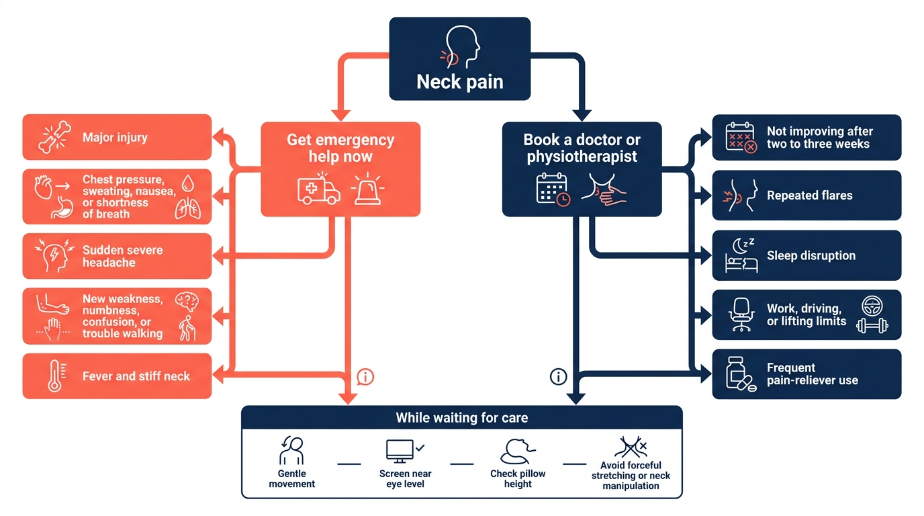
SaveYou should seek medical help for neck pain immediately if it follows serious injury, includes weakness or numbness, appears with fever or severe headache, or comes with chest symptoms. You should schedule a routine visit if pain lasts more than a few weeks, keeps returning, or interferes with sleep and daily activity.
When in doubt, choose safety.
Get emergency help now if these happen
- Major injury: Severe neck pain after a fall, crash, diving accident, or hard impact.
- Chest symptoms: Chest pressure, sweating, nausea, shortness of breath, jaw pain, or arm pain.
- Severe headache: Especially if sudden, intense, or paired with fever or stiff neck.
- Neurological changes: New weakness, numbness, confusion, trouble walking, or loss of coordination.
- Fever and stiff neck: Especially with rash, vomiting, light sensitivity, or unusual drowsiness.
Cleveland Clinic’s overview of neck pain causes and warning symptoms also highlights fever, chills, unexplained weight loss, weakness, and coordination problems as reasons to seek care.
Book a doctor or physiotherapist visit if pain lingers
Not every appointment needs to be urgent. But lingering pain deserves a plan, especially if it changes how you sleep, work, drive, or exercise.
- Two to three weeks: Pain is not improving with basic care.
- Repeated flares: The same pain keeps returning.
- Sleep disruption: You wake often because of neck pain.
- Work limits: Desk posture, driving, or lifting becomes difficult.
- Pain medication reliance: You need frequent pain relievers to function.
The NHS neck pain page notes that many people can access physiotherapy or musculoskeletal services for neck pain support. That kind of guided plan can help when home changes are not enough.
What to do while waiting for care
Keep your neck moving gently within a comfortable range. Avoid sudden twisting, heavy lifting, or forceful stretching.
Heat may feel better for tight muscles. Ice may feel better after a fresh strain.
- Use gentle movement: Small, comfortable motions usually beat total rest.
- Adjust screens: Keep your screen near eye level to reduce forward-head posture.
- Check pillow height: Your neck should look neutral, not bent upward or collapsed downward.
- Avoid hard manipulation: Do not crack or force your neck when symptoms are severe or spreading.
If symptoms are mild and clearly sleep-related, a better pillow can be part of the solution. If symptoms are serious, the pillow comes later.
If you’re ready to pick one, here’s what I’d actually recommend after ruling out red flags:
🏆 BEST CERVICAL SUPPORT
Elviros Cervical Memory Foam Pillow
★★★★☆
This contoured memory foam pillow is built to cradle the neck curve while giving side and back sleepers a more structured surface. I like it most for people who wake with posture-related stiffness but do not have red-flag symptoms.
💤 BEST ADJUSTABLE LOFT
Coop Sleep Goods Original Adjustable Pillow
★★★★☆
This shredded memory foam pillow lets you add or remove fill, which matters when neck pain comes from the wrong pillow height. I would choose this before a fixed-height pillow if you switch between back and side sleeping.
FAQ
Can neck pain be a sign of something serious?
Yes, neck pain can be serious when it comes with injury, weakness, numbness, fever, severe headache, confusion, chest symptoms, or worsening pain. Mild stiffness after sleeping awkwardly is common, but symptoms that spread or affect the whole body need medical advice.
When should I worry about neck pain on one side?
One-sided neck pain is often muscular, especially after poor sleep or desk posture. Worry more if it shoots into the arm, causes numbness or weakness, follows an injury, or comes with fever, headache, chest pressure, or balance problems.
How long is too long for neck pain?
If neck pain is not improving after two to three weeks, keeps returning, or disrupts sleep and daily tasks, book a medical or physiotherapy appointment. Get urgent help sooner if pain is severe, spreading, injury-related, or paired with neurological symptoms.
Can a bad pillow cause serious neck pain?
A bad pillow can cause stiffness, muscle strain, and morning soreness, but it should not cause fever, weakness, numbness, chest symptoms, or loss of coordination. If those symptoms appear, treat the pain as medical first and pillow-related second.
Should I stretch serious neck pain?
Do not force stretches when neck pain is severe, injury-related, sharp, or spreading into the arm. Gentle movement may help ordinary stiffness, but red-flag symptoms need medical guidance before stretching, manipulation, massage, or intense exercise.
Neck pain is serious when it stops acting like simple stiffness.
If it follows trauma, spreads into the arm, causes weakness, or comes with fever, headache, chest symptoms, confusion, or balance changes, get medical help instead of waiting on a pillow to fix it.
For mild sleep-related soreness, adjust your pillow height, support your neck in neutral alignment, and track whether symptoms improve over the next several days.

I’m a home decor enthusiast who loves discovering beautiful room ideas, creative DIY projects, and Pinterest-worthy decorating inspiration. At DecorMinty, I share simple tips, fresh trends, and practical ideas to help you create a home you’ll truly love—one room at a time.