10 Best Neck Pillow for Neck Problems in 2026: Pain-Relief Picks
The 10 best neck pillow for neck problems start with the TEMPUR-Neck Pillow — its contoured foam supports both back and side sleeping. We evaluated 10 neck pillows by comparing materials, design specs, and buyer feedback, scoring each on support, comfort, and value. Most neck pillows look identical online but fail on loft and firmness, the two things that matter most. Whether you need nightly sleep support, travel comfort, or an adjustable fit, this guide gives you one clear answer.


Quick Comparison: All 10 Neck Pillows Ranked
| # | Product | Best For | Rating | Badge | |
|---|---|---|---|---|---|
| 1 | TEMPUR-Neck Pillow | Back and side sleepers who want dependable nightly support | 4.7/5 | Best Overall | Buy → |
| 2 | EPABO Contour Memory Foam Pillow | Shoppers wanting a cervical contour on a tighter budget | 4.5/5 | Best Budget | Buy → |
| 3 | Core Products Tri-Core Cervical Support Pillow | Back sleepers needing a firm, defined neck roll | 4.5/5 | Best for Cervical Support | Buy → |
| 4 | Coop Home Goods Original Adjustable Pillow | Sleepers unsure which height suits their neck | 4.5/5 | Best Adjustable | Buy → |
| 5 | Cabeau Evolution S3 Travel Neck Pillow | Frequent flyers and long-distance passengers | 4.4/5 | Best for Travel | Buy → |
| 6 | Sleep Artisan Luxury Side Sleeper Pillow | Side sleepers with a gap between ear and shoulder | 4.3/5 | Best for Side Sleepers | Buy → |
| 7 | Bcozzy Chin Supporting Travel Pillow | Travelers whose head slumps forward when dozing | 4.3/5 | Best Chin Support | Buy → |
| 8 | Mediflow Water Base Pillow | Sleepers who change positions or share a bed | 4.2/5 | Best Self-Adjusting | Buy → |
| 9 | Therapeutica Cervical Orthopedic Foam Sleeping Pillow | Back sleepers wanting orthopedic neck positioning | 4.2/5 | Best Orthopedic Contour | Buy → |
| 10 | Trtl Travel Pillow | Light packers wanting gentle support on short trips | 4.0/5 | Most Compact | Buy → |
How We Chose These Neck Pillows
What we compared
Ten popular neck pillows across sleeping and travel use, judged on materials, shape, loft, adjustability, and care. Scores come from published specifications and recurring themes in buyer feedback, not lab testing.
Our 3 scoring criteria
Support (how well it holds the neck in line), Comfort (feel, breathability, and adjustment time), and Value (what you get for the cost). Each is scored out of 5.
Sources consulted
Published guidance from spine-health organizations and chiropractor-reviewed buying guides on loft, firmness, and sleep position. No single clinician endorses this list.
What we cut, and why
Inflatable travel pillows, heated wraps, and traction devices. They serve different needs and cannot be compared fairly on nightly sleep support.
What to Look for When Buying a Neck Pillow
Neck problems rarely come from one cause, but the wrong pillow can make any of them worse. Four factors decide whether a pillow helps or hurts.
1. Loft and Fit
Loft is the height of the pillow, and it should fill the space between your ear and the mattress so your neck stays in line with your spine. Side sleepers need more loft than back sleepers because of shoulder width. Use this guide on how to size a neck pillow before you order.
2. Firmness and Support
Firm enough to hold the head steady, soft enough to relieve pressure: that is the target. Very soft pillows sag overnight, while rock-hard ones push the neck out of line. Our explainer on firm versus soft pillows for neck pain walks through how to judge the right feel.
3. Material and Temperature
Solid memory foam contours well but can trap heat. Shredded foam and fiber-topped designs breathe better and let you reshape the pillow. If you sleep hot, prioritize airflow over maximum contour.
4. Sleep Position and Intended Use
Back sleepers do best with a neck roll or contour, side sleepers with a taller, curved shape, and stomach sleepers with something very low. Travel pillows are built to hold an upright head, so keep them separate from your bed pillow.

Tempur-Pedic TEMPUR-Neck Pillow — The Most Reliable All-Rounder
Best for: Back and side sleepers who want dependable nightly support
If your neck stiffens overnight and ordinary fiber pillows flatten by morning, a contoured foam pillow is the logical upgrade. The TEMPUR-Neck uses Tempur’s pressure-relieving foam shaped with a raised curve under the neck and a lower dip for the head, so it cradles the head for both back and side sleeping. It is available in several sizes, which helps you match loft to shoulder width, and the cover comes off for washing. The trade-off is the dense, firm feel: some sleepers need a week or two to adjust, and most stomach sleepers will find it too tall.
- Contoured shape supports back and side sleeping
- Multiple sizes help match shoulder width
- Cover removes for washing
- Firm feel needs an adjustment period
- Too tall for most stomach sleepers
4.9/5
4.8/5
4.4/5

EPABO Contour Memory Foam Pillow — Cervical Support Without the Premium Cost
Best for: Shoppers wanting a cervical contour on a tighter budget
Shopping for a cervical pillow without paying premium-brand money is hard, and this contour memory foam pillow is the most sensible answer. The ergonomic wave shape lifts the neck while the head rests in a gentle dip, which suits back and side sleepers who want support without a stiff, dense feel. Slow-recovery memory foam spreads pressure, and the contour keeps your head centered through the night. The limitations are real, though: new foam can carry a noticeable smell for a day or two, and the fixed height will not fit very broad shoulders or very petite frames.
- Budget-friendly cervical contour shape
- Pressure-spreading memory foam
- Works for back and side sleeping
- New-foam smell can linger briefly
- Fixed height suits average builds best
4.3/5
4.4/5
4.8/5

Core Products Tri-Core Cervical Support Pillow — Firm Reversible Neck Rolls for Back Sleepers
Best for: Back sleepers needing a firm, defined neck roll
Some people with neck problems need a firm, defined roll under the neck rather than a full-size pillow, and the Tri-Core is built around that idea. One side has a larger neck roll for more lift, the other a smaller one for less, so you can flip it as your needs change. This cervical roll style is widely used by people who sleep on their back or side. It is not plush: the support is deliberately firm, and stomach sleepers should avoid it because the neck roll pushes the head into extension.
- Two neck roll sizes in one pillow
- Firm, defined support for back sleepers
- Reversible design adjusts support level
- Less plush than memory foam
- Stomach sleepers should skip it
4.7/5
4.2/5
4.6/5

Coop Home Goods Original Adjustable Pillow — Dial In Your Own Loft
Best for: Sleepers unsure which height suits their neck
If you have never found a pillow that fits, adjustability solves the guesswork. The Coop Original is filled with shredded memory foam and microfiber that you can unzip and remove or add, letting you set the loft for your shoulder width and sleep position. That matters for neck problems, since the wrong height is the most common reason pillows fail. The shredded fill breathes better than solid foam and molds to your head. The drawback is maintenance: the fill shifts and compresses, so expect to fluff it often and top it up occasionally.
- Add or remove fill to fine-tune loft
- Suits back, side, and stomach sleepers
- Shredded fill breathes better than solid foam
- Shredded fill needs regular fluffing
- Less contoured than molded cervical pillows
4.6/5
4.7/5
4.3/5

Cabeau Evolution S3 Travel Neck Pillow — Best Wraparound Support for Travel
Best for: Frequent flyers and long-distance passengers
Long trips punish the neck because your head has nowhere to rest, and a flat inflatable rarely helps. The Cabeau Evolution S3 is a memory foam wraparound that cups the sides and back of the neck, keeping your head from tipping sideways while you doze upright. The foam holds its shape through a long flight and compresses for packing. The trade-off is bulk: it is larger than scarf-style pillows, and it is built for sitting up, so it is not a replacement for a proper bed pillow at home.
- Wraparound support for upright sleeping
- Memory foam holds shape on long trips
- Practical for planes, trains, and cars
- Bulkier than scarf-style travel pillows
- Not designed for all-night bed use
4.3/5
4.5/5
4.4/5

Sleep Artisan Luxury Side Sleeper Pillow — Curved Comfort for Side Sleepers
Best for: Side sleepers with a gap between ear and shoulder
Side sleeping leaves a gap between ear and mattress that a flat pillow cannot fill, and that gap is where neck strain often starts. The Sleep Artisan Luxury Side Sleeper pillow is curved to follow the shoulder and neck, keeping the spine aligned, and it is adjustable so you can tune the height. It is a specialist design, and that is its limit: back sleepers may find the lift excessive, and it costs more than basic foam pillows. If you sleep on your side every night, the shape is worth considering.
- Curved shape fills the side-sleeping gap
- Adjustable for personal loft preference
- Supports neck and spine alignment
- Back sleepers may find it too high
- Costs more than basic foam pillows
4.5/5
4.5/5
4.0/5

Bcozzy Chin Supporting Travel Pillow — Stops Your Head Dropping Forward
Best for: Travelers whose head slumps forward when dozing
The classic travel pillow fails when your head drops forward, and that is the specific problem the Bcozzy is designed to solve. Its wraparound shape adds a chin support so your head stays upright instead of slumping onto your chest, which strains the neck on flights and long drives. The plush cover feels comfortable against the skin. It is an acquired fit, though: the chin piece feels odd at first, and it offers less adjustment than designs that fasten snugly, so smaller necks may need to experiment.
- Chin support stops head dropping forward
- Plush feel for long sitting
- Helps neck stay upright in transit
- Chin piece feels odd at first
- Less adjustable than snug-fastening designs
4.0/5
4.4/5
4.5/5

Mediflow Water Base Pillow — Adjust Firmness With Water
Best for: Sleepers who change positions or share a bed
Pillow height is the biggest variable in neck comfort, and the Mediflow lets you change it by adding or removing water from a base beneath a fiber top layer. That makes it useful for people who sleep differently from night to night or share a bed. The water base responds to your movement, supporting the neck as you shift between back and side positions. It requires patience: filling and tuning takes a few attempts to get right, and the base adds weight, so it is awkward to move, wash, or pack for travel.
- Adjust firmness by changing water level
- Fiber top layer feels familiar
- Suits back and side sleepers
- Water base needs setup and tuning
- Heavier and less portable than foam
4.2/5
4.0/5
4.3/5

Therapeutica Cervical Orthopedic Foam Sleeping Pillow — Orthopedic Cervical Curve at Night
Best for: Back sleepers wanting orthopedic neck positioning
Therapeutica pairs a defined cervical curve with dense foam, a combination aimed at people who want orthopedic positioning rather than a fluffy pillow. The curve sits under the neck to hold its natural arch, which is most useful for back sleepers recovering from stiffness. Dense foam resists flattening, so the shape lasts. Expect an adjustment period, because the contour feels pronounced at first and some side sleepers need extra shoulder room. It is also less forgiving of body size, so check the height guidance before buying and plan a gradual break-in over several nights.
- Distinct cervical curve under the neck
- Dense foam resists flattening
- Orthopedic shape suits back sleepers
- Contour takes time to adapt to
- Limited loft options for varied builds
4.4/5
3.9/5
4.2/5

Trtl Travel Pillow Neck Support — Lightest Option for Minimalist Travelers
Best for: Light packers wanting gentle support on short trips
Not every neck problem calls for heavy foam. If you want light, gentle support on flights or commutes, the Trtl wraps a soft fleece-covered scarf around your neck with an internal support that holds the head to one side. It packs down small, weighs very little, and slips into a carry-on without fuss. That makes it the most portable pick here. The cost is strength: the support is mild, it will not stop your head dropping forward, and anyone with persistent pain should choose firmer foam.
- Packs down light for carry-on bags
- Scarf-style wrap supports side of neck
- Soft fleece cover is gentle on skin
- Gentle support, not for chronic problems
- Does not stop forward head drop
4.0/5
4.2/5
3.9/5
Top 3 Head-to-Head: TEMPUR-Neck vs EPABO vs Tri-Core
These three are the usual final choices: one premium all-rounder, one budget contour, and one firm cervical roll. Each solves a different neck problem.
| Feature | #1 TEMPUR-Neck | #2 EPABO Contour | #3 Tri-Core |
|---|---|---|---|
| Support style | Raised neck curve | Wave contour | Firm neck roll — Best |
| Value for cost | Premium, long-lasting | Budget-friendly — Best | Mid-range |
| Sleeper versatility | Back and side — Best | Back and side | Mainly back sleepers |
| Choose if… | You want one dependable pillow for nightly use | You want cervical shape on a tighter budget | You need a firm roll and sleep on your back |
Who These Neck Pillows Are NOT For
A pillow can support a healthy neck, but it cannot treat every cause of pain.
Stomach sleepers should avoid most cervical designs here, because the raised neck curve forces the head to twist back. Hot sleepers should lean toward shredded or fiber-topped options like the Coop rather than solid memory foam.
Common Mistakes to Avoid
Most returns come from a handful of avoidable errors.
Frequently Asked Questions About Neck Pillows
What type of pillow is best for neck pain?
The best pillow for neck pain is one that keeps your head level with your spine, which usually means medium-firm support and a loft matched to your sleep position. Contoured memory foam and cervical roll designs are popular choices. Avoid very soft pillows that sag and very tall ones that tilt your head forward.
Is a firm or soft pillow better for neck pain?
A medium-firm pillow is generally the safest choice, because it holds the head steady without pushing the neck out of line. Very soft pillows sag overnight, while overly hard ones create pressure points. Your sleep position and shoulder width also matter, so treat firmness and loft as a pair.
Is memory foam better than latex for neck pain?
Neither is automatically better. Memory foam contours closely and relieves pressure but can retain heat, while latex is springier and breathes more. The deciding factors are loft, firmness, and how hot you sleep. Choose the material that keeps your neck aligned and stays comfortable through a full night.
How often should I replace a neck pillow?
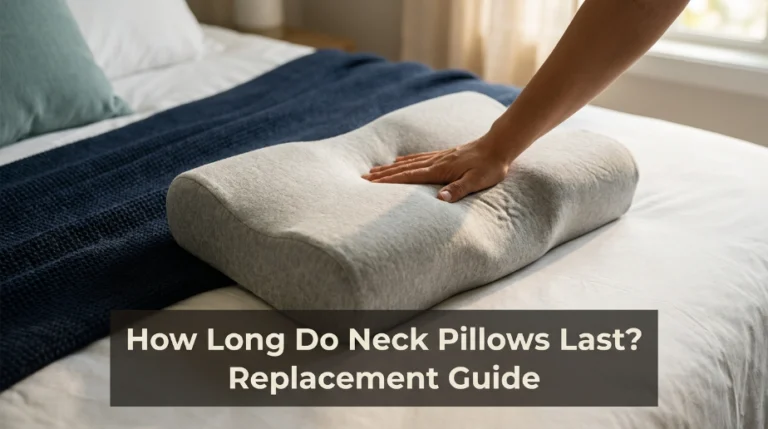
Most foam neck pillows last roughly one to three years, depending on density and use. Replace yours once it flattens, develops lumps, or stops holding your head level. For a deeper breakdown, see our guide on how long neck pillows last.
Can a neck pillow cure neck pain?
No. A neck pillow can reduce strain by supporting good alignment, but it does not cure underlying conditions. If pain lasts more than a few weeks, spreads to your arms, or comes with numbness, see a healthcare professional rather than relying on a pillow alone.
What is the best neck pillow for side sleepers?
Side sleepers need a taller, curved pillow that fills the gap between ear and shoulder. The Sleep Artisan Luxury Side Sleeper pillow and the TEMPUR-Neck in a larger size both suit this position. Avoid low, flat pillows, which let the head drop toward the mattress.
Are travel neck pillows good for neck problems?
They can help for short periods by stopping your head from tipping sideways or forward on a plane or in a car. Wraparound foam designs like the Cabeau Evolution S3 give firmer support than scarf-style options. They are not a substitute for a proper bed pillow at home.
Our Final Verdict
The right neck pillow depends on how you sleep, but one choice fits the widest range of people. The TEMPUR-Neck delivers dependable contoured support for back and side sleepers, while EPABO and Coop offer lower-cost and adjustable alternatives. Choose by sleep position first, then loft, and give any new pillow a short break-in.

I’m a home decor enthusiast who loves discovering beautiful room ideas, creative DIY projects, and Pinterest-worthy decorating inspiration. At DecorMinty, I share simple tips, fresh trends, and practical ideas to help you create a home you’ll truly love—one room at a time.