How to Style a Bolster Pillow on Bed: Size & Layouts
Quick Answer
Place one bolster horizontally across the front of your sleeping pillows, centred on the bed and slightly shorter than the mattress width. Start with sleeping pillows against the headboard, add the bolster last, and keep the rest of the bed simple so the bolster reads as the finishing line, not another layer to move at night.
A bolster can make a bed look finished in seconds, but only when its size, position and colour are doing a clear job. Too long, too many, or too busy, and the bed looks crowded instead of calm.
What a Bolster Pillow Actually Is
A bolster is a long, narrow pillow, usually cylindrical, with rounded ends. Modern versions also include long rectangular lumbar shapes, but the classic bed bolster is the cylinder you lay across the width of the bed.
That shape is what makes it useful for styling. A square throw pillow adds height and corners. A bolster adds one clean horizontal line. It can hide the gap between two sleeping pillows, soften a hard headboard edge, and give the front of the bed a clear edge.
It is not a replacement for a sleeping pillow for most people. A regular pillow supports the head and neck in a flatter, wider shape. A bolster is better as a support companion: behind the back while reading, under the knees, between the knees for a side sleeper, or hugged for comfort. For styling, treat it as decoration first and support second.
Choose the Right Size First
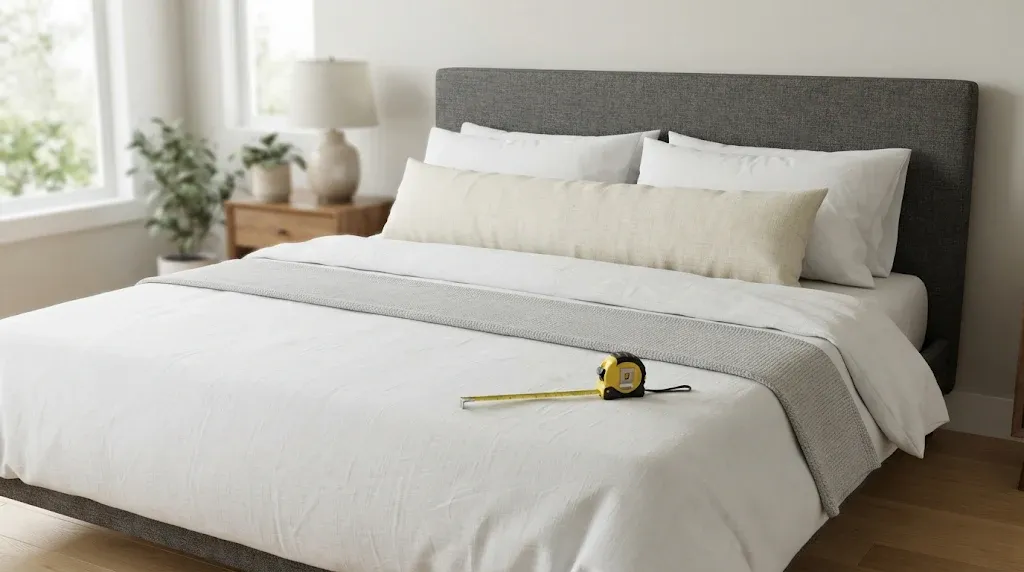
Size decides whether a bolster looks tailored or wrong, before colour or fabric get a chance. The usual rule is simple: the bolster should be a little shorter than the width of the mattress, so it sits inside the bed edges rather than hanging over them.
| Bed size | Bolster length that usually fits | Best use |
|---|---|---|
| Twin | 20 to 24 inches | One slim bolster, centred |
| Full | 24 to 36 inches | One bolster, or a pair at the ends |
| Queen | 36 to 48 inches | One long bolster across the front |
| King | 48 to 54 inches | One extra-long bolster, or two matching bolsters |
If you are between sizes, choose the shorter one. A bolster that is a few inches short looks intentional. A bolster that overhangs the mattress looks like a mistake, and it is the first thing to slide off at night. The same sizing logic applies to other pillows: a guide to choosing the right neck pillow shows why fit and firmness matter more than a generic size label.
Three Layouts That Work on Most Beds
Most good bolster styling falls into one of three layouts. Pick one, rather than mixing all three, and the bed will look calmer.
1. The single bolster
This is the simplest and most reliable layout. Place two sleeping pillows against the headboard, then lay one long bolster horizontally in front of them, centred. That is the whole arrangement.
2. The layered look
For a fuller, hotel-style bed, layer back to front: Euro shams against the headboard, sleeping pillows in front of those, then the bolster at the very front. Keep each layer visible. If the bolster hides the pillows behind it, it is too thick or too far forward.
3. The pair at the ends
Instead of one long bolster, place two shorter bolsters upright or angled at the left and right ends of the bed, in front of the sleeping pillows. This works well on a wide king bed, a daybed, or a bed with a strong headboard that does not need a horizontal line across it.
A pair also works as armrests on a daybed or bench. Keep the two bolsters identical in size, fabric and colour, or the symmetry will look accidental. The Amerisleep guide to arranging bed pillows shows the same back-to-front logic: larger pillows at the back, smaller accent pieces in front, with the bolster as the final layer.
How to Place a Bolster, Step by Step
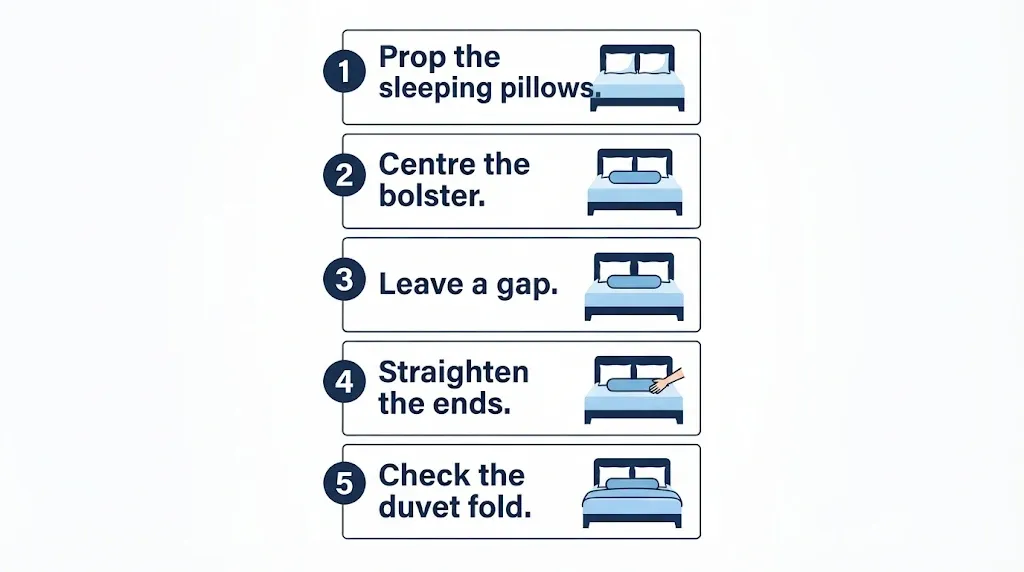
Start with a made bed. A bolster cannot fix a wrinkled duvet or a crooked sheet, and it will only draw attention to them.
- Prop the sleeping pillows. Stand them upright against the headboard, or lay them flat in two neat stacks if you prefer a low, tailored look. Keep them even.
- Centre the bolster. Lay it horizontally in front of the sleeping pillows, with equal space on each side. Check it from the foot of the bed, not just from the side.
- Leave a gap. The bolster should sit just in front of the pillows, not pressed hard against them. A small gap keeps the layers readable.
- Straighten the ends. Round ends should look full, not squashed. Pull the cover smooth and turn any zip or seam to the back or underside.
- Check the duvet fold. If you fold the duvet back, keep the fold below the bolster or just above it, not fighting it for the same line.
Colour, Texture and Pattern
Colour is where most bolster styling goes wrong, because the bolster is long enough to dominate the bed. Pick a colour that already exists somewhere else in the room: the bedding, the headboard, the curtains, or a throw at the foot of the bed. You do not need an exact match. A slightly different tone in the same family usually looks more natural than a perfect match.
Texture is often a better choice than pattern. Velvet, linen, boucle and cotton canvas give a bolster a finished look without competing with the bedding.
If you do want pattern, keep it to one patterned piece. That can be the bolster, or it can be the shams behind it, but not both. A striped or geometric bolster works well against plain bedding. A floral bolster needs plain shams and a plain duvet to breathe.
Tip
Repeat one colour, not three. Pick the bolster colour from the bedding or headboard, then repeat it once more in a small detail, such as a throw, and leave the rest plain.
Bolster, Lumbar and Throw Pillow: When Each Works
These three get confused because they can all sit at the front of a bed, but they do different jobs.
A bolster is long and cylindrical. It is the best choice when you want one clean horizontal line across the bed, or a pair of rounded ends framing the pillows.
A lumbar pillow is long and rectangular, usually flatter than a bolster. It is the best choice when you want a tailored, modern line without the roundness, or lower-back support while sitting up in bed. The Loom Decor guide to styling a bolster pillow notes the same distinction: a long bolster can stand alone as a statement piece, while a flatter lumbar sits more quietly in a layered bed.
A throw pillow is usually square or small and rectangular. It is the best choice when you want height, a pop of pattern, or a small accent in front of a bolster. One or two small throw pillows in front of a bolster can work, but three or four will hide the bolster altogether.
For sleep support, see our guide to how to sleep with a neck pillow.
Keep It Practical at Night
A styled bed still has to be slept in. Decide in advance where the bolster goes at night, or it will end up on the floor.
The simplest routine is to move the bolster to a bench, a chair, or the foot of the bed when you get in, and put it back in the morning. If that feels like too much, use the bolster as part of your sleep setup: hug it as a side sleeper, place it between your knees, or put it behind your back while reading. Then it earns its place instead of just decorating the bed.
Care is part of styling, too. A removable, washable cover means you can use the bolster daily instead of treating it as decoration. Check the care label before washing, and air the insert regularly. A bolster that smells stale or looks flattened will undo the polished look, however well it is placed.
A bolster looks more planned when the bedding shares a palette. See our guides to the best dorm room bedding and dorm room pillows for sleep and style.
Common Mistakes to Avoid

- Too many pillows. If you must remove five pillows to get into bed, the bolster is adding to the pile, not simplifying it.
- Wrong length. A bolster that overhangs the mattress, or one that is so short it looks lost, will always look off. Measure the bed width first.
- Competing patterns. Let one piece carry the pattern, not the bolster, shams and duvet together.
- Hiding the bolster. Throw pillows placed in front of a bolster can hide its shape. If you cannot see the cylinder, the bolster is not doing its styling job.
- Ignoring the headboard. A busy headboard needs a simple bolster; a plain one can take a bolder bolster.
Key Insight
A bolster works best as one clear line. If the bed looks busy, remove a pillow before you add a colour or a pattern.
Related Product
Bolster Pillow for Bed
A firm bolster with a removable cover is the easiest way to try this look, for styling across the bed and for back or knee support while reading.
As an Amazon Associate, we earn from qualifying purchases.
Frequently Asked Questions
Where should a bolster pillow go on a bed?
Across the front of the sleeping pillows, laid horizontally and centred, with equal space on each side. It should sit just in front of the pillows, not on top of them, so each layer stays visible.
What size bolster pillow do I need for a queen bed?
Most queen beds suit a bolster 36 to 48 inches long and 8 to 9 inches in diameter. Avoid one that hangs over the mattress edges.
Do you sleep with a bolster pillow on the bed?
You can, but you do not have to. Many people move it to a bench or the foot of the bed at night. If you keep it in bed, it works well hugged by a side sleeper, between the knees, or behind the back while reading.
Is a bolster pillow the same as a lumbar pillow?
No. A bolster is usually cylindrical and long, while a lumbar pillow is usually rectangular and flatter. A bolster gives a rounded, hotel-style line across the bed; a lumbar gives a flatter, more tailored line and is often used for lower-back support.
How many pillows should be on a bed with a bolster?
For most beds, two sleeping pillows plus one bolster is enough. On a king bed, four sleeping pillows plus one long bolster, or two shorter bolsters, can work.
What colour bolster pillow looks best on a bed?
A colour already present in the room, such as a tone from the bedding, headboard or curtains, usually looks best. Plain or textured bolsters in muted tones are the safest choice, while one deep colour against neutral bedding makes a clear statement.
Conclusion
Styling a bolster pillow on a bed comes down to three choices: the right length for your mattress, one clear layout, and a colour that already belongs in the room. Place it centred across the front of your sleeping pillows, keep the layers behind it simple, and give it a home at night, whether that is in the bed for support or on a bench until morning. Done that way, a single bolster finishes the bed without turning it into a daily chore.

I’m a home decor enthusiast who loves discovering beautiful room ideas, creative DIY projects, and Pinterest-worthy decorating inspiration. At DecorMinty, I share simple tips, fresh trends, and practical ideas to help you create a home you’ll truly love—one room at a time.