How to Use a Wedge Pillow for Bed Sores: 30-Degree Tilt
Quick Answer
Use a wedge pillow to hold a gentle 30-degree side tilt, or to lift the calves so the heels float free, so pressure moves off the sore or the skin most at risk. Never place a wedge directly under a bed sore. Reposition every 1 to 2 hours, or on the schedule in the person’s care plan, check the skin at each turn, and get medical help promptly if a sore opens, worsens, or shows signs of infection.
A wedge pillow is a positioning aid, not a treatment for a bed sore on its own. Its job is to hold a safer position steady between turns and keep a bony point from pressing into the mattress for hours at a time. Used badly, it can create a new pressure point or leave a sore pressed against the bed.
Bed sores are also called pressure sores or pressure injuries. They form when sustained pressure cuts off blood flow to skin and tissue over a bony area, most often the heels, tailbone, hips, shoulder blades, back of the head, elbows, and ankles. Risk is highest for someone who spends long periods in bed, cannot change position without help, or has reduced feeling. A wedge helps only as part of a wider plan: regular repositioning, skin checks, keeping skin clean and dry, a suitable mattress, and care from a clinician when a sore is present.
What a wedge pillow can and cannot do
A wedge can hold a 30-degree tilt, lift the lower legs, support the back, and keep knees and ankles from pressing together. A firm foam wedge holds its shape better than a soft pillow, which can sink or slide during the night.
A wedge cannot heal a bed sore, replace turning, or make up for a mattress that is too hard, a long stretch without movement, or skin that stays damp. If the sore itself is resting on the wedge, the wedge is in the wrong place.
Choose the right wedge before you position anyone
For a side tilt, use a long, firm positioning wedge that runs from below the shoulders to the hips. For heel relief, use a leg wedge that supports the calves and lets the heels hang past its end. A wedge under the knees alone does not do this job, and it can press the heels harder into the bed.
Choose firm foam that springs back when pressed and does not bottom out under the person’s weight. A non-slip base helps on smooth sheets, and a removable, washable cover helps keep the surface clean and dry.
Do not use a ring-shaped or donut cushion under a sore, as it can cut off blood flow and make pressure worse. If the person has a fracture, a spinal injury, severe breathing difficulty, a recent operation, or a clinician has advised against a position, follow that advice first.
How to use a wedge for a 30-degree side tilt

The 30-degree side tilt is the position most often recommended for pressure relief in bed. It is a partial turn, not a full turn onto the side. At about 30 degrees, weight moves off the tailbone without putting the full weight of the body onto the hip bone. A full 90-degree side position puts direct pressure on the hip and shoulder, so it is usually avoided.
Follow these steps, with a second person helping if the person in bed cannot move safely on their own. Lift, do not drag. Dragging across sheets creates friction and shear, which can damage skin even when pressure looks low.
- Lower the head of the bed to 30 degrees or less, unless a clinician has advised a higher position for breathing or swallowing.
- Place the wedge behind the person’s back, tapered edge toward the mattress and non-slip side down, running from below the shoulders to the hips.
- Help the person roll gently toward the side you want to offload, then let them settle back onto the wedge at a shallow angle, with the tailbone free of the mattress.
- Place a soft pillow or foam between the knees and ankles so the bony points do not press together, and support the upper arm on a pillow so it is not trapped under the body.
- Check from the foot of the bed: the spine should look fairly straight, the head supported, and the wedge not pressing into the ribs or lower back. Check the skin just offloaded for redness, warmth, or pain.
Alternate the tilt from side to side and back again, following the care plan: right tilt, back, left tilt, back. If one side is sore, swollen, or has a wound, do not use that side until a clinician says it is safe.
For sitting up to eat or read, a wedge behind the back can help, but keep that time short when pressure care is the priority. The best neck pillow for sitting up in bed guide covers head and neck support for that position.
How to use a wedge to offload the heels
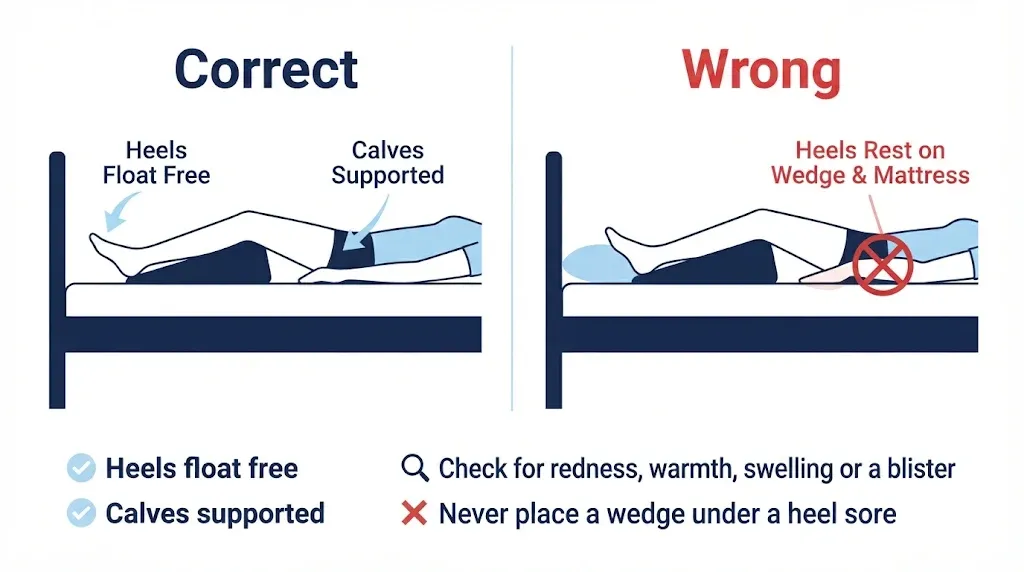
Heels are one of the most common places for bed sores to form, because the heel is a small bony point with little padding, and it rests on the mattress whenever a person lies on their back. A wedge under the calves can lift both heels completely clear of the bed. That is the test that matters: the heels should float, not rest on the wedge.
Place the leg wedge under the calves, with the thick end toward the knees and the heels extending past the thin end. If the heels still touch the wedge or the mattress, move the wedge further toward the knees or use a longer wedge.
Check the backs of the heels at each turn for redness that does not fade, warmth, swelling, or a blister. Do not place a wedge directly under a heel sore. If a heel sore is already open, the heel needs to stay off any surface, and the person needs wound care advice. The best neck pillow for a hospital bed guide looks at head and neck support in that setting, while the leg wedge handles the lower body.
Warning
Never place a wedge directly under an open sore, and never massage skin over or near a sore. If a sore is open, leaking, very painful, or getting larger, keep pressure off it and contact a clinician promptly.
How often to reposition and check the skin
A wedge does not remove the need to move. MedlinePlus guidance on preventing pressure injuries advises changing position every 1 to 2 hours and checking the body from head to toe each day, with special attention to the heels, ankles, hips, and elbows. The international guideline also suggests a 30-degree lateral position, and advises against routinely stretching intervals to four, five, or six hours.
Use each turn as a skin check. Look for a patch that stays red, purple, or blue after pressure is removed, feels warm, spongy, or hard, or is painful or itchy. On darker skin, the change may be a darker or purplish patch. Also check for blisters, broken skin, swelling, and any change in smell or discharge from an existing sore.
Keep a simple written record: time, position, wedge used, and what the skin looked like. Keep skin clean and dry, change damp bedding promptly, and wash the wedge cover regularly, letting it dry fully before use. Our guide to how to wash and clean a neck pillow safely covers gentle washing and drying for pillow covers.
Mistakes that make pressure worse
- Placing the wedge under the sore. The sore needs no pressure, not a firm surface underneath it.
- Turning fully onto the side. A 90-degree turn loads the hip bone and shoulder. Aim for a shallow tilt.
- Raising the head too high for too long. A steep head position makes the body slide down and loads the tailbone.
- Leaving the wedge in one place all day. Even a good position becomes a pressure point if it never changes.
- Ignoring a red mark that does not fade. A mark that stays after pressure is removed is an early warning.
- Adding a donut cushion. Ring cushions can reduce blood flow around the sore and are not a safe substitute for offloading.
The best sleeping position for neck pain guide is useful for head and neck alignment, and the guide to sleeping with a neck pillow covers how a neck pillow should sit when the body position changes.
Tip
After each turn, run a hand under the hips and shoulders to feel for folds, seams, or the edge of the wedge. Smooth the sheet and shift the wedge if you feel a ridge.
When to stop and get medical help

Get help promptly if you notice an open sore, a blister, broken skin, or a red or dark patch that does not fade. Seek urgent care if there is pus or discharge, a bad smell, hot or swollen skin around a sore, severe or worsening pain, a high temperature, or a sore that is getting larger or deeper. NHS guidance on pressure ulcers lists these as reasons to seek prompt or urgent help.
Also ask for a risk assessment and a repositioning plan if the person is cared for at home and is at risk, has had a pressure sore before, cannot move without help, or has reduced feeling. A clinician can advise on the right wedge, angle, turning interval, and whether a pressure-relieving mattress, heel protector, or dressing is needed.
Related Product
Wedge Pillow for Bed Sores
A firm positioning wedge can help hold a 30-degree side tilt or lift the calves so the heels float free, which is the practical job described in this article.
As an Amazon Associate, we earn from qualifying purchases.
Frequently Asked Questions
Can a wedge pillow heal a bed sore?
No. A wedge can take pressure off a sore and help prevent new sores, but it does not heal a sore on its own. An open sore needs assessment and treatment from a clinician.
Where should I place a wedge pillow for a tailbone bed sore?
Do not place the wedge under the tailbone sore. Use a long wedge behind the back to hold a 30-degree side tilt, so the tailbone is off the mattress. Alternate sides on the care-plan schedule.
How long can someone stay in one wedge position?
Usually 1 to 2 hours in bed, or the interval in the person’s care plan. If the skin shows a mark that does not fade, pain, or numbness, change position sooner.
Is a 30-degree tilt better than lying fully on the side?
Yes. A shallow 30-degree tilt moves weight off the tailbone without putting the full load on the hip bone. A full 90-degree side position puts direct pressure on the hip and shoulder.
Can I use a wedge pillow under the knees for bed sores?
No. A wedge under the knees can press the heels harder into the bed. For heel relief, place the wedge under the calves so the heels extend past its end and float free.
What wedge angle is best for bed sores?
Around 30 degrees for a side tilt, and a head-of-bed elevation of 30 degrees or lower for extended rest, unless a clinician advises a different angle.
Conclusion
A wedge pillow works when it holds a safer position steady: a shallow 30-degree side tilt for the tailbone, a calf lift that lets the heels float, and a head position low enough to prevent sliding. Never put the wedge under the sore itself, keep turning every 1 to 2 hours, and check the skin at each turn. If a sore opens, worsens, or shows signs of infection, keep pressure off it and get medical help promptly.

I’m a home decor enthusiast who loves discovering beautiful room ideas, creative DIY projects, and Pinterest-worthy decorating inspiration. At DecorMinty, I share simple tips, fresh trends, and practical ideas to help you create a home you’ll truly love—one room at a time.