How to Get Blood Out of a Bed Pillow: Cold-Water Guide
Quick Answer
Yes, in most cases, if you act before heat sets it. Blot the stain, flush it with cold water only, treat it with mild detergent or an enzyme stain remover, then wash or spot-clean the pillow according to its care label. For dried blood, soak it in cold water first, then repeat the enzyme treatment, or use 3% hydrogen peroxide on white or light fabric. Do not use hot water or a dryer until the stain is gone.
A blood stain on a pillow looks worse than it is. Most fresh stains lift well with cold water and a little patience. Dried stains take longer, and a faint shadow sometimes remains, but a pillow rarely needs to be thrown away after one stain. The deciding factor is whether the stain has been heated, how deep it has soaked, and whether the pillow can be washed.
Why Blood Stains Are Different
Blood is a protein stain. When its proteins meet heat, they change shape and bond more firmly to fabric fibres, much like egg white firms up in a hot pan. That is why hot water, a warm wash, or a hot dryer can turn a removable stain into a permanent one.
Cold water keeps the blood soluble enough to flush out before it bonds. The American Cleaning Institute gives the same basic rule for blood on washable fabric: soak fresh blood in cold water and do not use hot water, because hot water sets the stain. For dried blood, it recommends pretreating or soaking with a product containing enzymes before laundering.
Blood also soaks inward rather than sitting on the surface, so blotting the cover is not enough once it reaches the pillow itself. If the blood is not your own, wear disposable gloves and wash your hands well afterwards.
What to Check Before You Start
Check the care label first, usually sewn into a side seam. Most polyester, cotton, down, and feather pillows can be machine washed when the label allows it. Most solid memory foam and latex pillows cannot: machine agitation and soaking can tear foam or leave it damp inside. For silk, wool, or dry-clean-only pillows, blot with cold water and take the pillow to a cleaner instead of using enzyme products or peroxide at home.
Also check the colour, because hydrogen peroxide can lighten fabric and is safest on white or pale pillows. Test any cleaner on a hidden spot first. Gather clean white cloths, cold water, mild liquid detergent, an enzyme stain remover, and 3% hydrogen peroxide if the pillow is white or light-coloured.
How to Get Fresh Blood Out of a Bed Pillow
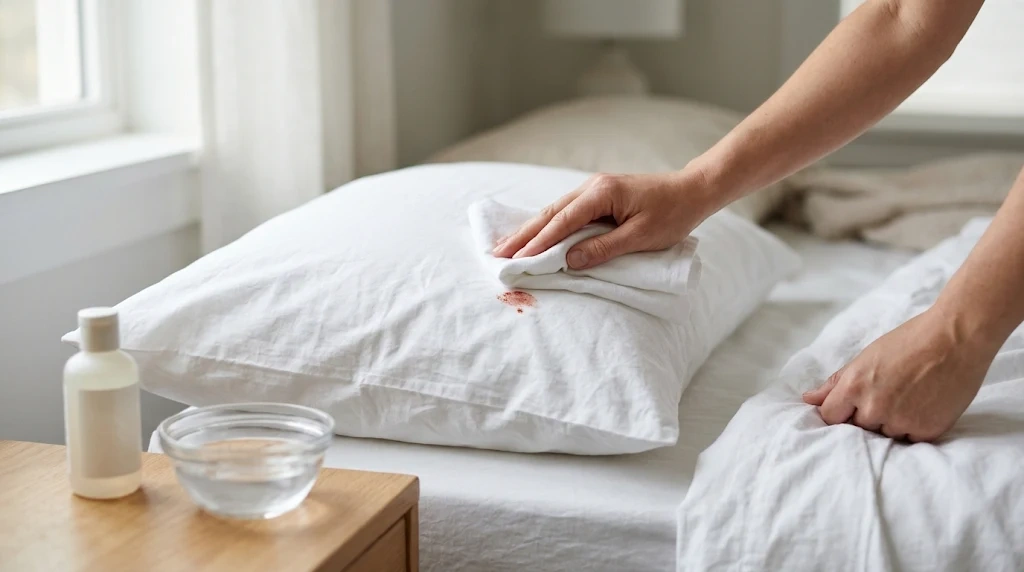
Fresh blood is the easiest kind to remove. Speed matters more than strength: a gentle cold-water flush in the first few minutes often removes most of it before any cleaner is needed.
- Remove the pillowcase and protector. Treat the case separately in cold water, so blood cannot transfer back.
- Blot, do not rub. Press a clean white cloth firmly onto the stain and lift it away, turning the cloth to a clean section each time. Rubbing pushes blood deeper and spreads the edges.
- Flush with cold water. Hold the stained area under cold running water, or press a cold, wet cloth into it and blot. Rinsing through the reverse side helps push blood out of the fibres.
- Work in a little mild detergent. Dab a small amount of liquid laundry detergent or dish soap into the stain with your fingers or a soft toothbrush, and let it sit for 10 minutes.
- Rinse, blot, and check before drying. Rinse with cold water and blot again. Wash a machine-washable pillow in cold water on a gentle cycle, or keep blotting a spot-clean pillow until the detergent is gone. If any trace remains, treat it again. Only dry the pillow once the stain is gone.
How to Remove Dried Blood From a Pillow
Dried blood has already bonded to the fibres, so it needs soaking time and a cleaner that can break down protein. Expect to repeat the treatment: a stain that has been there for days can still fade a lot, but it may not disappear completely in one round.
- Soak in cold water. For a washable pillow or case, soak for at least 30 minutes, and for several hours if the stain is old. For a spot-clean pillow, lay a cold, wet cloth over the stain for 30 minutes and re-wet it as it dries out.
- Apply an enzyme stain remover. Enzyme cleaners break down protein stains such as blood. Apply the product directly to the stain, follow the label directions, and let it sit for 15 to 30 minutes. A longer enzyme pre-soak is usually more useful than scrubbing harder.
- Blot and rinse with cold water. Blot the loosened stain with a clean white cloth, then rinse the area with cold water and blot again.
- Try 3% hydrogen peroxide on white or light fabric. If a shadow remains, apply a small amount directly to the stain. Let it bubble for about five minutes, blot it away, and rinse with cold water. Repeat once if needed, and skip this step on dark colours unless a spot test shows no lightening.
- Wash or spot-clean again. Wash a machine-washable pillow in cold water, or keep spot-cleaning a foam pillow until no cleaner remains. If the stain stops improving after two rounds, further scrubbing is more likely to damage the fabric than to remove the last trace.
Which Cleaner Should You Use?
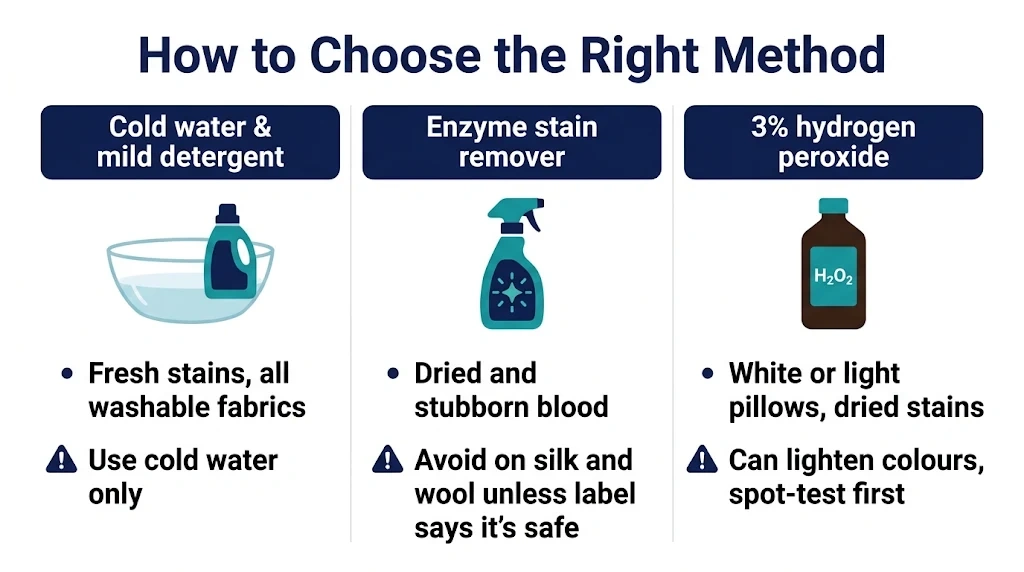
Most blood stains do not need every cleaner in the cupboard. Choose one main treatment, use it properly, and only switch if the stain stops improving.
| Cleaner | Best for | Watch out for |
|---|---|---|
| Cold water and mild detergent | Fresh stains, all washable fabrics | Use cold water only; heat sets the stain |
| Enzyme stain remover | Dried and stubborn blood | Avoid on silk and wool unless the label says it is safe |
| 3% hydrogen peroxide | White or light pillows, dried stains | Can lighten colours; spot-test first |
An enzyme cleaner is usually the strongest choice for dried blood because it targets the protein itself. Hydrogen peroxide helps because it oxidises the dried residue and lifts it from the fibres, which is why it bubbles on contact. Skip ammonia and chlorine bleach unless a product label specifically directs you to use it for that fabric. Never mix bleach with ammonia or other cleaners: the fumes are hazardous, and strong bleach can weaken pillow fabric and damage foam.
How the Method Changes by Pillow Type
The fill decides how much water the pillow can take, so use the method below for the stain, then follow our guide to how to clean a bed pillow for the full clean afterwards.
Polyester, cotton, down, and feather pillows
These are the most forgiving. After blotting and pretreating in cold water, wash two pillows at a time on a gentle cold cycle, so the machine stays balanced, and only dry the pillow after the stain is gone. Our guide to how to wash a bed pillow covers the machine settings and drying steps in more detail.
Memory foam and latex pillows
Do not machine-wash solid foam or latex, and do not soak the whole pillow. Remove the cover and wash that separately, then blot the foam with cold water and a little mild detergent, and blot again with plain cold water to remove the soap. Use as little water as you can: foam dries slowly, and trapped dampness can lead to mildew. Air-dry flat in a ventilated room until the centre feels completely dry.
Pillowcases and pillow protectors
Treat the case first, because it is usually the most stained layer. Rinse it under cold water from the back of the stain, apply detergent or enzyme cleaner, then wash it in cold water. Check the protector too: blood may have reached it before it reached the pillow.
Mistakes That Make a Blood Stain Permanent

Most stains that become permanent were heated, rubbed, or dried too soon.
- Using hot or warm water. Heat cooks the protein into the fibres. Keep every rinse, soak, and wash cold until the stain is gone.
- Rubbing the stain. Rubbing spreads blood and pushes it deeper. Blot and lift instead.
- Putting the pillow in the dryer too early. Dryer heat can set even a faint remaining stain.
- Using too much cleaner at once. Layering peroxide, bleach, ammonia, and detergent does not speed the job up, and it can damage fabric.
- Soaking a foam pillow. A solid foam pillow that is soaked through may never dry properly inside. Spot-clean it in small sections instead.
- Skipping the care label. A method that works for a polyester pillow can ruin a latex or silk one.
Warning
Never mix chlorine bleach with ammonia or other cleaners; the fumes are hazardous.
Related Product
Enzyme Stain Remover for Pillows and Bedding
An enzyme stain remover is the most useful product for dried blood, because it breaks down the protein that cold water and soap alone can leave behind.
As an Amazon Associate, we earn from qualifying purchases.
Frequently Asked Questions
Does cold water really remove blood from a pillow?
Yes, for fresh blood it is the most important step. Cold water keeps blood proteins soluble so they can be flushed out, while hot water can set them into the fibres. Use cold water for every rinse, soak, and wash until the stain is gone.
How do you get dried blood out of a pillow?
Soak it in cold water for at least 30 minutes, then apply an enzyme stain remover for the time on the label. Blot, rinse with cold water, and repeat if needed. On white or light fabric, 3% hydrogen peroxide can help lift a remaining shadow.
Can you use hydrogen peroxide on a pillow?
Yes, but only 3% hydrogen peroxide, and only after a spot test. It works best on white or light fabric and can lighten darker colours. Apply a small amount, let it bubble for about five minutes, blot it away, and rinse with cold water.
Can you wash a memory foam pillow with a blood stain?
No, do not machine-wash a solid memory foam pillow or soak it through. Wash the cover separately, then spot-clean the foam with cold water and a little mild detergent. Blot the soap out and air-dry flat until fully dry inside.
Will a blood stain come out after it has been dried in the dryer?
Often not fully. Dryer heat can set blood permanently, especially if the stain was still visible before drying. You can still try a cold enzyme soak, but expect only partial fading.
Should you throw away a pillow with a blood stain?
Usually not. If the pillow is clean, dry, and free of odour after treatment, a faint shadow is cosmetic and can be covered with a clean case and protector. Replace it only if the fill is damaged, clumped, torn, or still damp and musty after thorough drying.
Conclusion
Cold water, quick blotting, and the right cleaner do most of the work. Treat fresh blood with cold water and mild detergent, give dried blood a cold soak and an enzyme treatment, and save hydrogen peroxide for white or light fabric after a spot test. Check the care label, keep foam pillows to spot-cleaning, and do not let heat near the stain until it is gone. A washable protector also makes the next stain far easier to handle.

I’m a home decor enthusiast who loves discovering beautiful room ideas, creative DIY projects, and Pinterest-worthy decorating inspiration. At DecorMinty, I share simple tips, fresh trends, and practical ideas to help you create a home you’ll truly love—one room at a time.