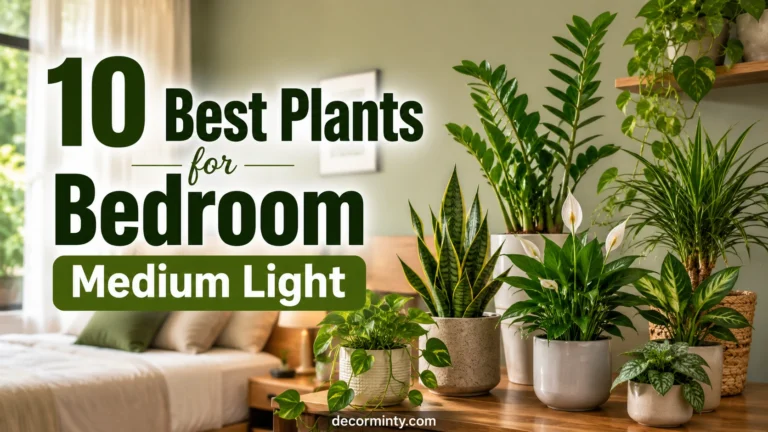
10 Best Beginner Plants for Bedroom (Even in Low Light)
Quick Answer
The best beginner plants for a bedroom are the snake plant, pothos, ZZ plant, peace lily, spider plant, Chinese evergreen, parlor palm, prayer plant, heartleaf philodendron, and cast iron plant, and they made this list because each one tolerates the low, uneven light most bedrooms get, forgives an inconsistent watering schedule, and has a long track record of surviving first-time plant owners.
Here’s the short version before you scroll further:
- Snake Plant — the most forgiving option, watered only every few weeks
- Pothos — a trailing vine that grows in almost any light you have
- ZZ Plant — stores its own water, so a missed week won’t hurt it
- Peace Lily — the only bloomer here, and it wilts visibly when thirsty
- Spider Plant — pet-safe and grows its own baby plants to share
- Chinese Evergreen — patterned leaves that hold color in dim corners
- Parlor Palm — pet-safe with a soft, tropical texture
- Prayer Plant — its leaves fold up at night like little hands
- Heartleaf Philodendron — near-identical to pothos but grows faster in low light
- Cast Iron Plant — survives near-total darkness and years of neglect
The deciding factor usually isn’t which plant looks best in a photo. It’s whether you have pets in the house, how dark your room actually gets, and whether you’ll remember to water on a schedule — match the plant to those things first, and the rest falls into place.
Our Top Picks at a Glance
Easiest to Care For — ZZ Plant
Best for Low Light — Cast Iron Plant
Most Beautiful Bloom — Peace Lily
Best for Pet Owners — Spider Plant


10 Beginner-Proof Plants That Actually Survive a Bedroom
#1. Snake Plant (Dracaena trifasciata) — “The Forgiving One”
| Sunlight | Tolerates low light; grows faster in bright, indirect light |
| Watering | Every 2-3 weeks; let the soil dry out completely first |
| Pot Size | 6-8 inch pot with drainage holes for a starter plant |
| Care Level | Easy |
| Bloom Time | N/A — grown for foliage |
The snake plant belongs to the Asparagaceae family and is native to West Africa, from Nigeria to the Congo. It’s often sold under its older botanical name, Sansevieria trifasciata, and picks up nicknames like Mother-in-Law’s Tongue for its sharp, upright leaves. It was also one of the top performers in NASA’s 1989 Clean Air Study, which is part of why it shows up on nearly every beginner list.
Here’s the thing that makes it genuinely different from most houseplants: it uses CAM photosynthesis, which means it releases oxygen at night instead of during the day. That’s the whole reason it’s become the go-to bedroom plant recommendation. It also stores water in its thick leaves, so it actually prefers you to under-water rather than over-water it.
A well-draining cactus and succulent soil mix matters more here than fertilizer ever will. Snake plants are mildly toxic to cats and dogs if chewed, so keep them somewhere your pets can’t graze. Otherwise, just repot every couple of years once roots start crowding the pot.
Pros
- Survives weeks of neglect without visible damage
- Sculptural, upright shape needs almost no styling
- One of the few plants that thrives in near-darkness
Watch For
- Mildly toxic if chewed by cats or dogs
- Root rot sets in fast if the pot lacks drainage
- Grows slowly, so don’t expect quick size changes
#2. Pothos (Epipremnum aureum) — “The Overachiever”
| Sunlight | Low to bright indirect light; loses variegation in very dim spots |
| Watering | When the top 1-2 inches of soil feel dry |
| Pot Size | 4-6 inch pot to start, sized up as vines lengthen |
| Care Level | Easy |
| Bloom Time | N/A — grown for foliage |
Pothos is native to Mo’orea in French Polynesia, though the trailing vine you see in nearly every home has been cultivated worldwide for decades. It belongs to the Araceae family and picked up the nickname Devil’s Ivy because it’s nearly impossible to kill. It’s also one of the plants NASA tested for its ability to filter airborne pollutants.
What makes pothos a favorite for beginners is how visibly it communicates. Leaves droop slightly when thirsty and perk back up within hours of watering, so you get a clear, low-stakes feedback loop while you’re learning to read a plant. It’s also one of the easiest plants to propagate — a single stem cutting will root in a glass of water in a few weeks.
Because it trails so readily, a hanging planter with a drainage tray works well on a shelf or from a hook near the window. Pothos is mildly toxic to cats and dogs due to calcium oxalate crystals in the leaves, so keep trailing vines out of chewing range if you have curious pets.
Pros
- Grows fast enough that progress feels rewarding
- Propagates for free in a glass of water
- Adapts to almost any light condition in a bedroom
Watch For
- Mildly toxic to cats and dogs if chewed
- Variegated leaves fade to solid green in low light
- Vines need occasional trimming or they get leggy
#3. ZZ Plant (Zamioculcas zamiifolia) — “The Low-Maintenance Icon”
| Sunlight | Tolerates low light; handles bright indirect light too |
| Watering | Every 2-3 weeks, letting soil dry fully between waterings |
| Pot Size | 6-8 inch pot with good drainage |
| Care Level | Easy |
| Bloom Time | N/A — grown for foliage |
The ZZ plant is native to eastern Africa, particularly Kenya and Tanzania, where it grows in dry grasslands. It belongs to the Araceae family, same as pothos and philodendron, but behaves nothing like its thirsty cousins. Its underground rhizomes store water the way a succulent stores water in its leaves.
That water-storing rhizome is why ZZ plants are so hard to kill through neglect but so easy to kill through kindness. Overwatering is genuinely the only common way people lose this plant. Its glossy, dark leaves also reflect what little light reaches them, which is part of why it photographs so well in dim bedroom corners.
Propagation happens through leaf cuttings or by dividing the rhizome when repotting, though it’s slow — expect months, not weeks. All parts of the ZZ plant are toxic to cats and dogs if ingested, so it’s a better fit for pet-free bedrooms or high shelves.
Pros
- Genuinely thrives on being forgotten for weeks
- Glossy leaves rarely attract pests
- Handles fluorescent light better than most houseplants
Watch For
- Toxic to cats and dogs if any part is chewed
- Yellow leaves almost always mean overwatering
- Very slow to visibly grow, even in good light
#4. Peace Lily (Spathiphyllum) — “The Dramatic One”
| Sunlight | Tolerates low light; blooms best in bright, indirect light |
| Watering | Weekly, or as soon as the leaves start to droop |
| Pot Size | 6-8 inch pot with drainage for a mature plant |
| Care Level | Moderate |
| Bloom Time | Spring through summer, with sporadic blooms possible year-round in bright light |
Peace lilies belong to the Araceae family and are native to the tropical forests of Central and South America, where they grow on shaded forest floors. Despite the name, they aren’t true lilies at all. In NASA’s Clean Air Study, the peace lily was the only plant to test positive for removing every pollutant researchers measured.
The peace lily’s real superpower for beginners is how obviously it tells you what it needs. Its leaves droop dramatically the moment it’s thirsty, then perk back up within hours of watering. That built-in feedback makes it almost impossible to accidentally let it dry out for too long, though it’s still easy to overwater since the leaves droop from too much water too.
Its white spathe isn’t technically a flower — it’s a modified leaf called a bract surrounding the true, tiny flowers on the spadix. A self-watering planter can help take the guesswork out of its moisture needs. Peace lilies are toxic to cats and dogs, so this one’s better suited to pet-free rooms.
Pros
- The only plant on this list that reliably flowers
- Visibly signals thirst before real damage happens
- Tolerates surprisingly dim corners for a bloomer
Watch For
- Toxic to cats and dogs if leaves are chewed
- Brown leaf tips often mean tap water minerals
- Won’t bloom much at all in truly dark rooms
#5. Spider Plant (Chlorophytum comosum) — “The Generous One”
| Sunlight | Bright, indirect light preferred; tolerates lower light |
| Watering | When the top inch of soil feels dry |
| Pot Size | 6 inch pot, ideally a hanging basket as it matures |
| Care Level | Easy |
| Bloom Time | N/A — grown for foliage |
Spider plants are native to South Africa and belong to the Asparagaceae family, the same family as the snake plant. They’re one of the few plants on this list confirmed non-toxic to cats and dogs, which makes them a rare pick for beginners who share a bedroom with pets. They also appeared prominently in NASA’s original air-quality testing.
The signature trait here is how the plant reproduces. Mature spider plants send out long stems tipped with baby “pups” that look like miniature versions of the parent plant. You can snip these off and root them in water to give away or fill more pots, essentially for free.
One quirk worth knowing: spider plants are sensitive to fluoride and chlorine in regular tap water, which shows up as brown, crispy leaf tips. Watering with filtered or distilled water solves this in most cases. Beyond that, an occasional trim of any browned tips is really the only maintenance it asks for.
Pros
- Non-toxic to cats and dogs
- Multiplies on its own for free propagation
- Looks lush fast, even for a total beginner
Watch For
- Brown tips from tap water minerals are common
- Needs a bigger pot faster than most beginner plants
- Pups can pile up quickly if you don’t propagate
#6. Chinese Evergreen (Aglaonema) — “The Colorful Survivor”
| Sunlight | Tolerates low light; holds patterned color best in medium light |
| Watering | Every 1-2 weeks, allowing the top soil to dry slightly |
| Pot Size | 6 inch pot with drainage |
| Care Level | Easy |
| Bloom Time | N/A — grown for foliage |
Chinese evergreen is native to the tropical and subtropical forests of Asia and belongs to the Araceae family, right alongside pothos and peace lily. Unlike most patterned houseplants, it’s genuinely one of the best performers in windowless rooms and offices lit only by fluorescent bulbs. Varieties range from deep solid green to pink and silver variegation.
Here’s the trade-off worth knowing before you buy: the more colorful and variegated the leaves, the more light the plant actually needs to keep that color. A solid green Aglaonema will handle a genuinely dim bedroom corner, while a pink ‘Valentine’ variety wants brighter, indirect light to stay vibrant rather than fading to plain green.
It resists most common houseplant pests better than its Araceae relatives, which makes cleanup and maintenance minimal. It is toxic to cats and dogs if chewed, so plan its placement with pets in mind. Fertilize lightly during spring and summer growth, and skip it entirely over winter.
Pros
- One of the few colorful plants that handles low light
- Rarely bothered by common houseplant pests
- Wide range of leaf patterns to match your decor
Watch For
- Toxic to cats and dogs if ingested
- Variegated types lose color fast in true low light
- Dislikes cold drafts near windows or vents
#7. Parlor Palm (Chamaedorea elegans) — “The Gentle Statement Piece”
| Sunlight | Low to medium indirect light |
| Watering | When the top inch of soil feels dry |
| Pot Size | 6-8 inch pot with drainage |
| Care Level | Easy to Moderate |
| Bloom Time | N/A — grown for foliage |
Parlor palm is native to the rainforest floors of southern Mexico and Guatemala, growing in the dappled shade beneath larger trees. It earned its common name during the Victorian era, when it became one of the most popular plants for dim indoor parlors that had little natural light. It belongs to the Arecaceae, or true palm, family.
Its feathery, arching fronds bring a softer texture than the broad, glossy leaves common on this list, which is part of why it’s such a popular pairing plant. It grows slowly and stays compact for years in a pot, so it rarely outgrows a bedroom corner the way some larger houseplants eventually do.
Parlor palm is confirmed non-toxic to cats and dogs, making it a solid pick alongside the spider plant for pet households. It appreciates a bit more humidity than most plants on this list, so a spot away from direct heating or AC vents helps it hold onto its fronds longer.
Pros
- Non-toxic to cats and dogs
- Stays compact, so it rarely needs repotting
- Softens a room full of upright, sword-shaped leaves
Watch For
- Fronds brown at the tips in dry, heated bedrooms
- Grows slowly, so patience is required
- Prone to spider mites if air stays too dry
#8. Prayer Plant (Maranta leuconeura) — “The Quiet Performer”
| Sunlight | Medium to bright indirect light; no direct sun |
| Watering | Keep lightly moist; water when the top inch starts to dry |
| Pot Size | 6 inch pot with drainage |
| Care Level | Moderate |
| Bloom Time | N/A — grown for foliage |
Prayer plant is native to the tropical rainforests of Brazil and belongs to the Marantaceae family, a group known collectively for dramatic leaf movement. Its patterned green and burgundy leaves are attractive on their own, but the real draw is behavioral rather than visual.
Each evening, the leaves fold upward as if hands pressed together in prayer, then lower flat again by morning. This is a genuine, documented plant behavior called nyctinasty, driven by a small hinge-like structure at the base of each leaf. It’s one of the few houseplant traits a beginner can actually watch happen in real time.
Prayer plant is a bit fussier than most others on this list, since it dislikes both soggy soil and letting the soil dry out completely. It’s confirmed non-toxic to cats and dogs, which makes the bedside table a genuinely safe spot for it. Propagate by division when repotting in spring.
Pros
- Non-toxic to cats and dogs
- Visible nightly leaf movement is genuinely fun to watch
- Stays compact and suits small nightstands
Watch For
- Curling leaves usually mean it’s gone too dry
- More sensitive to tap water minerals than most
- Needs steadier humidity than a true beginner plant
#9. Heartleaf Philodendron (Philodendron hederaceum) — “The Faster Pothos”
| Sunlight | Low to medium indirect light |
| Watering | When the top half of the soil feels dry |
| Pot Size | 4-6 inch pot, or a hanging basket for trailing growth |
| Care Level | Easy |
| Bloom Time | N/A — grown for foliage |
Heartleaf philodendron is native to Central America and the Caribbean and belongs to the Araceae family. It’s frequently confused with pothos at the garden center, since both are trailing vines with similarly shaped leaves, but philodendron leaves are thinner and heart-shaped with a smoother texture.
The practical difference that matters for a bedroom: heartleaf philodendron tends to grow noticeably faster in genuinely low light than pothos does. If your room gets almost no natural light at all, this is often the better performer of the two, even though care requirements are nearly identical otherwise.
It can be trained to climb a moss pole or left to trail off a shelf, depending on how you want it styled. Heartleaf philodendron is toxic to cats and dogs due to calcium oxalate crystals, so trailing vines should stay out of reach. Propagates easily from stem cuttings in water, just like pothos.
Pros
- Grows faster in low light than most trailing plants
- Trains easily onto a pole or trellis if you want height
- Propagates for free from stem cuttings
Watch For
- Toxic to cats and dogs if chewed
- Easy to mistake for pothos when buying
- Vines get leggy without regular trimming
#10. Cast Iron Plant (Aspidistra elatior) — “The Unkillable One”
| Sunlight | Tolerates deep shade; avoid direct sun, which scorches leaves |
| Watering | Every 2-3 weeks; quite forgiving if you forget |
| Pot Size | 6-8 inch pot with drainage |
| Care Level | Easy |
| Bloom Time | N/A — grown for foliage |
Cast iron plant is native to the shaded forest floors of Japan and Taiwan and belongs to the Asparagaceae family, the same family as the snake plant. It earned its common name in Victorian England, where it was famously one of the only houseplants that survived dim, gaslit parlors with poor ventilation.
Of every plant on this list, this is the one built to tolerate the deepest shade and the most neglect. It grows slowly, which means you won’t see dramatic new leaves every month, but that same slowness is exactly why it holds up so well through inconsistent care and low light without complaint.
Cast iron plant is confirmed non-toxic to cats and dogs, making it a genuinely worry-free pick for a bedroom shared with pets. Its main enemy is actually overcare — too much fertilizer or too much direct sun will do more damage than simply leaving it alone.
Pros
- Non-toxic to cats and dogs
- Tolerates the darkest bedroom corner on this list
- Genuinely hard to kill through neglect
Watch For
- Very slow growth tests an impatient beginner’s patience
- Direct sun scorches the leaves quickly
- Less visually striking than flashier plants on this list
Basic Care Tips for Beginners
A few habits make a bigger difference than any single fancy product. These apply to almost every plant on this list.
- Check the soil before you water, not the calendar. Stick a finger an inch or two into the pot. If it’s dry, water. If it’s damp, wait — this single habit prevents most beginner plant deaths.
- Match the pot to the plant’s actual size, not its future size. A pot that’s too large holds excess soil that stays wet for too long, which invites root rot in a slow-growing plant like a ZZ or cast iron plant.
- Wipe dust off broad leaves every few weeks. Dust blocks light from reaching the leaf surface, which matters even more in an already dim bedroom.
- Rotate the pot a quarter turn every week or two. Plants lean toward their light source, and rotating keeps growth even instead of lopsided.
Common Mistakes to Avoid
These mistakes account for most of the dead plants beginners deal with.
Watering on a fixed schedule instead of checking the soil first — This is the single biggest cause of houseplant death, and it usually shows up as overwatering. A ZZ plant watered every Sunday regardless of soil moisture will develop yellow leaves and root rot within weeks.
Using a pot with no drainage hole — Decorative pots without drainage trap excess water at the roots with nowhere to go. Even a snake plant, which handles neglect well, will rot in soggy, standing water.
Placing a low-light plant directly against a cold, drafty window — Bedroom windows can swing 15-20 degrees colder overnight in winter. A parlor palm or prayer plant left in that draft will brown and drop leaves even though the light itself was fine.
Fertilizing a plant that isn’t actively growing — Feeding a dormant plant in winter, especially a slow grower like a cast iron plant, can burn the roots instead of helping. Save fertilizer for the active spring and summer growing season.
Assuming “low light” means “no light” — Every plant on this list still needs some indirect daylight to survive long-term. A pothos in a completely windowless closet will slowly decline no matter how forgiving it’s supposed to be.
Where to Place Each Plant in Your Home
Bedrooms rarely have uniform light, so matching the plant to the exact spot matters more than the room label alone.
- Nightstand or dresser top, a few feet from the window — Prayer plant or Chinese evergreen do well here, where light is filtered but still present most of the day.
- Dim corner with almost no direct light — Cast iron plant, ZZ plant, or snake plant are the three most likely to actually thrive that far from a window.
- Hanging near a window or on a tall shelf — Pothos, heartleaf philodendron, or spider plant all trail beautifully and appreciate the extra light height provides.
- Directly on a windowsill with filtered light — Peace lily and parlor palm reward the brighter spot with better blooms and fuller fronds.
Signs Your Plant Needs Attention
Most houseplant problems show up as a visible symptom well before the plant is in real danger.
- Yellow, mushy leaves — Almost always overwatering. Let the soil dry out fully before watering again, and check that the pot actually drains.
- Brown, crispy leaf tips — Usually low humidity or tap water minerals, common on spider plants and prayer plants specifically. Try filtered water or a nearby humidifier.
- Dramatic drooping that bounces back after watering — Normal thirst, especially expected on peace lilies and pothos. Not a cause for concern if it recovers within a day.
- Pale, washed-out new leaves or leggy stretching toward the window — A sign the plant wants more light than it’s currently getting. Move it closer to the window or rotate it more often.
Make Overwatering Nearly Impossible
Since checking the soil before watering is the single biggest factor in keeping any of these plants alive, a simple soil moisture meter takes the guesswork out of it. Push it into the pot, glance at the reading, and you’ll know exactly when to water instead of guessing on a schedule.
Frequently Asked Questions
Q: Is it safe to keep plants in the bedroom overnight?
A: Yes, for the plants on this list. The idea that houseplants compete with you for oxygen at night is largely overblown, and plants like the snake plant actually release oxygen overnight rather than absorbing it.
Q: Do bedroom plants really improve air quality?
A: NASA’s 1989 Clean Air Study found plants remove VOCs in sealed lab chambers, but later research from Drexel University found the real-world effect in an open, ventilated bedroom is much smaller than the original study suggested. A few plants add humidity and a mood boost more reliably than they purify the air.
Q: What’s the easiest plant on this list for a total beginner?
A: The ZZ plant and snake plant tie for the most forgiving option. Both store their own water and genuinely prefer being under-watered to being over-watered.
Q: Which of these plants are safe if I have cats or dogs?
A: Spider plant, parlor palm, prayer plant, and cast iron plant are confirmed non-toxic to cats and dogs. Always double-check any new plant against the ASPCA’s plant database before bringing it home if pets have access to the room.
Q: How many plants do I actually need in one bedroom?
A: There’s no strict rule, but two to four plants is a realistic starting point for most bedrooms. Start with one or two easy options like a snake plant or pothos, then add more once you’re confident keeping those alive.
Q: My bedroom has almost no windows. Can I still keep any of these alive?
A: Yes — cast iron plant, ZZ plant, and snake plant are the three most tolerant of very low light on this list. In a truly windowless room, a small grow light can also help any of these plants along.
Final Thoughts
You don’t need a green thumb to make a bedroom feel more alive. Start with one or two of the truly forgiving options here, pay attention to how they respond, and you’ll build the instincts that make every plant after that easier.
Which plant are you adding to your space first? Save this post to Pinterest so you can come back whenever you need fresh plant inspo!

I’m a home decor enthusiast who loves discovering beautiful room ideas, creative DIY projects, and Pinterest-worthy decorating inspiration. At DecorMinty, I share simple tips, fresh trends, and practical ideas to help you create a home you’ll truly love—one room at a time.