Do Neck Pillows Really Work? What Actually Helps (and What Doesn’t)
Quick Answer
Yes, neck pillows work, but only when the shape matches your sleep or travel position and your neck’s natural curve. A pillow that’s too flat, too firm, or the wrong style can leave you more sore than before, which is why Mayo Clinic’s guidance on neck posture stresses fit over brand name. The right pillow keeps your cervical spine aligned instead of letting your head tip forward or sideways.
When a neck pillow actually helps
- Upright travel: Planes, trains, and car rides where you sleep sitting up.
- Side or forward head drop: U-shaped and wrap-around styles stop your head from lolling.
- Desk power naps: Compact inflatable or J-shaped pillows support the neck without a bed.
- Mild stiffness from posture: Consistent support can reduce next-day tightness over weeks.
When it won’t do much
- If you have a diagnosed spine condition or chronic pain, a pillow alone won’t fix it — see a doctor first.
I’ve bought more neck pillows than I’d like to admit, mostly after waking up on flights with a crick that lasted three days.
Some of them were genuinely useless. A few actually changed how I travel and nap.
Here’s what I’ve learned about which ones work, why, and where people go wrong picking one.


Do Neck Pillows Really Work?
 Save
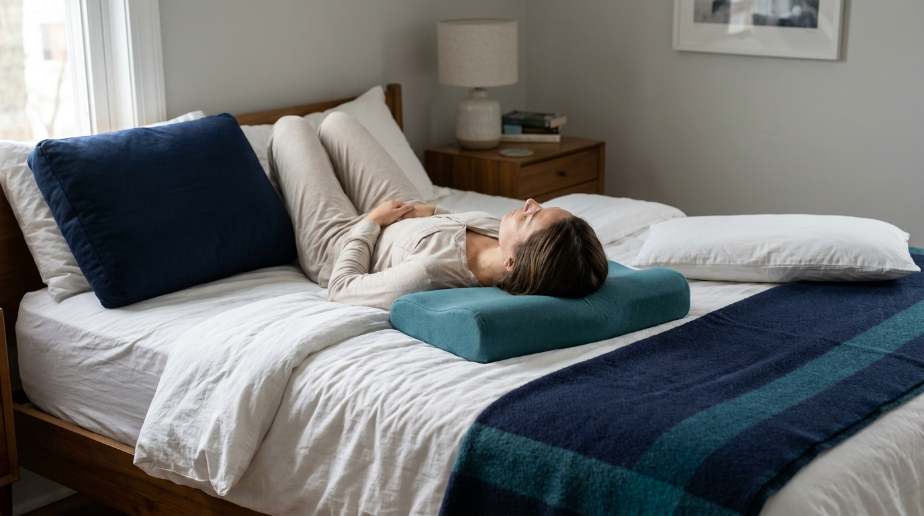
SaveNeck pillows work when they hold your head level with your spine instead of letting it tip forward or slump sideways.
That’s the whole job. A pillow that does this well genuinely reduces stiffness, especially on flights or long drives where you’re upright for hours.
The catch is fit. A pillow sized for a broad shoulder frame will sit wrong on a smaller neck, and vice versa.
What “working” actually means
A neck pillow isn’t a cure for chronic pain or a bad mattress. It’s a support tool for a specific situation: sitting upright for an extended stretch.
- Short-term relief: Less stiffness after a flight or car nap.
- Prevention: Fewer new aches from your head drooping while you doze.
- Not a fix: It won’t resolve pinched nerves, arthritis, or old injuries.
How Do Neck Pillows Work?
Most neck pillows work by filling the gap between your shoulder and your ear when your head tilts.
Without that support, your neck muscles stay partly contracted the whole time you’re upright and drifting off. That’s what causes the ache.
The main designs
Different shapes solve the tilt problem differently, which is why one style can feel great for you and useless for someone else.
- U-shaped: Wraps around the front, catching your head from both sides.
- Wrap-around (like the Trtl): Uses a firm internal support strip instead of foam bulk.
- J-shaped: Supports the chin so your head doesn’t fall forward, a common gap in U-pillows.
- Inflatable: Packs flat, adjustable firmness by how much air you add.
- Memory foam bolster: Denser support, best for side sleepers on a bed rather than a seat.
How Effective Are Neck Pillows?
Effectiveness comes down to matching the pillow style to your actual sleep posture, not the star rating on the listing.
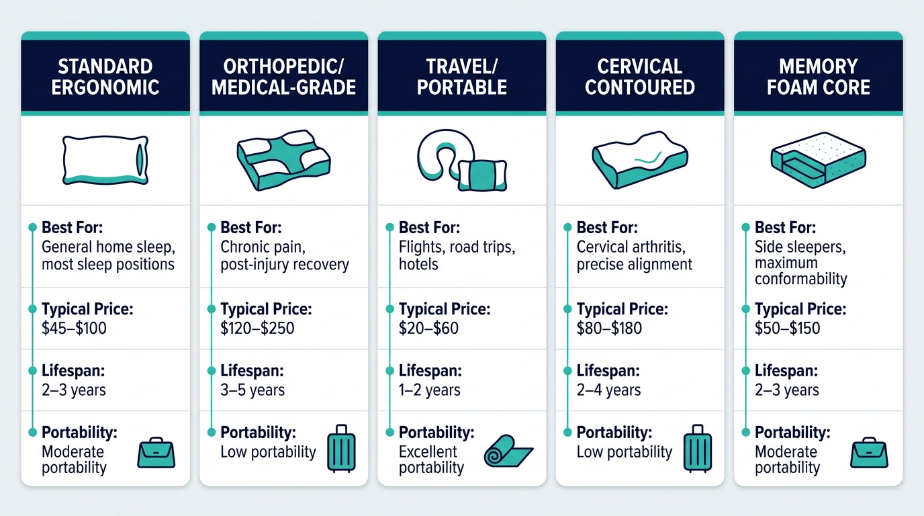
Below is how the main types compare on the things that actually matter when you’re choosing one.
| Pillow Type | Best For | Support Level | Packability | Typical Price (2026) |
|---|---|---|---|---|
| U-shaped memory foam | Head drop to either side | Medium | Bulky, doesn’t compress well | $15–$35 |
| Wrap-around (Trtl-style) | Side sleepers on planes | High | Folds flat | $30–$40 |
| J-shaped | Chin/forward head drop | Medium-high | Compact | $25–$35 |
| Inflatable | Occasional travelers, packing light | Adjustable | Fits in a jacket pocket | $10–$20 |
None of these are objectively “the best.” They’re built for different problems.
Do Neck Pillows Make a Difference?
In my experience, the difference shows up more in prevention than in cure.
On a red-eye flight, wearing a well-fitted wrap-around pillow means I land without the sharp crick I used to get from just leaning on a window.
Where I’ve noticed the biggest difference
- Long-haul flights: The biggest gap between using one and not.
- Road trips as a passenger: Similar upright-sleep problem, similar benefit.
- Office power naps: Smaller effect, but still noticeable after 20 minutes head-down.
- Regular bed sleep: Least difference — a good pillow for your sleep position matters more here.
So the honest answer is: it depends heavily on when and how you use it, not just which one you buy.
Why Do Neck Pillows Work?
 Save
SaveNeck pillows work because they reduce the load on the muscles that would otherwise hold your head up on their own.
Your cervical spine, the seven vertebrae in your neck, is designed with a slight forward curve. When you sit upright and your head tips forward or sideways during sleep, that curve gets stressed unevenly.
The posture connection
A neck pillow keeps that curve closer to neutral. Less strain on one side means less soreness when you wake up.
- Reduces forward head posture: Common on flights when there’s no headrest wing.
- Limits lateral tilt: Stops your head from dropping fully onto one shoulder.
- Keeps airway more open: A side benefit some people notice with breathing during naps.
Why Do Neck Pillows Sometimes Not Work?
Most complaints I’ve seen about neck pillows come down to a mismatch, not a bad product.
Here are the most common reasons a neck pillow ends up in a drawer unused.
- Wrong size: Too small doesn’t reach the shoulder gap; too large pushes the head forward instead.
- Too soft: Cheap polyester fill flattens within minutes and stops supporting anything.
- Wrong style for your habit: A U-shaped pillow won’t stop a forward chin-drop; you need a J-shaped one for that.
- Overheating: Memory foam without a breathable cover can feel worse than no pillow at all.
- Used for the wrong situation: A travel pillow isn’t built for nightly bed use, and a bed pillow is too bulky for a plane seat.
If your current pillow isn’t helping, it’s worth checking which of these actually applies before giving up on the idea altogether.
What Does a Neck Pillow Do?
At its core, a neck pillow fills the space between your head, neck, and shoulder so nothing has to strain to hold that gap closed.
It’s a small mechanical fix for a repetitive problem: gravity pulling an unsupported head somewhere your muscles have to fight to correct.
The practical summary
- Supports the head during upright rest, mainly travel and naps.
- Reduces muscle strain from prolonged tilting.
- Comes in several shapes, each built for a different drop pattern.
- Works best matched to your actual sleep posture, not just picked at random.
If you’re ready to pick one, here’s what I’d actually recommend based on the two situations most people are shopping for:
🏆 BEST OVERALL
Cabeau Evolution S3 Travel Pillow
★★★★★
Memory foam with side wings that catch a forward or sideways head drop, plus a compression strap for storage. This is the one I actually pack for anything over a four-hour flight — it holds its shape better than most foam pillows I’ve tried.
💰 BEST BUDGET
Inflatable J-Shaped Travel Neck Pillow
★★★★☆
Deflates flat enough to slide into a backpack pocket, with the J-shape covering the chin-drop gap most U-pillows miss. Support is firmer than foam and less plush, but for occasional flyers it’s hard to beat the price and packed size.
FAQ
Are neck pillows good for everyday bed use?
Not usually. Most neck pillows are built for upright sitting, not lying flat, so they don’t support side or back sleepers well in bed. A standard cervical pillow suited to your sleep position works better at night.
Can a neck pillow fix chronic neck pain?
No. A neck pillow can reduce strain during upright rest, but it isn’t a treatment for chronic pain, herniated discs, or arthritis. See a doctor or physical therapist if pain persists.
What’s the difference between a U-shaped and a wrap-around neck pillow?
A U-shaped pillow rests around the neck with foam bulk on both sides. A wrap-around style, like the Trtl, uses a firmer internal support strip instead, which tends to hold the head more securely for side sleepers.
How long does a travel neck pillow last?
A well-made memory foam pillow typically holds its shape for one to two years of regular flights before the foam compresses and loses support. Inflatable versions can last longer since there’s no foam to break down.
Do inflatable neck pillows work as well as foam ones?
They can, especially if you adjust the firmness to your neck size. They’re firmer and less plush than foam, but they pack smaller and don’t degrade the way foam does over time.
A neck pillow isn’t magic, but the right one, matched to how you actually sit and drift off, makes a real difference on long flights and drives. Start with your usual head-drop pattern, pick the shape built for it, and skip anything that’s too soft to hold its shape by the second hour.

I’m a home decor enthusiast who loves discovering beautiful room ideas, creative DIY projects, and Pinterest-worthy decorating inspiration. At DecorMinty, I share simple tips, fresh trends, and practical ideas to help you create a home you’ll truly love—one room at a time.