How Many Pillows Should You Use for Neck Pain? The Best Setup
Quick Answer
For most people with neck pain, one properly fitted pillow under the head is better than stacking two pillows. The goal is to keep your head and neck comfortably aligned, so start with one supportive pillow and adjust its height, firmness, or shape instead of automatically adding another. If you’re unsure what supportive fit looks like, see my guide to the best neck pillow for neck pain.
Simple pillow rules for neck pain
- Start with one: A single correctly sized pillow usually gives more predictable neck support than a stack.
- Check your chin: If two pillows push your chin toward your chest, the combined height is probably too high.
- Check side alignment: Your head should not drop toward the mattress or tilt upward when you lie on your side.
- Use extras elsewhere: Side sleepers may place a second pillow between the knees, while back sleepers may put one under the knees.
- Reassess morning pain: Repeated stiffness after waking can mean your pillow height, firmness, or sleep position needs changing.
One important exception
- If you need extra pillows because you feel short of breath when lying flat, tell a healthcare professional rather than treating it as a simple neck-pillow problem.
I understand why this question gets confusing. One pillow can feel too flat, while two can feel comfortable for five minutes and leave you stiff the next morning.
I look at pillow count as a starting point, not the final answer. For neck comfort, height after compression matters much more than whether the bed contains one pillow or two.


How Many Pillows Should I Use for Neck Pain?
 Save
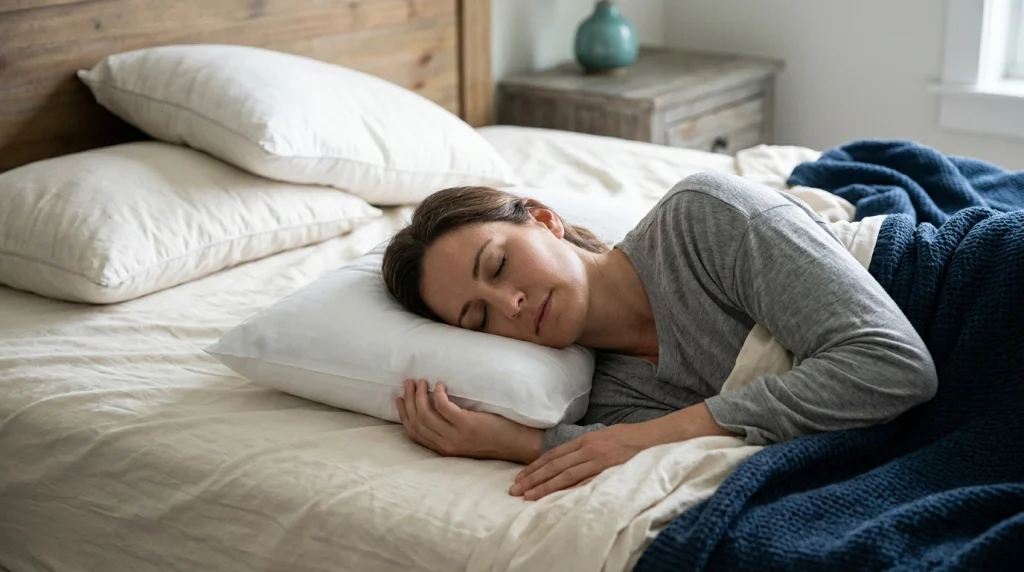
For most back and side sleepers with neck pain, one properly fitted head pillow is the best starting point. Stacking two ordinary pillows can raise the head too much or create an unstable surface that shifts overnight.
The purpose of a pillow isn’t simply to make your head feel soft. Its job is to support the space between your head, neck, shoulders, and mattress.
Definition: Pillow loft is the pillow’s working height when you lie on it. The correct loft helps keep the cervical spine, which is the neck portion of your spine, in a comfortable position.
Why two pillows under your head can cause problems
Two pillows don’t automatically cause neck pain. The problem appears when their combined height bends your neck away from a comfortable resting position.
- Too much forward bend: Your chin moves toward your chest while sleeping on your back.
- Sideways tilt: Your head rises above the middle of your shoulders during side sleeping.
- Uneven support: One pillow can slide away from the other as you change positions.
- Excess pressure: A tall, firm stack may create uncomfortable pressure around the neck or base of the skull.
The Mayo Clinic’s neck-pain guidance recommends keeping the head and neck aligned with the body while sleeping. It also suggests using a small pillow to support the neck.
If your pillow feels wrong, don’t assume you simply need more pillows. I would first check whether the existing pillow is too low, too soft, worn out, or mismatched to your sleep position.
When a second pillow can still be useful
A second pillow can be helpful without going underneath your head. Placement changes its purpose.
- Back sleepers: Try a pillow under the knees to make the resting position more comfortable.
- Side sleepers: Try a pillow between the knees to reduce twisting through the hips and lower body.
- Reading in bed: Extra pillows can support you temporarily while upright, but reconsider the stack before sleeping.
If you regularly wake with neck pain, compare your symptoms with these signs that a pillow may be causing neck pain. Morning timing can offer a useful clue.
| Setup | Potential benefit | Main concern | Best starting use |
|---|---|---|---|
| One head pillow | Simple, stable support | Wrong loft can still cause poor alignment | Most back and side sleepers |
| Two stacked head pillows | Adds height quickly | Can push the head too high or shift overnight | Usually not my first choice for neck pain |
| Head pillow + knee pillow | Supports more of the sleeping posture | Needs correct placement | Back or side sleepers |
| Very thin or no head pillow | May reduce excess height | Can leave side and back sleepers unsupported | Some stomach sleepers |
How Many Pillows Is Good to Sleep With?
There isn’t one medically perfect pillow count for everyone. Your sleep position, shoulder width, mattress firmness, pillow material, and body shape all affect how much support you need.
As of 2026, research still doesn’t show one pillow material or design that clearly works best for every person with chronic neck pain. A 2025 systematic review indexed by PubMed found limited evidence for specific pillows and no clear universal winner among latex, foam, and standard designs.
Use your sleep position to judge pillow height
I start with sleep position because it immediately changes the gap a pillow needs to fill. Then I adjust for mattress sink and shoulder width.
- Side sleeper: You usually need enough height to fill the space between your ear and mattress.
- Back sleeper: You generally need less height so the pillow doesn’t push your head sharply forward.
- Stomach sleeper: A thick pillow can increase neck rotation and extension, so a thinner setup may feel better.
- Combination sleeper: An adjustable pillow can make it easier to find a middle ground.
For a more precise fit, use my neck pillow size guide. It explains why shoulder width and working loft often matter more than standard, queen, or king labels.
The Cleveland Clinic’s neck-pain guidance also emphasizes keeping the head and neck aligned with the rest of the body during sleep. Back and side sleeping can both work when the pillow supports that goal.
Try this simple fit check
I prefer a basic alignment check over counting pillows. Lie in your normal sleeping position and let your head fully relax.
- Start with one pillow.
- Relax your shoulders and jaw.
- Notice whether your head feels pushed up, dropped down, or tilted sideways.
- Check whether your chin feels forced toward your chest.
- Change the pillow height or fill before adding another full pillow.
- Recheck how your neck feels the next morning.
Don’t force yourself to adapt to worsening pain simply because a pillow is marketed as orthopedic or cervical. Persistent deterioration is a reason to reassess the setup.
Is It Healthier to Sleep With 1 or 2 Pillows?
For neck alignment alone, one well-fitted pillow is usually a cleaner solution than two stacked pillows. Two pillows are not inherently unhealthy, but more height is not the same thing as more support.
If one pillow is too low, choosing the correct loft is usually better than creating a soft, shifting stack. An adjustable-fill or properly sized cervical pillow can solve the height problem more predictably.
One pillow is usually better when…
- Your head feels level and relaxed.
- Your neck isn’t bent sharply forward or sideways.
- You wake without new stiffness or headaches.
- The pillow maintains its shape through the night.
- You can change positions without falling off the support area.
Two pillows may make sense when…
- One supports your head and another supports your knees or legs.
- A healthcare professional has recommended an elevated sleeping position for a specific medical reason.
- You temporarily need extra upper-body elevation while following medical advice.
If you’re experimenting because neck pain changes with position, compare the best sleeping positions for neck pain. Position and pillow height should be considered together.
I’d also avoid changing three things at once. If you change your mattress topper, sleep position, and pillow stack on the same night, it’s harder to identify what helped.
A better approach is simple. Change one variable, observe how your neck feels, and then adjust again if needed.
Why Do Doctors Ask If You Sleep With Two Pillows?
A doctor may ask how many pillows you need because needing extra elevation to breathe comfortably can point to orthopnea. Orthopnea means shortness of breath that appears or worsens when you lie flat and improves when you sit or stand.
This question is therefore different from asking which pillow feels best for neck pain. The doctor may be screening for a change in breathing symptoms rather than evaluating your bedroom comfort.
Why pillow count can matter medically
People with orthopnea sometimes add several pillows because being more upright makes breathing easier. The Cleveland Clinic’s orthopnea guidance notes that heart failure, lung disease, and other medical conditions can cause this symptom.
The number of pillows alone doesn’t diagnose anything. What matters is why you need them and whether that need has changed.
- Comfort only: You enjoy a taller sleeping position and can breathe normally when flat.
- Neck support: You added pillows because one felt too low.
- Breathing problem: You become short of breath when flat and need elevation to breathe comfortably.
- Recent change: You suddenly need more pillows than you previously used.
The American Heart Association lists difficulty breathing while lying flat as a symptom people with heart failure should monitor. A new need for more pillows because of breathlessness deserves medical attention.
When neck pain needs more than a pillow change
 Save
A pillow may help sleep-related muscle discomfort, but it can’t explain every type of neck pain. Seek medical advice when pain is persistent, severe, follows an injury, or comes with neurological symptoms.
- New weakness or numbness in an arm or hand
- Pain spreading down an arm
- Severe pain after a fall, collision, or other injury
- Problems with walking, coordination, or balance
- Severe headache with fever and marked neck stiffness
- Shortness of breath when lying flat
For ordinary sleep-related stiffness, fit remains the practical place to start. You can also compare sleeping with or without a pillow before deciding that adding more pillows is the answer.
If you’re ready to simplify your setup, these are the two pillow styles I’d consider first:
🏆 Best for Adjustable Loft
Coop Home Goods Original Adjustable Pillow
★★★★☆
Its adjustable fill lets you remove or add loft instead of stacking another pillow underneath. I like this approach for combination sleepers because you can fine-tune one pillow before changing the whole sleep setup.
🛏️ Best for Structured Neck Support
Core Products Tri-Core Cervical Support Pillow
★★★★☆
The Tri-Core uses shaped cervical rolls with a recessed center rather than relying on a loose two-pillow stack. I would consider this style when someone wants more defined neck support and understands that contoured pillows can require careful sizing.
Frequently Asked Questions
Can sleeping with two pillows cause neck pain?
Yes, two stacked pillows can contribute to neck pain if their combined height bends your neck forward or sideways for hours. The number itself isn’t the problem, so judge the setup by alignment, comfort, and how your neck feels after waking.
Should side sleepers with neck pain use one or two pillows?
Most side sleepers should start with one head pillow tall enough to fill the space between the shoulder and head. A second pillow can be placed between the knees, but stacking two under the head is unnecessary when one pillow already provides the correct loft.
Should back sleepers use one pillow for neck pain?
One supportive head pillow is usually a good starting point for back sleepers. It should support the neck without pushing the chin strongly toward the chest, and a separate pillow under the knees may improve overall comfort.
Is sleeping without a pillow better for neck pain?
Not for everyone. Some stomach sleepers may prefer a thin pillow or no pillow, while many side and back sleepers need support to keep the head from dropping away from a comfortable position.
Why do I suddenly need more pillows to sleep?
If you simply want more cushioning, check whether your existing pillow has flattened or lost support. If you suddenly need more pillows because you become short of breath when lying flat, contact a healthcare professional because that symptom deserves medical evaluation.
My Takeaway
When neck pain is the issue, I would start with one correctly fitted pillow under your head rather than automatically stacking two. The best pillow count is the one that keeps your neck comfortable without forcing your head upward, downward, or sideways.
A second pillow can still be useful under your knees or between your legs. If you’re adding pillows because you can’t breathe comfortably while lying flat, treat that as a medical symptom rather than a pillow-selection problem.

I’m a home decor enthusiast who loves discovering beautiful room ideas, creative DIY projects, and Pinterest-worthy decorating inspiration. At DecorMinty, I share simple tips, fresh trends, and practical ideas to help you create a home you’ll truly love—one room at a time.