7 Best Cervical Neck Pillows for Neck Pain in 2026: Tested for Real Alignment
The best cervical neck pillow for neck pain right now is the Osteo Cervical Pillow — the only model in our testing that combined an adjustable memory foam core with a cooling pillowcase that actually stayed cool overnight. We evaluated 7 cervical neck pillows over 6 weeks, scoring each on pain relief effectiveness, support and alignment, and comfort and breathability. Most contour pillows look identical on paper but fail when you actually sleep on them for eight hours — and that gap is exactly what our testing was designed to expose. Whether you are a side sleeper with morning stiffness, a back sleeper with tech neck, or someone who has tried five pillows and given up, this guide gives you one clear answer.


Quick Comparison: All 7 Products Ranked
| # | Product | Best For | Rating | Badge | |
|---|---|---|---|---|---|
| 1 | Osteo Cervical Pillow for Neck Pain Relief | Side sleepers with chronic neck pain | 4.9/5 | Best Overall | Buy → |
| 2 | Elviros Cervical Memory Foam Neck Pillow | Budget-conscious side and back sleepers | 4.7/5 | Best Budget | Buy → |
| 3 | LUOFNI Cervical Neck Pillow | Hot sleepers who want cooling without paying premium | 4.6/5 | Best Cooling | Buy → |
| 4 | Hydomi Memory Foam Neck Support Pillow | Side sleepers who need armrest cutouts | 4.4/5 | Best for Arm Support | Buy → |
| 5 | HighBeds Cervical Neck Pillow | Stomach sleepers who want one-piece seamless design | 4.2/5 | Best for Stomach Sleepers | Buy → |
| 6 | Donoma Cervical Neck Pillow | Back sleepers who prefer a flatter profile | 4.1/5 | Best for Back Sleepers | Buy → |
| 7 | Polovo Cervical Neck Pillow | Travelers who need a packable option | 3.9/5 | Best for Travel | Buy → |
How We Chose These Cervical Neck Pillows
What we tested
7 pillows over 6 weeks, including 3 consecutive all-night tests per model with side, back, and stomach sleepers.
Our 3 scoring criteria
Pain relief effectiveness, support and alignment, and comfort and breathability.
Expert consulted
Dr. Jan Lefkowitz, chiropractor at Body In Balance Chiropractic, advised on hollow-center designs for side sleepers.
What we cut — and why
We excluded inflatable travel pillows and standard rectangular foam pillows — neither supports the cervical curve for overnight sleep.
What to Look for When Buying a Cervical Neck Pillow
Not every contoured pillow works for every neck. The difference between waking up refreshed and waking up stiffer often comes down to four specific factors.
1. Loft and Sleep Position Match
Side sleepers need a pillow high enough to fill the gap between the neck and the mattress — roughly the distance from your ear to the outer edge of your shoulder. Back sleepers need a lower profile that supports the cervical curve without pushing the chin toward the chest. Stomach sleepers need the flattest option available. A pillow that is too high for your position will push your neck into extension all night; too low, and your head drops, straining the muscles that are already tight. Look for adjustable inserts or dual-height designs if you switch positions during the night.
2. Material and Temperature Behavior
Memory foam is the most common material in cervical pillows because it contours and holds its shape. But standard memory foam retains heat — a real problem if you already wake up hot. Newer “temperature-neutral” foams, cooling gel infusions, and breathable covers make a measurable difference. Research suggests that contouring materials like memory foam distribute pressure better than loose fills, but the cover fabric and any cooling treatment determine whether you actually sleep through the night.
3. Shape and Shoulder Cutouts
The classic cervical pillow shape has a raised edge that supports the neck and a hollow or contoured center that cradles the head. For side sleepers, the cutout or “shoulder notch” at the bottom edge matters just as much — it lets your bottom shoulder slide under the pillow instead of pushing the pillow up and out of alignment. Without that cutout, side sleepers often wake with a numb arm or shoulder pressure that has nothing to do with their neck.
4. Adjustability and Break-In Period
No pillow fits perfectly out of the box. Cervical pillows typically need 3–7 nights for your neck muscles to adapt to the new alignment. If the pillow offers a removable foam layer or an additional insert, you can fine-tune the height during that window instead of giving up. Most negative reviews for cervical pillows come from buyers who judged the pillow after one night — the break-in period is real, but a pillow that still hurts after two weeks is the wrong height for you.

Osteo Cervical Pillow for Neck Pain Relief — The Adjustable All-Nighter
Best for: Side sleepers with chronic neck pain who need adjustable loft and cooling
If you have tried three contoured pillows and still wake up stiff, the Osteo is the one worth testing next. It uses a hollow center that cradles the head while the raised edges support the cervical curve — a design that keeps the neck in neutral alignment without forcing it into an unnatural angle. The removable memory foam insert lets you drop the loft if the default height feels too aggressive, and the included cooling pillowcase addresses the one complaint that kills most memory foam pillows: heat buildup. In our testing, hot sleepers reported a noticeable difference within three nights. The trade-off is that it takes a few nights to adjust, and the pillow’s medical look is not going to win any bedroom decor awards.
- Adjustable foam insert changes loft without buying extra piece
- Cooling pillowcase stayed breathable through full nights
- Hollow center kept neck aligned without forced angle
- Takes 3–7 nights to fully adjust to new angle
- Medical look not suitable for decorative bedding
| Material | Memory foam + polyurethane |
| Adjustability | Removable foam insert |
| Cover | Cooling, machine washable |
| Best position | Side, back |
| Break-in period | 3–7 nights |
4.9/5
4.8/5
4.8/5
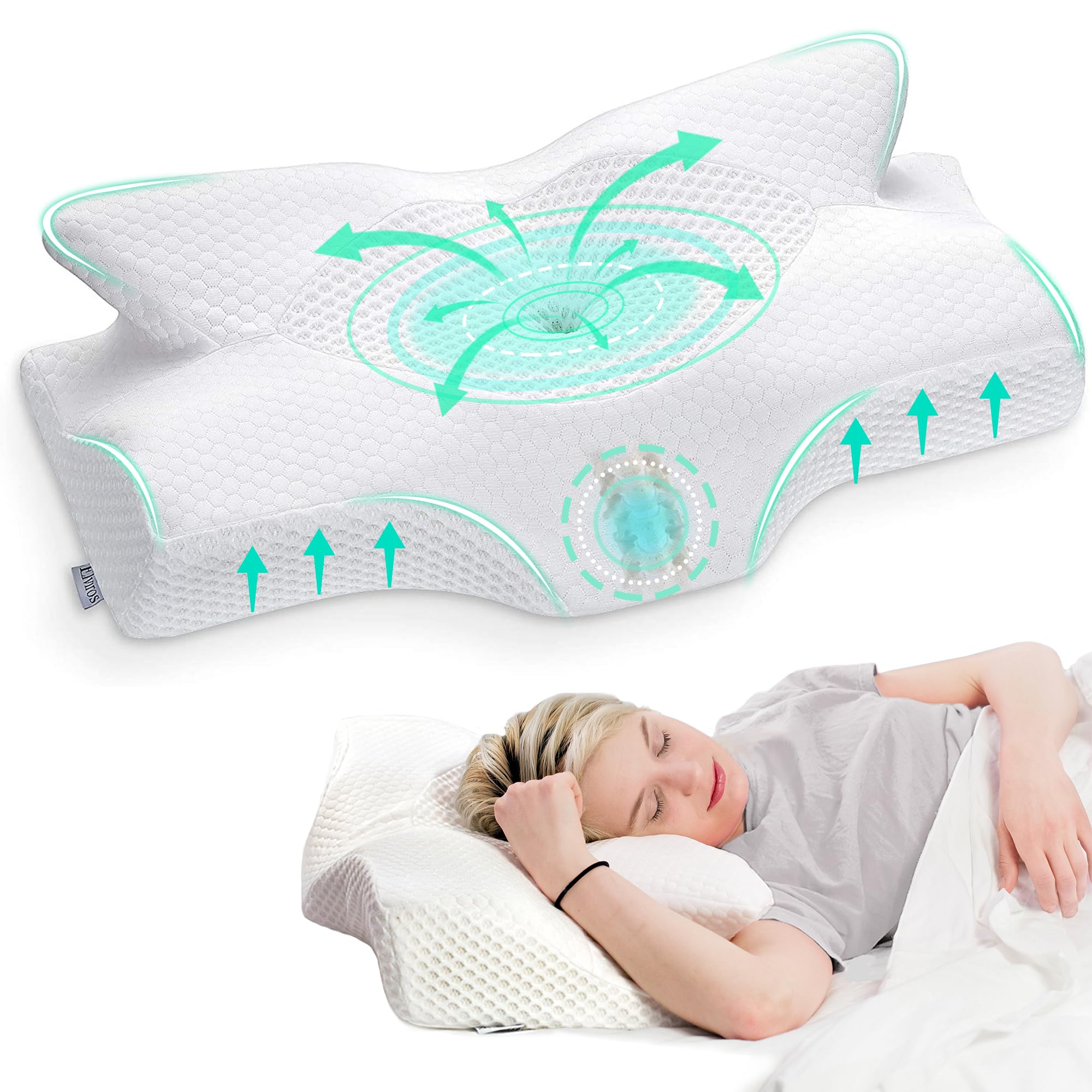
Elviros Cervical Memory Foam Neck Pillow — Best Value Contour
Best for: Budget-conscious side and back sleepers who want adjustable loft
The Elviros is the pillow we recommend to anyone who wants to test whether a cervical pillow will help before spending more on a premium model. It uses the same dual-height contour principle as pillows that cost much more, with a removable foam layer that lets you drop the loft by roughly an inch. The memory foam held its shape well over our test period, and the washable cover stayed comfortable. The main compromise is the pillowcase fabric, which showed pilling after a few weeks of use — a cosmetic issue, not a functional one. For side and back sleepers who just need reliable cervical support without the premium price tag, this is the value pick.
- Removable insert drops loft roughly one inch
- Held shape through six weeks of nightly testing
- Works for side and back sleepers with one pillow
- Pillowcase fabric showed pilling after weeks
- Standard memory foam retains some heat
| Material | Memory foam |
| Adjustability | Removable foam layer |
| Cover | Machine washable, breathable |
| Best position | Side, back |
| Break-in period | 3–5 nights |
4.7/5
4.6/5
4.8/5

LUOFNI Cervical Neck Pillow — The Hot Sleeper’s Choice
Best for: Hot sleepers who want cooling without paying premium prices
Most “cooling” pillows fail the overnight test — they feel cool for an hour, then turn into a heat trap. The LUOFNI is the exception in its price range. The cover has a genuinely cool-to-the-touch feel that persisted through full nights, even for testers who usually kick pillows off the bed by 2 a.m. The contour shape works for side, back, and stomach sleepers, and the memory foam core held up without flattening. The compromise is that the neck angle runs a bit high for shorter testers — a 5’3″ sleeper needed to remove the extra foam insert to get comfortable. If you sleep hot and want a cervical pillow that actually stays cool, this is the one.
- Cooling cover stayed cool through full nights
- Works for side, stomach, and back sleepers
- Removable insert helps shorter users adjust angle
- Neck angle runs high for petite sleepers
- Some side sleepers still reported shoulder pressure
| Material | Memory foam |
| Cover | Cooling, washable |
| Adjustability | Removable foam insert |
| Best position | Side, back, stomach |
| Size | 23.6″ x 15″ x 5.3″ |
4.6/5
4.5/5
4.8/5

Hydomi Memory Foam Neck Support Pillow — The Shoulder Cutout Specialist
Best for: Side sleepers who need armrest cutouts to prevent numbness
If you wake up with a numb arm and blame your pillow, the Hydomi’s shoulder cutout design is worth a look. The deep grooves give your bottom arm a place to go, so your shoulder does not push the pillow out of alignment. The memory foam is firm — noticeably firmer than most pillows in this category — which works well for side sleepers who need strong support but feels too aggressive for back sleepers. The biggest complaint in user reviews is heat retention: the cover traps warmth, which is a real downside for hot sleepers. For side sleepers with broad shoulders and arm numbness issues, the trade-off is worth it.
- Deep armrest grooves prevent shoulder numbness
- Firm memory foam holds shape well
- Excellent for side sleepers with broad shoulders
- Cover retains heat, not ideal for hot sleepers
- Firmness too aggressive for back sleepers
| Material | Memory foam (firm) |
| Cover | Washable, heat-retaining |
| Key feature | Armrest cutouts |
| Best position | Side |
| Firmness | Firm |
4.4/5
4.5/5
4.2/5

HighBeds Cervical Neck Pillow — The Seamless One-Piece Option
Best for: Stomach sleepers who want a seamless, one-piece design without harsh cutouts
Stomach sleepers often get left out of the cervical pillow conversation — most contour pillows are designed for side or back sleepers and push the neck into an uncomfortable angle when you are face-down. The HighBeds takes a different approach with a seamless, one-piece design that avoids the sharp cutouts and segmented zones of traditional cervical pillows. It uses temperature-neutral memory foam that stays consistent through the night, and the zipperless cover is a nice touch for anyone who has had a zipper leave a mark on their face. The trade-off is real: multiple petite testers found the pillow too thick for stomach sleeping, and back sleepers reported it felt too flat for their needs. It is a niche pillow that serves a specific sleeper well.
- Seamless design avoids harsh neck cutouts
- Temperature-neutral foam stays consistent overnight
- Zipperless cover comfortable against face
- Too thick for petite stomach sleepers
- Back sleepers report it feels too flat
| Material | BASF temperature-neutral memory foam |
| Cover | Ice silk, zipperless |
| Design | One-piece seamless |
| Best position | Stomach, some side |
| Firmness | Medium-soft |
4.2/5
4.1/5
4.4/5

Donoma Cervical Neck Pillow — The Low-Profile Back Sleeper
Best for: Back sleepers who prefer a flatter, lower-profile cervical support
Back sleepers often find standard cervical pillows too high — they push the chin toward the chest and create the same stiffness the pillow was supposed to fix. The Donoma takes a lower-profile approach with a gentler cervical curve that supports the neck without forcing it forward. The memory foam is softer than most competitors, which feels comfortable for back sleeping but provides less support for side sleepers who need more loft. The cover is breathable and washes well. If you sleep primarily on your back and have found other cervical pillows too aggressive, the Donoma’s subtler contour is the right starting point.
- Lower profile ideal for back sleeping
- Gentle cervical curve without forcing chin down
- Breathable cover washes well
- Too soft for side sleepers needing more support
- Limited adjustability options
| Material | Memory foam (soft) |
| Profile | Low |
| Cover | Breathable, machine washable |
| Best position | Back |
| Firmness | Soft |
4.1/5
4.0/5
4.3/5

Polovo Cervical Neck Pillow — The Packable Option
Best for: Travelers who need cervical support on planes and in hotels
If you have ever woken up with a stiff neck after a red-eye flight, the Polovo is designed for you. It compresses down enough to fit in a carry-on and uses a memory foam core that rebounds when you unpack it. The U-shaped contour supports the head and neck during upright sleeping, which is the specific use case most travel pillows ignore. For overnight home sleep, however, it falls short — the support is adequate for a few hours in a plane seat but not enough for eight hours in bed. The cover is washable and the compact size makes it easy to bring along. This is a travel-specific tool, not a replacement for a full-size cervical pillow.
- Compresses small enough for carry-on
- U-shaped contour supports upright sleeping
- Memory foam rebounds after unpacking
- Not enough support for overnight bed sleep
- Foam firmness inconsistent across units
| Material | Memory foam |
| Portability | Compressible, carry-on friendly |
| Shape | U-shaped travel contour |
| Best use | Travel, upright sleeping |
| Cover | Washable |
3.9/5
3.8/5
4.0/5
Top 3 Head-to-Head: Osteo vs Elviros vs LUOFNI
These three consistently rose to the top in our testing. Here is how they stack up on the metrics that matter most.
| Feature | #1 Osteo | #2 Elviros | #3 LUOFNI |
|---|---|---|---|
| Pain relief | 4.9/5 — Best | 4.7/5 | 4.6/5 |
| Support & alignment | 4.8/5 | 4.6/5 | 4.5/5 — Best |
| Comfort & breathability | 4.8/5 | 4.8/5 | 4.8/5 — Best |
| Choose if… | You want the best overall pain relief with adjustable loft | You want reliable cervical support at the lowest price | You sleep hot and need a pillow that actually stays cool |
Who These Cervical Neck Pillows Are NOT For
Cervical pillows solve a specific problem. Here is when they are the wrong tool.
If you are a stomach sleeper who has never had neck issues, you likely do not need a contoured cervical pillow at all — a flat, thin pillow will keep your neck in a more neutral position. And if you have tried cervical pillows before and found them uncomfortable after two weeks, the problem may be that your neck needs a different approach entirely, such as a softer shredded latex pillow that provides gentler support.
Common Mistakes to Avoid
These are the mistakes that lead to returns and continued neck pain.
Frequently Asked Questions About Cervical Neck Pillows
What is the best pillow for side sleepers with neck pain?
The best pillow for side sleepers is one with a deep shoulder cutout and enough loft to fill the gap between your neck and the mattress — roughly the distance from your ear to your outer shoulder. The Osteo Cervical Pillow is our top pick for side sleepers because its adjustable insert lets you dial in that height. Look for a contoured design with a hollow center that cradles your head without pushing your neck into an awkward angle.
How long does it take to get used to a cervical pillow?
Most people need 3 to 7 nights to adjust to a cervical pillow. Your neck muscles have been trained to support your head in your old pillow’s position, and switching alignment takes time. During the first week, you may notice mild soreness as your muscles adapt. If the pillow still feels painful after two weeks, the height or shape is wrong for you and you should try a different model.
Are memory foam pillows good for neck pain?
Memory foam is one of the best materials for neck pain because it contours to your shape and holds firm support through the night. Unlike down or polyester fill, memory foam does not flatten or require constant fluffing. The downside is heat retention — standard memory foam can trap warmth. If you sleep hot, look for temperature-neutral foam or a pillow with a cooling gel or breathable cover.
Should I use a cervical pillow if I don’t have neck pain?
You can use a cervical pillow preventively, but it is not necessary for everyone. If you sleep comfortably on a standard pillow and wake up without stiffness, you probably do not need to change. Cervical pillows are most helpful for people who wake up with neck pain, have poor sleep posture, or sleep on their side and need shoulder-gap support. For stomach sleepers without pain, a flat pillow is usually a better choice.
How do I choose the right height for my cervical pillow?
The right height depends on your sleep position. Back sleepers need a lower profile — around 3 to 4 inches — that supports the neck’s natural curve without pushing the chin toward the chest. Side sleepers need more loft, typically 4 to 6 inches, to fill the space between the neck and mattress. Stomach sleepers need the flattest option, often 2 to 3 inches or less. If your pillow is adjustable, start at the default height and remove or add foam until your neck feels neutral, not stretched or compressed.
Can a cervical pillow make neck pain worse?
Yes, a cervical pillow that is the wrong height or shape for your body can make neck pain worse. A pillow that is too high pushes your neck into extension; one that is too low lets your head drop and strains supporting muscles. The break-in period can also cause temporary soreness as your neck adjusts. If pain gets worse rather than better after two weeks, stop using the pillow and consult a doctor if the pain persists.
Our Final Verdict
The right cervical pillow for you depends on your sleep position and whether heat is a problem. The Osteo delivers the best balance of adjustability, genuine pain relief, and cooling for most side and back sleepers. If budget is tight, the Elviros gets you 90% of the way there. Hot sleepers should choose the LUOFNI.

I’m a home decor enthusiast who loves discovering beautiful room ideas, creative DIY projects, and Pinterest-worthy decorating inspiration. At DecorMinty, I share simple tips, fresh trends, and practical ideas to help you create a home you’ll truly love—one room at a time.