How to Relieve Neck Pain and a Stiff Neck Fast
How to Relieve Neck Pain and a Stiff Neck Fast
Quick Answer
For a mild stiff neck caused by sleep position, desk posture, or muscle tension, gentle movement, heat or cold, and better neck support often help. Start slowly, and don’t force your neck through sharp pain. If mornings are your main problem, choosing the right neck pillow for neck pain may also reduce repeated overnight strain.
Try these quick steps
- Move gently: Slowly turn your head left and right within a comfortable range.
- Use heat or cold: Choose the option that feels soothing and protect your skin with a cloth barrier.
- Relax your shoulders: Drop them away from your ears and avoid hunching over your phone.
- Check your pillow: Keep your head comfortably aligned rather than sharply tilted up or sideways.
- Keep moving: Avoid prolonged bed rest unless a healthcare professional has told you otherwise.
Get medical help sooner if
- You have severe pain after an accident, weakness or numbness, trouble walking, or a stiff neck with fever and a severe headache.
Waking up unable to turn your head comfortably can ruin your whole morning. I’ve also found that neck stiffness feels worse when you start aggressively stretching before the muscles have settled.
This guide focuses on simple relief for common muscle-related neck discomfort. It also explains when home care isn’t enough.
Definition: Neck pain is discomfort involving structures in the cervical region, including muscles, joints, nerves, ligaments, discs, and the seven cervical vertebrae. A “stiff neck” usually describes pain or tightness that makes normal head movement difficult.


How can you cure neck pain fast?
 Save
SaveYou usually can’t guarantee an instant cure because neck pain has many possible causes. For a mild strain or awkward sleeping position, though, you can often make yourself noticeably more comfortable within the same day.
I start with the least aggressive option. Trying to “crack” a painful neck or force a stretch has never been my first choice.
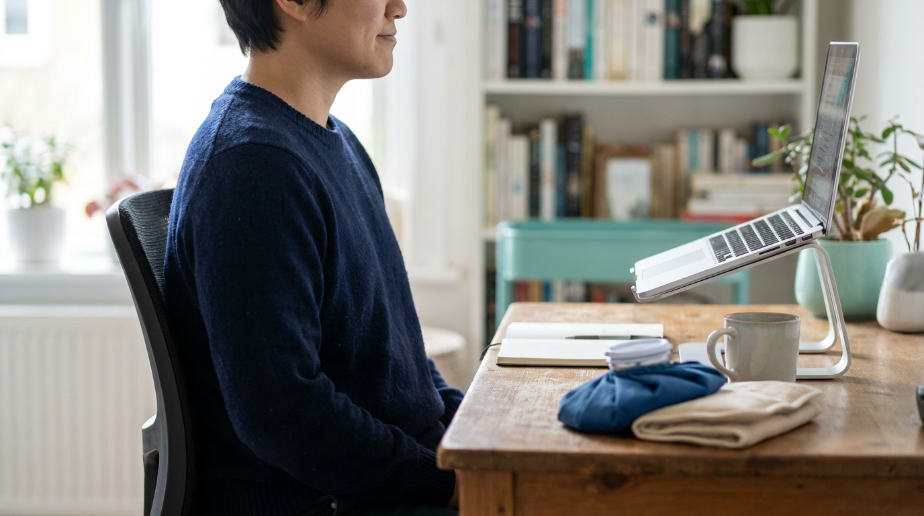
Use a simple relief sequence
- Stop the aggravating position. Move away from the laptop, phone, heavy lifting, or posture that triggered the pain.
- Try gentle motion. Slowly look left, right, slightly down, and back to center.
- Use cold or heat. Mayo Clinic suggests ice during the early period of acute discomfort and heat later when appropriate.
- Reduce muscle guarding. Let your shoulders drop and unclench your jaw.
- Recheck your posture. Keep your screen near eye level instead of bending your neck downward.
You can review Mayo Clinic’s neck pain treatment guidance for additional self-care and treatment information.
| Method | Best Use | Practical Timing | Important Note |
|---|---|---|---|
| Cold pack | Recent strain or soreness | Up to about 15 minutes at a time | Wrap it in cloth and protect your skin |
| Warm shower or heat | Tight, guarded muscles | Short comfortable sessions | Never sleep on an active heating pad |
| Gentle motion | Everyday stiffness | Several slow repetitions | Stop if movement causes sharp pain |
| Pillow adjustment | Morning neck pain | Throughout sleep | Aim for neutral head and neck alignment |
What about pain medicine?
Over-the-counter medicines such as acetaminophen or some anti-inflammatory medicines can help certain people. They aren’t safe for everyone, so follow the label and ask a pharmacist or clinician when you’re unsure.
Don’t exceed recommended doses or combine products without checking their active ingredients.
How can you cure neck pain at home?
Home care works best when your discomfort is mild and you don’t have warning signs of a serious injury or illness. Think of home treatment as reducing irritation while keeping the neck comfortably mobile.
Set up your day to reduce repeated strain
- Raise your screen: Keep frequently viewed screens closer to eye level.
- Change positions: Don’t keep your head fixed in one posture for hours.
- Support your back: A stable sitting position makes it easier to avoid pushing your head forward.
- Take movement breaks: Walk, relax your shoulders, and gently move your neck.
- Avoid heavy twisting: Give an irritated neck time to settle before strenuous activity.
MedlinePlus also recommends remaining reasonably active rather than using prolonged bed rest for common neck pain. Its neck pain self-care guidance covers activity changes, heat, cold, and supportive sleep.
Check your nighttime setup
Your pillow should support the space around your neck without forcing your chin toward your chest. Side sleepers usually need enough height to fill the shoulder-to-head gap.
Back sleepers often need less loft. My preferred test is simple: the neck should feel supported without making the head look obviously pushed forward.
If you’re unsure where to start, this guide on how to choose the right neck pillow explains loft, contour, material, and sleeping position.
How can you cure a stiff neck fast?
A common stiff neck often improves with comfortable movement, posture changes, and heat or cold rather than complete immobilization. Cleveland Clinic notes that many temporary stiff necks come from overuse, unusual sleep positions, or prolonged posture.
You can see its current stiff-neck guidance for causes and warning signs.
My practical morning routine
- Sit upright with your back supported.
- Relax both shoulders for several breaths.
- Slowly turn your head toward the comfortable side.
- Return to center.
- Repeat toward the stiffer side without forcing the range.
- Follow with a warm shower if warmth feels soothing.
Don’t chase a dramatic stretch. Comfortable movement is the goal.
When stiffness isn’t a normal “crick”
A stiff neck with fever, severe headache, confusion, marked sleepiness, light sensitivity, or vomiting needs prompt medical assessment. These symptoms can occur with meningitis and shouldn’t be treated as a simple pillow problem.
Severe neck pain after a car crash, fall, diving accident, or other significant trauma also deserves urgent evaluation.
How can you fix a stiff neck in 5 minutes?
You may reduce tightness in five minutes, but five minutes isn’t a realistic guaranteed cure. Treat it as a short reset for mild muscular stiffness.
A gentle five-minute neck reset
- Minute 1: Sit tall, support your back, and relax your shoulders.
- Minute 2: Slowly rotate your head left and right within a comfortable range.
- Minute 3: Bring one ear gently toward the same-side shoulder, then switch sides.
- Minute 4: Draw your shoulder blades gently back and down, then release.
- Minute 5: Walk around and reassess your neck before returning to work.
Nothing should feel sharp, electric, or progressively more painful. Stop the routine if you develop dizziness, tingling, weakness, or pain shooting into an arm.
Johns Hopkins provides additional examples of gentle neck-strain exercises, including rotation and shoulder-blade squeezes.
What exercises help relieve neck pain?
Gentle range-of-motion and posture exercises may help common muscle-related neck stiffness. The right exercise depends on why your neck hurts, so don’t push through pain after an injury.
Three simple movements to consider
- Neck rotation: Turn your head slowly toward one side, return to center, then repeat on the other side.
- Side bending: Bring your ear gently toward your shoulder without lifting the shoulder.
- Scapular squeeze: Draw your shoulder blades gently together while keeping your shoulders relaxed.
I prefer small, controlled movements over large neck circles. Small movements make it easier to notice when you’ve reached your comfortable limit.
When should you skip exercise?
Don’t start a DIY exercise routine for severe pain after trauma, new weakness, major numbness, loss of balance, or other concerning neurological symptoms. Get medical advice first.
If you’re waking sore despite exercising, your sleep setup may be contributing. Compare your pillow’s support using this firm vs. soft neck pillow guide.
Can you massage a stiff neck?
Gentle massage can feel helpful when tight muscles are contributing to your stiffness. Keep the pressure comfortable and focus on soft tissue rather than forcefully pressing on the spine.
How I approach a simple massage
- Start around the upper shoulders rather than attacking the sorest spot.
- Use slow, comfortable pressure.
- Avoid aggressive twisting or neck manipulation.
- Stop if pain shoots down an arm or causes tingling.
- Combine massage with posture changes so the muscle isn’t immediately irritated again.
Massage shouldn’t be used to hide worsening neurological symptoms or pain from a significant injury.
What can you drink to reduce neck pain?
There isn’t a drink proven to instantly cure a stiff neck. Hydration supports normal body function, but water isn’t a direct treatment for a strained cervical muscle.
Keep the drink advice simple
- Water: A sensible default if you’ve been sitting, traveling, exercising, or simply haven’t had much fluid.
- Warm nonalcoholic drinks: They may feel relaxing, although the warmth doesn’t directly treat the injured tissue.
- Normal balanced nutrition: It’s more useful than chasing a single “anti-inflammatory” drink.
Be cautious with alcohol if you’re taking pain medicine. Drug-alcohol interactions can increase side effects, so check your medication label or ask a pharmacist.
I wouldn’t spend money on a drink promising overnight neck-pain relief. Fixing the aggravating position usually matters far more.
What is the pillow trick for neck pain?
 Save
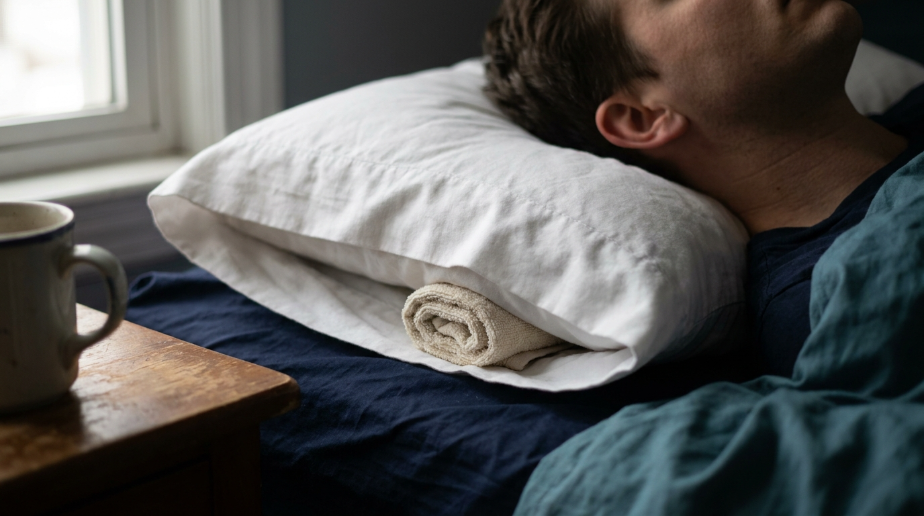
SaveThe useful “pillow trick” is to adjust support so your neck stays comfortably neutral rather than bending sharply for hours. It isn’t about piling several pillows under your head.
Try a small towel-roll adjustment
One simple option is to roll a small towel and place it inside the lower edge of your pillowcase so it supports the natural neck curve. Your head should still rest comfortably on the main pillow.
Keep the roll modest. If it pushes your chin upward, feels hard, or increases your symptoms, remove it.
Match the trick to your sleep position
- Back sleeper: Support the neck curve without forcing the head forward.
- Side sleeper: Fill the space created by your shoulder so the head doesn’t drop toward the mattress.
- Stomach sleeper: Thick loft can increase neck rotation, so a thinner setup usually makes more sense.
For a position-by-position breakdown, see which neck pillow works best for your sleeping position.
The pillow also needs to stay supportive throughout the night. If you aren’t sure whether specialized designs make enough difference, read whether neck pillows really work.
When should you stop treating the pillow as the problem?
If neck pain keeps worsening, lasts despite reasonable self-care, or repeatedly spreads into an arm, get medical advice. A pillow can’t diagnose or treat nerve compression, arthritis, infection, or an injury.
Seek urgent help for severe neck pain after trauma or symptoms such as new weakness, major numbness, difficulty walking, loss of bladder or bowel control, or severe stiffness with fever and headache.
If you want to improve nighttime support while you work on posture and gentle movement, these are two practical pillow styles I’d compare:
🏆 BEST FOR ADJUSTABLE LOFT
Coop Sleep Goods Original Adjustable Pillow
★★★★☆ 4.7/5
This pillow uses adjustable cross-cut memory foam and microfiber fill, so you can remove or add material to change the loft. I like adjustability when you’re still figuring out how much neck support your body prefers.
🛏️ BEST FOR FIRM CONTOURED SUPPORT
TEMPUR-Neck Pillow
★★★★☆ 3.8/5
The TEMPUR-Neck uses a firm contoured shape and comes in different profile heights for back and side sleepers. I’d consider it when you prefer defined cervical support rather than loose adjustable fill.
Frequently Asked Questions
How long does a stiff neck usually take to go away?
Many uncomplicated stiff necks improve over several days or weeks, depending on the cause. If your stiffness keeps worsening, doesn’t improve with reasonable self-care, or comes with numbness, weakness, fever, severe headache, or trauma, contact a healthcare professional.
Is heat or ice better for neck pain?
Both can be useful. Cold is commonly suggested during the early period after a fresh strain, while warmth may help tight muscles feel more relaxed later. Protect your skin, keep sessions short, and use whichever option your healthcare provider recommends for your situation.
Should I sleep without a pillow when my neck hurts?
Not automatically. Your goal is neutral alignment, and the required pillow height depends on your sleeping position, shoulder width, and mattress. Removing the pillow may help one person but leave another person’s neck unsupported.
Can a bad pillow cause a stiff neck?
A poorly matched pillow can contribute to morning stiffness by holding your neck at an uncomfortable angle for hours. Consider changing the pillow’s height or support if symptoms repeatedly appear after sleep and improve as you move during the day.
When is neck pain an emergency?
Seek urgent medical attention after significant trauma or if neck pain occurs with serious symptoms such as new weakness, severe numbness, difficulty walking, bowel or bladder problems, or a very stiff neck accompanied by fever and severe headache.
Takeaway:
For ordinary muscle-related neck pain, start with gentle movement, sensible heat or cold, posture changes, and comfortable sleep support. Don’t force stretches or expect a five-minute miracle.
If your neck keeps getting worse instead of better, treat that as useful information. A healthcare professional or physical therapist can help identify the cause and decide what should come next.

I’m a home decor enthusiast who loves discovering beautiful room ideas, creative DIY projects, and Pinterest-worthy decorating inspiration. At DecorMinty, I share simple tips, fresh trends, and practical ideas to help you create a home you’ll truly love—one room at a time.