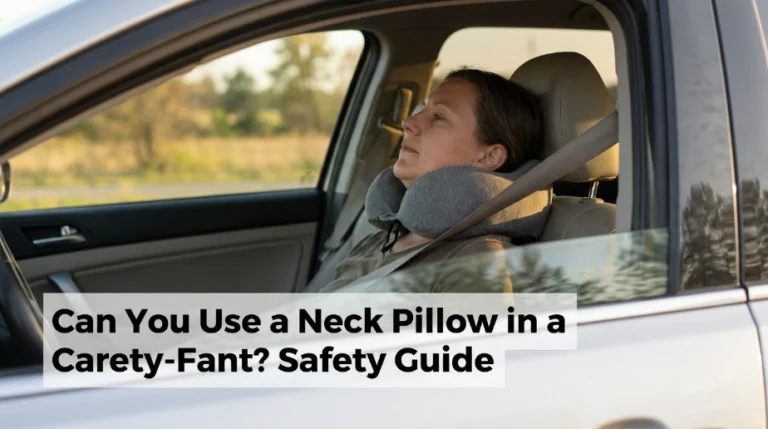
Are Neck Pillows Safe for Babies and Kids? What Parents Should Know
Are Neck Pillows Safe for Babies and Kids? What Parents Should Know
Quick Answer
Neck pillows should not be used for infant sleep. Babies should sleep on their backs on a firm, flat surface with no pillows, positioning cushions, or other soft objects, following CPSC safe-sleep guidance. Older children may use an age-appropriate neck pillow in some situations, but a travel pillow should never interfere with a car seat, harness, breathing, or normal head movement.
What parents should know
- Infant sleep: Keep pillows and other soft objects out of the sleep space through the first year.
- Newborns: They do not need neck pillows for routine sleep, positioning, or head support.
- Car seats: Do not add an aftermarket neck pillow or insert unless the car-seat manufacturer specifically approves it.
- Older children: Choose a child-sized pillow that does not push the chin toward the chest or cover the face.
- Medical concerns: Ask your child’s pediatrician about unusual head position, weak head control, breathing issues, or persistent neck discomfort.
Neck pillows look harmless, especially when they’re marketed with words like “baby,” “support,” or “ergonomic.” Those labels don’t automatically make a pillow suitable for a baby’s sleep space.
I treat infant neck support differently from adult travel comfort. This guide explains where neck pillows create unnecessary risk, when older children may use one, and what I would choose instead.


Are neck pillows safe for babies?
 Save
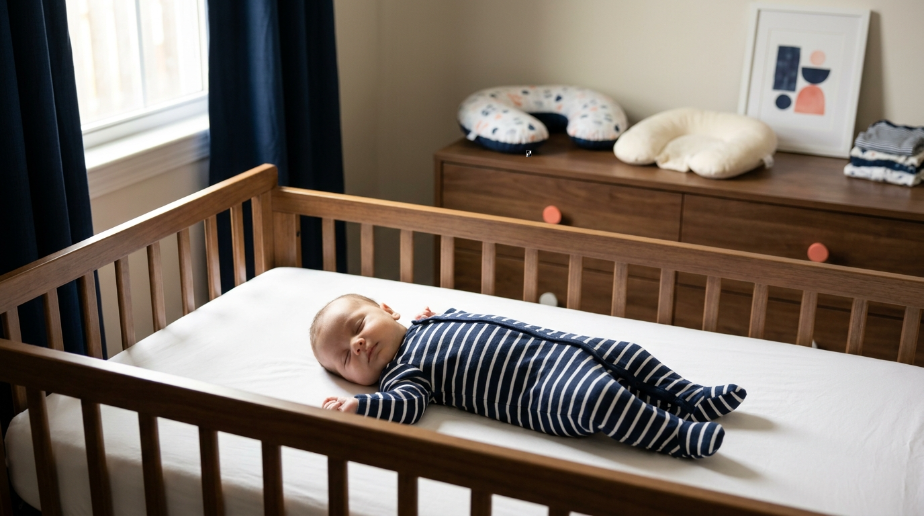
SaveNeck pillows are not considered safe additions to a baby’s sleep space. During infancy, the safer setup is deliberately simple: a firm, flat sleep surface with no pillows or soft positioning products.
That includes U-shaped pillows, head-positioning cushions, small travel pillows, and ordinary bed pillows. The fact that a product is small enough for a baby does not make it appropriate for infant sleep.
Definition: A neck pillow is a cushion designed to support or limit movement of the head and cervical spine. It may be U-shaped, contoured, rolled, inflatable, or made from foam or fiberfill.
Adult and older-child neck pillows can sometimes make upright travel more comfortable. My broader guide to when neck pillows are generally helpful explains why fit and intended use matter so much.
Why soft neck support is different for an infant
Babies cannot always move their heads away from soft material that blocks the nose or mouth. Young infants also have less head and neck control than older children.
- Suffocation risk: Soft material can obstruct an infant’s nose or mouth.
- Entrapment risk: A baby’s face or head can become pressed against padded products.
- Positioning risk: Extra support can place the head or chin in an unintended position.
- False reassurance: A product marketed for “support” may not be an approved infant sleep product.
Baby and child neck pillow safety at a glance
| Situation | Baby under 12 months | Older child | Safer approach |
|---|---|---|---|
| Crib, bassinet, or playard sleep | No neck pillow | Assess age, development, bed type, and product fit | For infants, use a firm flat surface with a fitted sheet only |
| Car seat | Do not add an unapproved pillow or insert | Same rule while using a child restraint | Use only accessories approved for that specific seat |
| Plane or train | Avoid using a neck pillow as a sleep-positioning device | A child-sized travel pillow may be suitable when used correctly | Keep the airway clear and follow restraint rules |
| Medical positioning | Only under medical direction | Follow the child’s clinician or therapist | Do not improvise with consumer pillows |
Can babies use neck pillows?
Babies generally do not need neck pillows for routine sleep or positioning. A healthy infant’s sleep setup should not rely on extra cushions to keep the head in a particular position.
As of 2026, safe-sleep guidance still emphasizes removing pillows and soft bedding from infant sleep spaces. The CDC’s infant safe-sleep guidance recommends a firm, flat sleep surface and keeping soft bedding away from babies.
What about a pillow used only while the baby is awake?
Awake use is different from sleep, but I still would not place a U-shaped travel pillow tightly around a baby’s neck. Babies normally build head and neck strength through movement rather than passive neck support.
- Give supervised tummy time while the baby is awake.
- Use age-appropriate floor play rather than soft positioning pillows.
- Keep the baby’s face completely clear.
- Stop using any product if the baby’s chin is pushed downward.
- Follow the product’s stated age and use instructions.
If your baby has unusual muscle tone, persistent head tilt, poor head control, or another positioning concern, discuss it with a pediatrician. A medical problem needs an individualized solution rather than a consumer neck pillow.
Can babies sleep with neck pillows?
No. Babies should not sleep with neck pillows. This applies to nighttime sleep and naps.
A neck pillow can create the same basic problem as other soft objects in an infant sleep space. It can move, compress, surround the baby’s face, or change head and neck position.
What should a baby’s sleep space contain?
- A firm mattress or pad: Use the surface supplied or approved for the crib, bassinet, portable crib, or playard.
- A fitted sheet: It should fit the sleep surface properly.
- The baby: Place the baby on their back for sleep.
- Nothing extra: Keep pillows, loose blankets, positioners, stuffed toys, and similar soft items out.
The American Academy of Pediatrics explains these principles in its safe-sleep guidance for parents. These recommendations generally apply through a baby’s first year.
If your child falls asleep in a sitting device, move them to an appropriate firm, flat sleep surface when practical. Do not add a neck pillow in an attempt to make a sitting device into a sleep space.
Can newborns use neck pillows?
Newborns should not use neck pillows for routine sleep. They have limited head control and cannot reliably reposition themselves away from a soft object.
A newborn also does not need a pillow to create the neck curve that an adult pillow supports. Their body proportions and sleep-safety needs are completely different.
What if a newborn’s head turns to one side?
It is common for babies to move their heads during sleep. Do not use a pillow, rolled cushion, or positioner to hold the head straight unless your baby’s healthcare professional gives specific instructions.
- Continue placing the baby on their back for each sleep.
- Offer supervised tummy time while the baby is awake.
- Vary how you hold and interact with the baby during awake periods.
- Ask your pediatrician about persistent head tilt or noticeable head-shape concerns.
I would rather ask a clinician one extra question than improvise with a soft positioning product. Newborn positioning is an area where a simple sleep space is usually the better choice.
When can a baby use a neck pillow?
There is no universal age at which a baby suddenly needs a neck pillow. For sleep, the AAP’s infant safe-sleep recommendations apply through the first year.
After 12 months, soft objects may pose less risk to a healthy child than during infancy, but that does not mean a neck pillow becomes necessary on the first birthday. Age, development, pillow design, and where it will be used all matter.
Questions I would ask before introducing one
- Is the child past infancy? Infant safe-sleep rules are intentionally stricter.
- Can the child reposition independently? A child should not be trapped by the pillow’s shape.
- Is it sized for children? An adult U-shaped travel pillow can be oversized.
- Does it leave the airway clear? The chin should not be forced hard toward the chest.
- Is the setting appropriate? Bed use, airline travel, and car-seat use have different safety considerations.
If you are shopping for an older child, start by understanding how neck pillow sizing affects fit. A smaller body does not automatically fit an adult pillow correctly.
Do babies need neck pillows?
Healthy babies do not normally need neck pillows. A pillow is not required for normal neck development, safe sleep, or routine head positioning.
The safest infant sleep environment is intentionally plain. A baby does not need extra cushioning because the mattress feels firmer than an adult bed.
What can I use instead?
The right alternative depends on what problem you’re trying to solve. Do not replace one positioning pillow with another soft object that creates the same concern.
- For warmth: Consider appropriately sized sleep clothing or a wearable blanket instead of loose bedding.
- For travel sleep: Use an appropriate portable crib or playard when possible.
- For head strength: Use supervised awake tummy time.
- For head-shape concerns: Talk with your pediatrician rather than using a shaping pillow.
- For car-seat positioning: Follow the car-seat manufacturer’s instructions.
Marketing language can make a specialized pillow feel necessary. My rule is simpler: if a healthy baby sleeps safely without it, I do not add it to the sleep space.
Can kids use neck pillows?
Older children can sometimes use neck pillows, especially for upright travel, if the pillow fits correctly and does not interfere with breathing or restraints. The answer is different from infant use because older children have better head control and can reposition themselves.
A child-sized pillow is usually a better starting point than giving a small child a bulky adult travel pillow. Fit still matters more than the word “kids” on the packaging.
How I check a child’s travel pillow
- Check the size. The pillow should contact the neck without crowding the jaw or face.
- Watch the chin. It should not be pushed sharply toward the chest.
- Check breathing. Nothing should cover the nose or mouth.
- Check movement. The child should be able to reposition their head easily.
- Check the restraint. The pillow must not change seat-belt or harness positioning.
For general purchasing decisions, my guide to choosing the right neck pillow covers shape, support, and fit. The same principles become even more important when the user has a smaller frame.
Once you have an age-appropriate model, learn how to position a neck pillow correctly rather than assuming every U-shaped design should sit the same way.
Can a toddler use a neck pillow in a car seat?
 Save
SaveDo not add an aftermarket neck pillow to a toddler’s car seat unless the car-seat manufacturer specifically approves that product for that seat. Extra padding can affect the way a restraint or harness fits the child.
This applies even when a product claims to stop a sleeping child’s head from falling sideways. The American Academy of Pediatrics car-seat guidance advises against extra inserts and accessories unless they came with the seat or the seat manufacturer approves them.
What if my toddler’s head slumps while sleeping?
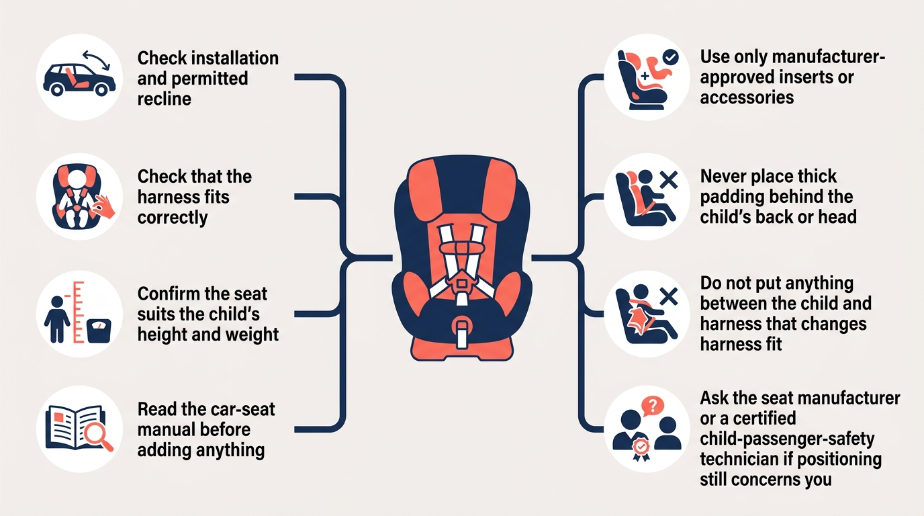
First check the car-seat installation and recline settings permitted by the manufacturer. Make sure the child’s harness is fitted correctly and the seat is appropriate for the child’s height and weight.
- Read the car-seat manual before adding anything.
- Use only manufacturer-approved inserts or accessories.
- Never place thick padding behind the child’s back or head.
- Do not put anything between the child and harness that changes harness fit.
- Ask the seat manufacturer or a certified child-passenger-safety technician if positioning still concerns you.
A sleeping toddler’s head does not need to look perfectly upright to be comfortable. I would not “fix” a harmless-looking head position with an accessory that changes how a crash-tested restraint system works.
If your goal is safer, more comfortable sleep rather than neck cushioning, these are the two products I’d consider first:
😴 Safe Sleep Layer
HALO SleepSack 100% Cotton Wearable Blanket
★★★★☆ 4.5/5 editorial fit
A wearable blanket provides warmth without placing a loose blanket or pillow around a baby’s face. I prefer this type of solution when the real concern is keeping an appropriately aged baby comfortable rather than adding neck support; always choose the correct size and follow the manufacturer’s instructions.
🧳 Portable Sleep Space
Graco Pack ‘n Play On The Go Playard
★★★★☆ 4.4/5 editorial fit
A portable playard gives parents a dedicated travel sleep space instead of trying to make a car seat, sofa, or padded travel product work for sleep. I like this approach for trips because the sleep environment stays separate from neck pillows and other comfort accessories; use only the original or manufacturer-approved sleep components.
Frequently Asked Questions
Is a U-shaped travel pillow safe for a baby?
A U-shaped travel pillow should not be used as an infant sleep pillow or positioning device. Babies have less head control and can have difficulty moving away from soft material, so keep the sleep space free of pillows and use products only for their intended age and purpose.
Can I use a head-shaping pillow for my baby?
Do not place a head-shaping pillow in an infant’s sleep space unless your child’s medical professional specifically directs you to use a medical device. If you notice flattening, persistent head tilt, or limited neck movement, ask your pediatrician to evaluate the cause instead of treating it with a consumer pillow.
Can children use neck pillows on airplanes?
Older children may use an appropriately sized travel neck pillow when it does not cover the face, force the chin downward, or interfere with a required restraint. Supervise younger children and follow airline or child-restraint instructions whenever a safety device is being used.
Is a neck pillow safe when a child falls asleep in a car seat?
Do not add an aftermarket neck pillow, head support, or padding unless the car-seat manufacturer approves it for that specific seat. Added accessories can alter harness positioning or restraint performance, so follow the car-seat manual and use the seat exactly as its manufacturer directs.
At what age can a child sleep with a pillow?
AAP safe-sleep recommendations generally apply through the first year, and pillows should stay out of an infant’s sleep area during that period. After 12 months, do not rush to introduce one simply because of age; consider the child’s development, sleep environment, pillow size, and pediatrician’s advice when needed.
The main takeaway
babies do not need neck pillows, and they should not sleep with them. A firm, flat, uncluttered sleep space is the safer choice throughout infancy.
For older children, think about fit and context rather than the product label. Keep neck pillows away from car-seat harness systems unless the seat manufacturer specifically approves the accessory.

I’m a home decor enthusiast who loves discovering beautiful room ideas, creative DIY projects, and Pinterest-worthy decorating inspiration. At DecorMinty, I share simple tips, fresh trends, and practical ideas to help you create a home you’ll truly love—one room at a time.