How to Dispose of a Bed Pillow: Recycle, Donate, Compost & Reuse
Quick Answer
Do not put a bed pillow in curbside recycling. Wash it if you can, donate it only if it is clean, close to like-new, and accepted after you call first, or take a worn-out pillow to a textile recycling drop-off. Compost only truly natural fills where local rules allow, reuse it at home if you can, and use the trash only as a last resort.
The right choice depends on its condition, its fill, and what your local recycling programme accepts. A clean guest-room pillow and a flat, yellowed pillow are not the same problem.
How to Tell If a Bed Pillow Is Actually Done
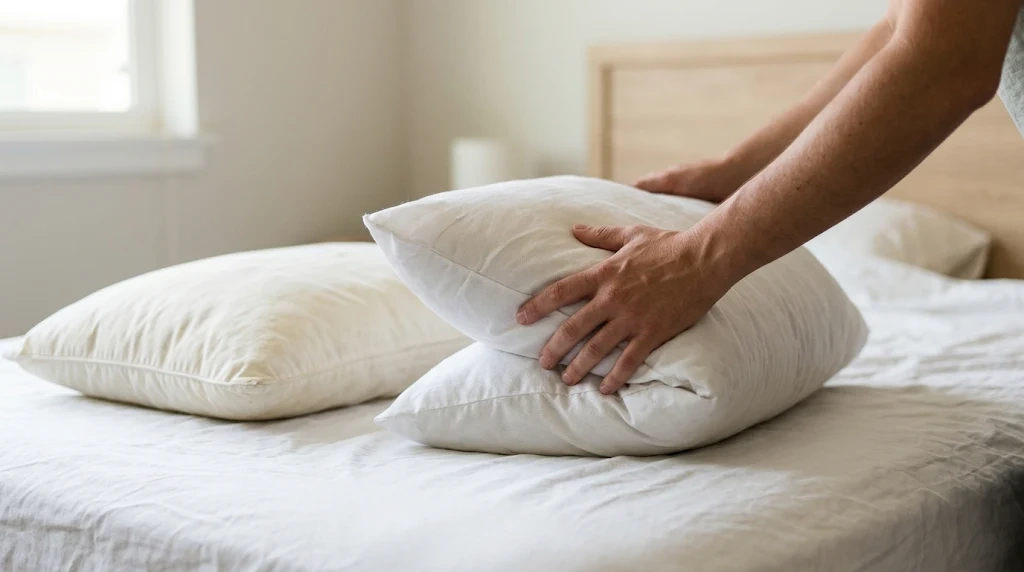
A pillow is done when it stops supporting your head and neck, not on a fixed birthday. Many guides suggest replacing bed pillows every one to two years, but a lightly used guest pillow can last longer, while a nightly pillow that has gone flat may be finished sooner.
Try the fold test on a polyester or down-alternative pillow: fold it in half, press the air out, and let go. A pillow with life left springs back; one that stays folded has lost its loft. Judge memory foam and latex by support instead: if the foam stays compressed where your head rests, it is probably finished. Permanent yellowing, stains that survive washing, lumps, or a musty smell that returns after airing are also signs it is finished. A pillow with visible mould should not be donated or reused as bedding. Our guide to how long neck pillows last covers the same wear signs.
What to Do First: Check the Fill, Then Wash It
Read the care label before you choose a disposal route. It tells you the fill, the shell material, and whether the pillow can be washed. That label decides almost everything that follows, because polyester, down, memory foam, latex, wool, and buckwheat hulls do not share the same options.
Most polyester and down-alternative pillows can be machine washed. Down and feather pillows can usually be washed too, but they need a gentle cycle and a long, low-heat dry so the fill does not clump or mildew. Memory foam and latex should not go in a washing machine; spot-clean them and use a washable cover instead. For buckwheat pillows, empty the hulls, wash the shell, dry it fully, and return the hulls. Washing also gives you a fair test: some pillows regain loft after a proper wash and full dry. If it still feels flat, lumpy, or musty afterwards, it is finished. Our guide to how to wash and clean a neck pillow safely explains the steps by fill.
Tip
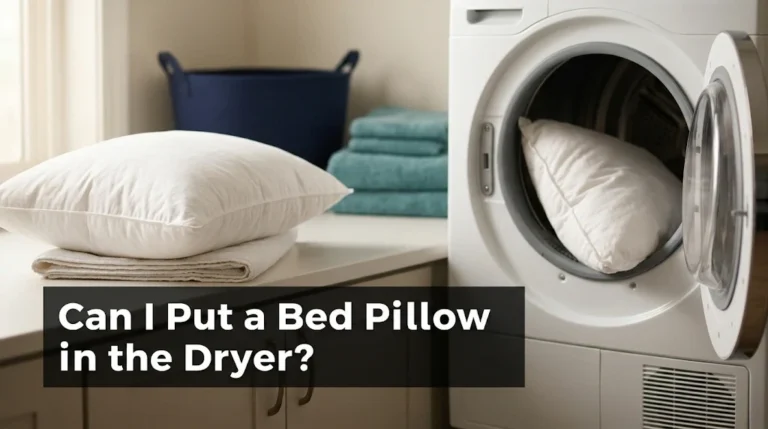
Dry a washed pillow completely before you bag it. Put it in the dryer on low heat with clean dryer balls, or air it in sun and fresh air, turning it until the centre feels dry and springy, not cool or heavy.
Can You Donate a Bed Pillow?
Yes, sometimes, but donation is the narrowest option, not the default. A pillow is worth donating only when it is clean, lump-free, stain-free, odour-free, and still supportive. That usually means a pillow bought recently and barely used, a guest-room pillow, or a spare that never suited you. A flat, yellowed, or lumpy pillow is not a donation, even if it feels wasteful to throw it away. Charities that receive it will usually have to dispose of it themselves.
Most thrift shops do not accept used pillows, for hygiene reasons. Large charities such as Goodwill and the Salvation Army generally do not take them, and homeless shelters are also stricter than many people expect. Animal shelters are the more realistic route. Many accept clean, gently used pillows as bedding, and some prefer them cut open so the fill can be used separately. Call first: some shelters do not accept down fill, because it can trigger allergies in animals, and some will not take memory foam. Local free groups can also find a home for a clean spare pillow, provided you describe its condition honestly. Wash it if the label allows, dry it fully, and bag it.
How to Recycle a Bed Pillow
Pillows are recyclable in the sense that their fibres can be recovered, but not through the blue bin. Do not put a pillow in curbside recycling. Its size, mixed materials, and soft fill can jam sorting machinery, and most curbside programmes reject pillows outright. A pillow placed in the blue bin is usually pulled out at the sorting facility and sent to landfill anyway.
Textile recycling is the route that works. These programmes collect household textiles and send usable fibres for reuse as insulation, carpet padding, cleaning cloths, or stuffing. Some accept whole pillows, some accept only the fill, and some need the shell and fill separated. Check the accepted-items list first. Start with your city or county recycling guide. In the United States, the Earth911 guide to recycling pillows explains how to find a local drop-off.
The U.S. Environmental Protection Agency reported that the United States generated about 17 million tons of textile waste in 2018, recycled only about 14.7 percent of it, and landfilled 11.3 million tons. What happens next depends on the fill. Polyester and down-alternative fills are accepted by some textile programmes, but never composted. Down and feather can go to some programmes, and the fill alone can be composted if untreated. Memory foam needs a foam programme. Wool can be recycled and composted if untreated, and buckwheat hulls can be composted or used as mulch. To work out which fill you have, see our guide to what neck pillows are made of.
Can You Compost a Bed Pillow?
Sometimes, but only part of it, and only when the material is genuinely natural. Feathers, down, untreated wool, plain cotton fill, and buckwheat hulls can break down in compost. Polyester, down-alternative fibre, memory foam, and most latex cannot, and they should never go in a compost bin or a garden heap.
Even a natural fill needs preparation. Remove the shell unless it is also 100 percent natural and untreated, take off zips, tags, and synthetic stitching, and add the fill in small amounts mixed with other compost material. Feathers and down break down slowly, so they work better in a hot pile than in a small home bin. Buckwheat hulls can go straight into compost or be spread as mulch. Do not compost a treated, mouldy, or bed-bug-affected pillow, and check local rules first.
Smart Ways to Reuse a Bed Pillow at Home
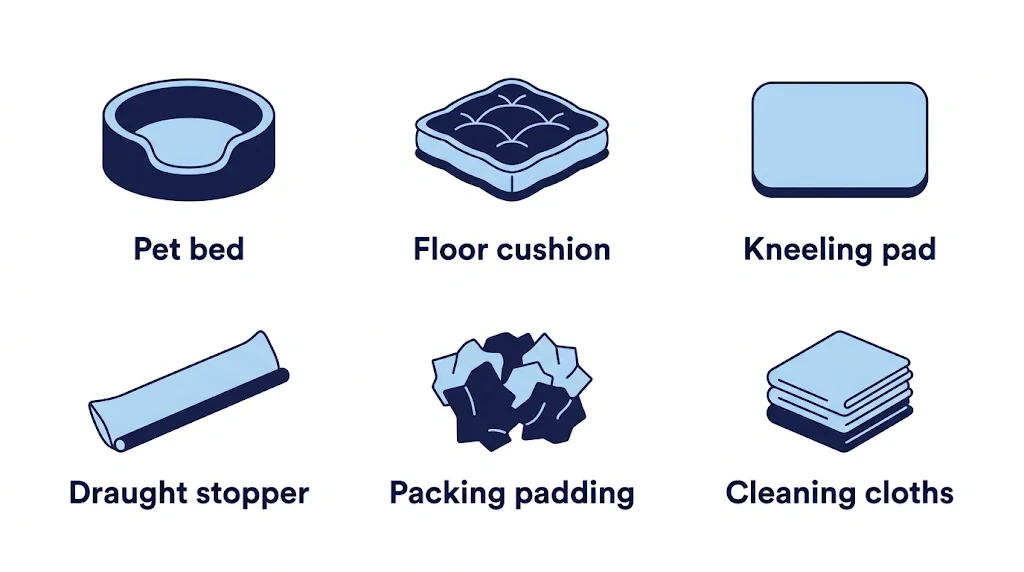
Reuse is often the easiest win, because it needs no drop-off, no phone call, and no waiting. An old bed pillow that is no longer good enough to sleep on can still be useful elsewhere, provided it is clean and dry.
A pet bed is the most common second life. Put the whole pillow in a washable pet-bed cover, or use the fill to stuff a pet bed, floor cushion, or bolster. Avoid down fill for animals that react to it. A flat pillow also works as a floor cushion, a kneeling pad, or extra chair padding. For draughts, roll it lengthwise against the bottom of an exterior door. The fill makes good packing padding, and a clean cotton shell can become cleaning cloths or a storage bag. Keep a reused pillow out of a baby’s cot.
How to Throw a Bed Pillow Away as a Last Resort
When donation, recycling, composting, and reuse are all ruled out, the trash is the honest answer. That happens more often than people expect, especially with old memory foam, heavily stained polyester, or a pillow from a home with a pest or mould problem. Putting it in the trash is not a failure. It is the last step after the better options have been checked.
Bag the pillow first, tie it closed, and put it out with your household trash on your normal collection day. If you are disposing of several at once, check size and weight limits. Do not leave a loose pillow beside the bin, burn a pillow, or leave one at a charity shop door after hours.
What Not to Do When Disposing of a Bed Pillow
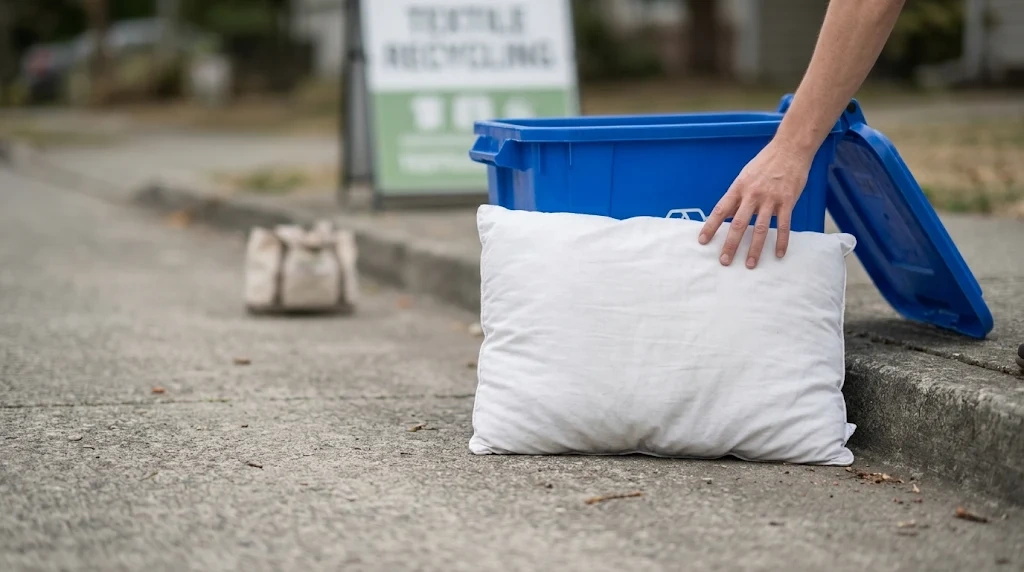
Do not put pillows in curbside recycling. They jam sorting equipment and end up landfilled, and they can contaminate a whole load of otherwise recyclable material. Do not donate a pillow that is not fit to sleep on. Donation is not a way to avoid the trash. If you would not sleep on it yourself, do not expect a shelter or a thrift shop to pass it on.
Do not compost the wrong material. Synthetic fill, memory foam, and treated cotton do not break down in home compost. If you are not sure a fill is natural and untreated, keep it out. Do not ignore the label either: memory foam can tear in a washing machine, and damp down can mildew.
Warning
Do not donate or reuse a pillow from a home with bed bugs, and do not put it in a shared textile bin without checking the programme’s rules. Bag it, seal it, and follow your local pest-control or waste guidance instead.
When you replace the pillow, choose with disposal in mind. A removable, washable cover lasts longer, and a fill you can identify is easier to recycle or compost later. Our guide to how to choose the right neck pillow covers fill, loft, and support, and how much a neck pillow costs gives a realistic price range.
Related Product
Pillow Protector
A washable pillow protector keeps your next bed pillow cleaner for longer, so it stays donatable and lasts before it needs replacing.
As an Amazon Associate, we earn from qualifying purchases.
Frequently Asked Questions
Can you put a bed pillow in the recycling bin?
No. Curbside recycling programmes almost never accept pillows. The mixed materials and soft fill can jam sorting machinery, and most pillows placed in a blue bin are pulled out and landfilled. Use a textile recycling drop-off instead.
Where can I recycle old pillows near me?
Check your city or county recycling guide for textile recycling, textile drop-off, or clothing recycling. Look for textile collection bins, charity textile drives, and mail-in programmes.
Do thrift stores take used pillows?
Most do not, for hygiene reasons. Policies vary by store, and a few will take a pillow that is new or barely used, often only in its original packaging. Always call ahead first.
Can animal shelters use old pillows?
Many animal shelters accept clean, gently used pillows as pet bedding, and some prefer the fill separated from the shell. Call first, because some do not accept down fill or memory foam.
Can I compost a memory foam pillow?
No. Memory foam is polyurethane, a synthetic material that does not break down in home compost. The same applies to polyester and down-alternative fill. Only truly natural, untreated fills such as feathers, down, wool, plain cotton, and buckwheat hulls can be composted, and only where local rules allow it.
How often should I replace a bed pillow?
Most bed pillows need replacing every one to two years, but use condition, not the calendar alone. Replace it when it stays flat after folding, feels lumpy, has permanent stains, smells musty after washing, or no longer supports your head and neck.
Conclusion
Disposing of a bed pillow starts with an honest check, not a trip to the bin. Wash it, judge its support and condition, and donate it only if it is clean, close to like-new, and accepted. Otherwise, look for a textile recycling drop-off, compost only natural fills where local rules allow, or reuse it at home. The trash is the last resort, for a mouldy, pest-affected, or badly worn pillow.

I’m a home decor enthusiast who loves discovering beautiful room ideas, creative DIY projects, and Pinterest-worthy decorating inspiration. At DecorMinty, I share simple tips, fresh trends, and practical ideas to help you create a home you’ll truly love—one room at a time.