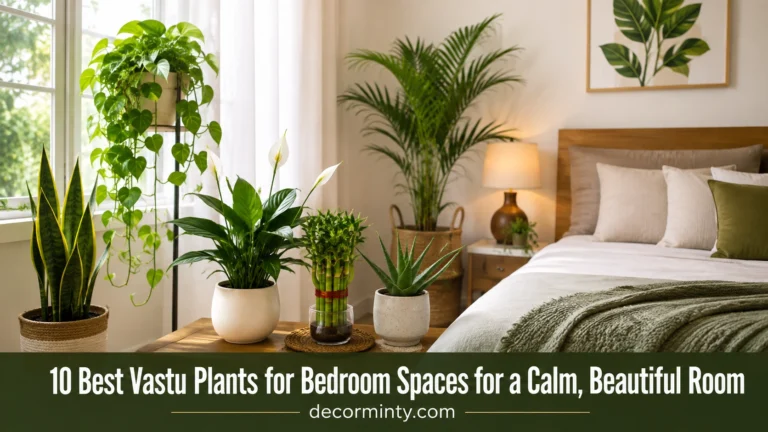
Best Plants for Bedroom Medium Light: 10 Easy Picks
Quick Answer
The best plants for bedroom medium light include spider plant, Chinese evergreen, wax plant, baby rubber plant, corn plant, rubber plant, Monstera deliciosa, grape ivy, iron cross begonia, and asparagus fern because each performs well in bright or moderate indirect light without needing harsh direct sun.
Here’s the short version before you scroll further:
- Spider Plant — forgiving, pet-friendly, and perfect for hanging.
- Chinese Evergreen — patterned foliage that loves moderate indirect light.
- Wax Plant — trailing vines with clusters of fragrant flowers.
- Baby Rubber Plant — compact, glossy, and easy to fit anywhere.
- Corn Plant — tall architectural greenery for an empty corner.
- Rubber Plant — bold leaves and dramatic upright growth.
- Monstera deliciosa — large split leaves with tropical impact.
- Grape Ivy — adaptable vine for shelves and hanging baskets.
- Iron Cross Begonia — striking patterned foliage for humid rooms.
- Asparagus Fern — soft, feathery texture without demanding direct sun.
For most bedrooms, medium light means a well-lit spot near an east- or west-facing window without intense direct afternoon sun. Match your plant to your watering habits, available floor or shelf space, and pet situation before choosing by looks alone.
Our Top Picks at a Glance
Easiest to Care For — Spider Plant
Best for Balanced Medium Light — Chinese Evergreen
Most Beautiful Bloom — Wax Plant
Best for Small Bedrooms — Baby Rubber Plant


10 Best Medium-Light Plants for a Bedroom
 Save
Save#1. Spider Plant — “The Generous One”
| Sunlight | Medium to bright indirect light |
| Watering | Check weekly; water when the top 1-2 inches feel dry |
| Pot Size | Snug pot or hanging basket with drainage; divide when crowded |
| Care Level | Easy |
| Bloom Time | Small white flowers may appear on mature plants |
Spider plant, Chlorophytum comosum, belongs to the Asparagaceae family and comes from southern Africa. Its arching striped foliage works especially well above dressers or on bedroom shelves.
Mature plants produce long stems carrying baby plantlets. Brown tips can appear when the plant becomes too dry or reacts to mineral-heavy water.
Trim damaged tips and divide crowded roots when necessary. A hanging planter with drainage gives the developing plantlets room to cascade.
Pros
- Handles normal bedroom humidity
- Produces easy-to-propagate plantlets
- Non-toxic to cats and dogs
Watch For
- Brown leaf tips
- Waterlogged roots
- Direct sun scorching
#2. Chinese Evergreen — “The Patterned Survivor”
| Sunlight | Low to moderate indirect light; colorful cultivars prefer more light |
| Watering | Check weekly; water after the top 1-2 inches dry |
| Pot Size | Container with drainage, kept only moderately larger than the root mass |
| Care Level | Easy |
Chinese evergreen, or Aglaonema, comes from tropical and subtropical Southeast Asia and New Guinea. Silver, green, pink, and red cultivars make it one of the easiest ways to add color without relying on flowers.
Medium indirect light is especially useful for variegated types because stronger color usually needs more light than solid-green foliage. Keep the mix lightly moist, never waterlogged.
Division and stem cuttings are common propagation methods. Because Aglaonema contains irritating calcium oxalate crystals, keep its leaves away from pets that chew plants.
Pros
- Excellent patterned foliage
- Compact bushy growth
- Tolerates ordinary indoor conditions
Watch For
- Cold drafts
- Root rot from soggy soil
- Pet toxicity if chewed
#3. Wax Plant (Hoya carnosa) — “The Patient Bloomer”
| Sunlight | Bright to medium indirect light |
| Watering | Check every 7-10 days; let the mix dry between waterings |
| Pot Size | Snug, free-draining pot; move up no more than about 2 inches |
| Care Level | Easy to Moderate |
| Bloom Time | Mature plants can produce fragrant flower clusters during active growth |
Hoya carnosa is an epiphytic member of the Apocynaceae family with thick, waxy leaves and long climbing stems. Its flower clusters can be surprisingly fragrant.
Let the growing mix dry between waterings and avoid a container that stays wet for days. Mature hoyas often flower better when they receive consistent indirect light.
Don’t remove old flower spurs because they can bloom again. A small indoor plant trellis keeps the vines tidy beside a bedroom window.
Pros
- Fragrant flowers
- Attractive waxy foliage
- Handles a snug pot well
Watch For
- Soggy potting mix
- Mealybugs
- Removing reusable flower spurs
#4. Baby Rubber Plant — “The Compact Minimalist”
| Sunlight | Medium to bright indirect light |
| Watering | Check every 7-10 days; let the mix noticeably dry first |
| Pot Size | Compact pot with drainage; repot infrequently |
| Care Level | Easy |
Baby rubber plant, Peperomia obtusifolia, is a compact South American member of the Piperaceae family. Its thick glossy leaves store some moisture, helping it cope with brief dry spells.
Bright indirect light is ideal, although green forms can tolerate less. Overwatering is a bigger danger than a slightly dry pot.
Peperomias propagate from stem or leaf cuttings and rarely demand frequent repotting. They are also widely regarded as pet-safe, making them especially useful on accessible bedroom furniture.
Pros
- Compact footprint
- Pet-friendly choice
- Slow, manageable growth
Watch For
- Root rot
- Cold drafts
- Harsh direct sunlight
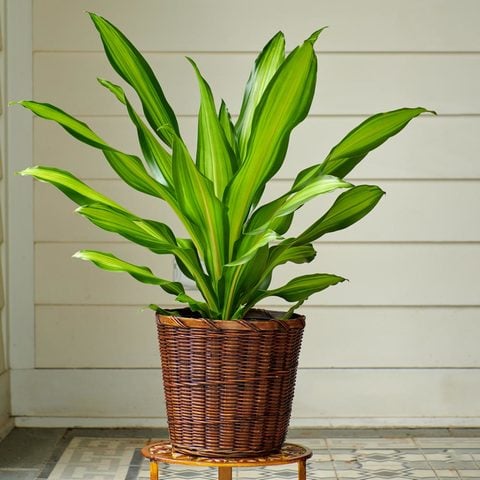
#5. Corn Plant (Dracaena fragrans) — “The Corner Filler”
| Sunlight | Bright to moderate filtered light |
| Watering | Check weekly; water after the top inch dries |
| Pot Size | Stable draining pot; size up when roots emerge or lift the plant |
| Care Level | Easy |
Dracaena fragrans develops woody canes topped with long arching leaves. Its upright shape adds height without spreading across much bedroom floor space.
Moderate filtered light keeps growth stronger than a dark corner, while direct hot sun can damage foliage. Brown tips may appear in very dry air or with mineral-heavy water.
Repot only when roots begin crowding the container. Stem sections can also be propagated when an older plant becomes taller than you want.
Pros
- Strong vertical shape
- Handles moderate filtered light
- Good long-term floor plant
Watch For
- Brown leaf tips
- Excess water
- Pet access to foliage
#6. Rubber Plant — “The Bold Statement”
| Sunlight | Bright indirect light to partial shade |
| Watering | Check weekly; water after the upper soil begins drying |
| Pot Size | Heavy, stable container with good drainage |
| Care Level | Easy to Moderate |
Ficus elastica is a member of the Moraceae family with broad, glossy leaves and a naturally tree-like habit. Indoors, pruning can keep it much smaller than its tropical outdoor form.
It grows well under bright indirect light and can handle partial shade, but frequent changes in placement aren’t ideal. Let excess water drain instead of leaving the roots standing wet.
Wipe the large leaves with a damp cloth so dust doesn’t build up. Wear gloves when pruning if your skin is sensitive to the plant’s milky latex sap.
Pros
- Large dramatic leaves
- Can be pruned for shape
- Excellent floor accent
Watch For
- Cold drafts
- Overwatering
- Irritating latex sap
#7. Monstera deliciosa — “The Tropical Showstopper”
| Sunlight | Moderate to bright indirect light |
| Watering | Water thoroughly after roughly the top quarter of the mix dries |
| Pot Size | Stable draining container with room for support |
| Care Level | Moderate |
Monstera deliciosa is a climbing tropical plant in the Araceae family. As it matures under suitable conditions, its leaves develop the characteristic splits and internal openings that make it instantly recognizable.
Moderate light works, although stronger indirect light usually produces more vigorous growth. Allow part of the potting mix to dry before watering again.
Give mature stems something sturdy to climb. A moss pole for Monstera helps keep a bedroom plant upright instead of sprawling across furniture.
Pros
- Dramatic mature foliage
- Easy stem propagation
- Strong focal-point plant
Watch For
- Needs physical support
- Root rot from excess water
- Toxic foliage if ingested
#8. Grape Ivy — “The Adaptable Trailer”
| Sunlight | Bright filtered to medium indirect light |
| Watering | Check weekly; allow some drying between waterings |
| Pot Size | Hanging pot or trellised container with drainage |
| Care Level | Easy |
Grape ivy, commonly grown as Cissus alata or under older trade names, is a tropical American vine with glossy compound leaves. Tendrils let it climb naturally when support is nearby.
Bright filtered light is ideal, yet the plant is more adaptable than many decorative vines. Reduce watering during slower winter growth.
Pruning keeps stems compact and fuller-looking. Stem cuttings also make propagation straightforward when your vine becomes long enough to trim.
Pros
- Flexible trailing habit
- Handles varied indoor conditions
- Easy to shape by pruning
Watch For
- Persistently wet soil
- Cold temperatures
- Long untrimmed vines
#9. Iron Cross Begonia — “The Foliage Artist”
| Sunlight | Bright filtered or medium indirect light |
| Watering | Keep lightly moist in active growth; let the surface nearly dry first |
| Pot Size | Compact draining container suited to its rhizomatous growth |
| Care Level | Moderate |
Begonia masoniana comes from China and Vietnam and is grown mainly for its textured leaves marked with a dark cross-like pattern. It stays relatively compact compared with many floor-sized houseplants.
Give it bright filtered light and steady but not saturated moisture. Higher humidity helps, although constantly wet leaves can encourage disease problems.
Remove damaged foliage at the base and avoid splashing leaves during watering. Iron cross begonias can be multiplied from leaf cuttings when the plant is healthy and actively growing.
Pros
- Distinctive foliage pattern
- Compact indoor size
- Propagates from leaves
Watch For
- Wet foliage
- Soggy roots
- Very dry bedroom air
 Save
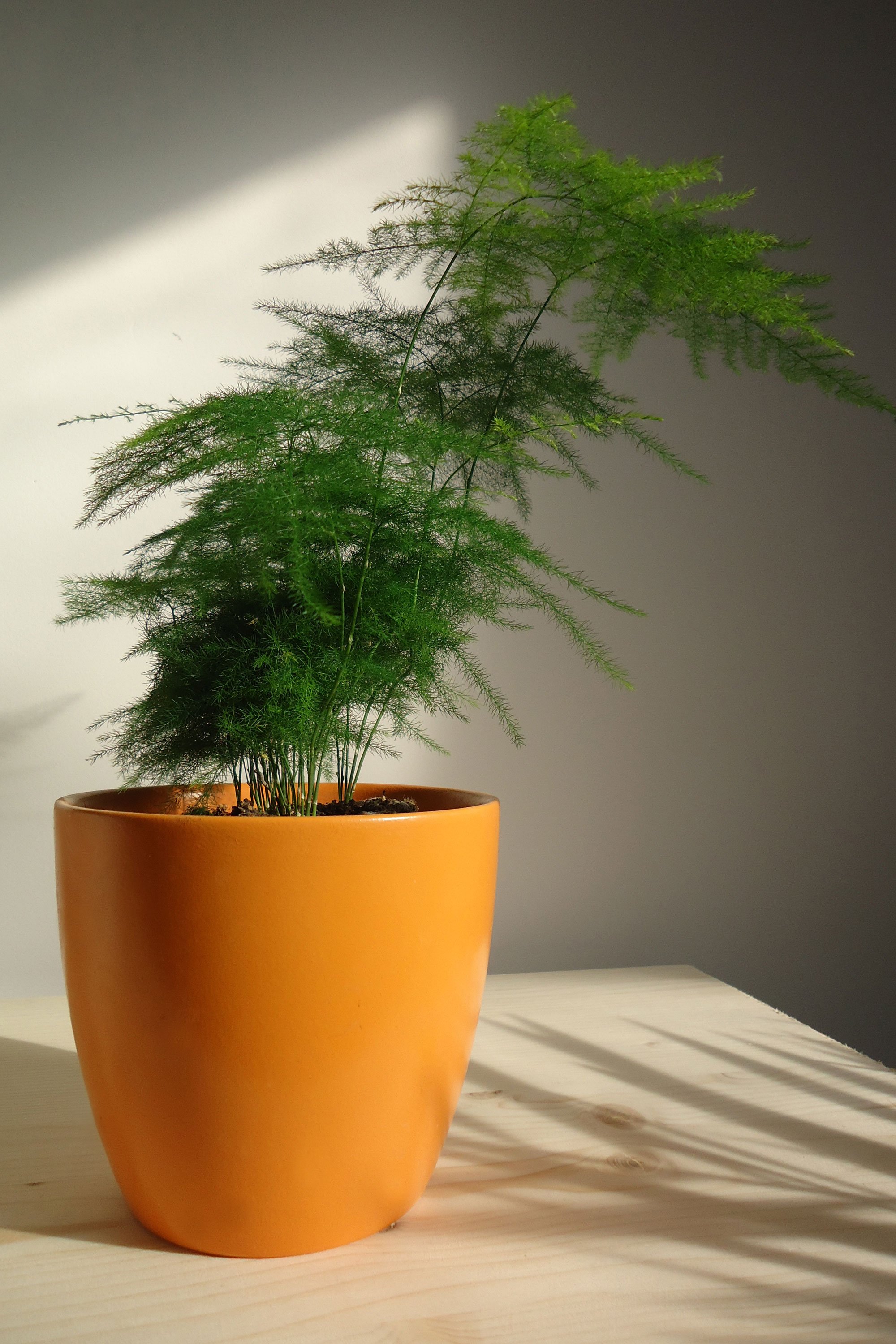
Save#10. Asparagus Fern — “The Softener”
| Sunlight | Bright filtered to medium light; protect from hot direct sun |
| Watering | Water regularly during active growth, less in winter |
| Pot Size | Draining pot with room for its vigorous tuberous roots |
| Care Level | Easy to Moderate |
Despite its common name, asparagus fern is an ornamental asparagus rather than a true fern. Its fine green growth creates a soft contrast beside broad-leaved plants such as Monstera or rubber plant.
Filtered light suits it better than hot direct sun. The root system can become crowded surprisingly quickly, so watch for a plant that begins lifting from its container.
Cut unwanted stems back near the base instead of shortening only their tips. Gloves are sensible when handling ornamental asparagus, and berries should never be treated as edible.
Pros
- Soft feathery texture
- Fast-growing indoors
- Responds well to division
Watch For
- Dry yellowing growth
- Crowded tuberous roots
- Irritating or harmful berries
Basic Care Tips for Medium-Light Bedroom Plants
Medium light is useful, but the exact brightness still changes with window direction, season, curtains, and distance from the glass. The University of Minnesota Extension indoor lighting guide describes medium-light locations as east-facing windows or areas near west-facing windows without direct sunlight.
- Judge the actual spot — Don’t label an entire bedroom “medium light.” A dresser beside an east window can receive far more usable light than a shelf across the same room.
- Check soil instead of following a calendar — Medium-light plants usually dry more slowly than plants sitting in strong sun. Feel the potting mix before adding water.
- Rotate plants occasionally — Turning a plant helps prevent one-sided leaning when light arrives from a single bedroom window.
- Adjust for winter — A spot that works in June may become much dimmer in December. Move plants closer to the window or supplement light if growth becomes weak.
If your bedroom is darker than expected, compare these choices with our best plants for bedroom low light. Beginners can also use our beginner bedroom plant guide for more forgiving options.
Common Mistakes to Avoid
Most bedroom plant problems start with light and watering rather than a lack of fertilizer.
Calling a dark corner “medium light” — Light intensity drops quickly as you move away from a window. A plant may stay alive there while gradually producing weaker, smaller growth.
Watering every plant on the same day — Peperomia and Hoya prefer more drying than an actively growing begonia. Check each pot separately instead.
Using a decorative pot without drainage — Water trapped around the roots removes oxygen from the potting mix and raises the risk of root rot.
Placing leaves against hot window glass — Rubber plants, begonias, and other indirect-light plants can develop scorched or bleached foliage when exposed to intense direct sun.
Ignoring pets when choosing placement — Several popular bedroom plants contain substances that can irritate cats or dogs. Check the ASPCA toxic and non-toxic plant database before placing unfamiliar plants within chewing range.
For a bedroom shared with curious cats or dogs, our pet-safe bedroom plant guide gives you more suitable alternatives.
Signs Your Bedroom Plant Needs Attention
Plants usually show a pattern of symptoms before serious decline. Read several clues together instead of assuming one brown leaf tells the entire story.
- Long, weak stems or leaning growth — The plant may be stretching toward a stronger light source. Move it closer to the window gradually.
- Faded variegation — Chinese evergreen and other patterned plants can lose contrast when light is insufficient.
- Yellow leaves with consistently wet soil — Check drainage and allow more drying before the next watering, especially with Hoya, Peperomia, and rubber plants.
- Crispy edges or tips — Dry air, underwatering, mineral-sensitive foliage, or hot direct sun may be involved. Look at the soil and placement before changing your routine.
- No flowers on a healthy Hoya — The plant may simply be immature, but consistently weak light can also reduce flowering.
If air quality is part of your reason for adding greenery, see our guide to oxygen-producing plants for bedrooms. Treat houseplants mainly as living decor rather than a replacement for ventilation or mechanical air cleaning.
Keep Medium Light Consistent Through Darker Months
If your usual bedroom spot becomes too dim in winter, a compact full-spectrum LED grow light can supplement natural daylight without moving every plant to another room. Use it as extra light rather than leaving it on continuously.
Frequently Asked Questions
Q: What does medium light mean for bedroom plants?
A: Think of a bright east-facing window or a spot near a west-facing window where the plant receives plenty of daylight without sitting in strong direct sun.
Q: What is the easiest medium-light bedroom plant?
A: Spider plant is one of the easiest choices because it adapts well to normal indoor conditions and gives clear clues when its roots or foliage need attention.
Q: Which medium-light plant is best for a small bedroom?
A: Baby rubber plant is an excellent compact option. Peperomias stay manageable on a nightstand or dresser and don’t need frequent repotting.
Q: Can medium-light bedroom plants grow several feet from a window?
A: Sometimes, but light falls sharply with distance. Watch for stretching, smaller leaves, fading color, or stalled growth and move the plant closer if those symptoms appear.
Q: Do I need a grow light for a medium-light bedroom?
A: Not when natural daylight is already sufficient. A grow light is most useful when winter, heavy curtains, nearby buildings, or window direction leave the room noticeably dimmer than the plant needs.
Q: Which of these plants can flower indoors?
A: Hoya carnosa is the standout flowering choice, producing waxy fragrant clusters when mature and well lit. Begonias and some other selections may also flower, although their foliage is usually the main attraction.
Final Thoughts
The best plants for bedroom medium light are the ones that match both your window and your routine. Spider plant and Peperomia are forgiving starters, while Hoya, Monstera, begonia, and rubber plant give you more decorative impact when you can provide the right placement.
Start with one plant, learn how quickly its soil dries in your bedroom, and adjust from there. That simple habit is more useful than following a rigid watering calendar.
Which plant are you adding to your space first? Save this post to Pinterest so you can come back whenever you need fresh plant inspo!

I’m a home decor enthusiast who loves discovering beautiful room ideas, creative DIY projects, and Pinterest-worthy decorating inspiration. At DecorMinty, I share simple tips, fresh trends, and practical ideas to help you create a home you’ll truly love—one room at a time.