best plants for bedroom corner: 13 Easy-Care Picks
Quick Answer
The best plants for bedroom corner spaces are snake plant, cast iron plant, peace lily, ZZ plant, Chinese evergreen, parlor palm, corn plant, golden pothos, heartleaf philodendron, bird’s nest fern, prayer plant, baby rubber plant, and Dieffenbachia because this mix covers dim corners, brighter indirect-light spots, floor-level statement plants, and compact options for stands or shelves.
Here’s the short version before you scroll further:
- Snake Plant — Upright, drought-tolerant, excellent for tight floor space.
- Cast Iron Plant — One of the toughest choices for deep shade.
- Peace Lily — Elegant foliage with white blooms in better light.
- ZZ Plant — Stores water underground and tolerates neglect.
- Chinese Evergreen — Patterned foliage brightens a shaded corner.
- Parlor Palm — Soft tropical height without demanding strong sun.
- Corn Plant — Tall, narrow growth fills empty vertical space.
- Golden Pothos — Trails beautifully from a raised corner stand.
- Heartleaf Philodendron — Climbs or cascades with minimal fuss.
- Bird’s Nest Fern — Broad rippled fronds soften modern bedrooms.
- Prayer Plant — Patterned leaves visibly move between day and night.
- Baby Rubber Plant — Compact glossy foliage suits small corners.
- Dieffenbachia — Bold variegation works in a brighter corner.
Your biggest decision should be light, not looks alone. A shaded corner can support several adaptable houseplants, but a corner with almost no natural light will eventually need supplemental lighting.
Our Top Picks at a Glance
Easiest to Care For — Snake Plant
Best for Low Light — Cast Iron Plant
Most Beautiful Bloom — Peace Lily
Best for Beginners — ZZ Plant


13 Best Plants for a Bedroom Corner
 Save
Save#1. Snake Plant — “The Upright Survivor”
| Sunlight | Low to bright indirect light; tolerates very low light |
| Watering | Let the potting mix dry between waterings |
| Care Level | Easy |
| Bloom Time | Rare indoors, grown mainly for foliage |
Dracaena trifasciata, formerly widely sold as Sansevieria, comes from central Africa and forms stiff vertical leaves that fit neatly into cramped bedroom corners.
Its succulent foliage handles missed watering far better than constantly wet soil. A free-draining cactus-style potting mix can help reduce waterlogging.
Remove badly damaged leaves at soil level and keep the plant away from pets that like chewing foliage.
Pros
- Very drought tolerant
- Narrow upright footprint
- Handles dim rooms
Watch For
- Root rot from excess water
- Slower growth in deep shade
- Not a pet-safe choice
#2. Cast Iron Plant — “The Shade Specialist”
| Sunlight | Low light to shade; avoid strong direct sun |
| Watering | Water regularly in active growth, less in winter |
| Care Level | Easy |
Aspidistra elatior forms upright clumps of broad leaves and earned its common name from its unusual tolerance of shade and imperfect care.
Growth is naturally slow, so don’t assume a quiet plant is an unhappy plant. Direct sun is more troublesome than a shaded bedroom corner.
Divide mature rhizomatous clumps when needed and wipe broad leaves occasionally so dust doesn’t dull their appearance.
Pros
- Excellent shade tolerance
- Tolerates irregular care
- Pet-friendly choice
Watch For
- Very slow growth
- Direct-sun leaf scorch
- Soggy potting mix
#3. Peace Lily — “The Elegant Bloomer”
| Sunlight | Bright indirect light; survives deeper shade with fewer flowers |
| Watering | Water when the upper compost begins drying or foliage droops |
| Care Level | Easy to Moderate |
| Bloom Time | Intermittent indoors when light is sufficient |
Spathiphyllum combines glossy leaves with distinctive white spathes, giving a bedroom corner a softer look than strongly architectural plants.
The foliage can droop dramatically when moisture runs low, making this plant unusually communicative. Consistently waterlogged compost is still risky.
Trim spent flower stems near the base and place the plant out of reach of pets and young children.
Pros
- Attractive white spathes
- Handles shaded rooms
- Shows when thirsty
Watch For
- Few blooms in deep shade
- Root rot when constantly wet
- Toxic if chewed
#4. ZZ Plant — “The Forgetful Owner’s Friend”
| Sunlight | Very low to bright indirect light |
| Watering | Let the soil dry thoroughly before watering again |
| Care Level | Easy |
Zamioculcas zamiifolia is native to tropical Africa and produces glossy upright leaves from thick underground rhizomes that store moisture.
Those reserves explain why missing a watering is usually safer than watering too often. Direct sun can scorch the foliage.
Propagation is possible through division or leaf cuttings, although growth is slow. Keep it away from pets that chew plants.
Pros
- Stores water in rhizomes
- Excellent low-light tolerance
- Naturally tidy shape
Watch For
- Overwatering
- Slow growth
- Pet toxicity
#5. Chinese Evergreen — “The Patterned Shade Lover”
| Sunlight | Diffuse or indirect light; many green forms tolerate low light |
| Watering | Water when the upper potting mix begins to dry |
| Care Level | Easy |
Aglaonema species come from tropical and subtropical parts of Southeast Asia and New Guinea and are valued for silver, green, cream, pink, or red-patterned foliage.
Green-leaved cultivars generally make safer choices for dim corners than heavily colorful forms, which usually look better with stronger filtered light.
Keep the plant warm, avoid cold drafts, and remove damaged lower foliage as the stems age.
Pros
- Excellent foliage variety
- Useful in low light
- Compact bushy shape
Watch For
- Cold drafts
- Root rot in wet soil
- Toxic if ingested
#6. Parlor Palm — “The Soft Statement Plant”
| Sunlight | Bright indirect light; tolerates dimmer conditions |
| Watering | Let the soil dry slightly between waterings |
| Care Level | Easy |
Chamaedorea elegans is an understory palm native from Mexico into Central America, where its naturally restrained growth suits indoor conditions.
The feathery fronds add volume without the heavy visual weight of broad-leaved floor plants. Growth becomes weaker if the corner is excessively dark.
Repot only when needed and protect the foliage from hot sun, cold drafts, and persistently soggy compost.
Pros
- Soft tropical texture
- Handles lower light
- Not hazardous to pets
Watch For
- Slow growth
- Brown tips in dry air
- Spider mites
 Save
Save#7. Corn Plant — “The Vertical Space Filler”
| Sunlight | Bright to moderate filtered light; some low-light tolerance |
| Watering | Keep moderately moist in growth, drier in winter |
| Care Level | Easy |
Dracaena fragrans is a tropical African species with cane-like stems and broad strap-shaped leaves, making it one of the strongest options for adding vertical scale.
Very dim light can produce narrower foliage, so this plant is better for a corner that still receives filtered daylight.
Repot when roots crowd the drainage holes or lift the plant from its container. Filtered water may help where mineral-heavy water causes brown tips.
Pros
- Excellent floor-plant height
- Narrow cane structure
- Slow manageable growth
Watch For
- Brown leaf tips
- Weak growth when too dark
- Pet toxicity
#8. Golden Pothos — “The Cascading Classic”
| Sunlight | Bright indirect light; survives long periods in low light |
| Watering | Let the potting mix dry between waterings |
| Care Level | Easy |
Epipremnum aureum, native to the Society Islands, produces long climbing or cascading stems covered with glossy heart-shaped foliage.
Variegation often becomes less pronounced in dark conditions. Place it on a corner stand when you want foliage to spill downward rather than occupy floor width.
Pruning encourages bushier growth, while stem sections root readily in water. Keep the plant out of reach of pets.
Pros
- Easy to propagate
- Trails or climbs
- Low-light tolerant
Watch For
- Reduced variegation in shade
- Root rot
- Toxic to pets
#9. Heartleaf Philodendron — “The Flexible Climber”
| Sunlight | Medium indirect light; tolerates low light |
| Watering | Keep lightly moist, allowing slight drying between waterings |
| Care Level | Easy |
Philodendron hederaceum is a tropical American vine that can cascade from furniture or climb upward when given support.
The solid-green form is especially useful where light is uneven. Growth may become longer and less compact in a very dark position.
Trim long stems to shape the plant and use healthy stem cuttings for propagation. The foliage isn’t suitable for chewing pets.
Pros
- Fast-growing vine
- Climbs or trails
- Low-maintenance habit
Watch For
- Leggy shaded growth
- Root rot
- Toxic foliage
#10. Bird’s Nest Fern — “The Tropical Rosette”
| Sunlight | Bright indirect light or light shade |
| Watering | Water when the top inch begins drying; avoid the crown |
| Care Level | Moderate |
| Bloom Time | N/A — ferns do not flower |
Asplenium nidus is an epiphytic tropical fern whose broad fronds form a distinctive funnel-shaped rosette rather than feathery foliage.
It dislikes drying completely and appreciates humid air. In a dry bedroom, a small plant humidifier can make care easier.
Water around the outer potting mix instead of pouring directly into the central crown, where trapped moisture can create problems.
Pros
- Distinctive broad fronds
- Compact rosette growth
- No pruning routine
Watch For
- Dry bedroom air
- Water in the crown
- Fragile fronds
#11. Prayer Plant — “The Night Mover”
| Sunlight | Bright indirect light; tolerates low to medium light |
| Watering | Keep evenly moist in active growth, reduce in winter |
| Care Level | Moderate |
Maranta leuconeura belongs to the arrowroot family and is famous for patterned foliage that lifts into a more upright position at night.
Low humidity and harsh direct sun cause more trouble than gentle filtered light. Its spreading form works especially well on a low bedroom stand.
Divide established rhizomatous growth when propagating and keep the potting mix evenly moist without leaving it waterlogged.
Pros
- Striking leaf patterns
- Visible daily leaf movement
- Handles gentle shade
Watch For
- Dry air
- Cold drafts
- Bleached leaves in strong sun
#12. Baby Rubber Plant — “The Compact Glossy One”
| Sunlight | Bright indirect light; green forms tolerate lower light temporarily |
| Watering | Let the upper compost dry before watering |
| Care Level | Easy |
| Bloom Time | Erratic, often late summer indoors |
Peperomia obtusifolia is a South American plant with thick, glossy leaves and a naturally compact, bushy habit that can stay under about two feet indoors.
Its fleshy leaves make constant watering unnecessary. Solid-green plants cope with dimmer conditions better than highly variegated selections.
Leaf or softwood cuttings can produce new plants, and this species is widely listed as a pet-friendly houseplant.
Pros
- Compact footprint
- Glossy succulent-like leaves
- Pet-friendly
Watch For
- Overwatering
- Cold drafts
- Variegation loss in low light
 Save
Save#13. Dieffenbachia — “The Bold Foliage Accent”
| Sunlight | Bright filtered or indirect light |
| Watering | Water thoroughly after the top inch dries |
| Care Level | Moderate |
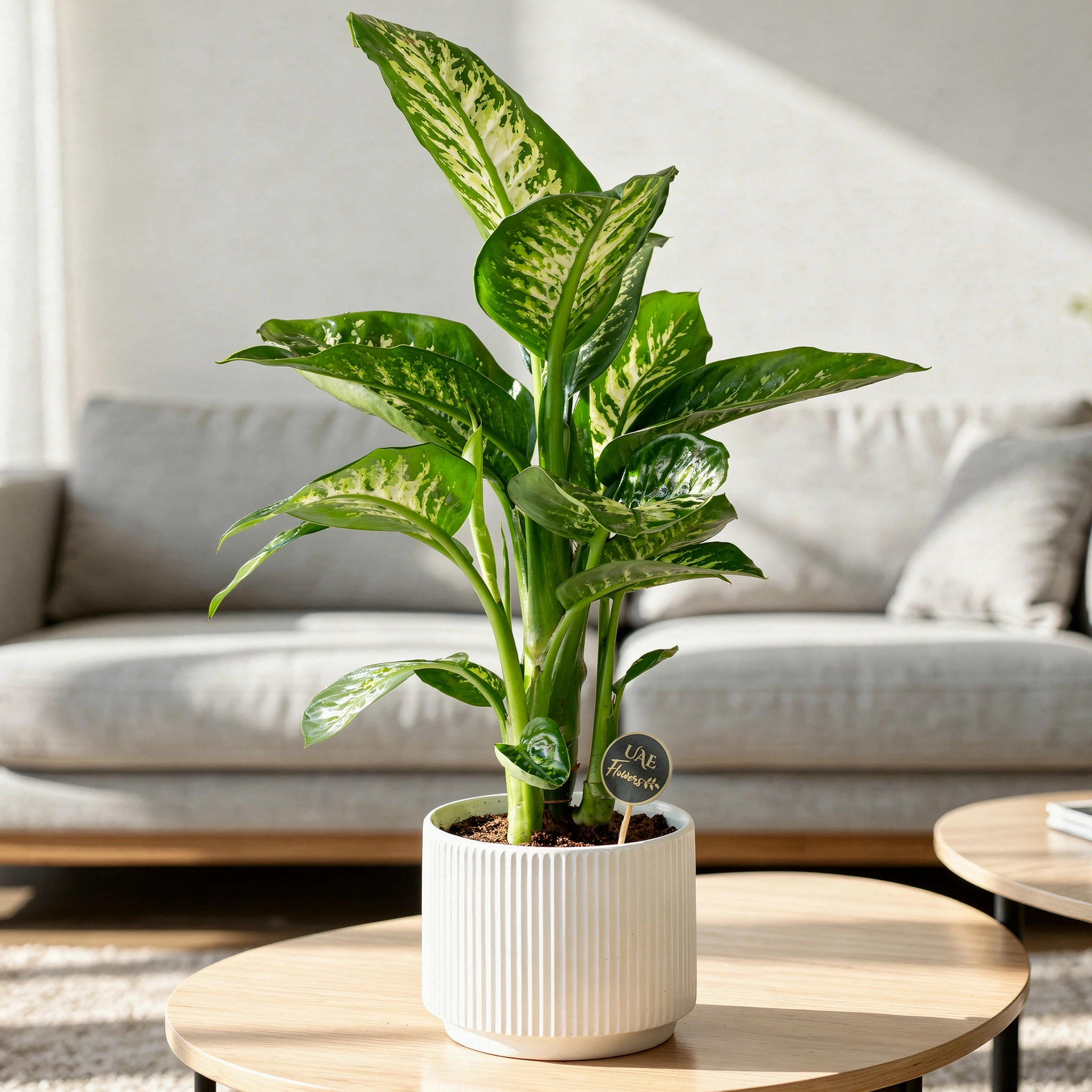
Dieffenbachia seguine develops large cream, white, yellow, and green-patterned leaves that can visually brighten an otherwise plain bedroom corner.
Unlike the toughest plants above, Dieffenbachia performs best when the corner receives useful filtered light rather than remaining deeply shaded all day.
Propagation is possible through division or stem cuttings. Wear care when handling sap and keep this plant away from children and pets that might chew it.
Pros
- Large patterned leaves
- Strong visual impact
- Useful upright growth
Watch For
- Needs better light than ZZ
- Cold-draft sensitivity
- Toxic sap and foliage
How to Choose the Right Plant for Your Bedroom Corner
Start with what the corner actually provides rather than choosing by appearance alone.
- Check the real light level — All plants need usable light for photosynthesis. The University of Minnesota Extension indoor lighting guide explains why plants become weak, pale, or leggy when light is inadequate.
- Match the plant to the darkest season — A corner that looks bright in summer may be much dimmer in winter. The RHS guide to houseplants for shady rooms is a useful reference for realistic low-light choices.
- Choose height intentionally — Pick snake plant, corn plant, ZZ plant, or parlor palm for floor-level height. Use pothos, prayer plant, or peperomia on a stand when floor space is limited.
- Compare with proven bedroom options — Our guide to bedroom plants for low light can help if your corner sits well away from the nearest window.
Common Mistakes to Avoid
Most corner-plant problems come from mismatched light or watering rather than a lack of gardening skill.
Treating complete darkness as low light — Even a shade-tolerant ZZ plant or cast iron plant needs usable light. If your corner gets almost none, move the plant or add a full-spectrum grow light.
Watering every plant on the same schedule — Snake plants and ZZ plants need much more drying than peace lilies or bird’s nest ferns. Check the potting mix before reaching for the watering can.
Leaving water trapped in decorative pots — Roots sitting in stagnant water can lose oxygen and rot. Use containers with drainage and empty collected water after irrigation.
Ignoring pet access — Several popular corner plants contain irritating or toxic compounds. Check your exact species against the ASPCA toxic and non-toxic plant database before placing it within reach.
Assuming low maintenance means no maintenance — Dust, pests, stretched growth, and seasonal changes still matter. See our low-maintenance bedroom plant guide for more forgiving choices.
What You’ll Need
A few basic supplies make corner plants easier to keep healthy without turning your bedroom into a gardening station.
Helps excess water escape instead of surrounding the roots.
Useful as a secondary check while learning how quickly pots dry.
If you’re new to indoor greenery, our guide to beginner plants for bedrooms gives you an even shorter list of forgiving choices.
Give an Overly Dark Bedroom Corner Usable Light
If the corner receives almost no daylight, choosing a tougher plant won’t solve the underlying problem. A compact full-spectrum grow light can provide supplemental light without moving the plant across the room.
Frequently Asked Questions
Q: What is the best plant for a dark bedroom corner?
A: Cast iron plant, ZZ plant, and snake plant are among the strongest choices for dim conditions. They still need some natural or supplemental light.
Q: What tall plant works well in a bedroom corner?
A: Corn plant, snake plant, and a mature parlor palm provide useful vertical height without requiring a huge footprint.
Q: Can a plant survive in a bedroom corner with no window?
A: Not indefinitely without another light source. Live plants require light, so a windowless bedroom usually needs an appropriate grow light.
Q: Which bedroom corner plants are easiest to maintain?
A: Snake plant, ZZ plant, cast iron plant, and pothos are forgiving options when their light and watering needs are respected.
Q: Which corner plants are better for homes with pets?
A: Cast iron plant, parlor palm, and baby rubber plant are stronger options to investigate, but always verify the exact species before buying.
Final Thoughts
The best plants for bedroom corner spaces aren’t necessarily the trendiest ones. Choose a plant that matches your actual light level, watering habits, available floor space, and household safety needs.
A tall snake plant can sharpen a modern corner, while a parlor palm makes it softer and a trailing pothos adds movement from above. Start with the conditions you already have, then style around the plant.
Which plant are you adding to your space first? Save this post to Pinterest so you can come back whenever you need fresh plant inspo!

I’m a home decor enthusiast who loves discovering beautiful room ideas, creative DIY projects, and Pinterest-worthy decorating inspiration. At DecorMinty, I share simple tips, fresh trends, and practical ideas to help you create a home you’ll truly love—one room at a time.