best plants for bedroom desk: 10 Compact Easy Picks
Quick Answer
The best plants for a bedroom desk are Baby Rubber Plant, ZZ Plant, Dwarf Snake Plant, Golden Pothos, Curly Spider Plant, Nerve Plant, Chinese Evergreen, African Violet, Moth Orchid, and Prayer Plant because they offer useful combinations of compact growth, indoor-light tolerance, attractive foliage, or manageable care.
Here’s the short version before you scroll further:
- Baby Rubber Plant — stays tidy and genuinely suits a desktop.
- ZZ Plant — handles missed waterings better than most.
- Dwarf Snake Plant — upright growth uses very little desk space.
- Golden Pothos — trails beautifully from a shelf or desk edge.
- Curly Spider Plant — compact, playful foliage and pet-friendly appeal.
- Nerve Plant — vivid leaves but dislikes drying out completely.
- Chinese Evergreen — brings colorful foliage to modest indoor light.
- African Violet — gives a small desk real flowering color.
- Moth Orchid — offers the longest-lasting floral display here.
- Prayer Plant — patterned leaves noticeably move between day and night.
Your best choice depends less on finding a plant labeled “bedroom friendly” and more on matching its mature size, light needs, watering habits, and pet safety to the exact desk you have.
Our Top Picks at a Glance
Easiest to Care For — ZZ Plant
Best for Low Light — Dwarf Snake Plant
Most Beautiful Bloom — Moth Orchid
Best for Beginners — Baby Rubber Plant


10 Bedroom Desk Plants That Earn Their Space
 Save
Save#1. Baby Rubber Plant — “The Neat Little Workhorse”
| Sunlight | Bright indirect light preferred; tolerates lower indoor light |
| Watering | Water after the upper potting mix dries; avoid keeping roots constantly wet |
| Pot Size | Small 4–6-inch pot with drainage for a young desk plant |
| Care Level | Easy |
| Bloom Time | Occasional flower spikes; primarily grown for foliage |
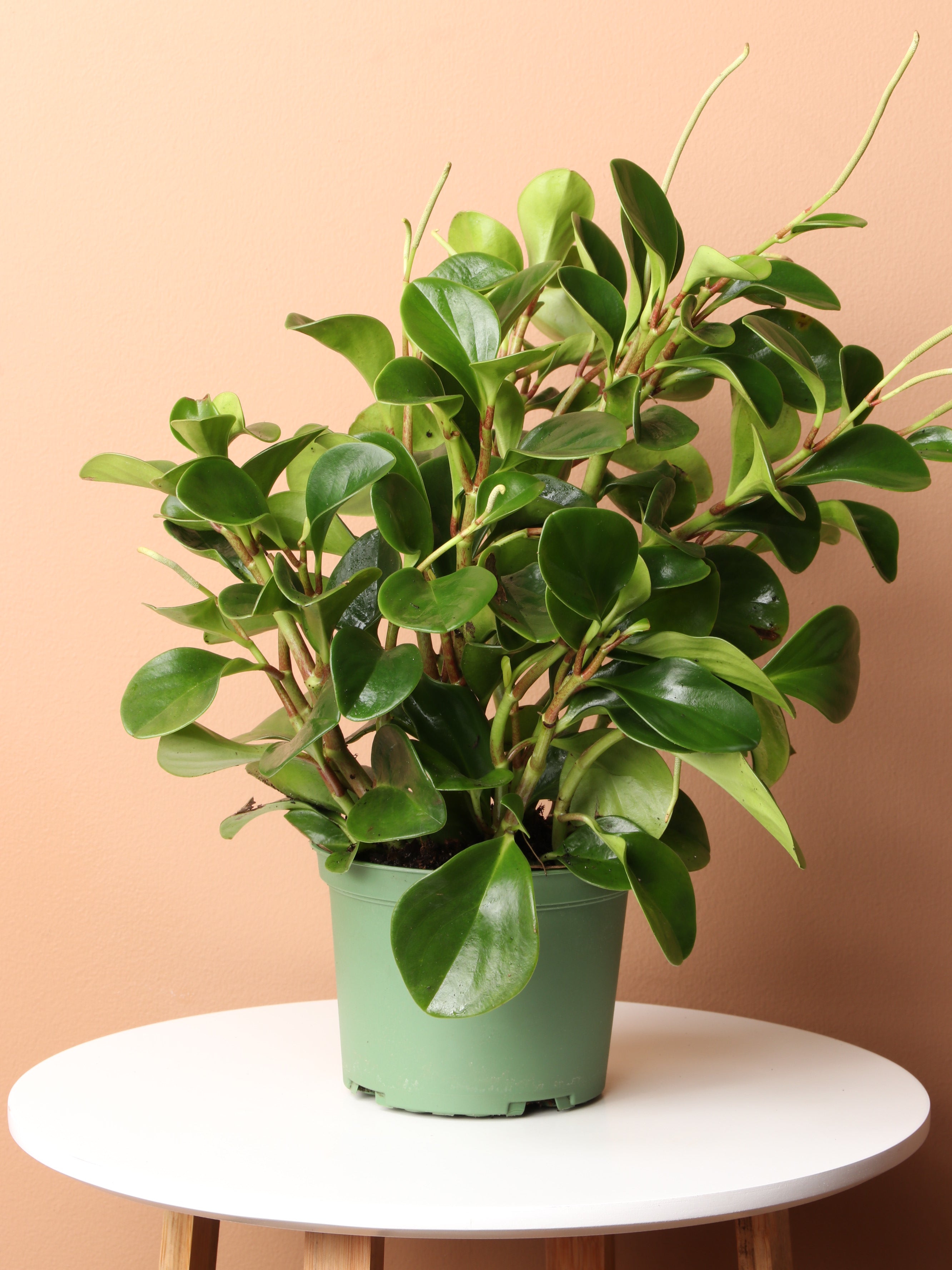
Baby Rubber Plant, Peperomia obtusifolia, is a compact member of the pepper family native to tropical parts of the Americas. Its thick, glossy leaves and naturally restrained growth make it unusually well suited to a bedroom desk.
The fleshy leaves store some moisture, so the plant copes better with a short dry spell than with constantly saturated soil. Yellowing or soft growth can be a warning that the roots are staying too wet.
Pinch or prune stretched stems to maintain a dense shape, and rotate the pot occasionally for even growth. This Peperomia is also widely regarded as non-toxic to cats and dogs.
Pros
- Naturally compact desktop habit
- Thick leaves tolerate brief dryness
- Non-toxic choice for pet homes
Watch For
- Root problems in soggy soil
- Scorch from harsh direct sun
- Stretching when light is too weak
#2. ZZ Plant — “The Forgetful Owner’s Ally”
| Sunlight | Tolerates very low light; grows best in brighter indirect light |
| Watering | Let the mix dry substantially before watering again |
| Pot Size | Small, sturdy pot that accommodates its thick rhizomes |
| Care Level | Easy |
| Bloom Time | N/A — primarily grown for foliage |
Zamioculcas zamiifolia comes from eastern Africa and stores water in thick underground rhizomes. That reserve helps explain why a small ZZ plant is much happier with occasional neglect than repeated watering.
It can remain presentable in modest bedroom light, although brighter indirect light usually supports stronger growth. New shoots are a better sign of success than expecting rapid growth from a plant that naturally takes its time.
Use a draining pot and resist adding water just because the surface looks dry. Keep the plant away from pets and small children who might chew it because ZZ plant tissue contains irritating compounds.
Pros
- Tolerates long gaps between waterings
- Glossy foliage suits clean interiors
- Accepts lower indoor light
Watch For
- Rhizome rot from frequent watering
- Slow growth in very dark positions
- Not suitable for chewing pets
#3. Dwarf Snake Plant — “The Tiny Tank”
| Sunlight | Adaptable from low light to bright indirect light |
| Watering | Allow the potting mix to dry before watering thoroughly |
| Pot Size | 4–6-inch draining pot for a compact specimen |
| Care Level | Easy |
| Bloom Time | Rare indoors; grown for architectural foliage |
Dwarf forms of Dracaena trifasciata, including compact Laurentii types, pack the familiar upright snake plant look into a much smaller footprint. The species is native to tropical western Africa and is valued for unusually durable leaves.
Those firm leaves hold moisture, so overwatering is a greater threat than temporarily dry soil. Weak bedroom light slows water use further, which means the pot may stay damp longer than you expect.
Remove damaged leaves near the base and divide crowded offsets when the clump becomes too wide. Snake plants contain saponins and should be kept out of reach of pets that chew foliage.
Pros
- Very small horizontal footprint
- Excellent tolerance of dry intervals
- Strong upright visual shape
Watch For
- Soft leaves from soggy roots
- Very slow growth in deep shade
- Toxicity if pets chew it
#4. Golden Pothos — “The Desk-Edge Trailer”
| Sunlight | Low to bright indirect light; variegation is stronger with adequate light |
| Watering | Water when the upper layer feels dry and foliage begins losing firmness |
| Pot Size | 4–6-inch pot for a young plant; prune vines to desk scale |
| Care Level | Easy |
| Bloom Time | N/A indoors — grown for foliage |
Epipremnum aureum is a tropical aroid with heart-shaped leaves and flexible trailing stems. On a desk, its real advantage is vertical freedom: the vines can fall over an edge instead of consuming the work surface.
The plant tolerates low light, but extremely dark placement usually produces slower growth and less colorful variegation. Letting the upper mix dry before watering helps avoid the yellow leaves commonly associated with prolonged wetness.
Trim long vines just above a node to keep the plant compact, then root healthy cuttings if you want another plant. Golden pothos contains insoluble calcium oxalates, so keep it away from chewing pets.
Pros
- Uses vertical space efficiently
- Easy to prune and propagate
- Handles a range of indoor light
Watch For
- Long vines tangling with desk items
- Loss of variegation in dim light
- Toxicity when chewed
 Save
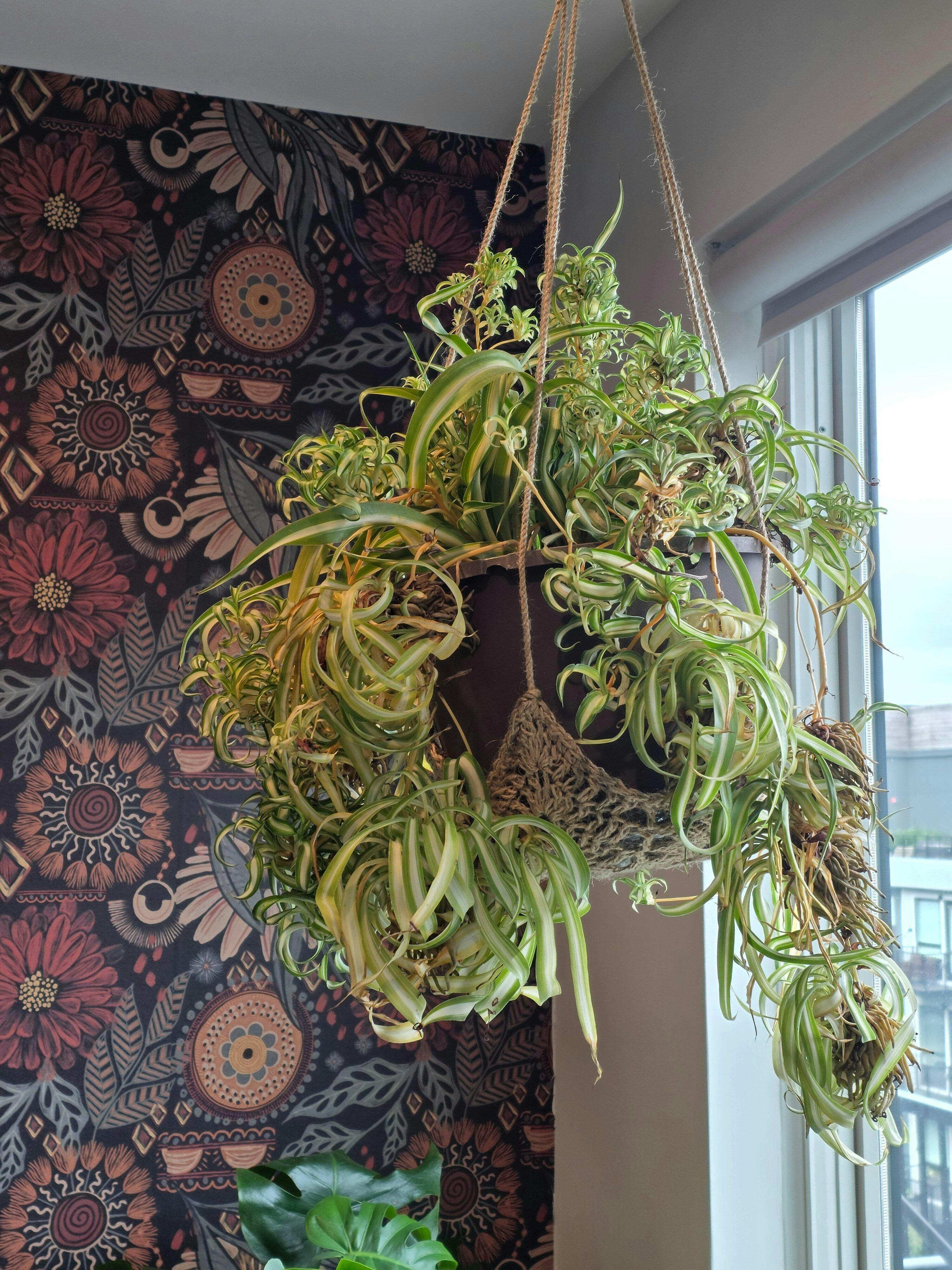
Save#5. Curly Spider Plant — “The Pet-Safe Cascade”
| Sunlight | Medium to bright indirect light; tolerates some shade |
| Watering | Water when the surface begins drying; reduce frequency in winter |
| Pot Size | 4–6-inch pot for compact ‘Bonnie’ plants |
| Care Level | Easy |
| Bloom Time | Small white flowers may appear before plantlets form |
Curly Spider Plant, usually sold as Chlorophytum comosum ‘Bonnie’, has curling striped leaves that stay visually compact. Its arching growth works especially well near the corner of a desk where leaves can spill outward.
It appreciates more light than a ZZ or snake plant, although harsh sun can damage foliage. Brown leaf tips can appear when salts accumulate or when water quality and moisture conditions are unfavorable.
Remove spent leaves and separate rooted plantlets when you want to propagate it. Spider plants are considered non-toxic to cats and dogs, making this one of the easier bedroom choices for pet households.
Pros
- Compact curly cultivar available
- Easy plantlet propagation
- Pet-friendly foliage
Watch For
- Brown tips from mineral buildup
- Scorch in intense direct sun
- Plantlets eventually need extra space
#6. Nerve Plant — “The Drama Queen”
| Sunlight | Medium to bright filtered light; can adapt to fluorescent light |
| Watering | Keep evenly moist; drooping leaves are an obvious thirst signal |
| Pot Size | Shallow 4–6-inch pot suits its low growth habit |
| Care Level | Moderate |
| Bloom Time | Small flowers may appear in summer; foliage is the main attraction |
Fittonia albivenis is a low-growing South American rainforest plant known for contrasting leaf veins. Its naturally short stature makes it one of the easiest plants on this list to fit beneath a monitor or shelf.
Fittonia is famous for collapsing dramatically when it becomes too dry, then often recovering after watering. Repeated severe wilting is still stressful, so use that performance as a warning rather than a watering strategy.
Pinch stem tips to encourage fuller growth and keep the pot away from drying vents. Nerve plant is considered non-toxic to cats and dogs.
Pros
- Stays naturally low and compact
- Highly decorative veined leaves
- Pet-friendly option
Watch For
- Rapid wilting when too dry
- Crisp edges in dry air
- More frequent moisture checks
#7. Chinese Evergreen — “The Low-Light Color Hit”
| Sunlight | Diffuse or indirect light; many green forms tolerate low light |
| Watering | Water after the surface begins drying; use less during slow winter growth |
| Pot Size | 6-inch starter pot; move it off the desk as it matures |
| Care Level | Easy |
| Bloom Time | May form aroid-type flowers; primarily grown for foliage |
Aglaonema species originate in tropical and subtropical parts of Asia and New Guinea. Their patterned leaves provide more visual color than many classic low-light plants without requiring flowers.
Green varieties generally tolerate modest light better than highly colored cultivars, which may need brighter indirect light to hold their markings. Growth is steady rather than tiny, so this is best for a desk with some breathing room.
Remove yellow leaves and repot once the plant becomes too top-heavy for its container. Chinese evergreen contains irritating calcium oxalate crystals and should be positioned away from pets and young children.
Pros
- Excellent patterned foliage
- Green forms tolerate modest light
- Straightforward general care
Watch For
- Eventually outgrowing a tiny desk
- Root rot in constantly wet mix
- Toxicity when chewed
#8. African Violet — “The Compact Bloomer”
| Sunlight | Bright filtered light; gentle north or east exposure works well |
| Watering | Keep lightly moist without waterlogging; avoid leaving the crown wet |
| Pot Size | Small pot matched to the rosette; miniature forms suit desks best |
| Care Level | Moderate |
| Soil pH | About 6.2–6.5 |
| Bloom Time | Can flower repeatedly indoors when light is sufficient |
African violets, now commonly classified within Streptocarpus, are small flowering plants originating from eastern Africa. Miniature and semi-miniature forms give you vivid flowers without sacrificing much working space.
Blooming depends heavily on adequate filtered light, so a dark corner won’t show this plant at its best. Keep the root zone evenly moist but never swamp the pot, and avoid leaving cold water sitting on fuzzy leaves.
Remove faded flowers and aging leaves to keep the rosette open and attractive. African violets are considered non-toxic to cats and dogs.
Pros
- True flowers in a compact footprint
- Miniature varieties stay desk-friendly
- Non-toxic to cats and dogs
Watch For
- Reduced blooming in weak light
- Root rot in saturated mix
- Leaf spotting from careless watering
#9. Moth Orchid — “The Long-Lasting Showpiece”
| Sunlight | Low to medium filtered light; an east-facing window is often ideal |
| Watering | Water as the bark approaches dryness, then drain completely |
| Pot Size | Snug orchid pot with excellent drainage and airflow |
| Care Level | Moderate |
| Bloom Time | Flower displays commonly last for several months |
Phalaenopsis orchids come from tropical Asian and western Pacific regions and are among the most approachable orchids for indoor growing. Their tall flower spikes create visual impact while the actual pot occupies little desk space.
Unlike ordinary potting-soil plants, moth orchids need an airy orchid medium around their roots. Water in the morning, let excess water escape, and never leave the crown sitting wet.
After flowering, continue normal care rather than discarding the plant because healthy Phalaenopsis can bloom again. They are considered non-toxic to cats and dogs.
Pros
- Flowers can remain attractive for months
- Small pot with strong vertical impact
- Pet-friendly choice
Watch For
- Root problems in compacted media
- Crown rot from trapped water
- Poor reblooming in inadequate light
#10. Prayer Plant — “The Nighttime Performer”
| Sunlight | Bright filtered or indirect light; avoid harsh direct sun |
| Watering | Keep evenly moist during active growth, slightly drier in winter |
| Pot Size | Shallow pot that accommodates its spreading growth |
| Care Level | Moderate |
| Bloom Time | Small flowers may appear; foliage is the main attraction |
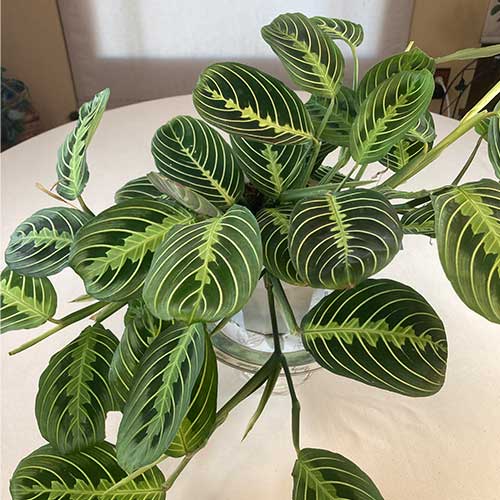
Maranta leuconeura is a Brazilian tropical plant famous for patterned foliage that changes position through the daily light cycle. Its leaves often lift upward in the evening, creating the “praying” effect behind its common name.
Prayer plants prefer consistently moist soil, filtered light, and more humidity than a snake plant or ZZ plant. Browning edges often become noticeable when the air is very dry or moisture swings are extreme.
Trim long stems to encourage a fuller mound, or divide established plants during repotting. Prayer plants are generally considered a pet-friendly choice for indoor spaces.
Pros
- Striking patterned leaves
- Interesting daily leaf movement
- Pet-friendly reputation
Watch For
- Brown edges in dry conditions
- Leaf bleaching in strong sun
- Less forgiving of missed watering
How to Choose the Right Plant for Your Bedroom Desk
Start with the light that actually reaches your desk, not the brightness of the bedroom as a whole. The University of Minnesota’s indoor plant lighting guide explains why distance and window direction matter when matching houseplants to indoor locations.
- For a desk far from a window — start with ZZ Plant, Dwarf Snake Plant, or a green Chinese Evergreen. You can also compare more bedroom plants for low-light spaces.
- For a small work surface — Baby Rubber Plant, Fittonia, miniature African Violet, and compact Spider Plant varieties are easier to keep out of your keyboard and lamp space.
- For homes with curious pets — Baby Rubber Plant, Spider Plant, African Violet, Fittonia, and Phalaenopsis are stronger candidates. Confirm any unfamiliar species against the ASPCA toxic and non-toxic plant database, and see these pet-safe bedroom plant ideas.
- For the biggest visual payoff — choose Moth Orchid for lasting flowers, African Violet for compact color, or Prayer Plant for patterned foliage that changes position throughout the day.
Basic Care Tips for Small Desk Plants
Small containers can change moisture quickly, while low bedroom light can slow drying. The Missouri Botanical Garden’s indoor plant watering guidance emphasizes checking the plant’s actual moisture needs instead of relying on one schedule.
- Check before watering — ZZ, snake plant, Peperomia, and pothos should not receive another drink simply because a certain number of days has passed.
- Rotate the pot — a quarter-turn every week or two helps prevent desk plants from leaning heavily toward one window.
- Keep leaves away from vents — forced heating or air-conditioning can dry Fittonia, Prayer Plant, and orchids faster than expected.
- Prune before plants invade your workspace — pothos vines, spider plant runners, and Prayer Plant stems are easier to manage with light, regular trimming.
If you’d rather begin with the most forgiving choices, these beginner-friendly bedroom plants and low-maintenance bedroom plants offer more options.
Common Mistakes to Avoid
Most desk-plant problems begin with a mismatch between the plant, the light, and the way its small container is watered.
Watering on a fixed calendar — A ZZ plant in dim light can remain moist much longer than a Fittonia beside a bright window. Watering both every Saturday ignores how differently they use moisture and increases the chance of root problems.
Treating low light as no light — Snake plants and ZZ plants tolerate dim conditions, but they still need usable light. A completely dark desk leads to weak or stalled growth and even slower soil drying.
Using a decorative pot with nowhere for water to escape — Water trapped around Peperomia, pothos, ZZ, or snake plant roots can displace oxygen and encourage decay. Use a draining nursery pot inside the decorative container if necessary.
Ignoring dry air around moisture-loving plants — Fittonia and Prayer Plant can develop crisp edges or wilt rapidly beside heating and cooling vents. Move them away from direct airflow before assuming they simply need more water.
Buying for today’s size without checking mature growth — A young Chinese Evergreen may look perfect beside a laptop but eventually demand more width and height. Choose naturally compact species when desk space is permanently limited.
What You’ll Need for a Healthy Bedroom Desk Plant
You don’t need a cabinet full of supplies. A few practical basics solve the most common problems with small indoor pots.
Keeps a desktop plant attractive without trapping excess water around its roots.
Useful when your desk sits too far from a window for healthy long-term growth.
Provides the airy root environment a Phalaenopsis needs instead of dense regular potting soil.
A tidy accessory for moisture-loving plants such as Fittonia and Prayer Plant.
Stop Guessing When a Small Pot Is Still Wet
Overwatering is especially easy when a bedroom desk receives limited light and soil dries slowly. A basic indoor plant moisture meter can provide an extra check before you reach for the watering can, especially while you’re learning how quickly each pot dries.
Frequently Asked Questions
Q: What is the best plant for a bedroom desk with low light?
A: A small ZZ Plant or Dwarf Snake Plant is usually the strongest starting point because both tolerate lower indoor light better than flowering plants. They still need usable light and shouldn’t be placed in a permanently dark room.
Q: Which bedroom desk plants stay small?
A: Baby Rubber Plant, Fittonia, miniature African Violet, and compact Spider Plant cultivars are good choices when surface space is tight. Regular pruning can also keep pothos manageable.
Q: Can I keep a plant on a desk away from the window?
A: Yes, if enough indirect light still reaches the desk. For truly dim positions, use a tolerant plant such as ZZ or snake plant, or add a suitable grow light rather than expecting a plant to live without light.
Q: What bedroom desk plant is safest around cats and dogs?
A: Baby Rubber Plant, Spider Plant, Fittonia, African Violet, and Phalaenopsis orchid are commonly listed as non-toxic choices. Always verify the exact plant identification before bringing an unfamiliar species into a pet-accessible room.
Q: How often should I water a small desk plant?
A: There isn’t one correct schedule. Check the potting mix first because a drought-tolerant ZZ or snake plant needs very different moisture conditions from Fittonia or Prayer Plant.
Q: Which small desk plant has the best flowers?
A: Moth Orchid is the standout when you want a dramatic display that can remain attractive for months. African Violet is a better choice when you want colorful flowers from a much shorter, more compact plant.
Final Thoughts
The best bedroom desk plant is the one that fits both your available light and the amount of care you’ll realistically give it. Start with Baby Rubber Plant, ZZ Plant, or Dwarf Snake Plant for simplicity, then move toward Fittonia, Prayer Plant, African Violet, or orchids when you want something more interactive.
Which plant are you adding to your space first? Save this post to Pinterest so you can come back whenever you need fresh plant inspo!

I’m a home decor enthusiast who loves discovering beautiful room ideas, creative DIY projects, and Pinterest-worthy decorating inspiration. At DecorMinty, I share simple tips, fresh trends, and practical ideas to help you create a home you’ll truly love—one room at a time.