Can You Sleep With a Neck Pillow? What to Know
Quick Answer
Yes, you can sleep with a neck pillow, including through the night, as long as it keeps your head and neck comfortably aligned. The key is choosing a pillow designed for your sleeping position rather than assuming every cervical or travel pillow works the same way; this guide to choosing the right neck pillow explains the main fit factors.
What matters most
- Keep neutral alignment: Your pillow shouldn’t force your chin sharply toward your chest or tip your head sideways.
- Match the setting: Bed neck pillows and upright travel pillows solve different positioning problems.
- Watch the height: Too much or too little support can leave your neck bent for hours.
- Check morning comfort: New or worsening stiffness can mean the pillow isn’t a good fit.
- Don’t treat pain blindly: Persistent pain, numbness, weakness, or pain after an injury deserves medical attention.
I get why this question is confusing. A “neck pillow” can mean a contoured pillow for your bed, a small cervical roll, or the U-shaped pillow you pack for a flight.
Those designs aren’t interchangeable. In this guide, I’ll show you when sleeping with one makes sense, when it can make things worse, and how I check whether the support feels right.


Can you sleep with a neck pillow?
 Save
SaveYes. A neck pillow can be used for sleeping when its height and shape keep your cervical spine, which is the neck portion of your spine, in a comfortable position.
The important word is support. You don’t want the pillow to hold your neck in a dramatic curve simply because the product is labeled “cervical” or “orthopedic.”
What a neck pillow should do while you sleep
A well-fitted pillow supports the space created by your head, neck, shoulders, mattress, and sleeping position. Your head should feel supported without being pushed noticeably forward or sideways.
- Back sleeping: Look for support under the natural neck curve without excessive height behind the head.
- Side sleeping: The pillow needs enough height to fill the space between your head and mattress.
- Stomach sleeping: Thick neck support can make an already rotated neck position more extreme.
- Upright sleeping: A travel pillow should limit uncontrolled forward or sideways head drop.
Harvard Health similarly recommends keeping the neck supported and notes that back and side sleeping are generally easier on the neck than stomach sleeping.
Bed neck pillows and travel neck pillows are different
A cervical bed pillow normally supports both your head and neck. A travel neck pillow is mainly designed to stabilize your head while you’re sitting more upright.
| Pillow type | Best setting | Main support goal | Common problem |
|---|---|---|---|
| Contoured cervical pillow | Bed | Support the head and neck together | Wrong contour height |
| Neck roll | Bed or short rest | Fill the curve beneath the neck | May not support the head by itself |
| U-shaped travel pillow | Plane, train, or passenger seat | Reduce sideways head drop | Bulky material behind the neck can push the head forward |
| Wrap-around travel pillow | Upright travel | Stabilize forward and sideways movement | Poor fit can feel restrictive |
Is it okay to sleep with a neck pillow every night?
Yes, sleeping with a neck pillow every night can be fine if it remains comfortable and supports a neutral sleeping posture. There’s no general rule saying a properly fitted cervical pillow must only be used occasionally.
Your body gives useful feedback. I pay more attention to how my neck feels after waking than to marketing words printed on the pillow packaging.
Signs your nightly setup is working
- You can settle into your normal position without fighting the pillow.
- Your chin isn’t being forced toward your chest.
- Your head doesn’t fall toward one shoulder when side sleeping.
- You aren’t repeatedly waking because of pressure behind your neck.
- You don’t notice new morning stiffness after switching pillows.
If pain is the reason you’re changing your setup, see my guide to choosing a neck pillow for neck pain before assuming more support is always better.
When nightly use deserves another look
Reassess the pillow if discomfort repeatedly gets worse overnight. A pillow can feel plush at bedtime yet still hold your neck at an awkward angle for several hours.
Mayo Clinic recommends keeping your head and neck aligned during sleep and using appropriate neck support.
Is it good to sleep with a neck pillow?
It can be good for you when the pillow solves a positioning problem. It isn’t automatically healthier than a normal pillow just because it has an ergonomic shape.
That’s also why I don’t judge a pillow by firmness alone. Shape, height, mattress softness, shoulder width, and sleeping position all affect the final angle of your neck.
Potential benefits of a well-fitted pillow
- More consistent support: A contour can fill the gap beneath the neck more reliably than a flat pillow.
- Less head drop: Travel designs can stabilize your head when you fall asleep sitting up.
- Better position awareness: A structured shape can make it obvious when your head is sitting too high or low.
- Improved comfort: The right fit may reduce the need to bunch, fold, or constantly reposition a standard pillow.
For a broader look at the trade-offs, I’ve also covered whether neck pillows are good for you and who benefits most from them.
My simple alignment check
I use one practical test before judging any neck pillow: does my head feel centered over my body rather than propped away from it? That catches obvious fit problems quickly.
- Lie in your normal sleeping position.
- Relax instead of deliberately correcting your posture.
- Notice whether your chin is being pushed down or upward.
- For side sleeping, check whether your head tilts toward either shoulder.
- Reassess after waking, especially if you notice new stiffness.
Is it bad to sleep with a neck pillow every night?
No, nightly use isn’t inherently bad. The problem is repeatedly sleeping on a pillow that positions your neck poorly or causes new symptoms.
A neck pillow that’s too tall can push your head forward. One that’s too low may leave your neck unsupported, especially when side sleeping.
Warning signs the pillow may not suit you
- Morning pain started soon after changing pillows.
- Your chin feels pushed toward your chest while lying on your back.
- Your head noticeably tilts when you sleep on your side.
- You keep sliding off the contour during the night.
- You wake with headaches, tingling, numbness, or unusual shoulder discomfort.
Don’t assume every symptom comes from your pillow. Cleveland Clinic’s neck-pain guidance notes that neck pain has many possible causes and recommends medical evaluation when concerning symptoms occur.
When I would stop using it
I wouldn’t keep forcing myself to “adjust” to a pillow that consistently makes symptoms worse. Comfort may take some experimentation, but escalating pain isn’t a useful adaptation goal.
Seek professional medical advice for persistent or severe neck pain, pain following an injury, or symptoms such as weakness or numbness. A pillow is a positioning tool, not a treatment for every neck condition.
Can you sleep with a travel neck pillow?
Yes. Travel neck pillows are specifically intended to support your head during upright rest, such as on a plane, train, bus, or while riding as a passenger.
The main challenge is keeping your head from falling sharply forward or sideways. A travel pillow should reduce that movement without forcing your head forward from behind.
How I position a travel pillow
I’ve found that fit matters more than the familiar U shape itself. If the thickest part sits directly behind your neck and pushes your head toward your chest, try adjusting the position or using another design.
- Fasten adjustable clasps snugly without creating throat pressure.
- Use raised side support where your head naturally tends to fall.
- Keep the back relatively slim when the seat already has a headrest.
- Don’t tighten a wrap-style pillow to the point that it feels restrictive.
- Remove or reposition it if you develop discomfort.
My detailed guide on whether neck pillows really work explains why upright travel is one of the clearest situations where added support can be useful.
Travel pillows aren’t automatically good bed pillows
A bulky U-shaped pillow may be comfortable for a short upright nap yet awkward when you lie flat. Your mattress already supports your torso, so the geometry changes completely.
For overnight bed use, I usually prefer a pillow designed to support the head and neck together rather than wrapping around the neck like a travel collar.
Can you sleep with just a neck pillow?
Yes, if the “neck pillow” is a full cervical bed pillow designed to support both your head and neck. A small neck roll by itself is different because it may leave your head without enough support.
Start by identifying which product you own. The label “neck pillow” covers several designs that serve completely different jobs.
When one pillow can be enough
- Contoured cervical pillow: Usually designed to replace a conventional head pillow.
- Ergonomic memory-foam pillow: Often supports the head and neck as one complete sleep surface.
- Adjustable-fill neck pillow: Can work alone when you’ve set the loft correctly.
If you’re unsure which design suits your position, compare your setup with this guide to the best neck pillow for different sleeping positions.
When you may need another pillow
A cylindrical neck roll is often intended to fill the cervical curve rather than cushion the entire head. Depending on its design, it may work better with a flatter head pillow.
A travel pillow also shouldn’t automatically replace your bed pillow. Its raised sides and front closure were designed around upright sitting rather than a flat mattress.
How long can you sleep with a neck pillow?
 Save
SaveThere’s no universal maximum number of hours for sleeping on a properly fitted ordinary neck pillow. If it’s a bed pillow that keeps you comfortable and aligned, it can generally serve as your regular pillow throughout the night.
The better question is whether your body tolerates that specific setup. Time alone doesn’t make a well-fitted pillow harmful.
Use symptoms instead of a stopwatch
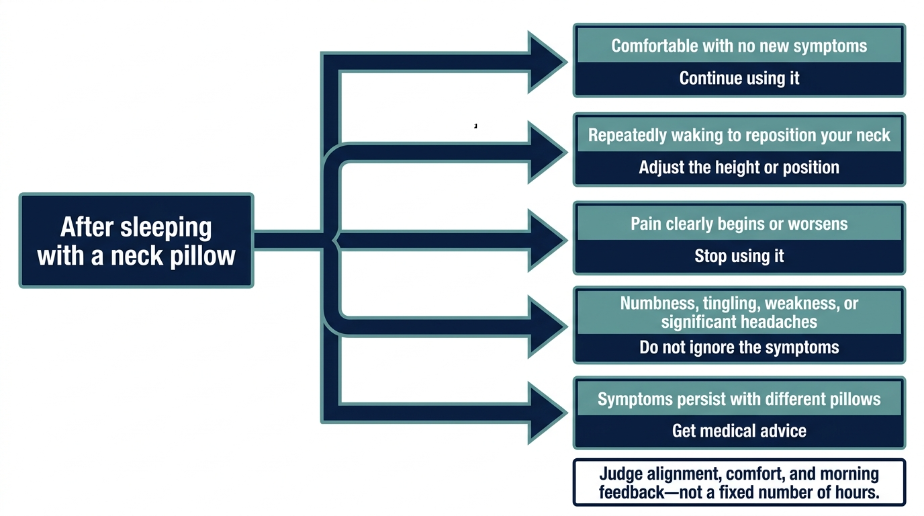
- Continue using it if you remain comfortable and wake without new symptoms.
- Adjust the height or position if you repeatedly wake to reposition your neck.
- Stop using it if it clearly causes or worsens pain.
- Don’t ignore numbness, tingling, weakness, or significant headaches.
- Get medical advice if symptoms persist regardless of which pillow you use.
For a travel neck pillow, comfort can change as your seat position changes. Remove or reposition it during a long journey when you aren’t sleeping rather than assuming it needs to stay around your neck continuously.
The rule I use in 2026
I focus on alignment, comfort, and morning feedback rather than a fixed number of hours. If those three things look good, the neck pillow is probably doing the job I bought it to do.
If one of them consistently fails, I change the setup. A pillow should adapt to your sleeping position, not force your sleeping position to adapt to it.
If you’re ready to pick one, these are the two styles I’d consider for the two most common situations:
🏆 Best for Bed Sleep
TEMPUR-Neck Pillow
★★★★☆ 3.8/5 manufacturer-listed rating checked in 2026
Its firm contoured TEMPUR material is designed for back and side sleepers, with small, medium, and large profile options. I’d pick this style when I want a dedicated bed pillow that supports the head and neck together rather than a travel-style collar.
✈️ Best for Upright Travel
Cabeau Evolution S3 Neck Pillow
★★★★☆ 4.3/5 manufacturer-listed rating checked in 2026
This memory-foam travel pillow uses raised side supports, an adjustable front clasp, and a flatter back designed for upright seats. I’d choose it for flights and train trips where preventing sideways or forward head drop matters more than bed-style support.
Frequently Asked Questions
Should your shoulders be on a neck pillow?
Usually, a bed pillow should mainly support your head and neck rather than having much of your shoulder resting on top. Your exact position depends on the pillow shape and mattress, but forcing your shoulder onto a contour can change its height and push your head out of alignment.
Can a neck pillow cause headaches?
A poorly fitted pillow can contribute to uncomfortable neck positioning, which may coincide with morning neck discomfort or headaches. If headaches start after changing pillows, reassess the height and firmness. Seek medical advice for persistent, severe, unusual, or worsening headaches rather than assuming the pillow is the only cause.
How do I know if my neck pillow is too high?
When you’re on your back, an overly high pillow may push your chin noticeably toward your chest. On your side, it can tilt your head upward away from the mattress. Consistent morning stiffness after changing to a higher pillow is another reason to reassess the fit.
What if a new neck pillow feels uncomfortable?
First, check whether the height and sleeping position match rather than assuming you simply need to tolerate it. Minor differences can feel unfamiliar, but new or worsening pain isn’t something I’d ignore. Change the setup and seek professional advice if symptoms continue.
Bottom line: You can sleep with a neck pillow every night, and you can use one for the entire night when it fits properly. What matters isn’t the “neck pillow” label—it’s whether the pillow keeps your head supported without forcing your neck into an uncomfortable position.
Start with your normal sleeping position, check your alignment, and pay attention to how you feel the next morning. That’s a much better test than choosing the firmest or most expensive pillow you can find.

I’m a home decor enthusiast who loves discovering beautiful room ideas, creative DIY projects, and Pinterest-worthy decorating inspiration. At DecorMinty, I share simple tips, fresh trends, and practical ideas to help you create a home you’ll truly love—one room at a time.