Can I Put a Bed Pillow in the Washing Machine? Guide
Quick Answer
Yes, many bed pillows can go in the washing machine, but only if the care label allows it. Most down, feather, polyester and cotton pillows can be washed on a gentle cycle. Memory foam, latex and buckwheat pillows cannot go in the washer. Dry the pillow completely through the centre before you use it again.
A pillowcase hides sweat, skin oils and dust, but it does not stop them reaching the pillow inside. The fill and the label in the seam usually decide whether a wash will help or ruin the pillow.
It Depends on What Is Inside the Pillow

The fill decides the method. Down, feather, polyester, cotton, solid foam, latex and buckwheat hulls react differently to water, agitation and heat. A method that cleans a polyester pillow can tear a foam pillow apart.
Loose fills that can move, separate and dry out again cope best with a machine. Solid fills that absorb water like a sponge cope worst. The care label matters more than any general rule, because it is the instruction for your exact pillow, not for pillows in general.
| Fill type | Machine wash? | How to clean it |
|---|---|---|
| Polyester and down alternative | Usually yes, if the label allows | Gentle cycle, mild liquid detergent, extra rinse, low-heat dry |
| Down and feather | Usually yes, if the label allows | Gentle cycle, cool or warm water, small amount of mild detergent, extra rinse |
| Cotton | Usually yes, if the label allows | Gentle cycle, warm water, mild detergent, dry fully |
| Solid memory foam | No | Wash the removable cover, vacuum and spot-clean the foam, air-dry flat |
| Solid latex | No | Wash the removable cover, spot-clean with a damp cloth, air-dry in the shade |
| Buckwheat, wool and kapok | No, not the fill | Remove the fill, wash the cover, air the fill |
How to Tell If Your Pillow Can Go in the Washer
Start with the label, usually sewn into a seam. It lists the fill and often gives washing instructions. Look for an instruction such as machine wash gentle, hand wash only, spot clean only, or dry clean only. A washtub symbol means washing is allowed. A hand in the tub means hand wash only, and a crossed-out tub means do not wash.
If the label is gone, use feel to identify the fill. Down and feather feel light and squashy, and you can sometimes feel a quill through the ticking. Polyester feels springy and fibrous. Solid memory foam is a dense block that springs back slowly when pressed. Latex feels rubbery and returns to shape quickly. Buckwheat rustles when you move it.
Then check the seams for fraying or small holes. A weak seam can open in the washer and spill fill into the machine. Washing cannot restore fill that has broken down.
How to Wash a Bed Pillow in the Washing Machine

These steps are only for pillows whose care label says they are machine washable. For foam, latex, buckwheat, wool and kapok, skip to the spot-clean section below. If you are unsure, hand wash or spot clean instead.
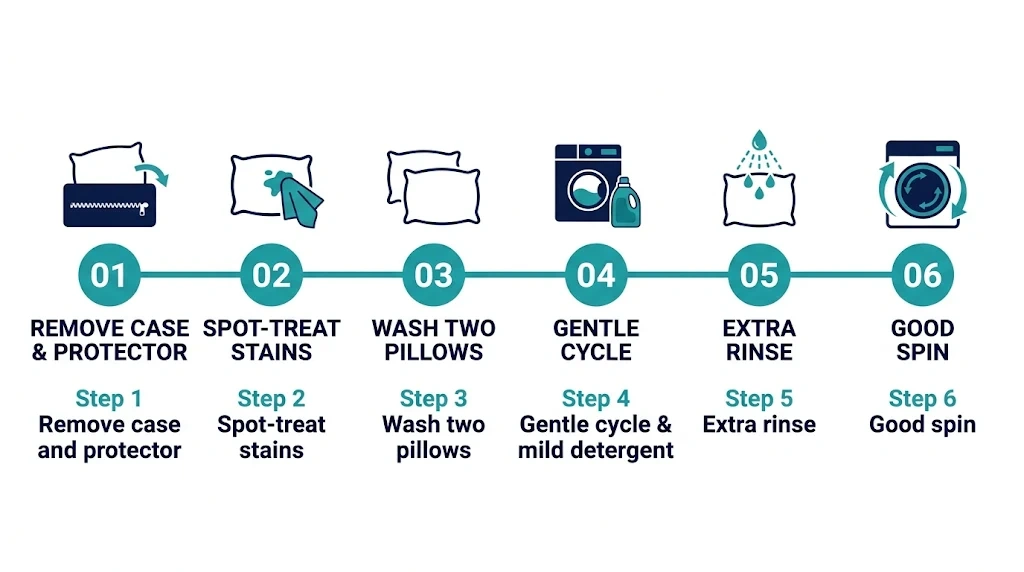
- Remove the case and protector. Wash those separately with your sheets. They are usually machine washable even when the pillow inside is not.
- Spot-treat stains first. Cover a stain with mild stain remover, let it sit for a few minutes, and blot with a damp cloth before the wash.
- Wash two pillows at a time. A single wet pillow slumps to one side and throws the load off balance. Two pillows keep the load steady. Do not add other laundry.
- Use a gentle cycle and a small amount of mild liquid detergent. For down and feather, use cool or warm water. For polyester, warm water is usually fine. Thick filling holds soap, so use less than for a normal load. Powder can lodge in the filling, so liquid is safer.
- Run an extra rinse. This is the step most people skip, and it makes the most difference to how the pillow feels when dry. If the rinse water still looks soapy, run another rinse.
- Use a good spin. A higher spin removes more water and shortens drying time. That helps, because a pillow that stays damp can develop mildew.
A front-loader is usually gentler than a top-loader with a central agitator. If the pillow barely fits, do not wash it in that machine.
Tip
Skip fabric softener and chlorine bleach on down, feather and foam fills. Softener coats the fill so it clumps and holds odour, and bleach weakens the ticking. A gentle wash with mild detergent and an extra rinse is enough.
Drying Is Where Most Pillows Are Ruined
Washing is only half the job. A pillow can feel dry outside while the centre is still damp, and that damp centre is where mildew starts. Do not use the pillow until the centre is dry. Press the middle firmly with both hands. If it feels cool, heavy or damp, it is not ready.
For most washable pillows, tumble dry on low heat with two or three clean dryer balls to break up clumps. Check every 30 minutes and fluff by hand. Down and feather often need two to three hours on low or no heat.
What to Do Instead for Memory Foam, Latex and Other Non-Washable Pillows
Memory foam and latex pillows should not go in the washer or dryer. The foam absorbs water deep inside, and agitation can tear it apart. Casper’s pillow washing guide says the same for its foam pillows: wash the cover, but do not machine wash the foam or fully submerge it.
For a solid foam or latex pillow, remove the cover and wash it if its label allows. Then vacuum both sides of the foam with the upholstery attachment. For a stain, dip a clean cloth in lukewarm water with a little mild detergent, wring it until damp, and dab gently. Do not scrub hard, or the foam may crumble, and do not soak it.
After spot cleaning, lay the pillow flat away from direct heat, and give it a full day to dry. A zippered cover, washed weekly with your sheets, matters more here, because you cannot wash the core itself.
Buckwheat, wool and kapok follow a different rule: never wash the fill. Remove the fill, wash the cover, and air the fill. Shredded memory foam is a middle case: wash the cover, but do not put shredded foam in the washer unless the maker says so.
How Often to Wash, and When to Replace Instead
Most washable bed pillows should be washed every three to six months. Wash closer to every three months if you sweat heavily, have allergies, share the bed with pets, or eat in bed. If you use a zippered protector and wash the pillowcase weekly, you can often stretch toward six months.
The pillowcase is different: wash it at least once a week, because it touches your face and hair directly. Do not wash the pillow more often than needed, because every wash stresses the seams and fill.
Washing cannot fix a pillow that has lost its support. Fold it in half and let go. If it stays folded, the fill has broken down. If it feels lumpy after a proper wash and full dry, or a musty smell returns quickly, the fill may have mildew inside. Most pillows last one to two years.
If you wake with neck stiffness or a headache that eases during the day, check the pillow’s height and support as well as its cleanliness. Our guide to whether a pillow can cause neck pain or headaches explains what to look for, and when a change in pillow, rather than a wash, is the more useful step. When you replace a pillow, take a photo of the new label. Labels fade or fall off, and the photo is often the only record you will have a year later.
Warning
Never put a pillow in the washer if the label says spot clean only, dry clean only, or do not wash. If the label is missing and you cannot identify the fill, hand wash or spot clean instead of risking the machine.
For a fuller walkthrough, our guide to how to wash a bed pillow covers the machine process in more detail, and our guide to how to clean a bed pillow covers stain removal and odour. The same rule applies to smaller pillows: our guide to how to wash and clean a neck pillow safely explains why foam neck pillows need spot cleaning. If you are weighing wash or replace, our guide to how long neck pillows last shows how fill type affects lifespan.
Related Product
Washable Bed Pillow Protector
A zippered, washable protector keeps sweat, oils and dust out of the pillow itself, so you can wash the protector often and the pillow less often.
As an Amazon Associate, we earn from qualifying purchases.
Frequently Asked Questions
Can you wash all bed pillows in the washing machine?
No. Most down, feather, polyester, down-alternative and cotton pillows can be machine washed if the care label allows it. Solid memory foam, solid latex, buckwheat, wool and kapok pillows cannot be machine washed. For those, wash the removable cover and spot-clean the core, and air the fill instead of soaking it.
What setting should I use to wash a bed pillow?
Use a gentle or delicate cycle with a small amount of mild liquid detergent. Use cool or warm water for down and feather, and warm water for polyester unless the label says otherwise. Wash two pillows at a time to balance the load, and run an extra rinse to remove soap from the thick filling.
Can I put a memory foam pillow in the washing machine?
No. Memory foam absorbs water like a sponge, and machine agitation can tear it apart. It also takes so long to dry inside that mould can grow before the centre is dry. Remove and wash the cover, vacuum the foam, spot-clean stains with a damp cloth and mild detergent, and air-dry the foam flat for a full day.
How do I dry a bed pillow after washing it?
Tumble dry washable pillows on low heat with dryer balls, checking and fluffing every 30 minutes until the centre is dry. Down and feather pillows often need two to three hours on low or no heat. You can also air-dry flat on a rack, turning and fluffing regularly. Do not use the pillow until the centre feels dry, not just the surface.
How often should I wash my bed pillow?
Wash a machine-washable bed pillow every three to six months. Wash it closer to every three months if you sweat heavily, have allergies, share the bed with pets, or eat in bed. Wash the pillowcase at least once a week, and wash a zippered protector monthly or with the pillow.
What if my pillow smells musty after washing?
A musty smell usually means the centre was still damp when the pillow was used or stored. Dry it again fully, fluffing it between cycles, and check the centre with both hands. If the smell returns quickly after a full dry, mildew may have started inside the fill, and the pillow may need replacing rather than another wash.
Conclusion
Yes, many bed pillows can go in the washing machine, but the fill and the care label decide. Down, feather, polyester and cotton pillows can usually be washed on a gentle cycle with mild detergent and an extra rinse, then dried fully on low heat. Memory foam, latex, buckwheat, wool and kapok pillows cannot. Check the label, wash two pillows at a time, dry the centre completely, and replace a pillow that stays flat, lumpy or musty after a proper wash.

I’m a home decor enthusiast who loves discovering beautiful room ideas, creative DIY projects, and Pinterest-worthy decorating inspiration. At DecorMinty, I share simple tips, fresh trends, and practical ideas to help you create a home you’ll truly love—one room at a time.