How to Keep Your Pillow From Falling Off the Bed: Simple Fixes That Work Tonight
Quick Answer
Close the gap between your mattress and headboard, then stop the slide. Push the mattress tight to the headboard, tuck your pillow under the top sheet, and add grip with a cotton pillowcase or a thin non-slip mat. If the gap is wide, fill it with a wedge pillow stopper. Most pillows stop falling the first night you close the gap and anchor the pillow.
A pillow on the floor at 3 a.m. is a small problem with an outsized effect. You wake up cold, stiff, or annoyed, and you lose a few minutes of sleep putting the bed back together. The fix is usually simple, because a pillow falls for only a few reasons: a gap it can slip into, a surface it can slide across, or movement that pushes it past the edge.
This guide starts with the fastest free fixes, then moves to grip, size, and placement. Try them in order. You may only need the first two.
Why Your Pillow Keeps Falling Off the Bed
A pillow falls when nothing stops it. The head of most beds has a weak point, and the sides have an open edge. Movement during sleep supplies the push. Once you know which weak point is doing the work, the right fix becomes obvious.
The headboard gap is the most common cause. Many bed frames leave a space of two to six inches between the mattress and the headboard. That space exists so you can tuck in sheets, but it also gives a pillow somewhere to go. If you sleep with your head near the top of the bed, your pillow can be pushed back a little each time you shift. Over a night, those small pushes add up.
Slippery bedding is the second cause. Satin and silk pillowcases feel smooth against skin, but they also let a pillow glide across the mattress. A smooth mattress protector or a fitted sheet that has worked loose can do the same thing. The pillow does not need a large push when friction is low.
Pillow size and shape matter too. A pillow that is wider than the space available, or much narrower than your mattress, is easier to dislodge. A very soft, flat pillow can fold and slip through a gap that a firmer pillow would bridge. How big a standard bed pillow is affects this more than most people expect, because a pillow that fits the width of your sleeping space has less room to turn and slide.
Restless sleep and an uneven surface finish the picture. Side sleepers who change sides, stomach sleepers who turn their head, and anyone who sits up to read before sleep all move the pillow more. A mattress that slopes toward the head, a sagging edge, or a bed that is too small for two people and their pillows makes the problem worse.
Close the Gap Between the Mattress and Headboard First
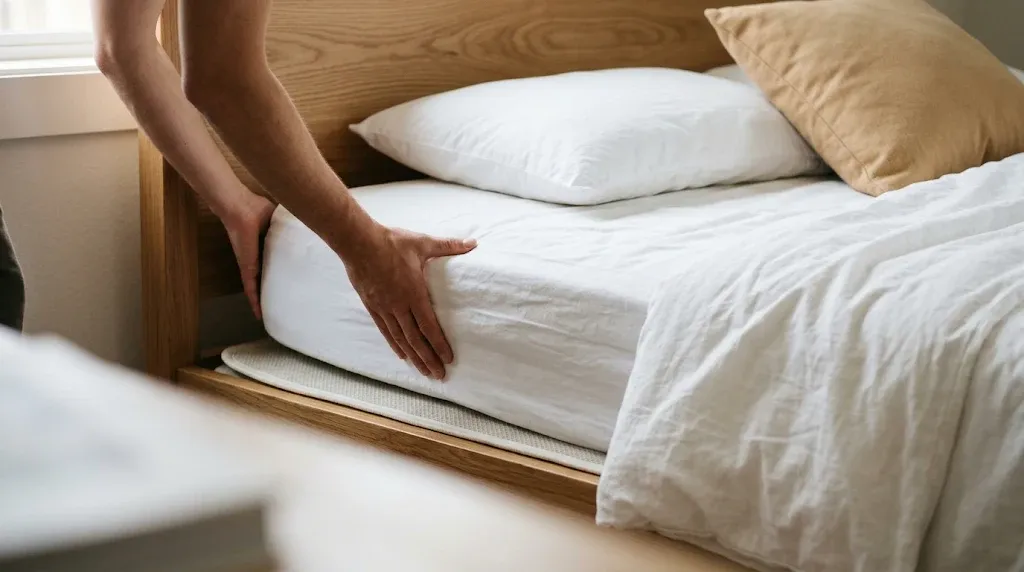
Start here, because closing the gap removes the place the pillow falls into. You do not need to buy anything for this step.
Push the mattress firmly toward the headboard until it touches. Stand at the foot of the bed and use your knees or hands to slide it. Check both corners, because a mattress can sit straight at the foot and still leave a gap on one side at the head. If the frame allows it, centre the mattress side to side as well.
Next, check why the gap keeps returning. A mattress on a slatted base can creep forward over a few nights. A bed on a hard floor can slide a little each time you get in and out. Tighten the frame bolts if they are loose, and check that the headboard is fixed firmly to the frame. A headboard that leans back, even slightly, creates a wider gap at the top than at the mattress level.
If the mattress still moves, put a thin non-slip rug pad or a sheet of shelf liner between the mattress and the base. Cut it to fit under the head half of the mattress so it does not change how the rest of the bed feels. This adds friction where the mattress meets the frame and helps it stay where you put it.
For a gap that remains after the mattress is pushed tight, fill it rather than fighting it. A rolled towel works for one night. A folded blanket works for a week. A wedge-shaped pillow stopper works for the long term, because it is made to sit in that space and stay put. The goal is simple: nothing at the head of the bed should be wider than the filler, and the filler should reach from the mattress surface to the headboard.
Tip
Measure the gap before you buy a filler. A two-inch gap and a six-inch gap need different solutions, and a stopper that is too narrow will sink into the space instead of bridging it.
The Fastest Free Fixes to Try Tonight
You can test most of these in under five minutes, with bedding you already own. Try one at a time so you know which change made the difference.
- Push the mattress to the headboard. This is the single most effective free fix. Do it after you make the bed, not before, so the sheets do not pull the mattress back.
- Tuck the pillow under the top sheet. Lay the pillow on the mattress, pull the flat sheet over its lower half, and tuck the sheet tightly under the mattress at the head. The sheet acts like a pocket. It holds the pillow down without holding your head down.
- Tuck the fitted sheet tightly. A loose fitted sheet lets the whole sleeping surface shift. Pull each corner down hard and smooth the top of the mattress before you place the pillow.
- Turn the pillowcase inside out if it is satin. The inside is often less glossy than the outside. If that feels wrong against your skin, swap to a cotton case for a few nights and see whether the sliding stops.
- Use a second pillow as a backstop. Place a spare pillow, a body pillow, or a folded blanket across the head of the bed, behind your main pillow. It fills the gap and gives your pillow something to rest against.
- Move the bed against the wall. If your bed sits away from the wall, the headboard is the only barrier. Pushing the bed so the headboard touches the wall removes one more source of movement and closes a gap behind the frame.
If the pillow still falls after these steps, the problem is probably grip or size rather than the gap alone. That is the next place to look.
Stop the Slide With Grip and Better Bedding
Friction is what keeps a pillow still when you move. When friction is low, even a small shift sends the pillow toward the edge. You can raise friction without changing how the bed feels to sleep on.
Start with the pillowcase. Cotton, cotton-blend, and brushed microfibre cases grip more than satin or silk. A case with a small amount of texture, such as percale or a light waffle weave, holds better still. You do not need a rough case. You need one that does not let the pillow slide on its own weight.
Next, look at what sits under the pillow. A thin non-slip mat, cut to the size of the pillow, goes between the pillow and the fitted sheet. It is the same idea as the mat under a rug. It does not need to be thick or sticky. A shelf-liner sheet works, and it can be washed and replaced cheaply. Keep it under the pillow only, so the rest of the bed feels unchanged.
Washing matters here too. Fabric softener and some dryer sheets leave a coating that makes cotton smoother. If your cases have become unusually slick, wash them without softener and dry them fully. How to wash a bed pillow covers the care steps that keep fill and fabric in good shape, and the same care applies to keeping a case from becoming too slippery. A clean, dry, well-fitted case grips better than a coated one.
A weighted blanket can also help, but it works indirectly. It does not hold the pillow. It reduces how much your body moves during the night, which reduces how much the pillow is pushed. It is worth trying if you already own one, but it is not the first fix to buy for this problem.
Choose the Right Pillow Size, Shape, and Placement
Placement is a habit, and habits can be changed in one night. Put the pillow so its top edge sits a few inches below the headboard, not pressed hard against it. That small space gives the pillow room to move when you turn your head without pushing it into the gap.
Centre the pillow on your sleeping space. If you share a bed, each person needs their own clear width. A pillow that hangs over the centre line will be nudged by the other person, and a pillow that hangs over the side edge will fall at the first turn.
For side sleepers, a firmer pillow that keeps its shape is easier to keep in place than a very soft one. A soft pillow folds at the edge and can slip through a gap in pieces. A firmer pillow bridges a small gap. For back sleepers, a medium pillow that stays flat is usually enough, because the head moves less from side to side.
If you use two pillows, stack them with the firmer one underneath. The lower pillow provides a stable base. The upper pillow, which is the one your head rests on, moves less when the base does not shift. Avoid a tall, uneven stack, because it is top-heavy and falls more easily.
Position also includes how you get into bed. If you sit on the edge and slide up, you drag the pillow with you. Sit closer to the centre, then lie back without pulling the pillow. It sounds small, but it removes one push a night, every night.
A quick placement check
Before you turn off the light, look at the pillow from the side. Its top edge should be clear of the headboard gap, its bottom edge should be on the mattress, and both sides should be on the bed. If any corner hangs in the air, adjust it now. A pillow that starts the night half off the bed will not stay on it.
When a Wedge, Pillow Stopper, or Guard Rail Helps
Some beds need a physical barrier. That is not a failure of the free fixes. It is a sign that the gap, the frame, or the sleeping position needs a filler that stays put.
A wedge pillow stopper is the most direct option. It is a triangular foam piece that sits between the mattress and the headboard. It fills the gap from the mattress surface upward, so the pillow meets a slope instead of an empty space. Choose one that matches the width of your bed and the height of the gap. A stopper that is too short will leave a space above it. One that is too tall will push the pillow forward.
A half-moon bolster works in a similar way and can double as a reading support. It is softer and rounder, so it suits a smaller gap. A body pillow placed across the head of the bed works as a temporary version of the same idea.
Guard rails and bumpers help when the pillow falls off the side rather than the head. These are low rails that attach to the bed frame. They are often sold for children, but the same principle applies to adults who move a lot. A bumper does not need to be high. A few inches is enough to catch a pillow that would otherwise slide off the edge.
For pillow straps and clips, the test is simple: does the strap hold the pillow without pulling the sheet loose? A strap that connects the pillow to the mattress can work well on a bed where the gap is closed but the pillow still slides. A clip that connects the pillowcase to the sheet works best when the sheet is tightly tucked. If either device makes the bed harder to make, you will stop using it, so choose the one you will actually keep in place.
What to Do If You Move a Lot in Your Sleep

Restless sleep does not mean the bed is wrong. It means the pillow needs more anchoring, because it is being pushed more often and from more directions.
Anchor the pillow in two places, not one. Tuck it under the top sheet and place a second pillow or bolster behind it. That way, a push backward meets the bolster, and a push sideways meets the sheet. One anchor can be overcome. Two are much harder to move at once.
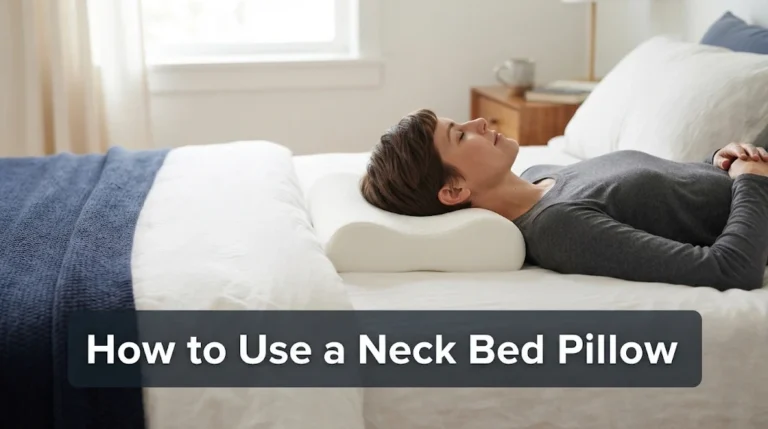
Check your sleep position as well. How to use a neck bed pillow explains how to set the pillow up before you lie down and how to check whether the height is right. The same principle applies to a standard bed pillow: set it up before you lie down, lie down on it once, and adjust it before you settle. A pillow that is adjusted after you are half asleep is usually adjusted badly.
If you wake with neck pain as well as a fallen pillow, the two problems may share a cause. A pillow that is too high, too low, or too soft can make you shift more during the night as you search for a comfortable position. Can a pillow cause neck pain or headaches is a useful next read if that pattern sounds familiar. Fixing the fit can reduce the movement that pushes the pillow off the bed.
Avoid the temptation to use a very heavy pillow to solve the problem. Weight helps a little, but a heavy pillow that is the wrong height will still be pushed, and it will be harder to adjust in the dark. Fit and friction matter more than weight.
Warning
Do not use a guard rail, strap, or heavy filler in a child’s bed or a bed shared with a small child without checking that it cannot trap a child or block them getting out of bed safely.
Common Mistakes That Make the Problem Worse
A few common habits undo the fixes above. The first is making the bed with the mattress still away from the headboard. You push the mattress tight, then you pull the sheets, and the mattress creeps back. Push the mattress last, after the sheets are tucked.
The second is using a pillowcase that is too large. A loose case lets the pillow turn inside it, so the pillow and the case move separately. A case that fits snugly moves as one piece with the pillow and grips the sheet better.
The third is stacking too many decorative pillows at the head of the bed. They look neat during the day, but at night they take up the space your sleeping pillow needs. They also create a pile that can push your pillow forward and off the bed. Move them off the bed before you sleep.
The fourth is buying a fix before testing the free ones. A wedge stopper is useful, but it will not help if the mattress is still sliding away from the headboard each night. Close the gap, tuck the sheet, and add grip first. Then, if you still need a barrier, you will know exactly what size and type to buy.
Related Product
Bed Wedge Pillow Stopper
A wedge stopper fills the gap between the mattress and headboard so your pillow has nowhere to fall.
As an Amazon Associate, we earn from qualifying purchases.
Frequently Asked Questions
Why does my pillow keep falling behind the bed?
The most common reason is a gap between the mattress and the headboard. Your pillow is pushed back a little each time you move, and the gap gives it somewhere to fall. Slippery pillowcases and a mattress that slides forward make the same problem worse.
How do I close the gap between my mattress and headboard?
Push the mattress firmly against the headboard, check that both corners touch, and tighten the frame if it is loose. If a gap remains, fill it with a wedge pillow stopper, a bolster, or a rolled blanket so the pillow meets a surface instead of empty space.
Does putting my pillow under the sheet really help?
Yes, for most people. Lay the pillow on the mattress, pull the flat sheet over its lower half, and tuck the sheet tightly under the mattress. The sheet forms a pocket that holds the pillow down while still letting you move your head freely.
What is the best pillowcase to stop a pillow sliding?
Cotton and cotton-blend cases grip better than satin or silk, because they have more friction against the sheet and the mattress. A snug-fitting case also helps, since a loose case lets the pillow turn inside it.
Will a wedge pillow stopper work on any bed?
It works when it matches the gap. Measure the width of the gap and the width of your bed before you choose one. A stopper that is too narrow will sink into the gap, and one that is too short will leave space above it for the pillow to slip through.
How do I keep my pillow on the bed if I toss and turn?
Anchor it in two places: tuck it under the top sheet and place a bolster or spare pillow behind it. Check the pillow height and fit too, because searching for a comfortable position during the night makes you move more and push the pillow further.
Conclusion
Keeping a pillow on the bed comes down to two things: closing the space it falls into, and giving it enough grip to stay put. Push the mattress to the headboard, tuck the pillow under the top sheet, and switch to a case that does not slide. If the gap is still wide, fill it with a wedge stopper or bolster and measure before you buy. Try the free fixes tonight, keep the one that works, and your pillow should still be on the bed in the morning.

I’m a home decor enthusiast who loves discovering beautiful room ideas, creative DIY projects, and Pinterest-worthy decorating inspiration. At DecorMinty, I share simple tips, fresh trends, and practical ideas to help you create a home you’ll truly love—one room at a time.