Why Do My Bed Pillows Smell? Causes, Fixes & Prevention
Quick Answer
Bed pillows usually smell because sweat, skin oils, saliva, and dead skin cells soak into the fill and feed bacteria. Trapped moisture makes it worse, and in a damp room it can turn musty from mildew. A sour smell points to body residue. A damp, earthy smell points to moisture. Find the smell type first, then clean and dry the pillow completely.
A pillow can look clean and still smell. It stays pressed against your head for seven or eight hours a night, while the case and sheets are changed far more often. That close, warm contact is why it picks up so much.
What That Smell Usually Is
Fresh sweat has little odour. The smell comes later, when bacteria break down sweat, oil, saliva, and skin cells trapped in the fabric and fill. As they feed, they release volatile compounds, and those compounds are what your nose picks up.
Not every smell comes from bacteria, though. A new foam pillow can smell chemical when first opened. A pillow washed with too much detergent can smell sour from soap residue. A pillow put away damp can smell musty from mildew. The treatment changes with the cause.
The Main Reasons Bed Pillows Start to Smell
Most smelly pillows have more than one cause at the same time. Sweat adds moisture. Oil adds food for bacteria. A damp room keeps both in place.
Sweat, skin oils, and saliva
Your scalp and face release sweat and sebum, the natural oil your skin makes, every night. Saliva adds moisture too, especially if you sleep on your side. A pillowcase catches some of this, but over weeks the residue soaks through to the cover and fill, and the oil can turn rancid. That is the stale, slightly sour smell on an older pillow, even with a fresh case.
Dead skin cells and dust mites
Skin sheds constantly, and a pillow collects a large share of it. Those cells are food for dust mites, microscopic creatures that thrive in warm, humid bedding. The mites do not smell, but their waste mixes with sweat and oil and adds to the stale character of an old pillow. Dust mite waste is also a common allergen, and it can irritate the nose and eyes.
Humidity, dampness, and mildew
Moisture turns a faint smell into a persistent one. Sleeping with wet hair, a humid bedroom, or a pillow stored in a damp cupboard leaves the fill damp for too long. Bacteria and fungi grow faster in that damp core, and mildew produces the classic musty smell. The U.S. EPA guidance on mold, moisture and your home states that indoor humidity should stay below 60 percent, ideally between 30 and 50 percent, and wet materials should be dried within 24 to 48 hours.
Hair and skin products
Leave-in conditioner, hair oil, gel, spray, makeup, and night creams transfer to the pillowcase and then to the pillow. At first they may smell pleasant. As the residue ages and mixes with sweat, it can turn stale, waxy, or sour. This is a useful clue when only one side smells, or when the smell is strongest where your hair rests.
New foam and off-gassing
A new memory foam or latex pillow can smell chemical, sweet, or plasticky when first unpacked. That is off-gassing: volatile compounds leaving the foam after manufacturing. It usually fades with airing over a few days. If it is still strong after a week of airing, check the care instructions and return policy. Do not wash a foam pillow to remove it, because soaking foam can trap water and create a musty problem.
Detergent residue and poor drying
Too much detergent, fabric softener, or a cycle that does not rinse well can leave a film inside the fill. That film traps oil and moisture, and it can smell sour once the pillow warms up at night. The same happens when a pillow is washed but not dried all the way through. The outside can feel dry while the centre is still damp, and that hidden dampness is a common reason a pillow smells worse after washing.
What Your Pillow Smell Is Telling You
| Smell | Most likely cause | Check first |
|---|---|---|
| Sour or stale | Sweat and oil broken down by bacteria | Yellow stains, oily feel |
| Musty or earthy | Trapped moisture or mildew | Damp core, dark spots |
| Chemical | New foam off-gassing | Is the pillow new? |
| Soapy after washing | Detergent residue or incomplete drying | Squeeze the centre |
How to Tell Which Cause You Have
Start with the care label. It tells you whether the pillow can be machine washed, spot cleaned only, or not washed at all. Memory foam and latex usually fall into the last two groups. Down, feather, polyester, and cotton are more often washable, but the label still decides.
Remove the case and protector, smell the pillow itself, then press the centre firmly. A pillow that feels cool and damp inside, clumps together, or springs back slowly is holding moisture. Yellow staining usually points to sweat and oil. Dark spots with a musty smell point to moisture and possible mildew.
Warning
Do not use a pillow with visible mould, large dark patches, or a strong musty smell that does not fade after cleaning and full drying. Replace it instead, especially if you have asthma or allergies. Masking the smell with spray does not remove the moisture underneath.
How to Get the Smell Out
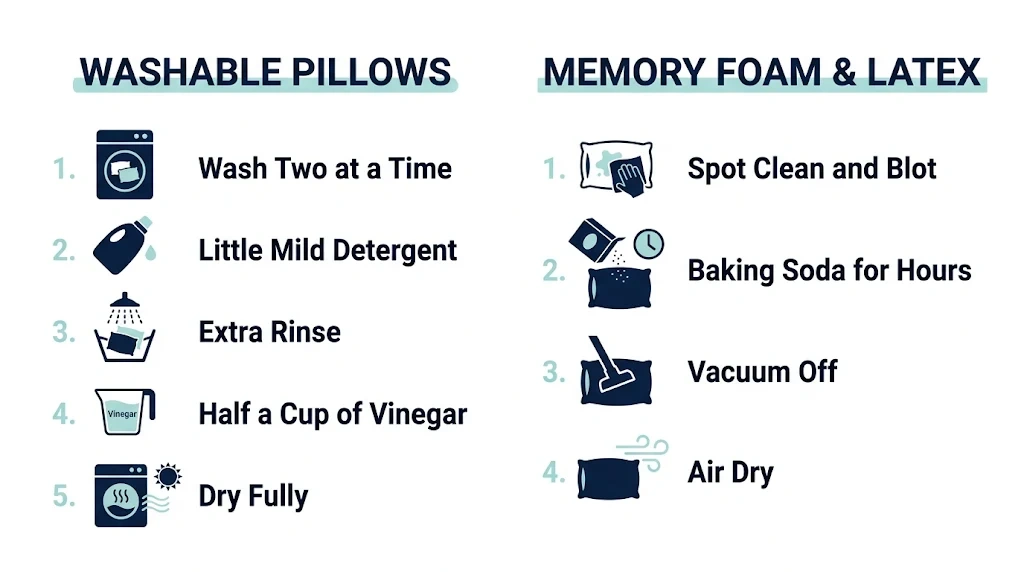
The right method depends on the fill. Washing a pillow that should only be spot cleaned can break the foam and trap water. Cleaning only the surface of a washable pillow often leaves the residue inside untouched.
For washable pillows
Wash two pillows at a time if you can. They balance the machine better and rinse more evenly. Use warm water and a small amount of mild liquid detergent, plus an extra rinse. Less detergent rinses out more completely than a full cap.
Add half a cup of white vinegar to the rinse cycle if the label allows it. Skip fabric softener, which coats fibres and can trap residue. For a step-by-step routine, our guide to how to wash a bed pillow covers machine settings, drying, and common mistakes by fill type.
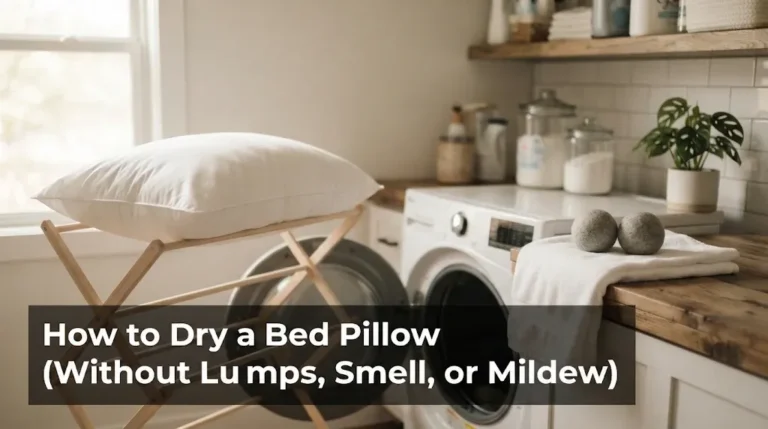
Dry the pillow completely. Tumble dry on low or medium heat with clean dryer balls, stopping every 30 minutes to fluff it and check the centre. The centre should feel warm and dry, not cool and heavy.
For memory foam and latex pillows
Do not put memory foam or latex in a washing machine or submerge it. Spot clean instead. Blot, do not rub, with a cloth dampened in warm water and a small amount of mild dish soap, then blot again with a clean damp cloth to lift the soap out.
For surface odour, sprinkle baking soda over the pillow, leave it for several hours, then vacuum it off. Baking soda absorbs moisture and odour without wetting the foam. Air the pillow in a ventilated room, turning it so both sides dry. If the foam smells musty deep inside and the smell returns quickly, the core is damp, and replacement is often the practical choice.
Tip
Dry the pillow until the centre feels warm and light, then leave it out for another hour. If you are unsure, it is still damp. Putting a slightly damp pillow back on the bed brings the smell back fast.
Why Your Pillow Still Smells After Washing
A wash that does not fix the smell usually failed in one of three places: residue was not removed, soap was left behind, or water was left behind.
If the fill is dense, a normal cycle may not push water through the centre. The outside gets clean while the core keeps its old oil and bacteria. An extra rinse and a longer cycle can help. If the smell is soapy or sour, detergent residue is the likely cause: use less detergent, skip softener, and add an extra rinse. If the smell is musty, incomplete drying is the likely cause: dry longer, fluff often, and do not use the pillow until the centre is dry.
How to Keep a Pillow From Smelling Again
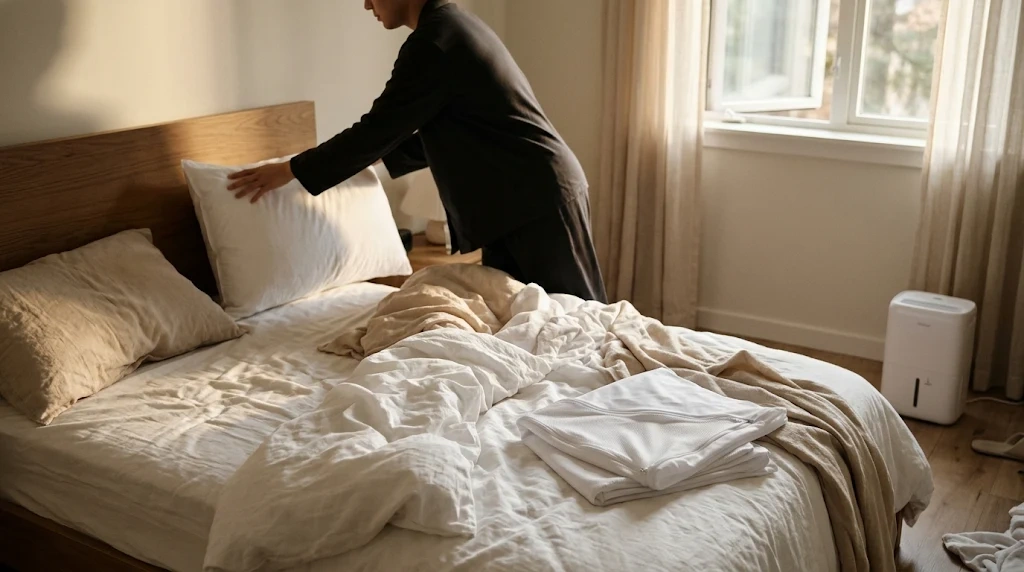
A washable pillow protector is the single most useful step. It sits between the case and the pillow, catches sweat and oil, and can be washed far more often than the pillow itself. Choose a breathable protector, not a thick plastic one that traps heat.
Wash the pillowcase weekly and the protector every one to two weeks. Do not go to bed with wet hair if you can avoid it. Air the pillow each morning: pull back the duvet, stand it upright, and let air move across it before you make the bed. That lets overnight moisture escape instead of staying trapped all day.
In a humid room, use a fan or dehumidifier to hold humidity in the 30 to 50 percent range. Replace a pillow when it no longer holds its shape, the fill clumps and will not fluff back, or the smell returns quickly after a proper wash.
Related Product
Waterproof Pillow Protector
A breathable, washable pillow protector catches sweat and oils before they reach the fill, so the pillow stays fresher for longer.
As an Amazon Associate, we earn from qualifying purchases.
Frequently Asked Questions
Why does my pillow smell even though I wash the pillowcase?
The case only catches surface residue. Sweat, oil, and saliva soak through it and settle in the cover and fill, where bacteria break them down. A fresh case can hide the smell for a night, but the pillow underneath still holds the residue.
Is a smelly pillow bad for my health?
It is usually a hygiene and comfort problem, not an emergency. Bacteria, dust mite waste, and mildew can irritate the nose, eyes, and skin, and make allergy or asthma symptoms worse.
How do I get the smell out of a pillow that cannot be washed?
Spot clean the surface, sprinkle baking soda over it for several hours, vacuum it off, and air it in a ventilated room. Do not soak memory foam or latex. If the smell is deep inside and returns quickly, the core is likely damp, and replacement is usually the practical answer.
Why does my new pillow smell chemical?
New foam pillows often release volatile compounds after unpacking, known as off-gassing. Air the pillow in a ventilated room for a few days. The smell usually fades. If it stays strong after a week, check the care instructions and return policy.
Can baking soda remove pillow smell?
Baking soda can reduce surface odour by absorbing moisture and smell, and it works well between washes. Sprinkle it on, leave it for a few hours, and vacuum it off. It does not replace washing for a pillow with deep sweat, oil, or mildew inside the fill.
When should I replace a smelly pillow instead of cleaning it?
Replace it when the smell returns within a week of a proper wash and full dry, when the fill is clumped or flat and will not fluff back, or when there is visible mould or large dark patches. A pillow that stays damp inside is also past the point where cleaning will keep it fresh.
Conclusion
A smelly bed pillow is usually a sign of residue and moisture, not a single fault. Sweat, oil, and saliva feed bacteria, and dampness lets that process continue inside the fill. Match the smell to its likely cause, clean the pillow the way its label allows, and dry it until the centre is warm and light. Then keep a washable protector on it, air it each morning, and hold the bedroom humidity down. If the smell comes back within a week of a proper wash, or the fill is clumped, flat, or mouldy, replace the pillow and start fresh.

I’m a home decor enthusiast who loves discovering beautiful room ideas, creative DIY projects, and Pinterest-worthy decorating inspiration. At DecorMinty, I share simple tips, fresh trends, and practical ideas to help you create a home you’ll truly love—one room at a time.