Best Plants for Bedroom and Bathroom: 13 Easy Picks
Quick Answer
The best plants for bedroom and bathroom spaces include spider plant, bird’s nest fern, Boston fern, peace lily, golden pothos, heartleaf philodendron, Chinese evergreen, ZZ plant, cast iron plant, parlor palm, prayer plant, baby rubber plant, and moth orchid because together they cover realistic indoor needs such as lower light, extra bathroom humidity, compact spaces, and beginner-friendly care.
Here’s the short version before you scroll further:
- Spider Plant — forgiving, cascading, and easy to propagate
- Bird’s Nest Fern — loves warm bathroom humidity
- Boston Fern — dramatic fronds but dislikes drying out
- Peace Lily — visibly droops when thirsty
- Golden Pothos — fast trailing growth in indirect light
- Heartleaf Philodendron — excellent for shelves and hanging pots
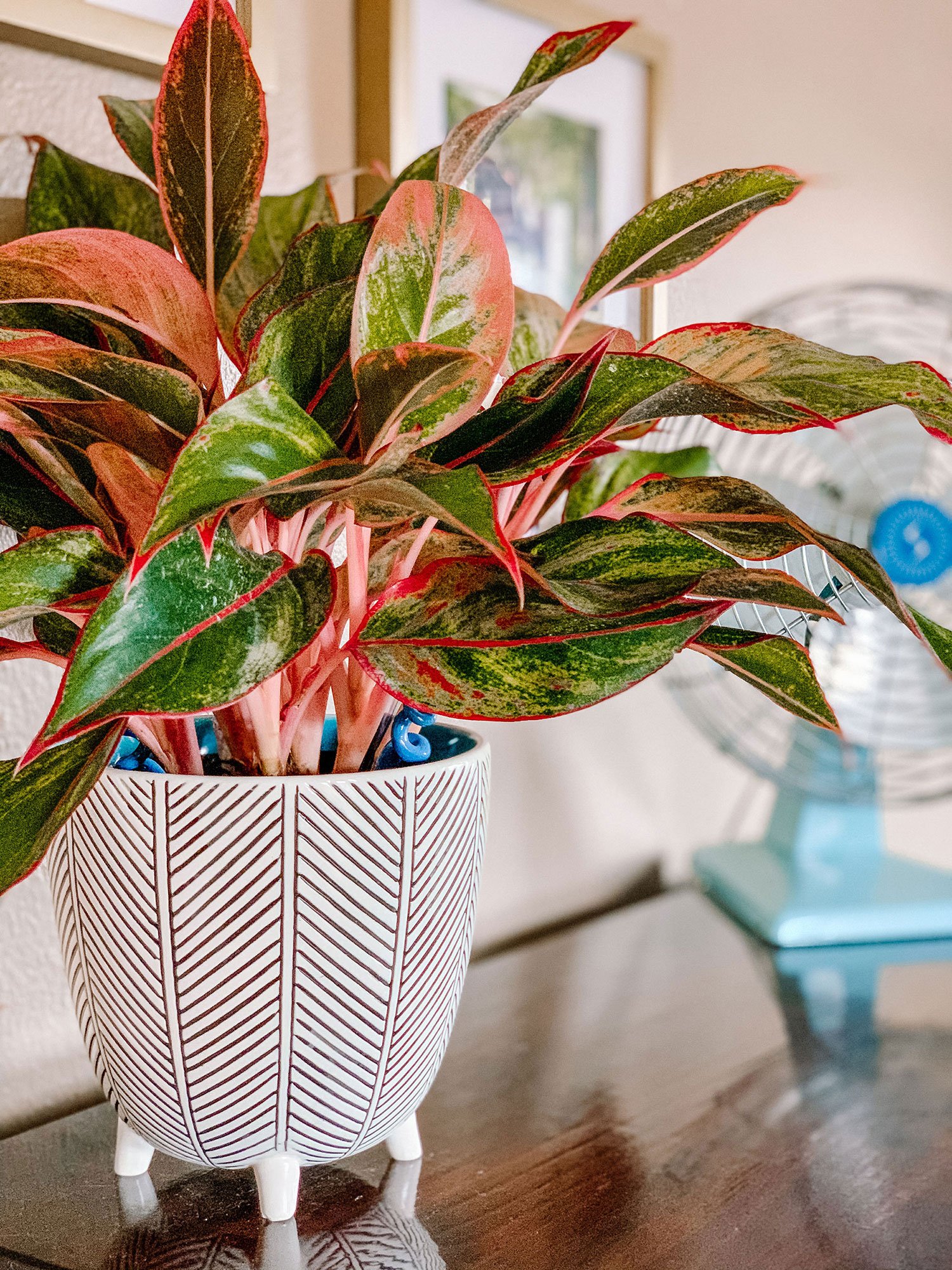
- Chinese Evergreen — colorful foliage without strong sun
- ZZ Plant — best for forgetful waterers
- Cast Iron Plant — exceptionally tolerant of dim rooms
- Parlor Palm — soft tropical height for bedrooms
- Prayer Plant — patterned leaves love added humidity
- Baby Rubber Plant — compact and resistant to occasional neglect
- Moth Orchid — long-lasting flowers for bright bathrooms
The deciding factor is your room’s actual light, not simply whether it is called a bedroom or bathroom. Humidity-loving ferns and orchids suit brighter bathrooms, while ZZ plants, cast iron plants, pothos, and similar adaptable foliage plants are easier choices for bedrooms with uneven light.
Our Top Picks at a Glance
Easiest to Care For — ZZ Plant
Best for Low Light — Cast Iron Plant
Most Beautiful Bloom — Moth Orchid
Best for Beginners — Spider Plant


13 Best Plants for Bedroom and Bathroom Spaces
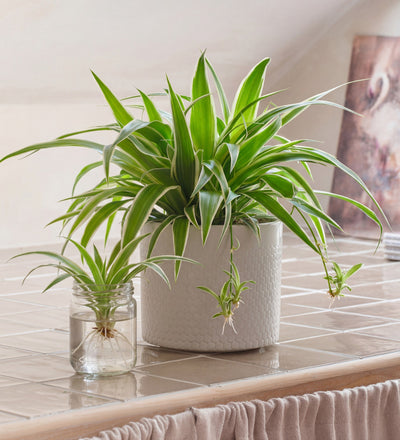
#1. Spider Plant — “The Easy Multiplier”
| Sunlight | Medium to bright indirect light; tolerates shade |
| Watering | Water when the upper soil begins drying; reduce in winter |
| Care Level | Easy |
| Bloom Time | Small flowers may appear before plantlets develop |
Chlorophytum comosum, from tropical and southern Africa, is famous for arching leaves and baby plantlets formed on long stems. Its adaptable growth makes it equally attractive on a bedroom shelf or in a bright bathroom.
It prefers evenly moist conditions but tolerates occasional drying. Brown tips can appear when salts or fluoride accumulate, so filtered water may help sensitive plants.
Trim damaged tips and remove mature plantlets for propagation. A hanging planter with drainage shows off its cascading habit without crowding a counter.
Pros
- Handles varied indoor conditions
- Propagates from plantlets easily
- ASPCA lists it non-toxic
Watch For
- Brown leaf tips
- Harsh direct sunlight
- Constantly soggy soil
#2. Bird’s Nest Fern — “The Bathroom Natural”
| Sunlight | Bright indirect light or light shade |
| Watering | Keep the growing medium consistently moist, not waterlogged |
| Care Level | Moderate |
| Bloom Time | N/A — fern reproduced by spores |
Asplenium nidus is an epiphytic fern native across tropical Southeast Asia and nearby Pacific regions. Its broad fronds form a nest-like rosette that naturally captures organic material.
Warm humidity is its biggest advantage in a bathroom. Dry air, direct heat, and harsh sunlight can quickly spoil the smooth green fronds.
Water the soil around the plant rather than repeatedly filling the central crown. Give it gentle airflow so humid conditions do not become stagnant.
Pros
- Thrives with extra humidity
- Architectural glossy foliage
- Fits shelves and counters
Watch For
- Dry indoor air
- Direct afternoon sun
- Water sitting in crown
#3. Boston Fern — “The Humidity Lover”
| Sunlight | Bright indirect light |
| Watering | Keep soil moist; do not let it fully dry |
| Care Level | Moderate |
| Bloom Time | N/A — fern reproduced by spores |
Nephrolepis exaltata is native to tropical and subtropical America and can grow into a substantial mound of arching fronds. The graceful shape looks especially good above a bathtub or on a plant stand.
Unlike drought-tolerant bedroom plants, Boston fern dislikes drying out. Higher bathroom humidity helps reduce the crispy edges that often appear in dry rooms.
Remove old brown fronds at the base and keep the soil evenly moist. Avoid leaving the pot standing permanently in water.
Pros
- Excellent humidity response
- Full cascading shape
- ASPCA lists it non-toxic
Watch For
- Drying root ball
- Crispy frond tips
- Poor air circulation
#4. Peace Lily — “The Thirst Signal”
| Sunlight | Low light tolerated; indirect light encourages flowers |
| Watering | Keep moderately moist; drooping leaves signal dryness |
| Care Level | Easy to Moderate |
| Bloom Time | Often spring and summer; may rebloom indoors |
Spathiphyllum species come from tropical regions and are grown for deep green foliage and white spathes. They tolerate lower light better than many flowering houseplants.
The leaves soften and droop noticeably when the root zone becomes too dry. That visual cue is useful, although repeated severe wilting still stresses the plant.
Cut spent flower stalks near the base and divide crowded plants when necessary. Peace lily contains insoluble calcium oxalates, so keep it away from pets that chew foliage.
Pros
- Flowers without intense sun
- Clear thirst signal
- Handles warm humidity
Watch For
- Pet toxicity if chewed
- Repeated severe wilting
- Waterlogged roots
#5. Golden Pothos — “The Fast Trailer”
| Sunlight | Bright indirect preferred; tolerates low light |
| Watering | Let the potting mix dry moderately between waterings |
| Care Level | Easy |
| Bloom Time | Rare indoors — grown for foliage |
Epipremnum aureum is an Araceae vine native to the Society Islands. Indoors, its heart-shaped leaves stay compact while vines can trail impressively from shelves.
It survives low light, although stronger indirect light usually produces fuller growth and better variegation. Letting the mix partly dry helps reduce root-rot risk.
Pinch long stems to encourage branching or root stem cuttings in water. Keep pothos out of reach of pets because its tissues contain irritating calcium oxalate crystals.
Pros
- Fast trailing growth
- Simple stem propagation
- Tolerates lower light
Watch For
- Toxicity if chewed
- Leggy low-light growth
- Overwatering
#6. Heartleaf Philodendron — “The Shelf Climber”
| Sunlight | Low to bright indirect light |
| Watering | Water after the upper layer begins drying |
| Care Level | Easy |
| Bloom Time | Rare indoors — grown for foliage |
Philodendron hederaceum originates from Mexico through tropical America. In nature it climbs, while indoors you can let its heart-shaped leaves cascade from furniture or a hanging basket.
Warm temperatures and indirect light suit it well. Pruning an overlong vine encourages branching and prevents the plant from becoming sparse.
Stem cuttings root readily, making it easy to renew an older plant. Like pothos, heartleaf philodendron contains calcium oxalates and should stay away from chewing pets.
Pros
- Flexible trailing habit
- Tolerates moderate shade
- Easy stem propagation
Watch For
- Toxicity if ingested
- Root rot from excess water
- Sparse growth in darkness
 Save
Save#7. Chinese Evergreen — “The Colorful Survivor”
| Sunlight | Diffuse or indirect light |
| Watering | Keep moderately moist in active growth; reduce in winter |
| Care Level | Easy |
| Bloom Time | May flower indoors with sufficient light |
Aglaonema species are native to tropical and subtropical Southeast Asia and New Guinea. Modern cultivars offer silver, cream, pink, or red patterns without demanding a sunny windowsill.
It appreciates warmth and humidity but can adapt to ordinary indoor air. Colder drafts are a bigger problem than slightly imperfect humidity.
Remove yellow leaves at the base and avoid continually saturated soil. Chinese evergreen is toxic if chewed, so consider placement carefully around pets.
Pros
- Colorful foliage
- Handles diffused light
- Naturally compact shape
Watch For
- Pet toxicity
- Cold drafts
- Waterlogged soil
#8. ZZ Plant — “The Forgetful Waterer’s Friend”
| Sunlight | Very low light tolerated; bright indirect is better |
| Watering | Allow soil to dry completely before watering again |
| Care Level | Easy |
| Bloom Time | Rare indoors — grown for foliage |
Zamioculcas zamiifolia is an Araceae perennial native to tropical Africa. Thick underground rhizomes store water, helping explain its exceptional drought tolerance.
Low light slows growth but usually does not immediately damage the plant. Bathroom humidity is acceptable only when the potting mix is still allowed to dry thoroughly.
Use a fast-draining mix and resist unnecessary watering. ZZ plant contains irritating crystals and should be kept away from pets and small children who may chew it.
Pros
- Outstanding drought tolerance
- Glossy upright foliage
- Handles very low light
Watch For
- Overwatering
- Pet chewing
- Direct hot sunlight
#9. Cast Iron Plant — “The Dark-Corner Veteran”
| Sunlight | Low to indirect light; avoid direct sun |
| Watering | Water regularly in growth, less during winter |
| Care Level | Easy |
| Bloom Time | Inconspicuous; grown for foliage |
Aspidistra elatior is a rhizomatous evergreen traditionally valued for surviving shade and neglect. Its upright leaves add calm greenery without spreading vines across bedroom furniture.
Direct sun can bleach or scorch the foliage, making shaded positions more appropriate. Growth is slow, so don’t expect the fast transformation you get from pothos.
Repot infrequently because unnecessary disturbance can set it back. Remove damaged leaves at soil level and allow good drainage after watering.
Pros
- Exceptional shade tolerance
- Handles occasional neglect
- Strong upright foliage
Watch For
- Very slow growth
- Direct sun scorch
- Frequent repotting
#10. Parlor Palm — “The Soft Statement”
| Sunlight | Dim to moderate indirect light |
| Watering | Water after the surface begins drying; avoid soggy soil |
| Care Level | Easy |
| Bloom Time | May flower indoors; foliage is the main feature |
Chamaedorea elegans is an understory palm native to southern Mexico and northern Central America. Multiple plants are often grouped in one container for a fuller, feathery appearance.
Its ability to tolerate dim interior conditions is why it has remained a classic houseplant. Growth is slow, which is useful when floor space is limited.
Repot only when necessary and protect the palm from cold drafts. It is listed as non-toxic to cats and dogs by the ASPCA.
Pros
- Pet-friendly choice
- Tolerates dim interiors
- Elegant floor plant
Watch For
- Spider mites
- Cold drafts
- Slow growth
#11. Prayer Plant — “The Night Mover”
| Sunlight | Bright indirect light; tolerates low to medium light |
| Watering | Keep evenly moist in active growth; reduce during winter |
| Care Level | Moderate |
| Bloom Time | Small flowers under favorable conditions |
Maranta leuconeura is a tropical member of the Marantaceae family, famous for leaves that rise into a prayer-like position at night. The patterned foliage gives small spaces plenty of personality.
High humidity and stable warmth suit it, which can make a bright bathroom easier than a dry bedroom. Direct sun fades or scorches the decorative leaves.
Divide established clumps when propagation is needed. Brown edges often point toward dry air, inconsistent watering, or mineral-heavy water.
Pros
- Striking leaf patterns
- Loves humid air
- ASPCA-listed non-toxic option
Watch For
- Low humidity
- Direct sunlight
- Cold drafts
#12. Baby Rubber Plant — “The Compact Minimalist”
| Sunlight | Bright indirect preferred; green forms tolerate lower light |
| Watering | Let soil partially dry; never keep permanently wet |
| Care Level | Easy |
| Bloom Time | Cream-colored spikes may appear indoors |
Peperomia obtusifolia is a South American member of the pepper family with glossy, spoon-shaped leaves. It stays far more compact than true rubber plants.
Its fleshy foliage stores some moisture, so overwatering is more dangerous than an occasional late watering. Non-variegated forms tolerate reduced light particularly well.
Pinch stems to keep the plant bushy and propagate healthy stem or leaf cuttings. Avoid placing it where shower water repeatedly saturates the pot.
Pros
- Compact footprint
- Tolerates brief low light
- Slow-growing and tidy
Watch For
- Root rot
- Wet bathroom soil
- Strong direct sun
:max_bytes(150000):strip_icc()/2046601_motho047_1-2000-66eca5df1ccb46148ffaab7ed2987fed.jpg) Save
Save#13. Moth Orchid — “The Bathroom Bloomer”
| Sunlight | Low to bright filtered light; east windows work well |
| Watering | Water when bark approaches dryness; never leave roots soggy |
| Care Level | Moderate |
| Bloom Time | Often winter to spring; hybrids may rebloom |
Phalaenopsis orchids are tropical epiphytes, meaning their roots naturally grow with abundant airflow rather than buried in dense soil. Warm temperatures and higher humidity make a bright bathroom surprisingly suitable.
The key is balancing humidity with drainage. Roots should receive moisture, then air, instead of remaining constantly wet inside compact potting soil.
After flowering, follow cultivar-specific spike-pruning guidance and repot when the bark breaks down. Use a bark-based orchid mix rather than ordinary garden soil.
Pros
- Long-lasting flowers
- Enjoys warm humidity
- Compact vertical shape
Watch For
- Dense potting soil
- Waterlogged roots
- Harsh direct sun
How to Choose the Right Plant for Your Space
Start with light, then consider humidity and your watering habits. The Royal Horticultural Society notes that bathrooms can suit many tropical plants when they receive adequate natural light, while truly windowless spaces require artificial plant lighting rather than a plant labeled simply “low light.”
- For darker bedrooms — ZZ plant, cast iron plant, pothos, and parlor palm are among the more forgiving choices. See our complete guide to low-light bedroom plants for more options.
- For humid bathrooms — bird’s nest fern, Boston fern, prayer plant, and moth orchid make better use of moisture in the air than drought-oriented plants.
- For pet households — always verify the exact species before buying. The ASPCA toxic and non-toxic plant database is a useful reference, and our bedroom plant guide includes additional placement ideas.
Where to Place Each Plant in Your Home
A few feet of distance can completely change how much usable light reaches a plant. Match the plant to the brightest realistic position available instead of decorating first and checking conditions later.
- Near a bright bathroom window — place moth orchids, Boston ferns, bird’s nest ferns, and prayer plants where they receive filtered light without hot direct sun.
- On bedroom shelves — pothos and heartleaf philodendron can trail downward, while baby rubber plants stay compact beside books or decor.
- In lower-light floor spaces — cast iron plants, parlor palms, and ZZ plants provide height without requiring the brightest windowsill. For especially easy options, compare our beginner bedroom plants.
- Away from pet access — peace lily, pothos, heartleaf philodendron, Chinese evergreen, and ZZ plant deserve more careful placement when curious pets are present.
Common Mistakes to Avoid
Most indoor plant problems begin with a mismatch between the room, light, and watering routine rather than a lack of expensive equipment.
Treating low light as no light — plants still need usable light for photosynthesis. Move the plant closer to a window or use a proper grow light when a bathroom receives no daylight.
Watering every plant on the same schedule — Boston fern prefers consistently moist soil, while ZZ plant needs substantial drying. A calendar cannot replace checking the potting mix.
Assuming bathroom humidity means less drainage matters — humid air does not protect roots sitting in saturated soil. Keep drainage holes clear and empty decorative cachepots after watering.
Putting shade plants in hot direct sun — prayer plants, bird’s nest ferns, and several other tropical foliage plants can scorch when moved from filtered light into intense sun.
Choosing by appearance without checking care needs — Iowa State University’s low-maintenance houseplant guidance emphasizes tolerance of light, watering, humidity, and general household conditions. Match those needs to your routine first.
If remembering plant care is your biggest challenge, our low-maintenance bedroom plant guide focuses specifically on forgiving choices.
What You’ll Need
You do not need a complicated indoor gardening setup. A few practical basics solve most everyday placement and watering problems.
A well-draining base for most foliage plants.
Lets excess water escape instead of collecting around roots.
Useful when a bathroom receives little or no usable daylight.
Keeps yellow leaves, damaged fronds, and trailing vines tidy.
Frequently Asked Questions
Q: What are the best plants for a bedroom and bathroom with low light?
A: ZZ plant, cast iron plant, pothos, parlor palm, Chinese evergreen, and heartleaf philodendron tolerate lower light better than many houseplants. They still need usable natural or artificial light.
Q: What plants are best for a humid bathroom?
A: Bird’s nest fern, Boston fern, prayer plant, and moth orchid are strong choices because they naturally appreciate higher humidity. Good light and drainage are still essential.
Q: Can plants live in a bathroom without windows?
A: Not indefinitely without another light source. A windowless bathroom needs a suitable grow light because low-light tolerance does not mean a plant can photosynthesize in complete darkness.
Q: Which bedroom and bathroom plants need the least watering?
A: ZZ plant is the standout choice because its thick rhizomes store water. Cast iron plant and pothos also tolerate some drying better than moisture-loving ferns.
Q: Are bedroom and bathroom plants safe for cats and dogs?
A: It depends on the species. Spider plant, Boston fern, parlor palm, and several prayer plants are commonly listed as non-toxic, while pothos, peace lily, philodendron, Chinese evergreen, and ZZ plant require more caution.
Q: Can I move the same plant between my bedroom and bathroom?
A: You can, but frequent changes in light, temperature, and humidity may stress sensitive plants. A stable location matching the plant’s needs is usually easier than constantly rotating rooms.
Final Thoughts
The best plant is the one that matches the light and moisture your room actually provides. Choose humidity-loving ferns and orchids for suitable bathrooms, or forgiving ZZ plants, pothos, palms, and cast iron plants for easier bedroom greenery.
Which plant are you adding to your space first? Save this post to Pinterest so you can come back whenever you need fresh plant inspo!
“`
## SECTION 2 — META & PINTEREST INFO
Focus Keyword: best plants for bedroom and bathroom
Title: Best Plants for Bedroom and Bathroom: 13 Easy Picks
Meta Description: Discover 13 best plants for bedroom and bathroom spaces, with low-light, humidity, watering, pet-safety, and beginner care tips to help you choose.
URL Slug: best-plants-bedroom-bathroom
Pinterest Pin Title: 13 Best Plants for Bedroom and Bathroom Spaces That Actually Thrive
Pinterest Pin Description: Discover the best plants for bedroom and bathroom spaces, including low-light favorites, humidity-loving ferns, easy-care picks, and beautiful indoor plants.
Note: The supplied Decorminty sitemap URL could not be retrieved successfully during research, so internal links were selected only from Decorminty pages that were independently confirmed live through search.

I’m a home decor enthusiast who loves discovering beautiful room ideas, creative DIY projects, and Pinterest-worthy decorating inspiration. At DecorMinty, I share simple tips, fresh trends, and practical ideas to help you create a home you’ll truly love—one room at a time.