best fake plants for bedroom: 10 Realistic Picks
Quick Answer
The best fake plants for bedroom decor are faux olive trees, snake plants, monstera, orchids, fiddle leaf figs, eucalyptus, Boston ferns, pothos vines, bird of paradise plants, and areca palms because these shapes translate especially well into realistic artificial greenery while covering everything from tiny nightstands to empty bedroom corners.
Here’s the short version before you scroll further:
- Faux Olive Tree — airy height without visually crowding a room.
- Faux Snake Plant — structured leaves fit narrow bedroom spaces.
- Faux Monstera — bold tropical leaves create an instant focal point.
- Faux Orchid — compact flowering style for nightstands and dressers.
- Faux Fiddle Leaf Fig — broad foliage delivers a polished designer look.
- Faux Eucalyptus — muted greenery suits calm neutral bedrooms.
- Faux Boston Fern — soft cascading fronds fill awkward shelves beautifully.
- Faux Pothos Vine — trailing stems work well on high furniture.
- Faux Bird of Paradise — oversized leaves suit modern statement corners.
- Faux Areca Palm — feathery foliage adds a relaxed resort mood.
Your best choice depends less on plant care and more on scale, realism, available floor space, and your bedroom style. Choose a shape that fits the room first, then upgrade the planter and arrange the leaves so the artificial plant looks intentionally styled.
Our Top Picks at a Glance
Best Tall Bedroom Accent — Faux Olive Tree
Best for Small Bedrooms — Faux Snake Plant
Best Tropical Statement — Faux Monstera
Best for a Nightstand — Faux Orchid


10 Best Fake Plants for Bedroom Decor
 Save
Save#1. Faux Olive Tree — “The Airy Statement”
| Sunlight | None required; check manufacturer guidance before prolonged direct sun exposure |
| Watering | None; dust leaves and branches when buildup becomes visible |
| Care Level | Very easy |
| Bloom Time | N/A — decorative artificial foliage |
A faux olive tree imitates Olea europaea, the Mediterranean evergreen known for narrow gray-green leaves and naturally irregular branching. That sparse structure is exactly what makes an artificial olive tree feel lighter than a dense tropical tree in a bedroom.
Choose branches with mixed angles rather than perfectly symmetrical foliage. Once unpacked, bend individual stems outward and rotate the tree until the silhouette looks uneven in a natural way.
A tall faux olive tree looks especially convincing when its small nursery-style base is hidden inside a textured basket or ceramic planter.
Pros
- Adds height without dense foliage
- Works with modern and Mediterranean decor
- Easy to reshape after shipping
Watch For
- Overly glossy leaves
- Visible plastic trunk joints
- Bases that look too small for the tree
#2. Faux Snake Plant — “The Space Saver”
| Sunlight | None required |
| Watering | None; wipe broad leaves as dust becomes visible |
| Care Level | Very easy |
| Bloom Time | N/A — decorative artificial foliage |
The snake plant form, modeled after Dracaena trifasciata, is one of the easiest silhouettes to reproduce convincingly because its leaves are naturally firm and upright. It brings greenery upward instead of spreading across valuable bedroom floor space.
Look for varied leaf heights and subtle striping rather than identical blades. A few leaves leaning outward make the arrangement appear much more believable.
This style fits beside a dresser, in a tight corner, or beside a bedroom desk. Choose a heavier decorative pot if the artificial plant feels top-heavy.
Pros
- Small footprint
- Naturally structured appearance
- Easy leaves to wipe clean
Watch For
- Identical leaf patterns
- Thin bases that tip easily
- Unnaturally bright green plastic
#3. Faux Monstera — “The Tropical Focal Point”
| Sunlight | None required |
| Watering | None; wipe both sides of large leaves periodically |
| Care Level | Easy |
A faux monstera copies the dramatic foliage of Monstera deliciosa, a tropical climbing plant native to parts of Central America. Its recognizable split and perforated leaves make a strong decorative statement even when you use only one plant.
Realistic versions mix leaf sizes and slightly different shades of green. Bend the wired stems in several directions instead of leaving every leaf facing straight forward.
If you want more control over the shape, look for an artificial monstera with adjustable stems. Keep it clear of busy furniture so the leaf shape remains visible.
Pros
- Instant visual impact
- Distinctive leaf silhouette
- Adjustable stems are easy to style
Watch For
- Flat leaves after shipping
- Excessive artificial shine
- Oversized foliage in tiny rooms
#4. Faux Orchid — “The Bedside Polisher”
| Sunlight | None required |
| Watering | None; use gentle dusting around petals |
| Care Level | Easy |
Artificial orchids typically imitate Phalaenopsis orchids, prized in real form for arching flower spikes and broad leaves. The compact footprint makes the faux version useful when you want floral detail without sacrificing much surface space.
Choose petals with gentle color variation and stems that curve rather than standing perfectly vertical. Artificial moss or bark around the base helps disguise construction materials.
Keep the arrangement simple. One well-proportioned orchid on a dresser often looks more convincing than several small faux arrangements crowded together.
Pros
- Small-space friendly
- Adds flowers without maintenance
- Works with polished decor
Watch For
- Fabric petals that trap dust
- Perfectly identical flowers
- Visible foam around the base
 Save
Save#5. Faux Fiddle Leaf Fig — “The Designer Favorite”
| Sunlight | None required |
| Watering | None; broad leaves are easy to wipe individually |
| Care Level | Easy |
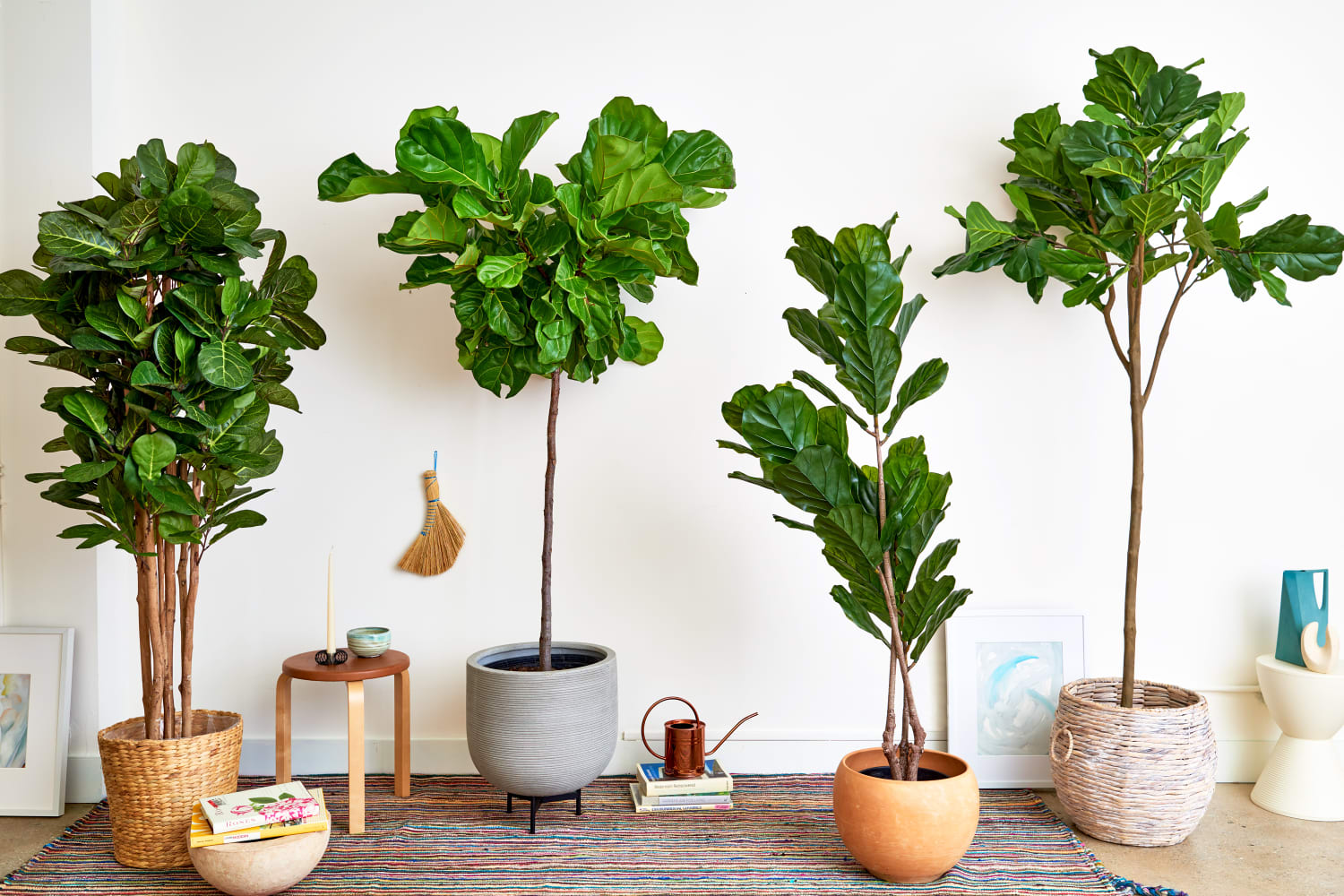
The fiddle leaf fig shape comes from Ficus lyrata, a West African species recognized for its large violin-shaped leaves. Artificial versions preserve that sculptural shape without the environmental sensitivity associated with keeping the real tree indoors.
For realism, favor matte leaves with visible veins and slightly different angles. A trunk with natural-looking variation also makes a major difference on taller models.
Place it where the broad canopy has breathing room. Crowding large leaves against curtains or furniture makes the plant look compressed instead of intentional.
Pros
- Strong designer-style silhouette
- Fills vertical bedroom space
- Broad leaves clean quickly
Watch For
- Plastic-looking leaf surfaces
- Straight, uniform trunks
- Too much bulk beside the bed
#6. Faux Eucalyptus — “The Calm Minimalist”
| Sunlight | None required |
| Watering | None; shake or wipe stems to control dust |
| Care Level | Very easy |
Faux eucalyptus usually copies the rounded, blue-green juvenile foliage seen in several Eucalyptus species. Its muted coloring is useful when bright emerald greenery would compete with a soft bedroom palette.
A small bunch works in ceramic pitchers, glass vases, or narrow bedside vessels. Vary the stem heights rather than cutting or arranging them into one perfectly even dome.
You can find artificial eucalyptus stems separately, which makes it easy to adjust fullness for different vase sizes.
Pros
- Soft muted color
- Easy to mix with existing decor
- Works in very small arrangements
Watch For
- Repeated leaf spacing
- Visible wire stems
- Overfilling a narrow vase
#7. Faux Boston Fern — “The Softener”
| Sunlight | None required |
| Watering | None; use a soft duster between fine fronds |
| Care Level | Easy |
The Boston fern form is based on Nephrolepis exaltata, known for long arching fronds made up of many smaller leaflets. That feathery texture softens hard furniture edges better than stiff upright artificial plants.
Spread the outer fronds horizontally after unpacking and leave several lower pieces hanging naturally. The result should look slightly untamed rather than perfectly round.
Fine artificial fern foliage collects dust more readily than broad faux leaves, so choose this style only if you’re comfortable giving it occasional detailed cleaning.
Pros
- Soft cascading texture
- Fills wide shallow spaces
- Useful for shelf styling
Watch For
- More surfaces for dust to settle
- Crushed fronds after shipping
- Overly symmetrical shapes
#8. Faux Pothos Vine — “The Shelf Draper”
| Sunlight | None required |
| Watering | None; dust trailing vines periodically |
| Care Level | Very easy |
Faux pothos imitates Epipremnum aureum, a tropical vine famous for heart-shaped leaves and trailing growth. Artificial versions let you create that cascading look on shelves where maintaining a live pot might be inconvenient.
Choose vines with several lengths and avoid arranging them in parallel lines. Allow one or two strands to cross naturally while leaving enough empty wall space around them.
This is one of the strongest choices for renters because it adds greenery without occupying valuable floor space. Keep trailing pieces away from walkways and anywhere they can easily snag.
Pros
- Uses vertical space
- Ideal for shelves
- Easy to rearrange
Watch For
- Repetitive printed leaves
- Visible attachment points
- Long vines creating clutter
#9. Faux Bird of Paradise — “The Modern Statement”
| Sunlight | None required |
| Watering | None; wipe oversized leaves individually |
| Care Level | Easy |
The bird of paradise silhouette usually draws from Strelitzia nicolai, which develops long stalks topped by broad paddle-shaped leaves. In faux form, those big leaves can fill a blank corner with fewer stems than a palm or fern requires.
Scale matters here. A large artificial bird of paradise can overwhelm a compact bedroom, so measure both ceiling height and available width before buying.
Once positioned, angle the tallest leaves upward and the outer leaves farther sideways. That staggered profile keeps the plant from looking like a flat fan.
Pros
- Large visual impact
- Clean contemporary silhouette
- Easy-to-clean broad leaves
Watch For
- Can dominate small bedrooms
- Creased leaves after shipping
- Thin stems on inexpensive models
 Save
Save#10. Faux Areca Palm — “The Relaxed Escape”
| Sunlight | None required |
| Watering | None; dust between narrow leaflets as needed |
| Care Level | Easy |
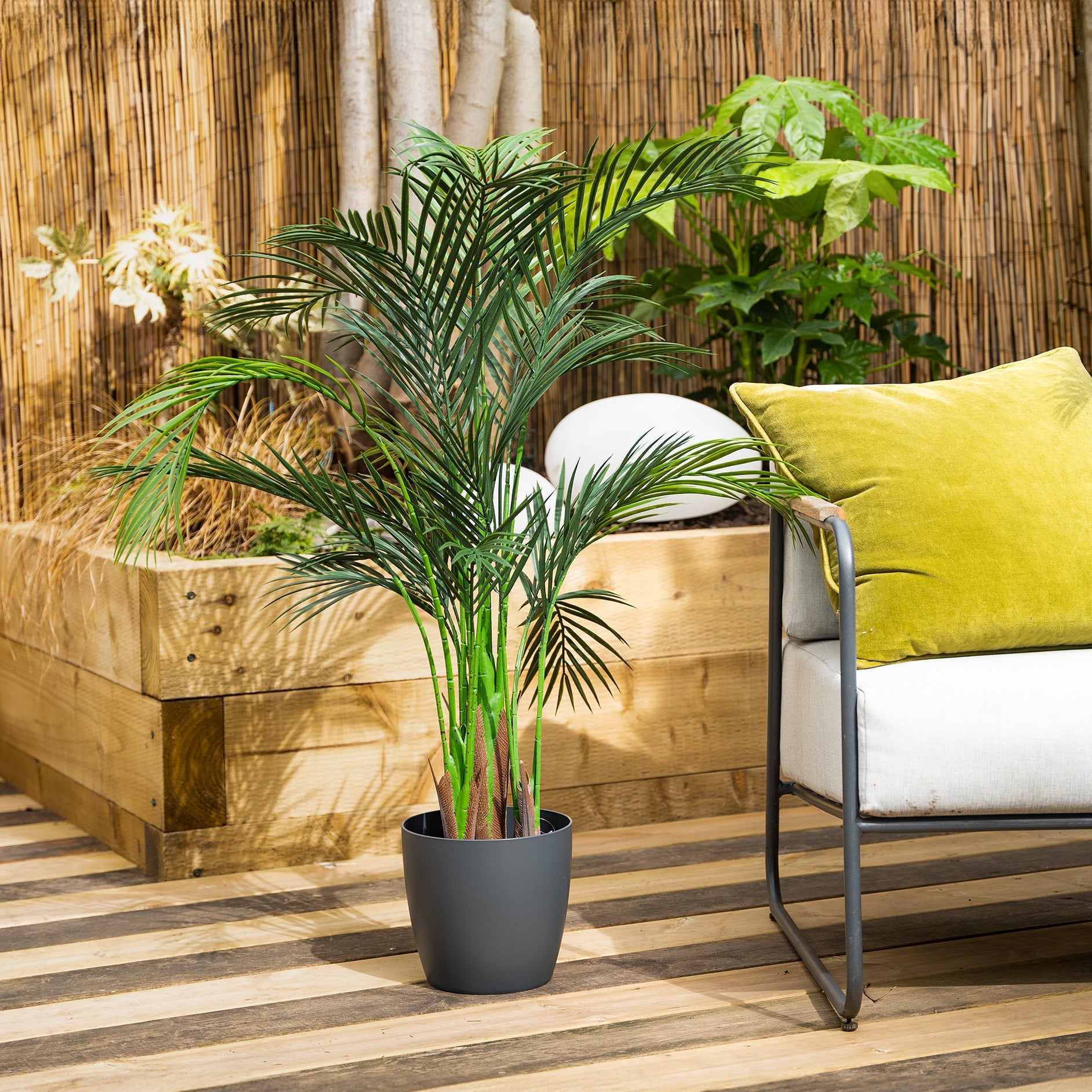
The areca palm shape comes from Dypsis lutescens, a clustering palm native to Madagascar. Its long arching fronds create a softer, more relaxed outline than the broad leaves of monstera or bird of paradise.
Choose a faux palm with fronds at multiple heights and several shades of green. Pull the stems apart gently after unpacking so light and empty space remain visible between them.
A palm works best where it can spread without blocking drawers, doors, or walking paths. A woven basket around the base strengthens the casual resort-inspired effect.
Pros
- Soft tropical atmosphere
- Fills broad empty corners
- Pairs naturally with woven decor
Watch For
- Fine leaves require more dusting
- Cheap fronds can look flat
- Needs more width than an upright plant
How to Choose the Right Fake Plant for Your Bedroom
The most realistic artificial plant isn’t automatically the best one for your room. Size, leaf texture, placement, and surrounding decor matter just as much.
- Match the plant to the available space — Use upright snake plants in narrow gaps, trailing pothos on shelves, and taller trees only where the canopy can spread comfortably.
- Look for natural irregularity — Mixed leaf sizes, slightly uneven branches, matte surfaces, visible vein details, and adjustable stems generally create a more believable result than perfect symmetry.
- Don’t buy faux greenery for air purification — Artificial plants don’t perform biological air-cleaning functions. The U.S. Environmental Protection Agency’s indoor air quality guidance also notes that even a reasonable number of live houseplants hasn’t been shown to remove significant quantities of pollutants in ordinary homes and offices.
- Treat greenery primarily as visual decor — Research comparing visual exposure to real plants, artificial plants, plant photographs, and no plants found stronger physiological relaxation responses from real plants, although artificial greenery still provides a plant-like visual element. You can review the NIH-indexed foliage-visualization study if you want the research details.
Where to Place Fake Plants in a Bedroom
Good placement makes an average faux plant look more intentional. Start with areas that feel visually empty rather than adding greenery everywhere at once.
- Beside a dresser — A tall olive tree, fiddle leaf fig, or snake plant balances the weight of a wide dresser and adds vertical interest.
- On a nightstand — Keep the scale restrained. A small faux orchid or eucalyptus arrangement adds detail while leaving room for a lamp, phone, and everyday essentials.
- On a high shelf — Trailing pothos or a soft fern breaks up hard shelf lines and brings greenery into rooms with limited floor space.
- In an empty corner — Bird of paradise, olive trees, and palms work well when the corner has enough width for leaves to spread without interfering with curtains or furniture.
Common Mistakes to Avoid with Fake Bedroom Plants
Most faux greenery looks disappointing because of styling mistakes, not because artificial plants are automatically unrealistic.
Leaving branches compressed after shipping — Artificial stems are often packed tightly. Spreading and bending them is usually essential for creating a fuller, less manufactured-looking silhouette.
Keeping the original plastic nursery pot visible — A tiny molded base immediately gives away many artificial trees. Place it inside a properly scaled basket, ceramic planter, or decorative cover pot.
Ignoring dust until the leaves look gray — Dust settles on stationary foliage and exaggerates its artificial appearance. Broad leaves can be wiped, while detailed fern or palm foliage benefits from a soft duster.
Choosing a plant that is too large for the room — A six-foot tropical plant can make a compact bedroom feel smaller. Measure both floor width and canopy space before ordering.
Using too many small faux plants together — Repeating miniature pots on every surface creates visual clutter. One larger, convincing plant often feels calmer and more intentional in a bedroom.
What You’ll Need to Keep Faux Greenery Looking Good
Artificial plants need very little maintenance, but a few inexpensive styling tools make them easier to keep presentable.
Useful for routine dust removal without repeatedly moving the plant.
Hides small plastic bases and gives tall artificial plants better visual proportion.
Helps disguise foam, glue, and construction details around tabletop arrangements.
The Simplest Way to Make a Fake Plant Look More Expensive
One of the most noticeable mistakes above is leaving a tiny plastic nursery base exposed. A properly sized decorative planter or woven basket instantly gives a tall artificial plant better proportion and helps hide obvious construction details.
Frequently Asked Questions
Q: Are fake plants good for bedrooms?
A: Yes, when your goal is low-maintenance greenery and visual decoration. They don’t require watering or suitable growing light, making them particularly convenient for dark corners and busy households.
Q: Which fake plant looks the most realistic?
A: Olive trees, snake plants, monstera, and high-quality orchids are strong choices because their distinctive natural shapes translate well into artificial materials. Construction quality still matters more than the plant name alone.
Q: Where should I put fake plants in a bedroom?
A: Try tall faux plants beside dressers or in empty corners, compact orchids on nightstands, and trailing greenery on shelves. Keep pathways, drawers, and frequently used surfaces clear.
Q: Do artificial plants improve bedroom air quality?
A: No. Fake plants are decorative objects and don’t biologically filter indoor air. If air quality is your concern, address ventilation and pollutant sources rather than relying on artificial greenery.
Q: How do you make fake plants look less fake?
A: Spread and bend the branches, vary leaf angles, hide the original base, use a realistic planter, and remove dust regularly. Avoid arranging every stem at the same height or angle.
Q: How often should you clean fake bedroom plants?
A: Clean them whenever visible dust starts collecting rather than following a rigid schedule. Broad artificial leaves are easy to wipe, while ferns and palms may need a soft duster to reach between smaller leaflets.
Final Thoughts
The best fake plants for bedroom decor are the ones that match your room’s scale and look convincing from the places you actually see them. An airy olive tree, compact snake plant, statement monstera, or small orchid can add greenery without turning plant care into another task.
Focus on realistic texture, natural irregularity, good placement, and a planter that suits the plant’s size. Those details usually matter far more than buying the biggest or most expensive option.
Which plant are you adding to your space first? Save this post to Pinterest so you can come back whenever you need fresh plant inspo!

I’m a home decor enthusiast who loves discovering beautiful room ideas, creative DIY projects, and Pinterest-worthy decorating inspiration. At DecorMinty, I share simple tips, fresh trends, and practical ideas to help you create a home you’ll truly love—one room at a time.