How to Get Rid of Bed Bugs From a Pillow: Safe Steps
Quick Answer
Yes, you can get rid of bed bugs from a pillow, but heat does most of the work. Remove the pillowcase, seal the pillow in a bag, and dry it on high heat for at least 30 minutes so the centre reaches at least 120°F (49°C). Wash it first only if the care label allows it. Then vacuum the bed area, check the mattress and frame, and use a bed bug-proof encasement. If bugs keep returning, or the infestation is beyond the pillow, call a pest professional.
Finding bed bugs near your face is unsettling, and it is natural to want the pillow fixed or gone right away. The good news is that a pillow is one of the easier items to treat, because it is small, portable, and often dryer-safe. The harder part is remembering that a pillow is rarely the whole problem.
Bed bugs usually hide in mattress seams, the bed frame, headboard joints, and nearby cracks. A pillow can hold them, especially around seams and zips, but treating only the pillow while the bed stays infested will not solve it. Treat the pillow first, then treat the bed around it.
Can Bed Bugs Live in a Pillow?
Yes. Bed bugs can live on and around a pillow, although they usually prefer firmer, tighter hiding places such as mattress piping, box spring edges, and bed-frame joints.
A pillow is warm, close to your body, and close to the carbon dioxide you breathe out while you sleep. That makes it a convenient feeding spot. Bed bugs are most likely to hide along the pillow seam, under a zip, inside a fold, or between the pillow and its case. Living deep inside loose filling is less common, because the filling shifts and does not give them the firm, narrow shelter they prefer for laying eggs.
That distinction matters. If you find bugs only on the pillow surface or seam, heat treatment has a good chance of working. If you also find them in the mattress, frame, or walls, the pillow is a symptom of a wider infestation, not the source.
Bed bugs are about the size of an apple seed when fully grown, flat, oval, and reddish-brown after feeding. Nymphs are smaller and paler. Eggs are tiny, white, about 1 mm long, and often found in clusters in seams and creases.
How to Tell If a Pillow Has Bed Bugs
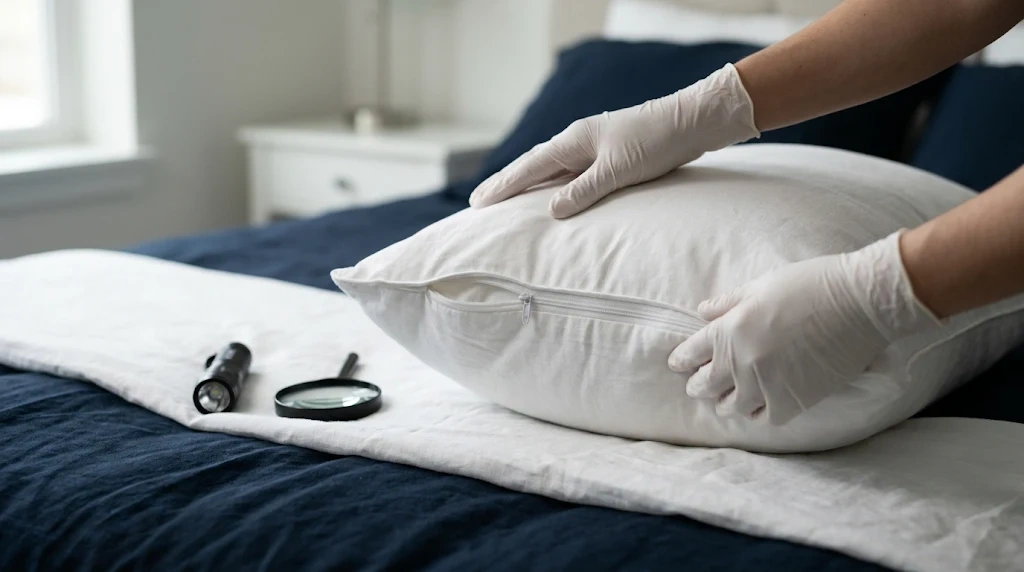
Do not rely on bites alone. Bites can look like mosquito bites or other skin irritation, and some people do not react at all. Look for physical evidence on the pillow, case, and nearby bedding.
- Small dark spots: Tiny black or dark brown specks, like ink dots or ground pepper. These are dried faecal spots. They may smear if wiped with a damp cloth.
- Rusty or reddish stains: Smears left when a bed bug is crushed after feeding.
- Shed skins: Pale, translucent cast skins left behind as nymphs grow.
- Live bugs or eggs: Adults are apple-seed sized and reddish-brown. Eggs are tiny, white, and sticky, usually tucked into seams.
- A musty or sweet smell: A faint odour can appear with a larger infestation, but its absence does not mean the pillow is clear.
- Bites in a line or cluster: Itchy bumps on the face, neck, or arms after sleeping can support the other signs, but they are not proof on their own.
Inspect in bright light. Remove the pillowcase and protector, turn the pillow slowly, and check every seam, piping, zip, label, and fold. Use a torch and a magnifying glass if you have one. Check the second pillow, the mattress seams, and the headboard too, before you decide how far the problem reaches.
If you find a live bug, take a clear photo and keep the bug in a sealed jar or bag if you can do so safely. That helps a pest professional confirm the identification and choose the right treatment.
Key Insight
Washing alone is not the reliable killer. Heat in the dryer is. The U.S. Environmental Protection Agency notes that washing generally will not kill bed bugs, while putting bedding and clothing in a dryer on high heat for 30 minutes can. The pillow must actually reach the lethal temperature all the way through.
What to Do First: Isolate the Pillow
Act before you shake, fluff, or carry the pillow around the house. Bed bugs and eggs can fall off during handling and start a new hiding place in another room.
Put on disposable gloves if you have them. Slide the pillow, still in its case if possible, into a large plastic bag and seal it. Do the same for the pillowcase, protector, sheets, and any nearby washable bedding. Carry the sealed bags directly to the washing machine or dryer.
Do not put an infested pillow on another bed, sofa, or chair. Do not store it in a closet with clean linen. If you need to wait before treatment, keep it sealed in the bag in the same room.
Vacuum the bed frame, mattress seams, headboard, bedside table, and floor around the bed before you bring a treated pillow back. Empty the vacuum immediately into a sealed bag and take it outside. A vacuum removes some bugs and eggs, but it does not replace heat treatment.
How to Get Rid of Bed Bugs From a Pillow: Step by Step
The safest home method is a careful heat routine, followed by containment and room checks. Follow the care label at every stage. Heat that is strong enough to kill bed bugs can also damage some fills.
Step 1: Check the care label
Read the label before you wash or dry anything. It tells you whether the pillow can be machine washed, tumble dried, and at what temperature. Down, feather, polyester, and many cotton pillows are often washable. Memory foam, latex, buckwheat, and some wool pillows usually are not.
If the label says do not wash, do not tumble dry, or dry clean only, skip to the non-wash options below. Forcing heat through a pillow that cannot take it can ruin the fill and still leave cool pockets where bugs survive.
Step 2: Dry on high heat first
For dryer-safe pillows, the dryer is the most useful first step. Empty the sealed bag directly into the dryer, without shaking the pillow in the laundry area. Discard the bag outside.
Run the dryer on high heat for at least 30 minutes. Thick down or gel pillows may need 45 to 60 minutes, because the centre warms more slowly than the surface. Do not overload the dryer. Heat must circulate around the pillow, not just warm its outside.
The target is sustained heat of at least 120°F (49°C) through the pillow, not just hot air in the drum. If the pillow still feels cool or damp in the centre after 30 minutes, run it longer. A longer, uninterrupted cycle is more reliable than two short cycles with cooling in between.
Step 3: Wash, then dry again if the label allows
If the pillow is washable, wash it after the first dry cycle, or wash it first and then dry it on high heat. Use the hottest water the label allows, with a normal amount of detergent. Wash two pillows at a time if your machine allows it, so they balance and clean evenly.
Move the pillow straight from the washer to the dryer. Do not leave it damp in the machine or in a laundry basket. Dry it fully on high heat for at least 30 minutes. A pillow that stays damp in the centre can develop mildew, and damp filling can also protect bugs from heat.
Our guide to how to wash a bed pillow explains which fills can go in the machine and which should stay out. If you are unsure about the fill, treat the pillow as non-washable and use the options below.
Step 4: Steam, vacuum, and freeze when washing is not possible
Steam can help on the surface and seams when a pillow cannot be washed. Use a steamer that reaches at least 130°F (54°C) at the surface, move it slowly, and cover every seam and fold. Steam kills on contact, but it does not stay hot inside thick filling, so do not rely on it alone for a dense pillow.
Vacuum the pillow after steaming, paying extra attention to seams, zips, and labels. Use a crevice tool if you have one. Seal and discard the vacuum contents outside right away.
Freezing is another option, but only in a freezer that holds 0°F (-18°C) or below. Seal the pillow in a bag, leave it for at least four days, and do not open the bag until it has returned to room temperature. A household freezer that is opened often, or one that does not stay cold enough, may not work. This method is slow and impractical for a thick pillow, and it is not a substitute for treating the bed.
Step 5: Encase the pillow
After heat treatment, put the pillow in a zippered encasement labelled bed bug-proof. The encasement should fully surround the pillow, with no gaps at the zip. It traps any bug that survived inside and stops new bugs from hiding in the seams.
Leave the encasement on. Removing it early defeats the purpose. Check it regularly for tears and replace it if the zip fails. Encase the mattress and box spring too if they are part of the same bed, because bugs move between the pillow and the mattress at night.
Step 6: Treat the bed and room, then repeat
A clean pillow will be reinfested if the bed is still active. Wash all bedding on hot water where the label allows, then dry on high heat. Vacuum mattress seams, the bed frame, headboard, skirting boards, and nearby furniture. Declutter the area around the bed so there are fewer hiding places to check.
Repeat the inspection weekly for at least a few weeks. Look for new faecal spots, shed skins, eggs, and live bugs. One treatment can miss eggs tucked deep in a seam, and eggs can hatch after the first heat cycle. A second check is not overkill. It is how you know whether the first treatment worked.
Tip
Dry clean items straight from a sealed bag, and bag them again in a clean bag after treatment. The gap between the dryer and the bed is when reinfestation often happens.
Best Method by Pillow Type
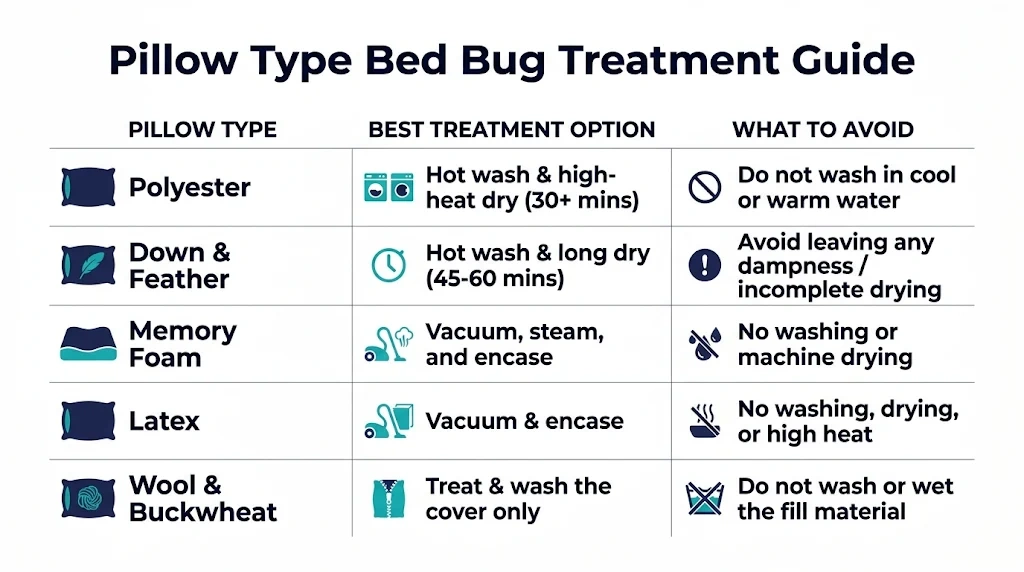
The right method depends on the fill. A method that works for polyester can destroy latex, and a method that is safe for latex may not reach a lethal temperature inside a thick down pillow.
| Pillow type | Best first option | What to avoid |
|---|---|---|
| Polyester / synthetic fill | Hot wash if allowed, then high-heat dry for 30 minutes or more | Leaving it damp in the centre |
| Down / feather | Hot wash if allowed, then long high-heat dry, 45 to 60 minutes | Short drying that leaves the core cool |
| Memory foam | Vacuum, steam the cover and seams, encase, seek professional advice | Machine washing or tumble drying |
| Latex | Vacuum, encase, contact the maker and a pest professional before heat or steam | Machine washing, drying, or high heat |
| Wool / buckwheat | Remove the cover for heat treatment, vacuum the fill area, encase if possible | Washing the fill unless the label clearly allows it |
If you cannot identify the fill, check the label and the maker’s care page. When in doubt, use the gentler route — vacuum, steam the seams, encase, and get professional advice — rather than risking a wash or dry cycle that ruins the pillow without killing the bugs inside.
For general cleaning after treatment, our guide to how to clean a bed pillow covers stain and smell removal by fill type, which is useful once you know the pillow is bug-free.
What Does Not Work Well
Several common ideas sound helpful but are unreliable, unsafe, or incomplete on their own.
Sunlight alone. A pillow left in the sun may feel hot on the surface, but the centre often stays below the lethal temperature. Do not rely on a sunny day to treat a thick pillow.
Turning up the heating. Raising the room temperature with a thermostat, space heater, or fireplace does not create the even, sustained heat needed to kill bed bugs and eggs, and it can be dangerous. Professional whole-room heat treatment uses specialist equipment and monitoring. Do not try to copy it at home.
Rubbing alcohol. Alcohol can kill bugs it touches, but it is flammable, evaporates quickly, and does not reach eggs hidden in seams. Spraying it generously on bedding creates a fire risk and is not a reliable treatment.
Bug bombs and foggers. Total-release foggers often push bed bugs deeper into hiding places and can leave pesticide where you sleep. They are not recommended for bed bug control, and they do not replace targeted treatment.
Spraying the pillow with insecticide. Only use a product that is registered for bed bugs and labelled for use on bedding, and follow the label exactly. Never use a general household spray on a pillow you will sleep on. Many sprays are not meant for fabric that touches skin, and a spray alone rarely reaches eggs. If you use a pesticide, treat it as one part of a wider plan, not as the whole fix.
Diatomaceous earth on a pillow. This powder is sometimes used in cracks and crevices, but it should not be spread on a pillow or bedding where you breathe and sleep. It can irritate lungs and skin, and it works slowly, if at all, in that setting.
Warning
Do not use a pesticide on a pillow unless the label specifically allows that use. Keep children and pets away during treatment, air the room as the label directs, and wash your hands after handling treated fabric. If the label is unclear, do not use it on bedding.
When to Throw a Pillow Away
Most washable pillows can be saved with heat. Replace the pillow when the risk of keeping it is higher than the cost of a new one.
Consider disposal if the pillow is heavily infested, torn open, badly stained, or cannot be heat-treated because of its fill. A pillow that has lost its shape, smells strongly even after cleaning, or has a broken zip that cannot be encased properly is also a good candidate for replacement.
Seal the pillow in a heavy-duty plastic bag before you move it. Label the bag if your local rules ask for it, and follow local disposal guidance. Do not leave an infested pillow on the street, in a hallway, or in a shared bin area where someone else might pick it up.
Do not replace the pillow and put the new one on the same untreated bed. Treat the mattress, frame, and room first, or the new pillow can become infested within days.
When to Call a Pest Professional
Call a professional if you find bed bugs in more than one place, if they return after two careful heat treatments, or if you cannot identify the fill or safely heat-treat the pillow.
A professional can inspect the mattress, frame, headboard, and nearby furniture, confirm the species, and use integrated pest management. That approach combines inspection, vacuuming, heat or steam where suitable, encasements, and targeted pesticide use where the label allows it. The U.S. Environmental Protection Agency describes this combined approach and the heat and cold thresholds that guide it.
Ask what the treatment covers, how many visits are expected, and what you need to do before and after each visit. A single spray visit rarely ends a bed bug problem. Follow-up inspections matter, because eggs can hatch after the first treatment.
If you rent, tell your landlord or building manager early. Bed bugs can move between rooms and flats, and a building-wide problem needs a coordinated response.
How to Stop Bed Bugs Coming Back to Your Pillow
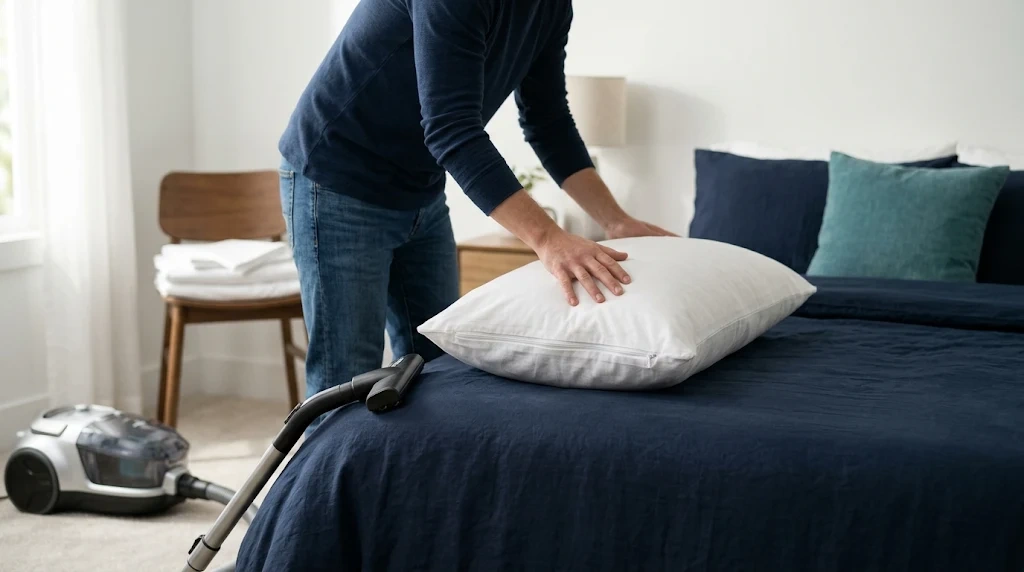
Prevention is mostly about reducing hiding places and catching a new problem early.
- Keep bed bug-proof encasements on pillows, mattress, and box spring, and check them for tears.
- Wash pillowcases and sheets weekly in hot water where the label allows, then dry on high heat.
- Vacuum mattress seams, the bed frame, and the floor around the bed regularly, and empty the vacuum outside.
- Move the bed a few centimetres from the wall and headboard, and reduce clutter under and beside the bed.
- After travel, seal luggage contents in bags, put washable items straight into a hot dryer, and inspect luggage away from the bed.
- Inspect second-hand bedding, pillows, and bed frames before bringing them into the bedroom.
Keep a simple routine: check seams when you change the sheets, look for dark spots when you wash the case, and act on the first sign rather than waiting for bites to appear. Early detection makes heat treatment far more likely to work.
Related Product
Bed Bug-Proof Pillow Encasement
A zippered encasement traps any bugs left inside after heat treatment and stops new bugs hiding in the seams.
As an Amazon Associate, we earn from qualifying purchases.
Frequently Asked Questions
Can you sleep on a pillow after bed bug treatment?
Yes, once the pillow is fully dry, aired, and encased, and any pesticide used was labelled for bedding and applied exactly as directed. If you used a spray, wait for the drying and re-entry time on the label. If you are unsure, sleep on a fresh pillow and keep the treated one sealed until you have checked it again.
Does washing a pillow in hot water kill bed bug eggs?
Hot water can help, but it is not reliable on its own. Eggs need sustained heat, and a wash cycle may not hold the centre of a thick pillow at a lethal temperature for long enough. A high-heat dryer cycle after washing is the more reliable step, because it can hold heat through the pillow for 30 minutes or more.
How long do bed bugs live in a pillow without feeding?
Bed bugs can survive for weeks to months without a blood meal, depending on temperature, humidity, and life stage. In cool conditions, some can survive much longer. That is why sealing an untreated pillow in a bag for a few days is not enough. Heat, freezing at 0°F for at least four days, or a sealed encasement left in place are more reliable than waiting.
Can bed bugs live inside a memory foam pillow?
They are unlikely to live deep inside solid foam, but they can hide in the cover, seams, zip, and surface indentations. Do not machine wash or tumble dry memory foam. Vacuum it thoroughly, steam the cover and seams where the maker allows it, encase it, and ask a pest professional if you find live bugs or eggs.
Do pillow encasements kill bed bugs?
An encasement does not kill bugs instantly. It traps them inside, stops them feeding, and prevents new bugs from hiding in the pillow. Bugs trapped inside will eventually die, but the encasement must stay on, fully zipped, and undamaged. It works best after heat treatment, not instead of it.
Why do bed bugs keep coming back to my pillow?
They usually return because the source is still active in the mattress, bed frame, headboard, or nearby furniture. Eggs may also have hatched after the first treatment. Re-check the whole bed, repeat heat treatment for washable items, keep encasements on, and call a professional if the signs return after two careful rounds.
Conclusion
Getting rid of bed bugs from a pillow comes down to heat, containment, and checking the bed around it. Seal the pillow, dry it on high heat until the centre reaches at least 120°F, wash it first only if the label allows, then encase it. Vacuum the mattress and frame, repeat the inspection for a few weeks, and replace the pillow if it cannot be treated safely. If the bugs keep returning, the infestation is wider than the pillow, and a pest professional is the next sensible step.

I’m a home decor enthusiast who loves discovering beautiful room ideas, creative DIY projects, and Pinterest-worthy decorating inspiration. At DecorMinty, I share simple tips, fresh trends, and practical ideas to help you create a home you’ll truly love—one room at a time.