How to Wash a Dog Pillow Bed Fast: Cover, Insert & Foam Cleaning Guide
Quick Answer
Remove the cover if it unzips, check the care label, then wash the cover separately on a gentle cycle with fragrance-free, pet-safe detergent. Clean the pillow insert according to its fill: most polyester-filled pillows can be machine washed if the label allows it, while memory foam and orthopedic foam should only be spot cleaned. Dry every part completely before putting the bed back together.
A dog pillow bed is not one item when it comes to washing. It is usually a cover, a pillow or foam insert, and sometimes a waterproof liner. Each part needs a different method, and treating the whole bed as one washable cushion is how covers shrink, foam breaks down, and smell comes back.
The method below works for most pillow-style dog beds. The care label on your exact bed still comes first. If the label and this guide disagree, follow the label.
First, Identify What Kind of Pillow Bed You Have
Check the label sewn into a seam or inside the cover near the zipper. It should tell you the fill, the fabric, the wash temperature, and whether the cover or insert can go in a machine. If the label is missing, search for the brand and model online before you wash anything.
Most dog pillow beds fall into one of these groups:
| Bed type | Usual cleaning method | Main caution |
|---|---|---|
| Removable fabric cover | Machine wash, gentle cycle | Remove the insert first and zip the cover closed |
| Polyester-filled pillow | Machine wash if the label allows it | Use a front-loader or a large tub if possible; an agitator can tear fill |
| Memory foam or orthopedic foam | Spot clean only | Do not machine wash or soak it unless the maker says it is fully washable |
| One-piece bed, no removable cover | Machine wash if it fits and the label allows it, otherwise hand wash | A wet bed is heavy; do not force it into a small drum |
Foam is the part people most often get wrong. Machine agitation and soaking can break down the cell structure of ordinary memory foam, leave it lumpy, and trap water deep inside. That trapped moisture is also why a foam bed can smell worse a few days after washing. A washable cover does not mean the whole bed is washable.
Prepare the Bed Before It Touches Water
Preparation takes a few minutes and prevents most washing problems. Take the bed outside if you can, and shake it well. Vacuum the cover and the insert separately with an upholstery attachment, paying attention to seams and tufting where hair collects.
Wet hair clumps, sticks to fabric, and can clog a washer filter. Removing it dry is much easier than removing it after a wash. Use a lint roller or a damp rubber glove for hair the vacuum misses.
Next, unzip the cover and remove the pillow or foam insert. Check the inside for a waterproof liner. If there is one, keep it with the cover unless the label says otherwise. Look for torn seams, a broken zipper, or loose fill poking through. Mend a small tear before washing, or loose fill can escape and the tear can grow.
Pre-treat visible stains now, not after the wash. For urine, mud, vomit, or drool, blot up what you can first, then apply an enzyme cleaner and leave it for 10 to 15 minutes. Enzyme cleaners break down the proteins in pet stains that ordinary detergent often leaves behind.
How to Wash a Removable Dog Bed Cover
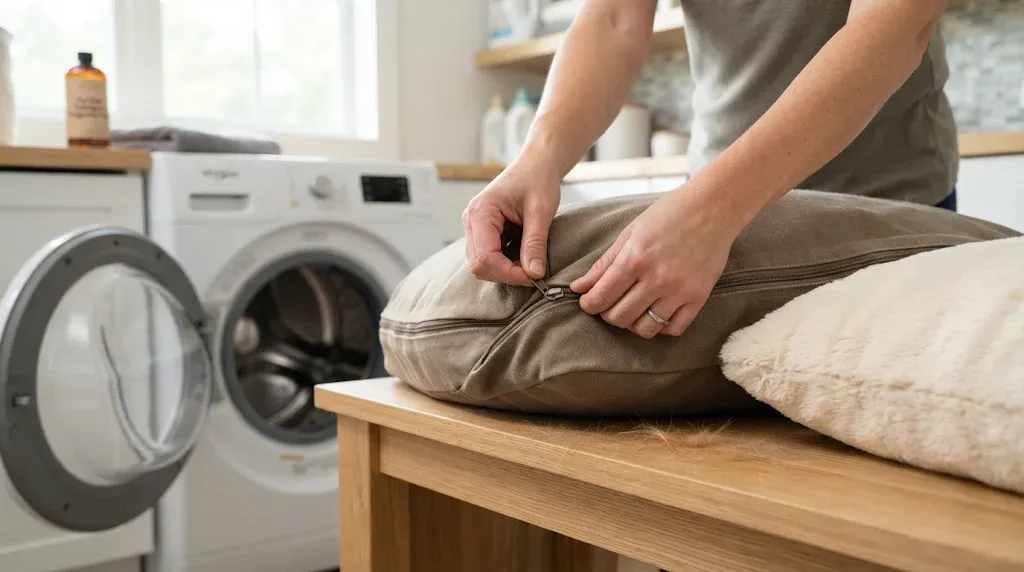
This is the easiest part, and it is the part that needs washing most often. The cover takes the dirt, oils, saliva, and hair, while the insert underneath usually stays cleaner.
- Zip the cover closed. This protects the zipper and stops the cover turning inside out and tangling.
- Load it loosely. The cover should have room to move. Do not pack it in with other laundry.
- Use a gentle or delicate cycle. Use cold or warm water, at the warmest temperature the label allows. Hot water can shrink cotton, damage a waterproof coating, or distort the fabric.
- Use a fragrance-free, dye-free detergent. Choose a pet-safe or sensitive-skin formula and use the normal amount. Extra detergent does not clean better; it leaves residue that can irritate a dog’s skin.
- Add an extra rinse. This helps remove detergent and loose hair. Skip fabric softener and dryer sheets. Softener can leave a coating that weakens waterproof backing and can irritate sensitive skin.
- Dry it fully. Air dry when you can, or tumble dry on low heat if the label allows it. Do not put a damp cover back on the insert.
Maytag’s guide to washing dog beds gives the same starting point: check the care label first, because some covers and inserts need hand washing or a laundromat instead of a home machine.
Tip
Wash the cover on its own. Towels and heavy bedding can trap the cover, reduce rinsing, and leave hair pressed back into the fabric.
How to Wash the Pillow Insert
Start with the fill, not the size. A thin polyester-filled pillow and a thick foam slab look similar from the outside, but they need opposite care.
Polyester-filled pillow insert
If the label says the insert is machine washable and it fits loosely in the drum, wash it on a gentle cycle with cold or warm water and the same fragrance-free detergent. A front-loading machine is usually kinder to fill than a top-loader with a center agitator, which can pull the fill apart.
Use two clean tennis balls or dryer balls in the dryer if the label allows tumble drying on low heat. They help break up clumps as the fill dries. Stop and check the pillow partway through drying. If the center still feels dense and damp, keep drying. A pillow that feels dry on the outside can still be wet inside.
If the insert is large, use a laundromat with a large-capacity machine. Do not force a bed that fills the whole drum. It will not rinse or spin properly, and the wet weight can strain the machine.
Memory foam or orthopedic foam insert
Do not put ordinary memory foam in the washing machine. Spot clean it instead. Vacuum the foam with an upholstery attachment first, then dampen a cloth with cool water and a small amount of pet-safe detergent and blot the stained area. Do not soak the foam.
For odor between washes, sprinkle baking soda over the foam, leave it for 30 to 60 minutes, then vacuum it off completely. For a urine spot, use an enzyme cleaner first and let it work before you blot. Press the foam gently with a clean towel to lift moisture. Never wring foam, and never return it to the cover while it feels damp.
Some newer foam beds are sold as fully washable systems. That claim applies to that specific product, not to foam in general. Follow the maker’s instructions for that model, and let it drain and dry completely before use.
How to Hand Wash a Dog Pillow Bed in the Bathtub
Hand washing is the right choice when the bed has no removable cover, the label says hand wash only, the bed is too large for your washer, or the insert is foam that cannot be machine washed.
- Vacuum and pre-treat first. Remove hair and treat urine or food stains with an enzyme cleaner.
- Fill a clean bathtub with warm water. Add a small amount of fragrance-free, pet-safe detergent and swish it until it is mixed.
- Submerge the bed and press gently. Push the soapy water through the fill or foam like a sponge. Do not twist or wring it.
- Soak for 15 to 30 minutes. For a urine-soiled cover, a longer enzyme pre-treatment before the soak works better than a longer soak in detergent alone.
- Drain and rinse twice. Refill with clean water, press the bed gently, and drain again. Repeat until the water runs clear and no soap remains.
- Press out water with towels. Roll the bed in clean towels and press down. Do not wring it.
Clean the bathtub after you finish, especially if you washed a bed soiled with urine or feces. Rinse the tub and clean it before anyone else uses it. The same care applies to washing a regular bed pillow: the method changes with the fill, and forcing the wrong method damages the pillow.
How to Dry a Dog Pillow Bed Completely

Drying is not the last step; it is half the wash. A damp bed grows mildew, holds odor, and can irritate a dog’s skin. Thick fill and foam take much longer to dry than a thin cover, so plan for it.
Air dry in a well-ventilated place when you can. Sunlight helps with odor, but do not leave foam in strong direct heat for a long time. If the label allows a dryer, use low heat only. High heat can shrink a cover, damage a waterproof liner, and melt or distort some fills.
For a pillow insert, reshape it while it is damp and flip it regularly. Check the center by pressing firmly. If it feels cool, heavy, or dense compared with the edges, it is still wet inside. Foam can take 24 to 48 hours to dry fully in a humid room. A fan and good airflow help more than extra heat.
Do not reassemble the bed until every part is dry to the touch, including seams and the center of the pillow. The same drying rule applies when cleaning a human bed pillow: a cover that feels dry can hide a damp core.
Warning
Do not use chlorine bleach on a dog bed unless the care label clearly allows it, and never use a strong disinfectant and then return the bed while it is still wet. Keep your dog away from cleaning products until the bed is rinsed and fully dry.
How to Remove Smell, Urine, Mud, and Vomit
Smell usually has a specific cause, so the fix changes with the cause. Washing again with more detergent rarely helps if the first wash left the cause behind.
General dog smell: Wash the cover with fragrance-free detergent and an extra rinse, then dry it fully. Between washes, vacuum the bed and air it out. A light sprinkle of baking soda, left for 30 minutes and vacuumed off, helps with surface odor.
Urine: Blot up fresh urine first. Apply an enzyme cleaner, leave it for 10 to 20 minutes, then wash the cover. Ordinary detergent can clean the fabric but leave behind the compounds that make the smell return when the fabric gets damp again. For dried urine, give the enzyme cleaner a longer contact time before washing. Check the area with your nose after drying, not while it is still wet.
Mud: Let mud dry first, then brush or vacuum it off. Washing wet mud into the fabric spreads the stain. Spot clean what remains with mild detergent and water, then machine wash the cover if the label allows it.
Vomit or feces: Remove solids, blot the area, and pre-treat with an enzyme cleaner. Wash the cover in the warmest water the label allows. If the insert was soaked through, clean that part by hand or spot clean it according to its fill. If your dog is sick, wash the bed more often and keep the bed away from food preparation areas while you clean it.
White vinegar: Half a cup in the rinse cycle can help with odor and detergent residue for many fabrics. It is a deodorizer, not a replacement for an enzyme cleaner on urine. Do not mix vinegar with bleach, and do not use vinegar as a disinfectant for a sick dog’s bedding without following the product and veterinary guidance for that situation.
How Often Should You Wash a Dog Pillow Bed?
For most indoor dogs, wash the cover every one to two weeks. Wash it weekly if your dog sheds heavily, spends a lot of time outdoors, has allergies or a skin condition, or sleeps on the bed for most of the day. Wash it sooner if it looks dirty or smells bad, even if the week is not up.
The Centers for Disease Control and Prevention gives weekly cleaning as an example schedule for pet beds and blankets, with more frequent cleaning when the item looks dirty or smells bad, or when someone in the household is more likely to become very sick from germs. The CDC also notes that fragrance-free and dye-free detergents may be a better choice for pets with sensitive skin.
Use this as a practical guide, not a fixed rule:
- Cover: every 1 to 2 weeks for an average dog; weekly for heavy shedders, outdoor dogs, and dogs with allergies.
- Polyester pillow insert: every 2 to 4 weeks, or when it develops odor.
- Foam insert: vacuum weekly and spot clean as needed; a deeper clean every month or so is usually enough unless there are accidents.
- After illness, fleas, or an accident: wash the cover right away and clean the insert according to its fill. Follow your veterinarian’s advice for flea or illness treatment; washing the bed alone does not treat the dog.
Mistakes That Ruin a Dog Pillow Bed
Skipping the care label: A removable cover does not mean the insert is washable. Check each part separately.
Overloading the washer: A bed that fills the drum cannot rinse properly. Soap and hair stay in the fill, and the bed comes out damp in the middle.
Using scented detergent or fabric softener: Strong fragrance can irritate a dog’s nose and skin and can make some dogs avoid the bed. Softener can also coat waterproof fabric.
Using high heat to dry faster: High heat shrinks covers, damages liners, and can distort fill. Low heat and extra time are safer.
Reassembling a damp bed: This is the most common reason a washed bed smells musty within days. Wait until the center is dry.
Soaking foam: Soaking ordinary memory foam or wringing it can break the foam and leave water trapped inside. Spot clean foam unless the maker says the exact product is washable. The same fill-first rule matters when washing a neck pillow: foam and fiber fill do not take the same treatment.
When to Replace the Bed Instead of Washing It Again
Washing helps, but it does not fix a worn-out bed. Replace the bed if the foam stays flat and does not spring back, the fill has clumped into hard lumps after drying, the cover has torn seams that keep reopening, or the smell returns quickly after a full wash and complete drying.
Also replace it if the waterproof liner is cracked or peeling, or if the bed was soaked with urine and the smell remains after enzyme treatment and washing. A fresh bed with a washable cover and a liner is easier to keep clean than an old bed that holds moisture in the fill.
Related Product
Enzyme Pet Stain and Odor Cleaner
Useful before washing for urine, vomit, and drool spots, because it breaks down the proteins that make pet odor return after a normal wash.
As an Amazon Associate, we earn from qualifying purchases.
Frequently Asked Questions
Can you put a dog pillow bed in the washing machine?
Yes, if the care label allows it and the bed fits loosely in the drum. Most removable covers are machine washable. Many foam inserts are not. Check the cover and the insert separately before you wash either one.
Can you wash a memory foam dog bed?
No, not in a washing machine in most cases. Ordinary memory foam should be spot cleaned with a damp cloth and a small amount of pet-safe detergent. Do not soak or wring it. Only wash a foam bed in a machine if the maker says that exact product is fully washable.
What detergent is best for a dog bed?
Use a fragrance-free, dye-free detergent made for sensitive skin or labeled pet-safe. Use the normal amount and add an extra rinse. Skip fabric softener, dryer sheets, and strong scents, which can irritate a dog’s skin and nose.
How do you get dog urine smell out of a dog bed?
Blot fresh urine, apply an enzyme cleaner for 10 to 20 minutes, then wash the cover in the warmest water the label allows. Dry it fully before use. If the smell returns when the bed gets damp, the urine compounds were not fully removed and the area needs enzyme treatment again.
Can you put a dog bed in the dryer?
Yes, if the care label allows tumble drying. Use low heat and dry until the center is completely dry. Use dryer balls for a polyester-filled pillow to reduce clumping. Air dry foam and any part labeled air dry only.
How do I clean my dog’s bed if it has fleas?
Wash the removable cover in the warmest water the label allows and dry it fully. Vacuum the insert and the area around the bed. Washing helps remove fleas, eggs, and hair from the bedding, but it does not treat the dog or the home. Follow your veterinarian’s flea treatment plan as well.
Conclusion
Washing a dog pillow bed comes down to separating the parts, following the care label for each one, and drying everything completely. Wash the cover regularly with a gentle, fragrance-free detergent, machine wash a polyester pillow only when the label allows it, and spot clean foam instead of soaking it. Pre-treat urine with an enzyme cleaner, skip high heat and fabric softener, and wait until the center is dry before putting the bed back together. That routine keeps the bed cleaner, fresher, and more comfortable for your dog.

I’m a home decor enthusiast who loves discovering beautiful room ideas, creative DIY projects, and Pinterest-worthy decorating inspiration. At DecorMinty, I share simple tips, fresh trends, and practical ideas to help you create a home you’ll truly love—one room at a time.