How Long to Keep a Bed Pillow? Signs, Tests & Care
Quick Answer
Keep most bed pillows for 1 to 2 years. Polyester wears out first, memory foam lasts 2 to 3 years, and latex lasts 2 to 4 years. Replace sooner if it stays flat, feels lumpy, smells after washing, or leaves you waking with a stiff neck.
A pillow does not fail on a fixed date. It fails gradually as the fill compresses, the loft drops, and sweat, skin cells, and dust mites build up inside. Age is a starting point for checking; condition decides: does it still hold your head at the right height, spring back, and stay clean enough to sleep on?
How Long Should You Keep a Bed Pillow?
For most people, 1 to 2 years is the right planning window. That covers the point where common fills lose support and allergen buildup becomes harder to control with washing alone. The Sleep Foundation gives the same rule, while noting that material quality changes the result.
Think of that range as a time to test, not a date to throw the pillow away. A well-made latex pillow with a protector can still pass at two years, while a cheap polyester pillow with no protector can fail in under a year. Support and hygiene fail at different times: foam can dent while still looking clean, and allergen buildup can become a problem while support still feels fine. Either reason alone is enough. Mark the purchase date, check at 12 months, then every few months after that.
How Long Each Type of Bed Pillow Lasts
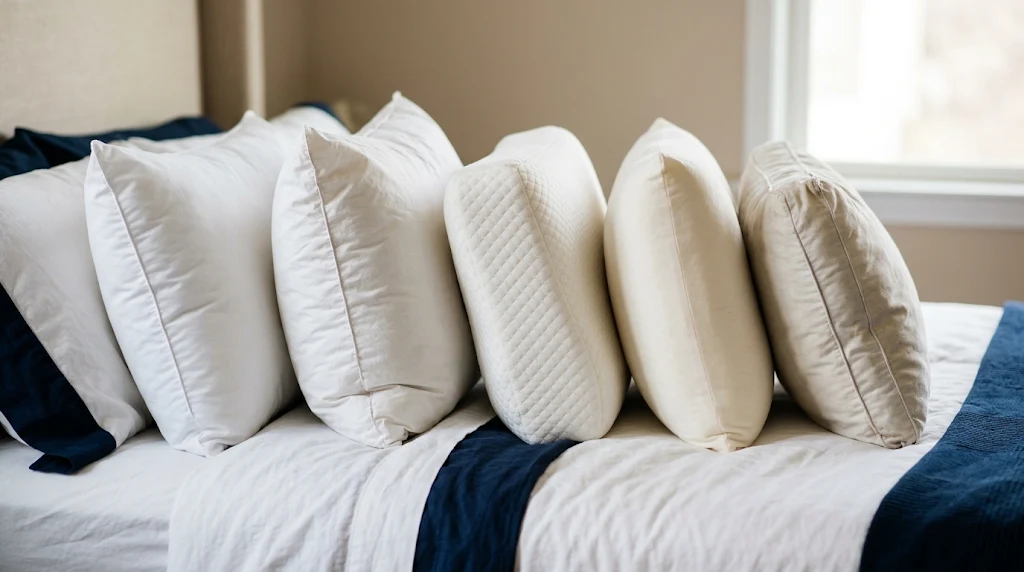
Fill type sets the ceiling. No washing restores fibres that have broken down or foam that has lost its rebound. Use the table as a guide, then test the pillow itself.
| Pillow type | Typical lifespan | What usually fails first |
|---|---|---|
| Polyester / down alternative | 6 months to 2 years | Fibres clump and flatten; loft collapses unevenly |
| Down / feather | 1 to 3 years | Fill clumps, feathers break down, loft stops recovering |
| Memory foam (solid) | 2 to 3 years | Permanent dent where the head rests; slower rebound |
| Latex | 2 to 4 years | Slow softening, then a dip; surface can crumble late in life |
| Buckwheat | Shell lasts years; hulls about 3 years | Hulls flatten and break down; top up or replace the hulls |
Polyester is shortest-lived because its fibres compress easily; a budget pillow can turn thin in the middle within months. Good down recovers well when fluffed daily and washed properly, so some down pillows outlast the range. Memory foam and latex last longer, but fail quietly: the foam softens in one spot and the head sits lower. Buckwheat is renewed by replacing flattened hulls roughly every three years.
7 Signs It Is Time to Replace Your Bed Pillow
Age alone should not decide this. If one sign is present, the pillow is already costing you comfort or cleanliness. If two or more are present, replace it now.
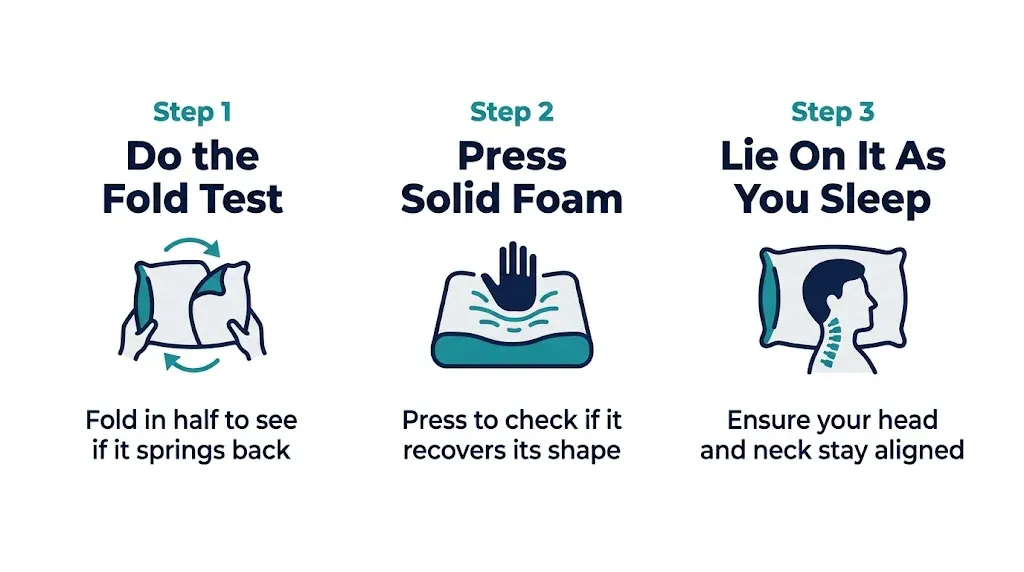
- It fails the fold test. Fold it in half, press the air out, and let go. If it stays folded, the fill has lost its support. This works best for down, feather, polyester, and down alternative pillows.
- You wake with a stiff neck or sore shoulders. A pillow that has lost height lets the head drop too far. Morning stiffness that eases during the day points at support. Our guide to whether a pillow can cause neck pain or headaches explains how support, height, and sleep position interact.
- It feels lumpy, flat, or uneven. Clumps that will not redistribute after fluffing, or a thin spot in the centre, mean the fill has broken down.
- Yellow stains or a smell survive washing. A stain or odour that returns after a proper wash means the inside of the pillow is holding what washing cannot reach.
- Allergy symptoms are worse at night or in the morning. Sneezing, a stuffy nose, itchy eyes, or a morning headache that eases when you sleep elsewhere can point to allergen buildup. The Asthma and Allergy Foundation of America recommends replacing pillows every two years as part of dust mite control, and using zippered allergen-barrier covers.
- Your skin reacts more than it used to. Oils and dirt that seep through the case can clog pores and irritate sensitive skin, especially on the side you sleep on.
- You keep adjusting it through the night. Punching, folding, or stacking the pillow to find support means it has none left to give.
Key Insight
A pillow can look clean and still be finished. Support fails inside the fill, where you cannot see it. Test how it holds your head, not how white the cover looks.
The 30-Second Fold Test and Other Quick Checks
Remove the case and protector, fold the pillow in half, press out the air, and release it. A healthy fibre or down pillow springs back within a few seconds. One that stays folded or springs back unevenly has lost its loft.
For foam and latex, press your hand into the centre for ten seconds and release. The surface should return to shape promptly; a dent that stays shows the material has worn out. Then lie on it in your usual position: side sleepers need enough height to fill the gap between ear and shoulder, back sleepers need less, and stomach sleepers need the thinnest pillow that still cushions the head. A stale smell that returns after washing is a hygiene signal.
What Makes a Pillow Wear Out Faster or Last Longer
Four factors move a pillow off its typical range: use, heat and moisture, cleaning, and protection.
Use is the biggest one. A pillow slept on every night in the same spot compresses there first, and heavier and side sleepers wear a pillow faster. A guest-room pillow used a few nights a year can last far longer than the same pillow on a main bed.
Heat and moisture speed up fill breakdown and dust mite growth, and a pillow put back before it is fully dry risks mildew. Regular washing helps a washable pillow last longer, but solid memory foam and latex should not go in a washing machine, and wringing, bleaching, or high-heat drying can ruin a pillow in one cycle. Check the care label first. A zippered protector blocks most sweat and oils from reaching the fill.
How to Make Your Bed Pillow Last Longer
Good care does not make a pillow last forever, but it decides whether you get the short or long end of its range.
- Use a protector from day one. Put a zippered protector on every new pillow. Wash it monthly, or more often in summer.
- Wash pillowcases weekly. Fresh cases reduce the oils and skin cells that reach the pillow.
- Fluff fibre and down pillows daily. A quick fluff redistributes fill, restores loft, and lets moisture escape.
- Air the pillow out. On a dry day, air it in fresh air for a few hours. This helps with odour and moisture.
- Wash washable pillows every three to six months. Use a gentle cycle and mild detergent, wash two at a time, and dry completely on low heat with dryer balls.
- Spot-clean foam and latex. Wipe stains with a damp cloth and mild detergent, then air dry flat. Do not submerge latex or wring foam.
- Rotate and flip when the design allows. Turning a pillow spreads wear more evenly.
For washing instructions by fill type, see our guide to how to wash a bed pillow. For stains and smells, see how to clean a bed pillow. Neck pillows follow a different timeline, in how long neck pillows last.
Tip
Dry a washed pillow completely before using it again, even if the outside feels dry. Damp fill is the fastest route to mildew and lingering smells.
When to Replace Sooner, and When You Can Keep It Longer
Replace sooner if allergies or asthma symptoms have increased, even if the pillow still feels supportive. Replace it too if it has been soaked, has mould or mildew, or smells musty after drying, or if you wake with neck pain most mornings and it fails the fold or press test.
You can keep a pillow past two years if it passes every check: it springs back, holds its shape, has no stains or smell after washing, and causes no allergy or skin symptoms. Latex and good-quality down are most likely to earn that extra time. Keep checking every few months, because the change can be gradual. A side sleeper will notice lost loft sooner than a stomach sleeper, and a change in position, mattress, or weight means testing it again rather than trusting its age.
What to Do With an Old Bed Pillow

Do not donate a worn-out pillow for sleeping; charities generally cannot accept used pillows for hygiene reasons. If it is still clean and supportive but the wrong height, a local shelter or animal rescue may accept it; check first. Clean fill can be repurposed as pet bedding or cushion stuffing. If the pillow is stained, torn, or mouldy, put it in general waste, because mixed fills are not usually recyclable. Replace the protector too if it is stained, torn, or no longer zips smoothly.
Related Product
Bed Pillow
If your pillow failed the fold test or no longer holds its shape, a new bed pillow in the right loft for your sleep position is the next step.
As an Amazon Associate, we earn from qualifying purchases.
Frequently Asked Questions
How long can you keep a bed pillow?
Most bed pillows should be kept for 1 to 2 years: polyester 6 months to 2 years, down and feather 1 to 3 years, memory foam 2 to 3 years, and latex 2 to 4 years. Keep one longer only if it springs back, holds its shape, and has no stains, smell, or allergy symptoms.
Can a pillow last 5 years?
It can, but only in limited cases. A high-quality latex or buckwheat pillow, used with a protector and cared for well, can last that long. Most fibre, down alternative, and budget polyester pillows will not.
Is it bad to keep a pillow for too long?
Yes, when it has lost support or built up allergens. A flat pillow can leave you waking with a stiff neck, and an old pillow can hold dust mites, sweat, and oils that worsen sneezing, congestion, or skin irritation. Washing cannot restore flattened fill.
How often should you wash a bed pillow?
Wash pillowcases weekly and washable pillows every three to six months, or more often after illness or heavy sweating. Memory foam and latex should not be machine washed; spot-clean them and air dry. Dry every pillow completely before using it again.
Does a pillow protector make a pillow last longer?
Yes. A zippered protector blocks sweat and oils from reaching the fill, slows staining, and reduces allergen buildup. It is easier to wash than the pillow itself. Wash the protector monthly and replace it when it is torn, stained through, or no longer zips properly.
How do you know if a pillow is still good?
Fold a fibre or down pillow in half and let go; if it springs back, it still has loft. Press foam or latex and check that it returns to shape promptly. Also check that it holds your head in line with your spine, has no lumps, stains, or smell, and does not leave you stiff or congested.
Conclusion
Keep most bed pillows for 1 to 2 years, and let fill type set your expectations: polyester wears out first, down and memory foam sit in the middle, and latex usually lasts longest. The date is only a prompt to check. The fold test, the morning neck check, and the smell and stain check decide. If your pillow passes, keep it and check again in a few months. If it fails, replace it, add a protector, and note the purchase date.

I’m a home decor enthusiast who loves discovering beautiful room ideas, creative DIY projects, and Pinterest-worthy decorating inspiration. At DecorMinty, I share simple tips, fresh trends, and practical ideas to help you create a home you’ll truly love—one room at a time.