Can I Put a Bed Pillow in the Dryer? Yes, If It Is Safe
Quick Answer
Yes, you can put many bed pillows in the dryer, but only if the care label allows it. Most down, feather, polyester, and down-alternative pillows are safe on low heat or air fluff. Solid memory foam, latex, buckwheat, and most wool pillows should not go in the dryer. Always use low heat, add dryer balls, and dry the pillow completely before you use it again.
A wet pillow is not a small problem. If the inside stays damp, it can clump, smell musty, and grow mildew. The dryer is faster than air drying and can restore loft, but the right answer changes with the fill inside your pillow.
Which Bed Pillows Can Go in the Dryer?
Most standard bed pillows are made to be washed and dried at home, but that does not cover every type. Down and feather pillows can usually go in on low heat or no heat. Gentle warmth helps the clusters separate again after washing.
Polyester and down-alternative pillows are usually the most forgiving. They tolerate low heat well and dry faster than down. Body pillows are often filled with the same materials, but a large one needs room to tumble freely, so a larger dryer at a laundromat may be better.
| Pillow fill | Dryer-safe? | Best setting |
|---|---|---|
| Polyester / down alternative | Usually yes | Low heat |
| Down / feather | Often yes | Low heat or air fluff |
| Shredded memory foam | Only if the label says so | Low heat, if allowed |
| Solid memory foam / latex | No | Air dry only |
| Buckwheat / wool | Usually no | Air dry, follow label |
Use this table as a starting point, not as a replacement for the label. If your pillow has a removable cover, check that cover separately, because the fill may be dryer-safe while the cover needs a gentler cycle.
Which Pillows Should Never Go in the Dryer?
Solid memory foam is the clearest no. The foam is a dense polyurethane material that responds to heat and pressure. That is what gives it support, and it is also what makes it vulnerable in a dryer. Heat can make the foam crumble and lose its shape, and even a low-heat cycle is not a safe shortcut for a solid foam block.
Latex pillows belong in the same group: heat can degrade latex and make it brittle. Buckwheat pillows should not go in the dryer either: remove the hulls first and wash only the cover. Wool pillows are also usually kept out of the dryer. Shredded memory foam sits in between, so check the label for that exact pillow.
Warning
Do not put a solid memory foam or latex pillow in the dryer to speed up drying, even on low heat. Heat can break down the foam and, in extreme cases, create a fire risk. Air dry these pillows flat until the centre is completely dry.
How to Read the Care Label Before You Dry
The care label is usually sewn into a side seam. Look for the tumble-dry symbol, a square with a circle inside it. A cross through that symbol means do not tumble dry. One dot inside the circle means low heat, and two dots mean medium heat. Words such as “air dry only” mean the same thing: keep the pillow out of the dryer.
Read the whole label, not just the drying line. Some labels say the cover is washable but the fill is not. If the label has faded, do not guess from the feel of the pillow. Check the maker’s website, or treat it as air-dry-only until you can confirm it is dryer-safe.
How to Dry a Bed Pillow in the Dryer Step by Step
Once the label gives the go-ahead, low and slow is the rule. Rushing with high heat is the most common way a washable pillow ends up lumpy or damaged.
- Wash according to the label first. Use a gentle cycle and a small amount of mild detergent. If you hand washed it, press out water without wringing it.
- Put one pillow in at a time. One pillow has room to tumble. Do not add bedding or clothing, because extra items block airflow.
- Add two or three dryer balls. Wool dryer balls or clean tennis balls break up wet clumps and push air into the fill.
- Choose low heat or air fluff. Low heat is often labelled “delicate.” For down and feather, air fluff is the safest choice.
- Stop and fluff every 30 minutes. Shake the pillow, punch clumps apart gently, turn it over, and put it back in.
- Check the centre, not just the surface. Press the middle for cool, damp spots. Keep running short cycles until it feels dry and warm all the way through.
- Take it out promptly. Once fully dry, remove it straight away and fluff it by hand.
What Dryer Setting Should You Use?
Low heat is the default safe setting for most dryer-safe bed pillows. Air fluff, which uses no heat, is even gentler and works well for down and feather, although it takes longer. Medium heat is only an option if the label clearly allows it, and high heat should be avoided in almost every case.
High heat can melt polyester fibres, scorch down, and shrink a cotton cover, while leaving the inside damp. Sensor-dry settings can also stop early when they read the dry surface. A timed low-heat cycle gives you more control.
How Long Does It Take to Dry a Bed Pillow?
A thin polyester pillow may be dry in 45 to 60 minutes on low heat. A thick down or feather pillow can take two to three hours, across several cycles. The fill, thickness, water left after washing, and dryer size all change the time.
Do not judge dryness by the cover alone. Squeeze the centre and feel for any cool spot. A cool spot means moisture is still there. If you put a slightly damp pillow back on the bed, that moisture can turn musty within a day. When in doubt, run one more low-heat cycle.
Dryer Balls, Lumps, and Damp Centres
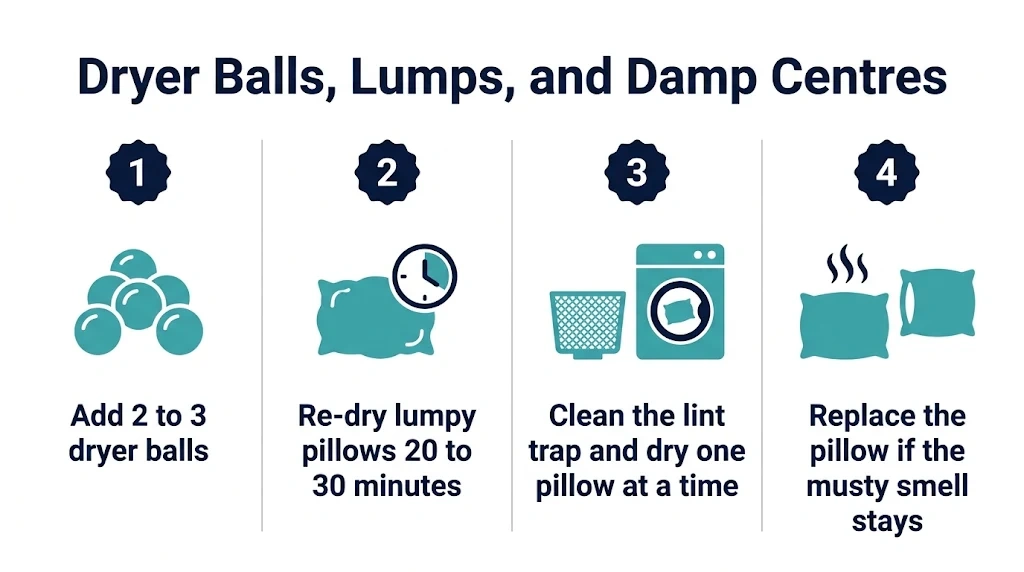
Dryer balls and tennis balls both work by hitting the pillow as it tumbles, breaking up clumps and letting air move through the fill. Wool dryer balls are quieter and reusable. Clean tennis balls do the same job, and putting them in clean white socks keeps fuzz off a light cover. Use two or three balls, not one.
A lumpy pillow usually means the fill clumped while wet and dried in that shape. Put it back in on low heat or air fluff with dryer balls for another 20 to 30 minutes, stopping halfway to shake the clumps apart. A damp centre usually means the pillow was too crowded or the lint trap was blocked. Clean the trap and dry one pillow at a time.
A musty smell after drying often means the pillow was used while still damp. Wash it again if the label allows it, dry it fully, and do not use it until the smell is gone. If the smell stays, replace the pillow.
For a full wash-and-dry routine, our guide to how to wash a bed pillow covers the washing step in detail. If stains or odours are the reason you washed the pillow, our guide to how to clean a bed pillow explains how to treat yellow stains and smells without damaging the fill.
How to Air-Dry a Pillow That Cannot Go in the Dryer
Foam, latex, buckwheat, and wool pillows need air, time, and patience. Lay a foam or latex pillow flat on a clean towel or drying rack in a well-ventilated room, away from direct sunlight and direct heat. Turn it every few hours so both sides dry evenly. Do not hang a wet foam pillow by one edge, and do not wring it.
Air drying a solid foam pillow can take 24 to 48 hours, and the outside may feel dry long before the centre is dry. Using the pillow before it is fully dry traps moisture inside, which can lead to mould and a musty smell.
For a removable foam cover, wash and dry the cover separately if its label allows it, while the foam insert air dries. Our guide to how to wash and clean a neck pillow safely explains that split for foam and other fills.
Mistakes to Avoid, and Fluffing a Dry Pillow
The most damaging mistake is using high heat to save time. The second is overloading the dryer: a pillow needs space to tumble, and when it is packed in with other laundry, air cannot reach it and the centre stays wet. Leaving the pillow in the washer for hours after the wash ends also lets wet fill clump.
A short fluff cycle can help a dry, dryer-safe pillow: 10 to 20 minutes on air fluff or low heat with dryer balls. Do not use this trick for solid memory foam or latex; fluff foam by hand instead. A fluff cycle does not clean a pillow, and it does not replace washing when the pillow is dirty or smells.
The Sleep Foundation guide to putting pillows in the dryer gives the same core advice: check the label first, use low heat or air dry for most dryer-safe fills, and keep foam and latex out of the dryer.
Related Product
Wool Dryer Balls
Wool dryer balls help break up wet clumps, lift the fill, and shorten drying time without high heat.
As an Amazon Associate, we earn from qualifying purchases.
Frequently Asked Questions
Can I put a bed pillow in the dryer after washing it?
Yes, if the care label allows tumble drying. Most polyester, down-alternative, down, and feather pillows can go in on low heat or air fluff. Solid memory foam, latex, buckwheat, and most wool pillows should be air dried instead.
What setting should I use to dry a pillow in the dryer?
Use low heat or air fluff. Low heat is the safest general setting for dryer-safe pillows, and air fluff is gentler for down and feather. Avoid high heat, because it can melt synthetic fibres, scorch down, and shrink the cover.
How long does it take to dry a bed pillow in the dryer?
A polyester pillow often takes 45 to 60 minutes on low heat. A down or feather pillow can take two to three hours across several cycles. Stop every 30 minutes to fluff and turn it, and keep drying until the centre is completely dry.
Can I put a memory foam pillow in the dryer on low heat?
No. Even low heat can damage solid memory foam, causing it to crumble and lose support. Air dry it flat for 24 to 48 hours until the centre is fully dry. Check the label for shredded foam, because some brands allow a low-heat tumble.
Should I use tennis balls or dryer balls with pillows?
Either can help. Use two or three wool dryer balls or clean tennis balls to break up clumps and fluff the fill as it dries. Wool dryer balls are quieter and reusable, while tennis balls work well in clean white socks.
Why does my pillow still smell after drying?
A lingering smell usually means the centre was still damp, or mildew had already formed inside. Wash it again if the label allows it, dry it fully, and do not use it until the smell is gone. If the smell stays, replace the pillow.
Conclusion
Most bed pillows can go in the dryer, but the fill decides the answer. Polyester, down-alternative, down, and feather pillows are usually safe on low heat or air fluff with dryer balls. Solid memory foam, latex, buckwheat, and wool pillows need air drying instead. Check the label first, use low heat, fluff the pillow every 30 minutes, and keep drying until the centre is fully dry. That extra patience is what keeps a pillow fluffy, fresh, and safe to sleep on.

I’m a home decor enthusiast who loves discovering beautiful room ideas, creative DIY projects, and Pinterest-worthy decorating inspiration. At DecorMinty, I share simple tips, fresh trends, and practical ideas to help you create a home you’ll truly love—one room at a time.