Best 12 Smelling Plants for Bedroom Spaces That Actually Fit Your Light
Quick Answer
The best smelling plants for bedroom spaces are Hoya carnosa, star jasmine, gardenia, scented geranium, Arabian jasmine, lavender, Meyer lemon, rosemary, peppermint, zygopetalum orchid, paperwhite narcissus, and silver dollar eucalyptus because each brings real fragrance through flowers, leaves, or seasonal bulbs instead of relying on artificial scent.
Here’s the short version before you scroll further:
- Hoya carnosa — Wax flowers, forgiving watering.
- Star jasmine — Sweet vine, bright window.
- Gardenia — Strong perfume, fussier care.
- Scented geranium — Fragrant leaves, easy pruning.
- Arabian jasmine — Tea-like blooms, steady humidity.
- Lavender — Dry soil, full sun.
- Meyer lemon — Citrus flowers, sunny room.
- Rosemary — Herbal scent, lean soil.
- Peppermint — Fresh leaves, frequent trimming.
- Zygopetalum orchid — Exotic scent, moderate care.
- Paperwhite narcissus — Winter fragrance, seasonal only.
- Silver dollar eucalyptus — Scented foliage, pet caution.
The deciding factor is not just which plant smells strongest. It is whether your bedroom has enough light, whether pets can reach the plant, and whether you want everyday foliage scent or dramatic seasonal flowers.
Our Top Picks at a Glance
Easiest to Care For — Hoya Carnosa
Best for Low Light — Star Jasmine
Most Beautiful Bloom — Gardenia
Best for Beginners — Scented Geranium
Fragrant bedroom plants work best when you match the scent source to your space. Flowering plants usually need brighter light, while leaf-scented herbs can still make a room feel fresh when you brush past them.
For general indoor plant success, light and watering matter more than the plant label. The University of Georgia Extension’s houseplant guide is a helpful reminder that indoor plants are most often stressed by low light, dry air, and incorrect watering.
12 Best Smelling Plants for Bedroom Corners, Windowsills, and Nightstands
 Save
Save#1. Hoya Carnosa — “The Wax-Flower Classic”
| Sunlight | Medium to bright indirect light; brighter light encourages blooms |
| Watering | Water when the top half of the mix feels dry |
| Pot Size | 4-6 inch starter pot; prefers being slightly root-bound |
| Care Level | Easy |
| Bloom Time | Late spring through summer indoors, if light is strong enough |
Hoya carnosa, also called wax plant, belongs to the Apocynaceae family and is loved for thick vines and star-shaped flower clusters. Its blooms can smell sweet, especially in the evening.
This plant stores moisture in its fleshy leaves, so it does not want constantly wet soil. A chunky mix or orchid-style potting mix helps protect the roots.
Do not cut off old flower spurs, because hoyas can rebloom from them. Keep vines out of reach if pets like to chew, even though hoyas are often treated as a safer houseplant choice.
Pros
- Handles short dry spells well
- Great for hanging bedroom corners
- Fragrant blooms feel special, not constant
Watch For
- Few blooms in dim bedrooms
- Root rot from oversized pots
- Cold water can shock roots
#2. Star Jasmine — “The Sweet Climber”
| Sunlight | Bright indirect light to part sun |
| Watering | Water when the top 1-2 inches feel dry |
| Pot Size | 6-8 inch pot with a small trellis |
| Care Level | Moderate |
| Bloom Time | Spring to summer |
Star jasmine is Trachelospermum jasminoides, not a true Jasminum, but its white pinwheel flowers have a classic sweet jasmine-like scent. It works best as a clipped indoor vine near a bright window.
Its biggest bedroom advantage is shape. You can train it upward on a hoop or trellis instead of letting it sprawl over a dresser.
Prune lightly after flowering to keep it compact. The ASPCA lists star jasmine as non-toxic to dogs and cats, but chewing can still upset a sensitive stomach.
Pros
- Beautiful climbing habit
- Elegant white fragrant flowers
- Can be clipped into a neat shape
Watch For
- Needs strong light to flower
- Can tangle without support
- Dry indoor air may slow growth
#3. Gardenia — “The Perfume Plant”
| Sunlight | Bright indirect light or gentle morning sun |
| Watering | Keep evenly moist; water when the surface just begins to dry |
| Pot Size | 6-10 inch pot, depending on shrub size |
| Care Level | Advanced |
| Bloom Time | Late spring through summer, depending on variety |
Gardenia jasminoides is a glossy evergreen shrub in the Rubiaceae family, native to parts of southern China and Japan. Its creamy white flowers are among the strongest natural scents you can grow indoors.
But here’s the thing. Gardenias are not casual dark-corner plants, and they need bright light, steady moisture, humidity, and acidic, well-drained soil.
Prune lightly after blooming to shape the plant without removing future buds. Gardenia is toxic to dogs and cats, so place it where curious pets cannot reach the leaves or flowers.
Pros
- Powerful luxury-style fragrance
- Glossy leaves look polished year-round
- Beautiful flowers for bedside styling
Watch For
- Bud drop from stress
- Yellow leaves in poor soil conditions
- Toxic to dogs and cats
#4. Scented Geranium — “The Leaf Fragrance Hero”
| Sunlight | Bright light with several hours of sun if possible |
| Watering | Let the soil dry lightly between waterings |
| Pot Size | 4-8 inch pot with drainage |
| Care Level | Easy |
| Bloom Time | Spring to summer; grown mostly for leaves |
Scented geraniums are Pelargonium plants, often grown for rose, lemon, mint, or spice-scented foliage. The fragrance releases when you touch or brush the leaves.
This makes them perfect near a bright bedroom window or dressing table. They do not need constant flowers to make the space smell fresh.
Pinch stems regularly to keep the plant bushy instead of leggy. Pelargoniums can be toxic to pets, so keep them off low nightstands.
Pros
- Fragrant even without blooms
- Easy to prune and shape
- Many scent varieties available
Watch For
- Leggy growth in weak light
- Wet soil around stems
- Pet toxicity concerns
 Save
Save#5. Arabian Jasmine — “The Nightstand Romantic”
| Sunlight | Medium to bright light; blooms best with strong indirect light |
| Watering | Water when the top inch feels dry; avoid bone-dry soil |
| Pot Size | 6-8 inch pot for a young shrub |
| Care Level | Moderate |
| Bloom Time | Intermittently in warm, bright indoor conditions |
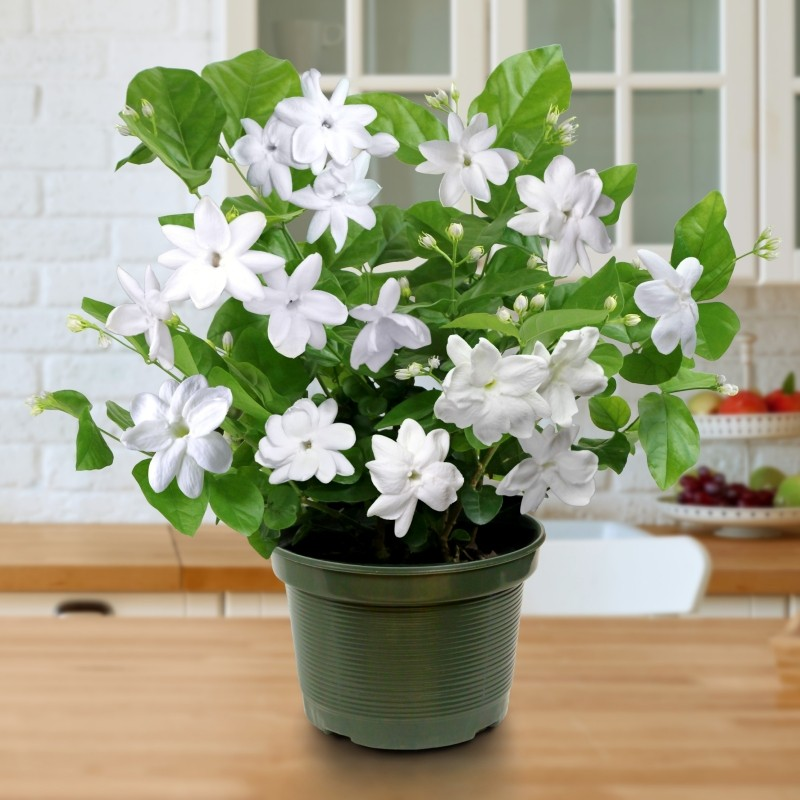
Arabian jasmine, or Jasminum sambac, is the fragrant jasmine associated with tea and perfume. It grows as a small evergreen shrub or vine when kept in a container.
It likes warmth and consistent moisture more than lavender or rosemary. A pebble tray can help if your bedroom air is very dry.
Prune after flowering to encourage branching and more bud sites. True jasmine species are listed by the ASPCA as non-toxic to dogs and cats, but keep dropped flowers cleaned up.
Pros
- Classic jasmine fragrance
- Compact with pruning
- Good choice for warm bedrooms
Watch For
- Sparse blooms without enough light
- Dry air causing bud stress
- Needs more attention than foliage plants
#6. Lavender — “The Sunny Minimalist”
| Sunlight | Full sun; place at the brightest window you have |
| Watering | Water when the mix is dry several inches down |
| Pot Size | 6-8 inch terra-cotta pot for a young plant |
| Care Level | Moderate indoors |
| Bloom Time | Summer, if light is strong enough |
English lavender, Lavandula angustifolia, is a Mediterranean herb in the mint family. Its flowers and silver-green leaves carry the familiar clean, herbal scent.
Lavender struggles in dim bedrooms because it needs strong sun and fast drainage. A terra-cotta pot with drainage helps the root zone dry more safely.
Cut off faded flower spikes and avoid rich, soggy soil. Lavender is listed as toxic to dogs and cats, so treat it as a high-shelf plant in pet homes.
Pros
- Clean herbal scent
- Likes dry indoor air more than tropical plants
- Beautiful soft gray-green foliage
Watch For
- Not good for low light
- Root rot in wet soil
- Toxic to dogs and cats
#7. Meyer Lemon — “The Citrus Wake-Up”
| Sunlight | Very bright light with direct sun when possible |
| Watering | Water deeply when the top 1-2 inches feel dry |
| Pot Size | 10-14 inch pot for a young patio-size tree |
| Care Level | Moderate |
| Bloom Time | Often spring, with possible repeat blooms indoors |
Meyer lemon is a compact citrus often grown in containers, and the white flowers can smell bright, sweet, and clean. The glossy leaves also add a polished conservatory look.
This is a bedroom plant only if your room is genuinely sunny. In a darker room, a small full-spectrum grow light can help support better growth.
Rotate the pot for even growth and watch for scale or mites. Citrus oils and plant parts can be a concern around pets, so keep trees away from chewers.
Pros
- Fresh citrus blossom scent
- Can eventually produce fruit
- Adds height and structure
Watch For
- Needs very strong light
- Can attract indoor pests
- Not ideal beside cold windows
#8. Rosemary — “The Herbal Minimalist”
| Sunlight | Full sun or the brightest indoor spot available |
| Watering | Water when the top few inches are dry; never leave soggy |
| Pot Size | 6-10 inch clay pot with fast-draining mix |
| Care Level | Moderate indoors |
| Bloom Time | Winter to spring outdoors; indoors grown mostly for foliage |
Rosemary is Salvia rosmarinus, a woody Mediterranean herb with needle-like fragrant leaves. It gives a clean, savory scent when touched or lightly pruned.
It wants bright sun and air movement, not steamy humidity. If the tips dry and the soil is wet, the roots may already be struggling.
Trim small sprigs often to keep the plant compact. Rosemary is commonly listed as non-toxic to dogs and cats, making it one of the friendlier fragrant choices for pet homes.
Pros
- Fresh herbal scent from foliage
- Useful for pruning and shaping
- Good for bright, dry bedrooms
Watch For
- Needs more sun than many bedrooms offer
- Dislikes soggy roots
- Can decline quickly after overwatering
#9. Peppermint — “The Fresh-Cut Fix”
| Sunlight | Bright indirect light to part sun |
| Watering | Keep lightly moist; water when the surface feels dry |
| Pot Size | 6-8 inch pot to contain spreading roots |
| Care Level | Easy |
| Bloom Time | Summer outdoors; indoors grown for leaves |
Peppermint, Mentha x piperita, is a naturally fragrant hybrid herb with cool, sharp leaves. It is less glamorous than gardenia, but it is wonderfully useful in a bedroom window herb pot.
The scent is strongest when you pinch, prune, or brush the leaves. That makes it ideal for a dresser near morning light.
Cut stems often to prevent legginess and refresh growth. Keep it in its own pot, because mint spreads aggressively when planted with other herbs.
Pros
- Fresh scent from leaves
- Fast regrowth after trimming
- Compact enough for a windowsill
Watch For
- Stretches in weak light
- Needs more water than woody herbs
- Can get messy without pruning
 Save
Save#10. Zygopetalum Orchid — “The Exotic Perfumer”
| Sunlight | Fairly bright indirect light, no harsh direct sun |
| Watering | Water before the medium dries completely; avoid soggy roots |
| Pot Size | 4-6 inch orchid pot for young plants |
| Care Level | Moderate |
| Bloom Time | Seasonal, depending on variety and conditions |
Zygopetalum orchids are known for showy, often fragrant flowers with purple, green, and patterned tones. They feel more special than a standard grocery-store orchid.
They like bright filtered light and regular moisture, but they still need air around the roots. Use an orchid pot and let water drain completely.
Remove spent flower spikes after blooming and repot only when the bark mix breaks down. Many orchids are considered pet-safe, but always confirm the exact plant if pets chew leaves.
Pros
- More fragrant than many common orchids
- Eye-catching patterned flowers
- Great for bright indirect windows
Watch For
- Needs more moisture than Phalaenopsis
- Dislikes stale soggy medium
- Not the easiest first orchid
#11. Paperwhite Narcissus — “The Winter Scent Bomb”
| Sunlight | Bright indirect light while growing and blooming |
| Watering | Keep roots moist, not submerged above the bulb base |
| Pot Size | Shallow 6-8 inch bulb bowl |
| Care Level | Easy seasonal |
| Bloom Time | Winter indoors when forced; spring outdoors |
Paperwhite narcissus, usually Narcissus tazetta, is a bulb grown indoors for clusters of strongly fragrant white flowers. It is one of the fastest ways to scent a bedroom for a few weeks.
This is not a permanent houseplant like hoya or rosemary. Think of it as a seasonal fragrance arrangement.
Support tall stems with stakes if they flop. Narcissus bulbs and plant parts are toxic, so keep them away from children, dogs, and cats.
Pros
- Very strong seasonal fragrance
- Fast indoor blooms
- Lovely for winter bedrooms
Watch For
- Scent may feel too strong in small rooms
- Short-lived indoor display
- Toxic bulbs and foliage
#12. Silver Dollar Eucalyptus — “The Spa Foliage”
| Sunlight | Full sun to very bright light |
| Watering | Water when the top 1-2 inches dry; do not let sit wet |
| Pot Size | 8-12 inch pot for a young container plant |
| Care Level | Moderate to advanced indoors |
| Bloom Time | Rare indoors; grown for scented foliage |
Silver dollar eucalyptus is grown for round juvenile leaves that release a cool, spa-like scent when brushed or cut. It brings a clean, airy look to minimalist bedrooms.
It is not a low-light plant. Without strong sun, eucalyptus gets weak, stretched, and disappointing fast.
Prune tips to keep it compact in a pot. Eucalyptus oil and plant parts are unsafe for pets if eaten, so skip this one in bedrooms where pets roam freely.
Pros
- Fresh foliage scent
- Beautiful silvery leaves
- Great for modern bedroom styling
Watch For
- Needs full sun conditions
- Can outgrow small spaces
- Unsafe for chewing pets
How to Choose the Right Plant for Your Bedroom
Start with your light level, then choose your fragrance style.
- For low-to-medium light — Choose hoya first, but understand that blooms may be less frequent. It can still stay attractive even when it is not flowering.
- For bright indirect light — Try Arabian jasmine, star jasmine, gardenia, or zygopetalum orchid. These give you real flowers, but they ask for more consistency.
- For direct sun — Lavender, rosemary, Meyer lemon, and eucalyptus need the brightest bedroom windows. Without enough light, they fade quickly.
Flowering indoor plants need light to make buds. The University of Minnesota Extension guide to indoor plant lighting explains why weak indoor light can cause stretching and poor flowering.
Basic Care Tips for Beginners
Most fragrant bedroom plants fail from the same few mistakes.
- Check soil before watering — Do not water just because it is Saturday. Push your finger into the mix and water based on how dry the plant actually feels.
- Use pots with drainage — Fragrant plants hate sitting in trapped water. Drainage holes are especially important for hoya, lavender, rosemary, orchids, and eucalyptus.
- Rotate the plant — Bedroom plants lean toward windows. A quarter turn every week keeps growth more even and attractive.
Common Mistakes to Avoid
These mistakes account for most fragrant plant disappointment indoors.
Putting flowering plants in a dark corner — Jasmine, gardenia, citrus, and orchids need enough light to form buds. In a dim bedroom, you may get leaves but no fragrance.
Watering lavender like a tropical plant — Lavender and rosemary prefer fast drainage and drier soil. Constant moisture can rot roots before the leaves show obvious trouble.
Repotting hoya into a huge container — Oversized pots hold extra moisture around the roots. Hoya usually performs better in a snug pot with a chunky mix.
Ignoring pet safety — Gardenia, lavender, paperwhite narcissus, eucalyptus, and scented geranium can be risky around pets. Use high shelves or choose jasmine, hoya, or rosemary instead.
Expecting constant scent from every plant — Some plants smell only when blooming, while others smell when touched. For steady fragrance, mix one leaf-scented plant with one flowering plant.
For pet homes, always check the exact plant before buying. The ASPCA toxic and non-toxic plant database is a practical reference for dogs and cats.
What You’ll Need
A few simple tools make fragrant plants much easier to keep healthy indoors.
Helpful when your bedroom is bright enough for leaves but not blooms.
Useful for beginners who overwater hoya, lavender, orchids, or rosemary.
Supports active growth during spring and summer without overfeeding.
Stop Guessing When These Fragrant Plants Need Water
A simple moisture meter helps solve the biggest beginner mistake on this list: watering by habit instead of checking the soil. It is especially useful for hoya, rosemary, lavender, and orchids.
Frequently Asked Questions
Q: What is the best smelling plant for a bedroom?
A: Gardenia is one of the strongest floral choices, while Arabian jasmine has the classic sweet jasmine scent. If you want easier care, start with hoya or scented geranium.
Q: Can fragrant plants grow in a dark bedroom?
A: Most fragrant flowering plants need bright light to bloom. In a dark bedroom, use a grow light or choose foliage-scented plants that release scent when touched.
Q: Which fragrant bedroom plants are best for beginners?
A: Hoya carnosa, scented geranium, peppermint, and rosemary are the easiest starting points. Gardenia, citrus, and zygopetalum orchid need more careful conditions.
Q: Are scented bedroom plants safe for pets?
A: Not always. Gardenia, lavender, scented geranium, eucalyptus, and paperwhite narcissus can be risky, so check pet toxicity before placing them where animals can chew.
Q: Do indoor plants really make a bedroom smell better?
A: They can, but only when the plant is healthy and actively releasing scent. Flowers, brushed leaves, fresh pruning, and seasonal bulbs give the most noticeable fragrance.
Q: Which plant smells good without flowers?
A: Scented geranium, rosemary, peppermint, and eucalyptus are grown mainly for fragrant leaves. They are better choices if you do not want to wait for blooms.
Final Thoughts
The best smelling plants for bedroom spaces are the ones that fit your actual light, routine, and safety needs. Start with hoya or scented geranium if you want something forgiving, or choose gardenia and jasmine if your room has the brightness they need.
One fragrant plant is often enough for a small bedroom. Let it breathe, give it the right light, and the room will feel fresher without sprays or plug-ins.
Which plant are you adding to your space first? Save this post to Pinterest so you can come back whenever you need fresh plant inspo!

I’m a home decor enthusiast who loves discovering beautiful room ideas, creative DIY projects, and Pinterest-worthy decorating inspiration. At DecorMinty, I share simple tips, fresh trends, and practical ideas to help you create a home you’ll truly love—one room at a time.