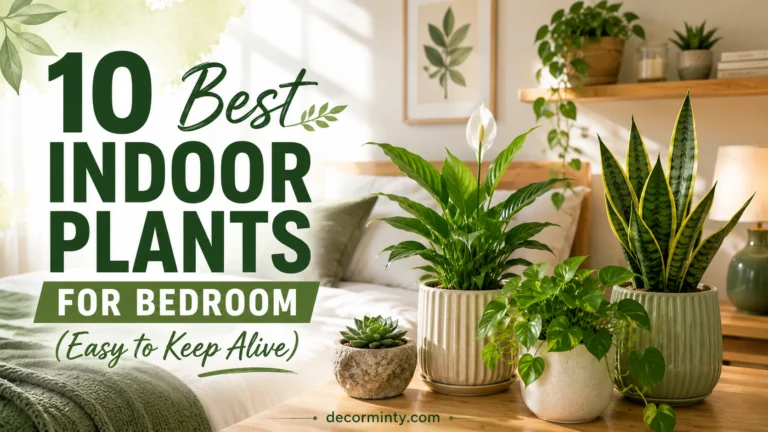
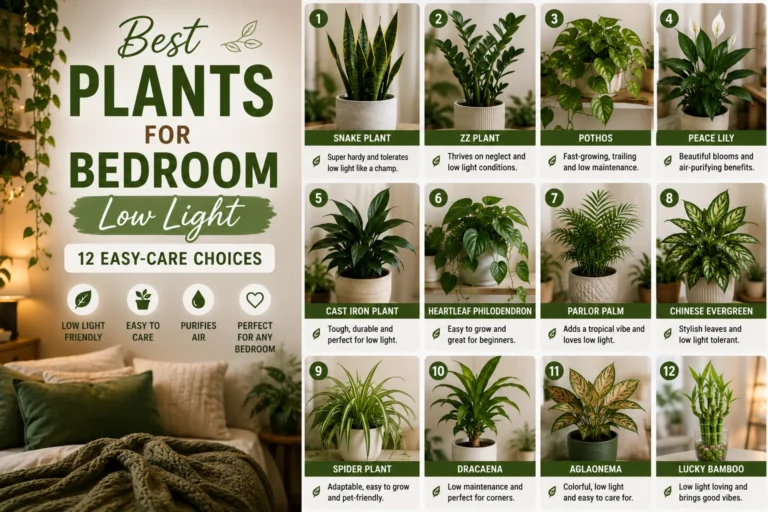
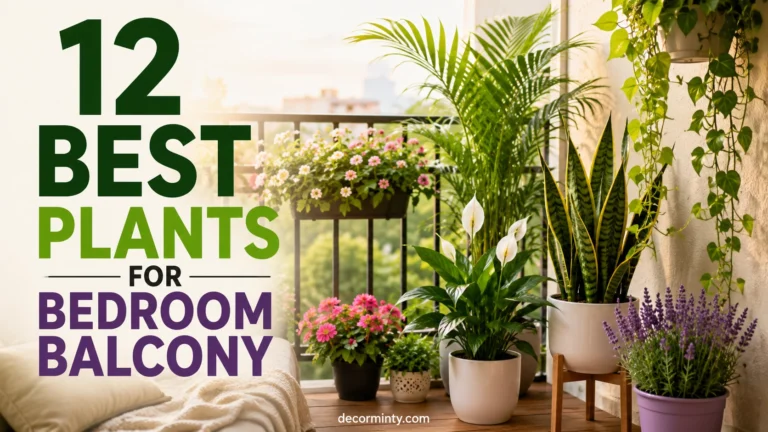
12 Best Moisture Absorbing Plants for Bedroom Spaces
Quick Answer
The best moisture absorbing plants for bedroom spaces include pink quill, bird’s nest fern, Boston fern, maidenhair fern, spider plant, peace lily, Monstera deliciosa, golden pothos, calathea, Chinese evergreen, parlor palm, and moth orchid because they tolerate humid indoor conditions well, while epiphytic choices such as Tillandsia and bird’s nest fern can also take in some moisture from their surroundings.
Here’s the short version before you scroll further:
- Pink Quill — absorbs moisture through its specialized foliage
- Bird’s Nest Fern — epiphyte that loves warm, humid air
- Boston Fern — lush choice for naturally humid bedrooms
- Maidenhair Fern — delicate foliage with serious humidity needs
- Spider Plant — forgiving, compact, and beginner-friendly
- Peace Lily — shade-tolerant with dramatic white spathes
- Monstera Deliciosa — bold tropical foliage for larger rooms
- Golden Pothos — trailing growth for shelves and dressers
- Calathea — patterned leaves that prefer humid air
- Chinese Evergreen — colorful foliage for softer bedroom light
- Parlor Palm — compact tropical texture without harsh sun
- Moth Orchid — flowering epiphyte with moisture-loving aerial roots
One important distinction: these plants are better described as humidity-tolerant or moisture-using plants, not natural dehumidifiers. If your bedroom has condensation, damp walls, or persistent humidity above a healthy indoor range, ventilation and proper moisture control matter far more than adding plants.
Our Top Picks at a Glance
Easiest to Care For — Spider Plant
Best for Low Light — Parlor Palm
Most Beautiful Bloom — Moth Orchid
Best for Beginners — Golden Pothos


12 Best Moisture Absorbing Plants for Bedroom Spaces
 Save
Save#1. Pink Quill — “The True Air-Moisture Specialist”
| Sunlight | Bright, diffused light |
| Watering | Soak thoroughly, then let foliage drain and dry |
| Pot Size | Small 3–5 inch container or mounted display |
| Care Level | Moderate |
Pink quill, traditionally known as Tillandsia cyanea, belongs to the bromeliad family and comes from tropical South America. Tillandsias naturally grow on other plants rather than depending heavily on soil.
Its foliage can take in moisture from humid surroundings, making it one of the closest matches to the idea behind this roundup. It still needs proper watering, so humid air alone isn’t enough.
Give it airflow after soaking because water trapped around the crown can encourage rot. A small air plant holder works well on a bedside shelf.
Pros
- Naturally adapted to atmospheric moisture
- Compact footprint
- Colorful flowering bract
Watch For
- Rot from trapped water
- Too little natural light
- Drying between infrequent soaks
#2. Bird’s Nest Fern — “The Tropical Moisture Catcher”
| Sunlight | Bright indirect light to light shade |
| Watering | Keep mix evenly moist, not waterlogged |
| Pot Size | Repot only slightly larger when rootbound |
| Care Level | Easy to Moderate |
Asplenium nidus grows as an epiphyte in tropical Southeast Asia. Its broad fronds form a central rosette that catches organic debris and moisture in its natural habitat.
It appreciates warm, humid bedroom air and dislikes becoming bone dry. A north-facing or softly lit east-facing window can suit it well.
Water around the potting mix rather than repeatedly filling the center of the crown. Its glossy foliage makes it especially attractive on a dresser or plant stand.
Pros
- Naturally epiphytic
- Handles filtered bedroom light
- Striking architectural fronds
Watch For
- Dry air and crispy edges
- Harsh direct sun
- Water sitting in the crown
#3. Boston Fern — “The Humidity Lover”
| Sunlight | Bright indirect light |
| Watering | Keep soil consistently moist without standing water |
| Pot Size | Current pot until crowded, then one size larger |
| Care Level | Moderate |
Nephrolepis exaltata comes from tropical and subtropical parts of the Americas and thrives in warm, humid conditions. Its arching fronds soften hard bedroom furniture beautifully.
Unlike drought-tolerant houseplants, Boston fern shouldn’t completely dry out. Browning or crisping fronds often signal that moisture or humidity has dropped too far.
Trim dead fronds at the base and keep it away from heating vents. Boston fern is also commonly listed as non-toxic to cats and dogs.
Pros
- Thrives in humid air
- Cascading bedroom-friendly shape
- Pet-friendly choice
Watch For
- Crispy fronds in dry air
- Spider mites in dry conditions
- Root rot from waterlogging
#4. Maidenhair Fern — “The Humidity Diva”
| Sunlight | Bright indirect light to partial shade |
| Watering | Water before the root zone dries completely |
| Pot Size | Snug container with reliable drainage |
| Care Level | Moderate to Advanced |
Maidenhair ferns in the Adiantum genus are famous for fine green leaflets carried on dark wiry stems. Many species come from naturally moist, sheltered habitats.
The roots dislike drying out, while the foliage responds badly to harsh sunlight and very dry air. That combination makes a naturally humid bedroom much easier to work with.
Use a moisture-retentive but draining mix, then check it regularly with your finger. This fern rewards consistency more than neglect.
Pros
- Thrives with steady humidity
- Beautiful delicate texture
- Compact enough for dressers
Watch For
- Rapid browning after drying out
- Direct-sun scorch
- Poor airflow around wet foliage
#5. Spider Plant — “The Forgiving Favorite”
| Sunlight | Medium to bright indirect light |
| Watering | Water when the upper soil begins drying |
| Pot Size | Repot one size larger when roots crowd the pot |
| Care Level | Easy |
Chlorophytum comosum is native to parts of tropical and southern Africa. Its fleshy roots store moisture, helping it recover from the occasional forgotten watering.
Spider plants appreciate moderate humidity but adapt better than fussy ferns when bedroom conditions fluctuate. Their arching plantlets also look excellent in hanging pots.
Brown leaf tips can come from dry conditions or mineral-sensitive foliage. You can propagate mature plantlets easily once they develop roots.
Pros
- Very forgiving care routine
- Easy to propagate
- Non-toxic to cats and dogs
Watch For
- Brown leaf tips
- Root rot in saturated soil
- Strong direct sunlight

#6. Peace Lily — “The Visible Thirst Signal”
| Sunlight | Partial shade to bright indirect light |
| Watering | Water when upper mix dries or foliage begins to droop |
| Pot Size | Keep slightly snug, then move a few centimetres wider |
| Care Level | Easy |
Spathiphyllum species come from tropical regions of the Americas and Asia-Pacific. Their deep-green foliage and white spathes make them feel more decorative than a typical foliage plant.
Peace lilies like warm conditions, indirect light, and consistent moisture without soggy roots. They often droop noticeably when thirsty, giving beginners a useful visual cue.
Keep them out of reach of chewing pets because their tissues contain irritating calcium oxalate crystals.
Pros
- Handles filtered bedroom light
- Clear thirst signal
- Produces decorative white spathes
Watch For
- Irritating if chewed by pets
- Root rot from constant saturation
- Leaf-tip browning
#7. Monstera Deliciosa — “The Statement Plant”
| Sunlight | Moderate to bright indirect light |
| Watering | Water after roughly the upper quarter of mix dries |
| Pot Size | Heavy pot only slightly larger than rootball |
| Care Level | Easy to Moderate |
Monstera deliciosa is native from Mexico through parts of Central America. In nature it climbs trees and can transition into an epiphytic growth habit.
The famous split foliage prefers warm, humid conditions, but the roots still need oxygen. Let part of the potting mix dry before watering again.
Give mature plants a sturdy support such as a moss pole. Keep foliage away from pets that may chew it.
Pros
- Dramatic large foliage
- Enjoys humid conditions
- Easy to propagate from nodes
Watch For
- Needs significant space
- Toxic if chewed
- Overwatering in dim rooms
#8. Golden Pothos — “The Easygoing Trailer”
| Sunlight | Bright indirect light, tolerates lower light |
| Watering | Let part of the potting mix dry before watering |
| Pot Size | Repot one size larger every few years as needed |
| Care Level | Easy |
Epipremnum aureum is a tropical climbing vine originally from the Society Islands. Brown aerial roots help it attach to surfaces as it climbs.
It enjoys extra humidity but doesn’t demand fern-like conditions, which makes it much easier in an ordinary bedroom. Longer gaps between waterings are preferable to constantly wet soil.
Trim long vines to encourage fuller growth, then root the cuttings in water. Keep the plant away from pets that chew foliage.
Pros
- Very beginner-friendly
- Works vertically or trailing
- Tolerates uneven light
Watch For
- Toxic if ingested
- Root rot from overwatering
- Loss of variegation in deep shade
#9. Calathea — “The Pattern Lover”
| Sunlight | Bright indirect light |
| Watering | Keep lightly moist, never swampy |
| Pot Size | One or two sizes larger only when rootbound |
| Care Level | Moderate |
Many plants sold as calatheas are now classified in the genus Goeppertia. Species such as furry feather calathea come from warm, humid Brazilian rainforest environments.
Their patterned leaves can curl or develop brown edges when moisture conditions become too dry. They prefer bright filtered light and evenly moist, draining potting mix.
Rainwater or filtered water can help sensitive varieties avoid mineral-related leaf damage. Divide established clumps when propagation is needed.
Pros
- Exceptional foliage patterns
- Thrives with higher humidity
- Compact bedroom size
Watch For
- Brown edges in dry air
- Sensitivity to hard water
- Root rot in soggy mix
#10. Chinese Evergreen — “The Dim-Room Color Boost”
| Sunlight | Diffuse or indirect light |
| Watering | Keep moderately moist, reducing water in winter |
| Pot Size | Snug pot with drainage, size up gradually |
| Care Level | Easy |
Aglaonema species come from tropical and subtropical parts of Southeast Asia and New Guinea. Their silver, green, pink, or red patterns make them unusually colorful for lower-light spaces.
Chinese evergreen prefers humidity but adapts to average indoor air better than many ferns. Let the upper potting mix begin drying rather than keeping the roots permanently wet.
Remove declining leaves cleanly at the base. Keep this member of the arum family away from pets and small children who might chew it.
Pros
- Tolerates softer light
- Colorful cultivar choices
- Adapts to household humidity
Watch For
- Toxic if chewed
- Cold drafts
- Root problems from wet soil
#11. Parlor Palm — “The Low-Light Classic”
| Sunlight | Indirect light to light shade |
| Watering | Water after the upper compost starts drying |
| Pot Size | Keep original pot for years, then size up slightly |
| Care Level | Easy |
Chamaedorea elegans is a small tropical palm valued as a houseplant since the Victorian era. Its slow growth keeps it far more manageable than large indoor palms.
It tolerates light shade and prefers moderate humidity, making it useful when your bedroom lacks a strong sunny window. Avoid leaving the roots in saturated compost.
Repot only after the root system becomes crowded. Its fine arching fronds create softness without taking over the entire room.
Pros
- Handles lighter shade
- Slow, compact growth
- Easy long-term houseplant
Watch For
- Spider mites in very dry rooms
- Overwatering
- Harsh direct sunlight
 Save
Save#12. Moth Orchid — “The Elegant Epiphyte”
| Sunlight | Bright indirect light |
| Watering | Water when roots turn silvery and bark approaches dryness |
| Pot Size | Snug clear orchid pot with excellent drainage |
| Care Level | Easy to Moderate |
Phalaenopsis orchids are epiphytes with specialized aerial roots that take advantage of moisture around them. They are among the most widely grown orchids indoors.
Healthy roots usually look green after watering and become silvery as they dry. That visible change makes watering easier than many beginners expect.
Use airy orchid bark rather than ordinary dense potting soil. A clear orchid pot with drainage makes root condition easy to monitor.
Pros
- Epiphytic aerial roots
- Long-lasting flowers
- Compact display size
Watch For
- Dense, waterlogged potting mix
- Water trapped in crown
- Cold drafts around buds
How to Choose the Right Plant for Your Bedroom
The best plant is the one that matches the light and humidity your room actually has, not the one with the biggest moisture-related claim.
- For low-light rooms — Start with parlor palm, Chinese evergreen, or pothos. You can also compare more options in our guide to bedroom plants for low light.
- For naturally humid rooms — Bird’s nest fern, Boston fern, maidenhair fern, and pink quill make more sense because humidity supports their normal growth.
- For small spaces — Pink quill, moth orchid, or spider plant fit shelves and dressers better than Monstera. Our broader best plants for bedroom guide can help if moisture isn’t your only priority.
Remember that no live plant thrives in complete darkness. Even shade-tolerant species need enough usable light to photosynthesize.
Basic Care Tips for Humidity-Loving Bedroom Plants
Humidity doesn’t remove the need for good watering habits. In fact, plants often use water more slowly in dim bedrooms.
- Check soil before watering — Watering on a fixed calendar can leave roots wet for too long. Test the potting mix instead, following the principles in the Illinois Extension houseplant watering guide.
- Give plants drainage — Decorative pots are fine, but excess water must be able to escape. A nursery pot hidden inside a decorative cover pot makes draining much easier.
- Match light before humidity — Light is one of the biggest factors controlling growth and water use. For particularly forgiving choices, see our low-maintenance bedroom plant guide.
Common Mistakes to Avoid
Most problems come from treating “likes humidity” as if it means “likes wet roots.” It doesn’t.
Expecting plants to dehumidify a damp bedroom — Plants move relatively small amounts of moisture compared with ventilation, air conditioning, or a dehumidifier. Treat condensation and mold as a home-moisture problem first.
Watering on a fixed weekly schedule — Low bedroom light slows plant growth and water use. Checking the soil or roots first reduces the risk of soggy conditions and root rot.
Putting humidity-loving plants in total darkness — Ferns, orchids, and tropical foliage still need natural or supplemental light. Humidity can’t compensate for inadequate photosynthesis.
Leaving water trapped around crowns and roots — Tillandsias, orchids, and bird’s nest ferns need airflow as well as moisture. Constant wetness creates conditions where tissue and roots can rot.
Ignoring persistent condensation or mold — The EPA’s moisture and mold guidance recommends controlling the moisture source rather than relying on decorative fixes.
Signs Your Plant Needs Attention
Your plant usually shows you what’s going wrong before the damage becomes severe.
- Crispy brown edges — Boston fern, maidenhair fern, and calathea may be experiencing dry air, inconsistent watering, or water-quality stress.
- Yellow leaves with constantly wet soil — Overwatering becomes especially risky in low-light bedrooms where pots dry slowly.
- Weak or stretched growth — Move the plant closer to usable indirect light. Our guide to bedroom air plants also compares several species by realistic indoor conditions.
- Silvery orchid roots — Phalaenopsis roots commonly become pale or silvery as they dry, giving you a useful cue to check whether watering is needed.
For broader humidity-loving plant inspiration, the Royal Horticultural Society’s guide to plants for humid rooms is also useful.
Find Out Whether Your Bedroom Is Actually Too Humid
A small digital hygrometer gives you a real humidity reading instead of making you guess from how the room feels. That’s far more useful when you’re deciding whether you simply have a fern-friendly bedroom or a genuine moisture problem.
Frequently Asked Questions
Q: Do moisture absorbing plants really reduce bedroom humidity?
A: Not enough to treat a genuinely damp room. Some plants can use moisture from humid air, but ventilation, air conditioning, leak repair, or a dehumidifier are much more effective for controlling indoor humidity.
Q: Which bedroom plant absorbs moisture from the air most directly?
A: Tillandsias such as pink quill are among the clearest examples because their foliage is adapted to take in moisture and nutrients from their surroundings rather than relying only on conventional soil roots.
Q: What plant is best for a humid bedroom with low light?
A: Parlor palm, Chinese evergreen, and pothos tolerate softer light better than many moisture-loving ferns. Remember that low light still means some usable light, not a completely dark room.
Q: Can bedroom plants prevent mold?
A: No. If mold is appearing, identify and correct the moisture source. Plants should be treated as decor and living organisms, not as mold-control equipment.
Q: Are ferns good for humid bedrooms?
A: Yes. Boston fern, bird’s nest fern, and maidenhair fern naturally prefer more moisture in the air than many common houseplants, provided they also receive suitable light and airflow.
Q: What humidity should I aim for in a bedroom?
A: For the room itself, prioritize healthy indoor conditions rather than maximizing humidity for a plant. If a specific tropical plant needs unusually high humidity, create a small local microclimate instead of making the entire bedroom excessively damp.
Final Thoughts
The best moisture absorbing plants for bedroom spaces are really plants that cope well with humid air, with pink quill and other epiphytes having the strongest connection to atmospheric moisture. Pick according to your light, available space, pets, and willingness to water consistently.
If your windows stay wet or your walls smell musty, solve the room’s moisture problem first. Then choose the plant that makes the bedroom feel greener and more relaxing.
Which plant are you adding to your space first? Save this post to Pinterest so you can come back whenever you need fresh plant inspo!

I’m a home decor enthusiast who loves discovering beautiful room ideas, creative DIY projects, and Pinterest-worthy decorating inspiration. At DecorMinty, I share simple tips, fresh trends, and practical ideas to help you create a home you’ll truly love—one room at a time.