How to Keep a Pillow From Sliding Off Bed: Gap Fixes That Work
Quick Answer
Push the mattress flush against the headboard or wall, close any gap wider than 2 inches with a wedge filler, rolled towel or pool noodle, and add grip with a cotton pillowcase and a non-slip mat under the pillow. If it still slides, use a pillow strap or retainer. Measure the gap first, because its size decides which fix will hold.
Waking up to a pillow on the floor breaks sleep and leaves the neck unsupported. Most pillows slide for a mix of reasons: a gap at the head of the bed, a slick pillowcase, a light pillow, and movement during the night.
Why Pillows Slide Off the Bed
A pillow slides when it has somewhere to go and nothing holding it back. The headboard gap is the most common escape route. Many beds leave a space between the mattress and the headboard so sheets can be changed easily.
Once that gap is wider than about 2 inches, a pillow pushed upward during the night can tip into it and fall behind the bed. Side sliding has a different cause: a pillow near the edge, a smooth satin pillowcase, and a light pillow all reduce friction.
Note where the pillow lands in the morning. Behind the bed points to a headboard gap, while beside the bed points to side sliding or slick bedding.
Measure the Gap First
Push the mattress as far toward the headboard as it will go, then measure what is left in the middle and at both corners. The gap is not always even.
Under 2 inches is usually a grip problem. A tighter pillowcase, a cotton case instead of satin, and a non-slip mat under the pillow often solve it. A 2 to 4 inch gap needs a physical filler, such as a wedge, a rolled towel, a pool noodle, or a body pillow laid across the head of the bed.
Over 4 inches is a bed setup problem. A filler alone will sink or shift. Check whether the mattress and foundation match the frame, whether the bed has drifted away from the wall, and whether the headboard is loose.
Free Fixes to Try Tonight

Try these in order. Most people need only the first two or three.
- Push the mattress flush. Strip the bed, slide the mattress toward the headboard until it touches, then remake the bed.
- Move the bed against a wall. If there is no headboard, push the head of the bed against a solid wall.
- Tuck the pillow under the top sheet. Slip it under the flat sheet and tuck the sheet tightly under the mattress.
- Centre the pillow. Keep it away from the edge, with its lower edge near the top of your shoulders.
- Use a body pillow as a backstop. Lay it horizontally across the head of the bed, behind your sleeping pillows.
- Tighten the frame. Check the bolts where the headboard joins the frame. A loose frame lets the mattress drift away each night.
If the pillow still falls after these changes, the gap is probably too wide for bedding alone, or the pillowcase is too slick.
Close the Headboard Gap With a Filler
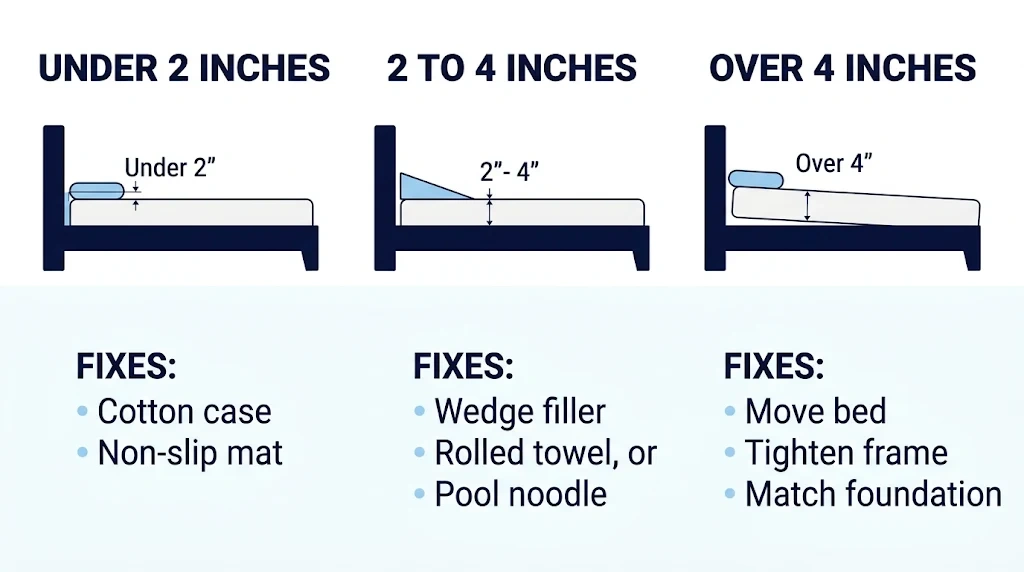
A filler turns a valley at the head of the bed into a flat surface. It is the most reliable fix for a 2 to 4 inch gap.
A purpose-built bed wedge or gap filler is the cleanest option. These are long, triangular foam pieces sized for twin, full, queen, and king beds. Place the wedge across the head of the mattress, between the mattress and the headboard, with the flat side down.
Choose a height that fills the gap without lifting the pillow too high, or it will push the pillow forward. A rolled bath towel or a draft stopper, often called a door snake, does the same job for no cost. Roll it tightly, place it across the head of the mattress under the fitted sheet, and smooth the sheet over it.
A pool noodle works the same way. Place one or two noodles side by side under the fitted sheet, cut to the width of the bed if needed. An extra pillow can also work, but it is less stable. Push it down so its top is level with the mattress, not piled above it.
Add Grip With Bedding and Pillowcases
Friction is the second half of the fix. A pillow on slick bedding will slide even when there is no gap, so change the surfaces the pillow touches.
Switch a satin or silk pillowcase for cotton or flannel. Cotton has more texture and holds the pillow in place, while satin lets it glide with very little force. Use a pillowcase that fits snugly, with a zipper or an envelope closure, because a loose case bunches and lets the pillow shift inside it.
Place a non-slip mat under the pillow. The thin rubber or silicone mats sold for rugs also work here. Cut the mat to the size of the pillow, place it between the pillow and the sheet, and smooth the pillow over it. Wash it regularly, because dust and lint reduce its grip.
Choosing the right pillow also helps. A heavier pillow, such as a memory foam pillow, moves less than a light down or polyester pillow. How to choose the right neck pillow covers size, loft, and support, and the same checks apply here. Firm or soft pillow for neck pain explains how firmness affects support.
Use Straps, Clips, and Retainers
When a filler and grippy bedding are not enough, a strap or retainer holds the pillow in place directly. These help restless sleepers, pillows propped up for reading, and adjustable beds.
A pillow strap is a band that goes around the pillow and attaches to the headboard or bed frame. Adjust it so the pillow can still be moved a little for comfort, but cannot slide off the bed. A pillow clip attaches the pillowcase to the sheet or mattress. Clips are less visible, but they can pull the sheet loose if they are too tight.
A pillow retainer is a strap system that fastens to the pillow and to the bed, often with adjustable clips. It is worth trying if the pillow slides every night despite a filler, because it tackles movement directly rather than relying on friction alone.
Guard rails and foam bumpers are a stronger option for side sliding. Foam bumpers placed under the fitted sheet along the edge of the mattress create a low ridge that stops a pillow rolling off the side. Bed rails do the same job more firmly, but they change how easy it is to get in and out of bed.
When the Pillow Slides Sideways, Not Behind the Bed

Side sliding needs a different emphasis. Closing the headboard gap will not help if the pillow is falling off the side.
First, check the bed width and pillow size. Two standard pillows on a queen bed leave a gap in the middle that lets each pillow drift sideways. Two queen pillows fill the width better and leave less room to move.
Second, check your sleep position. If you sleep near the edge, move toward the centre of the bed. Best sleeping position for neck pain explains how back, side, and stomach positions change pillow height and support, and a centred position also gives the pillow more room before it reaches the edge.
Third, add a side barrier only where the pillow falls. A foam bumper under the fitted sheet on that side, a body pillow laid along the edge, or a bedside table pushed close to the bed can all block the fall. A weighted blanket can also help, because its weight over the lower half of the pillow reduces how far the pillow moves when you turn.
Mistakes That Make Sliding Worse
- Using a pillow that is too small. A small pillow on a wide bed has more room to move and less weight to hold it down.
- Keeping a satin pillowcase. Satin looks smooth, which is exactly why it lets a pillow slide.
- Leaving the filler above the mattress. A wedge that sticks up pushes the sleeping pillow forward instead of supporting it.
- Over-tightening a strap. A strap pulled too tight flattens the pillow and pulls the sheet loose.
- Ignoring a loose frame. A frame that lets the mattress drift will reopen the gap, however good the filler is.
- Stacking too many pillows. A tall stack is unstable, and the top pillow will slide off the pillow below it.
| Gap size | Best first fix | If that fails |
|---|---|---|
| Under 2 inches | Cotton case, snug fit, non-slip mat | Tuck pillow under sheet, add strap |
| 2 to 4 inches | Wedge filler, rolled towel, or pool noodle | Pillow retainer, body pillow backstop |
| Over 4 inches | Move bed, tighten frame, match foundation | Filler plus strap, or change frame |
How to sleep with a neck pillow covers pillow placement for back, side, and stomach sleeping, and the same centred placement helps a bed pillow stay in place.
Amerisleep also lists guard rails, body pillows, and adjustable frames for this problem.
Related Product
Bed Wedge Pillow Gap Filler
A long foam wedge fills the gap between the mattress and headboard so the pillow has a flat surface to rest on instead of a space to fall into.
As an Amazon Associate, we earn from qualifying purchases.
Frequently Asked Questions
Why does my pillow keep sliding off the bed every night?
It usually slides because there is a gap at the head of the bed, the pillowcase is slick, or the pillow is light and small for the bed.
What is the fastest free way to stop a pillow sliding off?
Push the mattress flush against the headboard or wall, centre the pillow, and tuck it under the top sheet with the sheet tucked tightly under the mattress.
Do non-slip mats under a pillow really work?
Yes, when the problem is friction rather than a wide gap. A rubber or silicone mat under the pillow adds grip on smooth sheets and satin cases.
Can I use a pool noodle to stop my pillow falling behind the bed?
Yes. Place one or two pool noodles side by side across the head of the mattress, under the fitted sheet, to fill a 2 to 4 inch gap.
Will a bigger pillow stop it sliding off?
A larger, heavier pillow often helps, because it fills more of the bed width and is harder to push aside. A queen or king pillow on a queen or king bed leaves less room to drift than a standard pillow.
Should I use a pillow strap or a wedge filler?
Use a wedge filler first if the pillow falls behind the bed, because it removes the space the pillow falls into. Use a strap or retainer first if the pillow slides sideways or you move a lot at night, because it holds the pillow directly.
Conclusion
Keeping a pillow from sliding off the bed starts with finding where it goes. Measure the headboard gap, note whether it falls behind the bed or off the side, and start with the free fixes: push the mattress flush, centre the pillow, and tuck it under the sheet. Add a wedge filler for a 2 to 4 inch gap, add grip with a cotton case and a non-slip mat, and add a strap only if movement still wins. Fix the gap first, then the grip, and the pillow should stay where you left it.

I’m a home decor enthusiast who loves discovering beautiful room ideas, creative DIY projects, and Pinterest-worthy decorating inspiration. At DecorMinty, I share simple tips, fresh trends, and practical ideas to help you create a home you’ll truly love—one room at a time.