How to Use a Neck Pillow in Bed: Back & Side Guide
Quick Answer
Put the raised edge under your neck, not under your head, let the back of your head rest in the lower dip, and keep your shoulders on the mattress. Back sleepers use the lower side, side sleepers use the higher side so the head stays level, and stomach sleepers should use a very thin pillow or none at all. If your chin is pushed toward your chest or your head tilts back, the height or orientation is wrong.
A neck pillow only helps in bed when it fills the gap between your neck and the mattress. A regular pillow lifts the head. A neck pillow also supports the curve of the neck, so the head, neck and upper back stay in one line. Most discomfort comes from small errors: the pillow turned the wrong way, the shoulders creeping onto it, or the height suiting one sleep position and not the one you actually use.
Which Neck Pillow Are You Using in Bed?

The setup changes with the shape, so start by knowing which one you have.
| Type | Shape | Best for in bed |
|---|---|---|
| Contour or cervical | Raised edges, lower dip | Back and side sleepers, full night |
| U-shaped | Horseshoe around the neck | Short naps on your back |
| Neck roll | Firm cylinder | Back sleepers, small neck lift |
| Standard, shaped edge | Rectangular pillow | Combination sleepers |
Most of this guide follows the contour shape, because it is the one designed for a full night in bed. If you are still choosing, our guide to how to choose the right neck pillow explains loft, firmness and fill.
Set the Pillow Up Before You Lie Down
Do this while sitting on the edge of the bed. It is much harder to fix once your head is on the pillow.
- Put the contoured side up. The raised edges and dip face up. The flat side sits on the mattress.
- Find the neck edge. The raised edge belongs under your neck. The dip belongs under the back of your head. Reversing this pushes the chin up and strains the neck.
- Place it close to your shoulders. Its lower edge should sit just above your shoulders when you lie down. Your shoulders should not be on the pillow.
- Pick the height side. Start with the lower edge for back sleeping and the higher edge for side sleeping. Turn the pillow 180 degrees to switch.
For a U-shaped pillow, the opening goes at the back of your neck, not under your chin. For a neck roll, place it across the bed at neck level, then lie back so it sits in the curve under your neck.
How to Use a Neck Pillow in Bed, Step by Step
- Place the pillow contoured side up, with the raised edge toward the foot of the bed, so it will sit under your neck.
- Lower yourself back, letting your head land in the dip and your neck land on the raised edge. Do not slide down from the headboard.
- Let your shoulders rest fully on the mattress. If the pillow edge is under your shoulder blades, pull the pillow toward you by an inch or two.
- Check your chin. It should sit level, neither tucked toward your chest nor tilted back.
- Stay still for five minutes. Mild unfamiliar pressure is common. Sharp pain, tingling, or a feeling that your neck is being pushed forward is not.
When the pillow is right, the support should feel quiet, not forceful. You should notice the gap under your neck is filled, not that your head is being held up. For the wider routine, see how to sleep with a neck pillow.
How to Use It as a Back Sleeper
Back sleeping is the simplest position, because the gap from the mattress to the back of the neck is smaller than on your side. Use the lower raised edge under your neck and let the back of your head rest in the centre dip. The pillow should fill the curve behind your neck without pushing your head forward. Your ear, shoulder and hip should form a roughly straight line, and your nose should point at the ceiling.
If your chin is pressed toward your chest, the edge is too high. Turn the pillow 180 degrees to the lower side. If your head tips back and your throat feels stretched, the edge is too low. A thin pillow under your knees can also help, by taking pressure off the lower spine. See also the best sleeping position for neck pain.
How to Use It as a Side Sleeper
Side sleeping needs more height, because your shoulder creates a gap between your ear and the mattress. Turn the pillow so the higher raised edge is under your neck. Rest your head on the raised side section, not in the centre dip, and let your shoulder sit on the mattress just below the pillow edge. Your ear should stay level with your shoulder, and your spine should form a straight horizontal line.
Do not put your lower arm under the pillow. That lifts one side, tilts your head, and can cut off circulation to the arm. Place a pillow between your knees to keep your hips level. When the hips tilt, the neck ends up carrying the difference. Broad shoulders usually need the highest setting; narrow shoulders often need only the medium or lower side.
What If You Sleep on Your Stomach or Change Position?
Stomach sleeping is the hardest position, because any raised pillow forces the neck to turn to one side and bend back. If you sleep on your stomach, use the flattest option you have: turn a contour pillow flat side up, or use a very thin standard pillow, or no pillow under your head, with a thin pillow under your hips instead.
Combination sleepers need a pillow that works in both positions without flipping. A dual-height contour pillow does this best: the centre dip suits the back, and the raised side suits the side, so your head moves from one zone to the other as you roll. With a U-shaped pillow, changing position is awkward, because the shape is fixed around the neck. Take it off before you fall asleep properly.
How to Tell If the Height Is Right
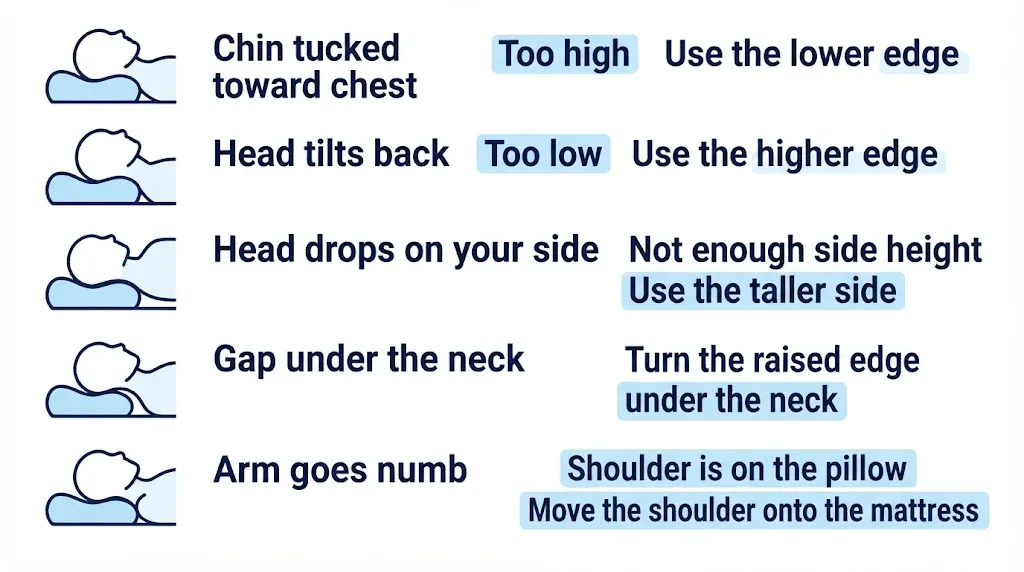
Height, or loft, is the most common reason a neck pillow feels wrong. Too high pushes the chin down. Too low lets the head drop.
| What you notice | What it means | What to try |
|---|---|---|
| Chin tucked toward chest | Too high | Use the lower edge |
| Head tilts back | Too low | Use the higher edge |
| Head drops on your side | Not enough side height | Use the taller side |
| Gap under the neck | Wrong way round, or too flat | Turn the raised edge under the neck |
| Arm goes numb | Shoulder is on the pillow | Move the shoulder onto the mattress |
Ask someone to look at you from the side if you can. On your back, the line from ear to shoulder should be roughly vertical. On your side, it should be roughly horizontal. The Sleep Foundation guide to pillows for neck pain makes the same point: the right pillow keeps the head and neck aligned with the spine, rather than simply feeling soft.
Common Mistakes That Make a Neck Pillow Hurt
- Using it backwards. The raised edge goes under the neck, not under the head.
- Flat side up. The contour only works when it faces up.
- Shoulders on the pillow. Shoulders belong on the mattress, or the height changes and the arm can go numb.
- Stacking a second pillow on top. A neck pillow plus a regular pillow is usually far too high.
- Judging it on the first night. The muscles need time to stop guarding a new position.
- Using a travel pillow all night. U-shaped pillows are made for sitting up. In bed they are bulky and push the head forward.
If pain gets worse, or you get numbness, tingling, weakness, or pain spreading down the arm, stop using the pillow in that position and get the symptom checked. A pillow can support a healthy neck, but it cannot fix a nerve or joint problem. See why a neck pillow hurts your neck for the most common causes.
Warning
Do not sleep with a U-shaped pillow fastened tightly around your neck, and do not use a neck pillow to prop a baby or small child. If you have a diagnosed neck condition or recent surgery, follow your clinician’s advice rather than a general pillow guide.
How Long to Give a New Pillow, and When to Change It

Give a new neck pillow 7 to 14 nights of correct use before you decide it does not work. That is the usual adjustment window. Use the same setup every night, rather than changing the orientation each time. If you change two things at once, you will not know which change helped.
Keep a short note for the first week: which edge you used, which position you fell asleep in, and how your neck felt in the morning. A pattern usually appears by night four or five. Change the pillow if, after two weeks, you still wake with new neck pain, headaches, or numbness, or if it has gone flat and no longer fills the gap under your neck. Our guide to how long to use a cervical neck pillow explains the usual signs it needs replacing. Recheck the height if you change your main sleep position, as the Sleep Foundation guide to sleeping positions notes.
Related Product
Cervical Neck Pillow for Sleeping
A contoured cervical pillow gives you the lower dip for back sleeping and the higher edge for side sleeping described in this guide.
As an Amazon Associate, we earn from qualifying purchases.
Frequently Asked Questions
Can I use a travel neck pillow in bed?
Yes, for a short nap on your back, with the opening at the back of your neck. For a full night, it is usually too bulky and pushes the head forward. A contour pillow is better for overnight sleep.
Should my shoulders be on the neck pillow?
No. Your shoulders should stay on the mattress. The pillow supports only your head and neck. If your shoulders climb onto it, the height changes and your arm can go numb.
Which side of a contour pillow goes up?
The contoured side goes up, with the raised edges and dip facing you. The flat side goes down on the mattress. The raised edge sits under your neck, and the back of your head rests in the dip.
How long does it take to get used to a neck pillow?
Most people need 7 to 14 nights of correct placement. Mild unfamiliar pressure is common at first. Sharp pain or tingling is not part of normal adjustment.
Can I use a neck pillow if I sleep on my stomach?
It is not a good match. Any raised pillow forces a stomach sleeper’s neck to turn and bend back. Use a very thin pillow, or no pillow under your head, with a thin pillow under your hips instead.
Do I need a different pillow if I change from back to side sleeping?
Not usually, if you have a dual-height contour pillow. Use the lower edge for back sleeping and the higher edge for side sleeping, turning the pillow 180 degrees to switch.
Conclusion
Using a neck pillow in bed comes down to three checks: the raised edge under your neck, the head resting in the dip, and the shoulders on the mattress. Back sleepers start on the lower edge, side sleepers on the higher edge, and stomach sleepers on the flattest option available. Give the correct setup 7 to 14 nights, change only one thing at a time, and use the chin and ear checks to judge height.

I’m a home decor enthusiast who loves discovering beautiful room ideas, creative DIY projects, and Pinterest-worthy decorating inspiration. At DecorMinty, I share simple tips, fresh trends, and practical ideas to help you create a home you’ll truly love—one room at a time.