10 Best Plants for Bedroom Condensation and Humid Spaces
Quick Answer
The best plants for bedroom condensation are spider plant, Chinese evergreen, anthurium, parlor palm, peace lily, Boston fern, bird’s nest fern, prayer plant, heartleaf philodendron, and raindrop peperomia because they cope well with the humid indoor conditions often found in condensation-prone rooms.
Here’s the short version before you scroll further:
- Spider Plant — forgiving, adaptable, and great for hanging baskets
- Chinese Evergreen — excellent when your bedroom is also fairly dim
- Anthurium — loves humid air and adds colorful flowers
- Parlor Palm — slow-growing and easy to fit beside furniture
- Peace Lily — visibly droops when it needs water
- Boston Fern — one of the strongest humidity-loving choices here
- Bird’s Nest Fern — bold tropical foliage without delicate fronds
- Prayer Plant — patterned leaves rise noticeably at night
- Heartleaf Philodendron — trails beautifully even in modest light
- Raindrop Peperomia — compact option for smaller bedrooms
One important distinction: houseplants won’t solve excessive bedroom condensation. Condensation can signal high indoor humidity, so ventilation, fixing moisture sources, and using a dehumidifier when needed matter more than adding plants.
Our Top Picks at a Glance
Easiest to Care For — Spider Plant
Best for Low Light — Chinese Evergreen
Most Beautiful Bloom — Anthurium
Best for Beginners — Parlor Palm
If poor natural light is as much of a problem as humidity, compare these options with our guide to plants for low-light bedrooms. Light still matters, even when a plant enjoys humid air.


10 Best Plants for a Bedroom With Condensation
#1. Spider Plant — “The Forgiving One”
| Sunlight | Bright indirect light preferred, tolerates lower light |
| Watering | Water when the surface begins drying, never leave soggy |
| Pot Size | Keep fairly snug, move one pot size up when roots crowd |
| Care Level | Easy |
| Bloom Time | Small white flowers can appear on mature runners |
Chlorophytum comosum is a resilient houseplant known for arching leaves and long runners covered with small plantlets. That growth habit makes it especially attractive on a shelf or in a hanging planter.
It tolerates a wider range of indoor conditions than many humidity-loving tropical plants. Humid bedroom air is usually fine, but the compost should still drain freely.
Trim brown tips when needed and separate mature plantlets for propagation. A hanging planter with drainage lets its cascading growth develop without trapping excess water.
Pros
- Tolerates some neglect
- Handles varied indoor light
- Very easy to propagate
Watch For
- Soggy compost around thick roots
- Leaf scorch in direct sun
- Brown tips in stressful conditions
#2. Chinese Evergreen — “The Low-Light Specialist”
| Sunlight | Low to medium indirect light |
| Watering | Keep lightly moist in active growth, reduce in winter |
| Pot Size | Repot only one size larger when rootbound |
| Care Level | Easy |
| Bloom Time | Occasional indoor flowers, mainly grown for foliage |
Chinese evergreen, or Aglaonema, comes from tropical and subtropical parts of Asia and New Guinea. Its broad patterned foliage works well where many colorful plants would lose vigor from insufficient light.
It appreciates humid air yet tolerates normal household conditions. Variegated cultivars generally need more light than darker green types.
Remove aging leaves at the base and avoid letting water collect around the roots. Keep it away from pets and young children because the plant contains irritating calcium oxalate crystals.
Pros
- Very shade tolerant
- Likes humid tropical conditions
- Many colorful cultivars available
Watch For
- Root rot from overwatering
- Cold bedroom drafts
- Irritating if chewed
#3. Anthurium — “The Color Lover”
| Sunlight | Bright indirect light |
| Watering | Water after the upper compost begins drying |
| Pot Size | Snug pot with excellent drainage |
| Care Level | Moderate |
| Bloom Time | Can flower repeatedly under good indoor conditions |
Anthuriums are tropical members of the Araceae family, prized for glossy foliage and brightly colored spathes. They naturally prefer warmth, bright filtered light, and high humidity.
That makes a warm condensation-prone bedroom comfortable for the foliage, provided there is enough natural light. Too little light usually means fewer flowers.
Use an airy, fast-draining mix rather than dense compost. An orchid-style potting mix can help maintain airflow around sensitive roots.
Pros
- Thrives in humid air
- Compact flowering habit
- Long-lasting tropical look
Watch For
- Root rot in dense wet compost
- Poor flowering in deep shade
- Toxic if eaten
#4. Parlor Palm — “The Quiet Classic”
| Sunlight | Indirect light, tolerates light shade |
| Watering | Let soil dry slightly between waterings |
| Pot Size | Repot infrequently, only slightly larger when needed |
| Care Level | Easy |
| Bloom Time | Small flowers may appear on mature plants |
Chamaedorea elegans is an understory palm native to Mexico and Central America. Its naturally slow growth keeps it manageable in bedrooms where a larger tropical palm would become awkward.
It tolerates lower light and average indoor humidity surprisingly well. Moderately humid air can also reduce the dry brown tips that appear in overly arid rooms.
Avoid frequent repotting because parlor palms are slow growers. Wipe dusty fronds occasionally and keep the plant away from cold vents.
Pros
- Tolerates modest light
- Slow compact growth
- Beginner-friendly watering needs
Watch For
- Overwatering slow-growing roots
- Spider mites in dry air
- Cold drafts near windows
#5. Peace Lily — “The Thirst Signal”
| Sunlight | Bright indirect light, tolerates shade |
| Watering | Water after the upper compost starts drying |
| Pot Size | One size larger only when roots fill the container |
| Care Level | Easy to Moderate |
| Bloom Time | Often spring through autumn in good light |
Peace lilies belong to the tropical genus Spathiphyllum. Their glossy foliage enjoys warmth and moderate to high humidity, while the familiar white structures are modified leaves called spathes.
They are useful for new growers because leaves often droop dramatically when the plant becomes thirsty. Recovering quickly after watering doesn’t mean you should keep the pot permanently wet.
Remove old flowers at the base and divide crowded plants during repotting. Keep peace lilies away from pets because chewing them can cause mouth and digestive irritation.
Pros
- Enjoys humid indoor air
- Clear thirst signal
- Tolerates lower light
Watch For
- Root rot in constantly wet soil
- Brown edges in dry air
- Irritating if eaten
#6. Boston Fern — “The Humidity Fan”
| Sunlight | Bright indirect light to light shade |
| Watering | Keep evenly moist, reduce slightly in winter |
| Pot Size | Roomy hanging or standard pot with drainage |
| Care Level | Moderate |
| Bloom Time | N/A, reproduces by spores |
Nephrolepis exaltata is native to tropical and subtropical regions of the Americas. Its arching fronds and strong preference for high humidity make it one of the most obvious choices for a naturally damp-feeling bedroom.
Unlike many forgiving foliage plants, Boston fern dislikes becoming completely dry. Crispy fronds often point toward inadequate moisture or dry air.
Use free-draining compost and remove dead fronds at the base. A simple plant moisture meter can be useful if you struggle to judge a fern’s consistently moist compost by touch.
Pros
- Strong humidity preference
- Tolerates light shade
- Pet-friendly choice
Watch For
- Crispy fronds after drying
- Root problems in waterlogged pots
- Needs steadier care than palms
#7. Bird’s Nest Fern — “The Tropical Rosette”
| Sunlight | Bright indirect light or light shade |
| Watering | Keep moist but well drained, avoid flooding the crown |
| Pot Size | Stable pot only slightly larger than the root mass |
| Care Level | Moderate |
| Bloom Time | N/A, reproduces by spores |
Asplenium nidus grows naturally as an epiphyte in tropical forests across Southeast Asia and nearby regions. Its broad strap-shaped fronds form a dramatic central rosette.
Humidity suits it well, but excess water sitting in the center can encourage rot. Water the compost around the plant instead of repeatedly pouring directly into the crown.
Handle the fronds gently because damaged leaves don’t repair themselves. Repot only when necessary using an airy fern-friendly mix.
Pros
- Excellent humidity tolerance
- Architectural foliage
- Handles light shade
Watch For
- Crown rot from trapped water
- Fragile fronds
- Cold drafts
#8. Prayer Plant — “The Night Mover”
| Sunlight | Bright filtered light, tolerates medium light |
| Watering | Keep evenly moist in growth, reduce during winter |
| Pot Size | Shallow, well-drained pot with room to spread |
| Care Level | Moderate |
| Bloom Time | Small insignificant flowers under good conditions |
Maranta leuconeura comes from tropical parts of South America. Its patterned leaves change position through the day, becoming more upright at night in the movement that inspired its common name.
High humidity is important, making a naturally humid bedroom potentially comfortable for this species. Direct sunlight can bleach or scorch its decorative foliage.
Keep the compost evenly moist without allowing it to become swampy. A small long-spout watering can makes it easier to water the soil without constantly soaking the foliage.
Pros
- Strong humidity preference
- Distinctive moving foliage
- Compact spreading habit
Watch For
- Leaf damage from direct sun
- Root rot in poor drainage
- Sensitive to cold drafts
#9. Heartleaf Philodendron — “The Easy Trailer”
| Sunlight | Medium indirect light, tolerates low light |
| Watering | Keep lightly moist, water less in winter |
| Pot Size | Hanging or standard pot, one size up when rootbound |
| Care Level | Easy |
| Bloom Time | Rarely flowers indoors, grown for foliage |
Philodendron hederaceum is a tropical climbing or trailing aroid with glossy heart-shaped leaves. It can survive long periods in lower light than many tropical vines.
Medium humidity is preferred, so it generally copes well in a bedroom that feels slightly more humid than the rest of the home. Air circulation still matters because persistently wet leaves can encourage spotting.
Pinch or prune long stems to encourage fuller growth, then root healthy cuttings. Keep the plant away from pets because its tissues contain irritating calcium oxalate crystals.
Pros
- Tolerates lower light
- Easy to prune and propagate
- Attractive trailing habit
Watch For
- Root rot in wet compost
- Sparse growth in very dark rooms
- Irritating if chewed
 Save
Save#10. Raindrop Peperomia — “The Small-Space Pick”
| Sunlight | Bright indirect light |
| Watering | Water when the upper mix starts drying, avoid saturation |
| Pot Size | Compact pot with drainage, avoid oversized containers |
| Care Level | Easy |
| Bloom Time | Greenish-white spikes, rarely notable indoors |
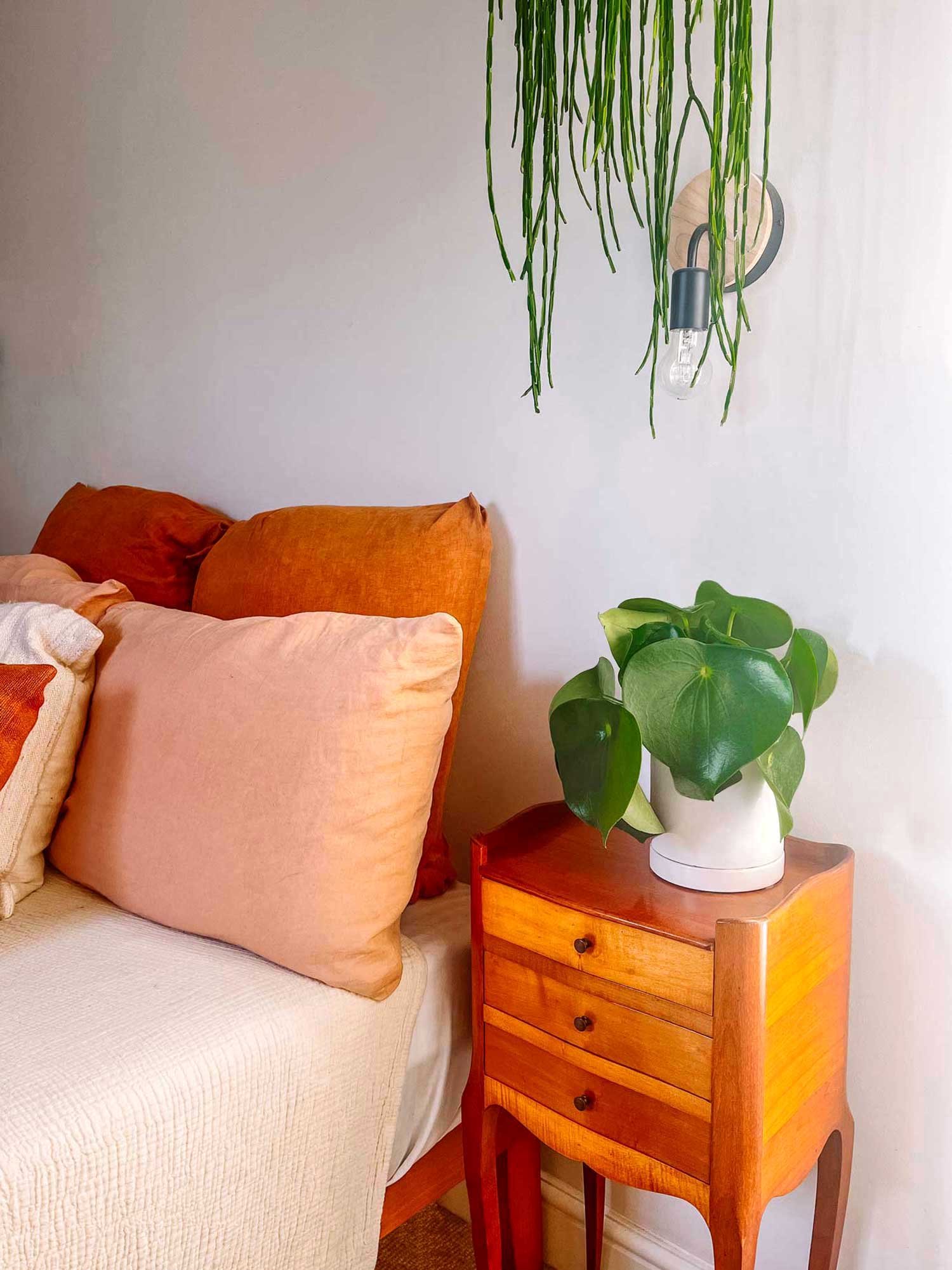
Peperomia polybotrya is native to Colombia, Ecuador, and Peru. Its glossy teardrop-shaped leaves and roughly one-foot mature size make it easier to fit into a bedroom than most palms or large aroids.
Raindrop peperomia thrives in warm, humid conditions but still needs well-drained soil. Its fleshy leaves mean constantly wet compost is unnecessary.
Allow some surface drying before watering again and avoid leaving moisture sitting on the leaves. Stem or leaf cuttings can be used for propagation.
Pros
- Compact mature size
- Thrives in humid conditions
- Low-maintenance foliage
Watch For
- Root rot from excess water
- Leaf spotting when foliage stays wet
- Weak growth without enough light
How to Choose the Right Plant for Your Space
Start with the bedroom conditions you actually have, not the plant you like most in a photo.
- Check the natural light — Chinese evergreen, parlor palm, peace lily, and heartleaf philodendron cope with lower light better than anthurium or raindrop peperomia. For more options, see our complete bedroom plant guide.
- Match the plant to your watering habits — Boston fern and prayer plant prefer steadier moisture, while spider plant and parlor palm are more forgiving if you occasionally forget.
- Consider pets before buying — several popular tropical plants can irritate pets when chewed. Our guide to non-toxic bedroom plants is a better starting point if cats or dogs regularly enter your room.
Remember that liking humidity is different from removing humidity. Houseplants release water through transpiration, so they shouldn’t be treated as miniature dehumidifiers.
The U.S. Environmental Protection Agency recommends keeping indoor relative humidity below 60 percent and ideally around 30 to 50 percent when practical. If you regularly see water collecting on bedroom windows, read the EPA’s guide to mold, moisture, and indoor humidity.
Common Mistakes to Avoid
Condensation-prone bedrooms make some ordinary houseplant mistakes easier to miss.
Assuming humid air means the pot needs more water — high atmospheric humidity slows water loss. Always check the compost before watering instead of following a fixed calendar.
Letting water sit in decorative outer pots — trapped water deprives roots of oxygen and increases the risk of rot, especially for anthurium, peperomia, and philodendron.
Buying a humidity-loving plant for a windowless corner — humidity cannot replace photosynthesis. Even shade-tolerant houseplants need usable natural or supplemental grow light.
Keeping foliage constantly wet — humid air and poor circulation can encourage leaf spotting and fungal problems. Water the root zone rather than repeatedly soaking leaves.
Expecting plants to solve bedroom condensation — persistent condensation calls for better ventilation, moisture-source control, insulation improvements, or dehumidification rather than additional plants.
If easier maintenance is your priority, compare these picks with our guide to low-maintenance bedroom plants.
Signs Your Plant Needs Attention
Your plant often shows the problem before serious damage occurs.
- Yellowing leaves with wet compost — usually means you should check drainage and reduce watering rather than adding more moisture.
- Brown crispy leaf edges — can signal dry air, underwatering, mineral-sensitive foliage, or hot airflow from a radiator.
- Weak stretched growth — often points to insufficient light, even if the plant is technically described as shade tolerant.
- Blackening roots or a sour smell — suggests the root zone has stayed too wet and may be developing rot.
- Persistent water on windows and walls — treat this as a room-moisture problem rather than a plant-care signal. The Royal Horticultural Society also recommends good light and sensible watering even for plants grown in humid rooms, as explained in its guide to plants for humid indoor spaces.
Check the Humidity Instead of Guessing
If condensation appears frequently, a small digital hygrometer shows whether your bedroom is actually staying too humid. It helps separate plant-care problems from a wider room-moisture issue.
Frequently Asked Questions
Q: Can plants stop condensation in a bedroom?
A: No. Plants may tolerate humid air, but persistent condensation is better addressed with ventilation, moisture control, insulation, or a dehumidifier.
Q: Which bedroom plant likes humidity the most?
A: Boston fern, bird’s nest fern, prayer plant, and anthurium have especially strong preferences for humid conditions.
Q: What plant is best for a damp bedroom with low light?
A: Chinese evergreen is one of the strongest combinations of low-light tolerance and preference for humid tropical conditions.
Q: Should I mist plants if my bedroom already has condensation?
A: Usually not. If the air is already humid, extra misting is unnecessary and keeping foliage wet can encourage leaf problems.
Q: Can too many houseplants increase bedroom humidity?
A: Plants release moisture through transpiration. A few plants are unlikely to dominate a normal room’s moisture balance, but they shouldn’t be added as a method of drying humid air.
Q: Is condensation around bedroom windows harmful to plants?
A: Humidity itself may suit tropical plants, but cold glass, drafts, constantly wet foliage, and waterlogged compost can still cause stress or disease.
Final Thoughts
The best plants for bedroom condensation are really plants that tolerate the humid conditions surrounding the problem. Spider plant and Chinese evergreen are easiest for beginners, while Boston fern, bird’s nest fern, prayer plant, and anthurium particularly appreciate humid air.
Choose according to your light and watering habits first. Then tackle persistent condensation separately with ventilation and proper moisture control.
Which plant are you adding to your space first? Save this post to Pinterest so you can come back whenever you need fresh plant inspo!

I’m a home decor enthusiast who loves discovering beautiful room ideas, creative DIY projects, and Pinterest-worthy decorating inspiration. At DecorMinty, I share simple tips, fresh trends, and practical ideas to help you create a home you’ll truly love—one room at a time.