How to Dry a Bed Pillow: Fast, Safe Methods
Quick Answer
Dry most bed pillows in the dryer on low heat or air fluff with two or three dryer balls, checking and fluffing every 20 to 30 minutes until the center feels completely dry. Memory foam and latex pillows must air-dry flat instead. Never put a pillow back on the bed while the middle still feels cool or damp.
A pillow can look dry long before it is dry. The cover and outer fill lose moisture first, while the center can stay wet for hours. That trapped moisture is what causes clumps, flat spots, a musty smell, and mildew.
Drying is therefore not the last small step after washing. It is the step that decides whether the pillow keeps its shape and stays fresh. The right method depends mainly on the fill, the care label, and whether you have a dryer.
Before You Dry: Check the Label and Remove Extra Water
Start with the care label. It tells you whether the pillow can be tumble-dried, which heat setting to use, and whether air drying is the only safe option. If the label says “do not tumble dry” or “air dry only,” follow it even if other pillows of the same type can go in the dryer.
Next, remove as much water as possible without damaging the fill. Press the pillow gently between two clean, dry towels. Hold it flat, press from the edges toward the center, then lift the top towel and repeat with a dry section.
Do not wring or twist a wet pillow. Wringing squeezes the fill into tight clumps, tears loose fibers, and can distort a foam core. For a pillow that has just come out of a washing machine, an extra spin cycle often removes more water than hand-pressing, so use it when the label allows.
While the pillow is still damp, reshape it. Pull the corners back into place, smooth the cover, and break up any obvious lumps with your fingers. A pillow that starts drying in the right shape is much easier to fluff later. This is also the moment to check for a torn seam. A small tear can spill down or fiberfill into the dryer, so repair it or wash the pillow inside a large mesh laundry bag if needed.
How to Dry a Bed Pillow in the Dryer
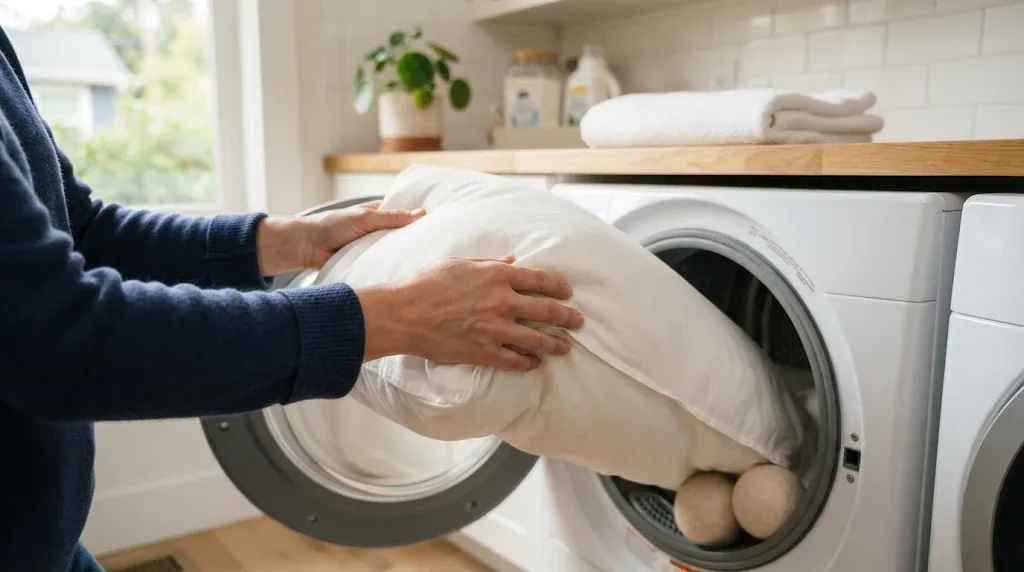
Machine drying is the fastest option for most polyester, down-alternative, down, and feather pillows. It also restores loft better than passive air drying, because the tumbling and dryer balls keep the fill moving while warm air passes through it.
The key is low heat and patience. High heat can melt synthetic fibers, scorch down, shrink a cover, and damage a foam core. Low heat takes longer, but it protects the fill and gives the center time to dry evenly.
- Put one or two pillows in the dryer. Do not overload it. Pillows need room to tumble. If your dryer is small, dry one pillow at a time.
- Add two or three dryer balls or clean tennis balls. Put tennis balls inside clean white socks to reduce noise and prevent dye transfer. The balls break up clumps and help air reach the center.
- Choose low heat or air fluff. Use low heat for most synthetic pillows. Use low heat or no heat for down and feather pillows. If you are unsure, choose the cooler setting.
- Run a full cycle, then check the pillow. Take it out, fluff it by hand, and squeeze the center firmly. If it feels cool, heavy, or damp, put it back for another cycle.
- Repeat until the middle is dry. Most dryer-safe pillows need more than one cycle. Keep checking between cycles rather than raising the heat.
- Remove the pillow promptly. Letting a dry pillow sit in a warm dryer can flatten it again. Fluff it once more, then let it cool and air for 15 to 30 minutes before putting the case back on.
The Sleep Foundation guide to drying pillows gives the same core advice: check the label first, use low heat or air dry for most dryer-safe fills, and keep checking until the pillow is fully dry, because foam pillows should not go in the dryer at all.
If you washed the pillow as part of a full bedding refresh, the drying step is where most problems start. Our guide to how to wash a bed pillow covers the washing side, including which fills can go in the machine and how to avoid clumping before drying begins.
Tip
Pause the dryer every 20 to 30 minutes, take the pillow out, and fluff it by hand. This simple pause breaks up damp clumps early, when they are still easy to separate.
How to Dry a Bed Pillow Without a Dryer
Air drying works for almost every pillow type, including foam and latex. It is slower, but it is gentler and gives you more control over shape. The goal is steady airflow, not just time.
Lay the pillow flat on a clean drying rack, a mesh surface, or a dry towel on a raised surface. A rack is better than a solid table because air can reach the underside. If you use towels, change them when they become damp, because a wet towel underneath will slow drying.
Choose a bright, breezy, well-ventilated spot. Outdoors on a dry day is ideal. Indoors, place the pillow near an open window or a fan. A fan blowing across the pillow, rather than straight down on it, moves moist air away without pressing the fill flat.
Turn and fluff the pillow every few hours. Flip it over, shake it, and knead any soft lumps apart with your hands. For down and feather pillows, this step matters most. The fill clumps when wet, and those clumps dry slowly if they are left alone.
Do not hang a heavy, wet pillow by one corner from a clothesline for the whole drying time. The weight can stretch the cover and pull the fill to one end. If you use a line, drape the pillow over two lines or lay it flat and turn it regularly.
Direct sun can help freshen a pillow and speed drying, but it is not always the best choice. Strong sun can fade a cover and, for some fills, weaken the fabric over time. Short periods in sun are usually fine; all-day sun on a dark cover is not needed to get a pillow dry.
How Long Does It Take to Dry a Bed Pillow?
Drying time depends on the fill, the pillow size, the starting moisture, the weather, and the dryer. A thin polyester pillow can dry in one dryer cycle, while a thick down pillow can need several cycles or a full day of air drying.
Use the table below as a planning guide, not a timer. Always confirm dryness by touch. A larger pillow takes longer than a standard one, and a humid room slows air drying more than most people expect. If you are unsure about the size, our guide to how big a standard bed pillow is explains the common sizes and how size affects fit and care.
| Pillow fill | Dryer, low heat | Air drying |
|---|---|---|
| Polyester / down alternative | 45 to 90 minutes | 8 to 24 hours |
| Down | 2 to 3 hours, several cycles | 24 to 48 hours |
| Feather | 2 to 3 hours, several cycles | 24 to 48 hours |
| Memory foam / latex | Do not tumble dry | 24 to 48 hours |
| Cotton | 1 to 2 hours | 24 to 48 hours |
The important point is the 24 to 48 hour window. A damp pillow left in that state gives mold and mildew time to grow, especially in a warm bedroom. If a pillow is still damp after a day of air drying, move it to better airflow, add a fan or dehumidifier, or finish it in the dryer on low heat if the label allows.
Drying by Pillow Type: What Changes
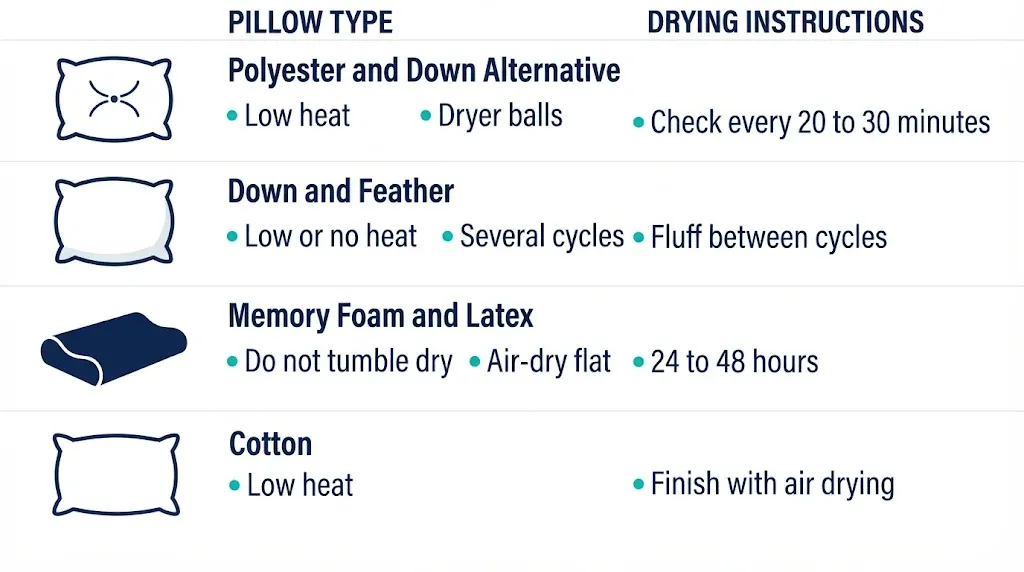
Most drying mistakes come from treating every pillow the same. The fill decides the heat, the time, and whether a dryer is safe at all.
Polyester and down-alternative pillows
These are the most forgiving. Use low heat, add dryer balls, and check every 20 to 30 minutes. They dry faster than down, but they can still clump if they are overloaded or dried on high heat. If the pillow feels lumpy after drying, run it for another 10 to 15 minutes on air fluff with dryer balls.
Down and feather pillows
Down needs the most patience. Use low heat or no heat, use dryer balls, and expect several cycles. Press the fill apart between cycles. The Sleep Foundation guide to washing down and feather pillows also warns that mold can grow if the pillow is not completely dry, and recommends air-drying to finish the job if needed.
Air drying down takes 24 to 48 hours in good conditions. Turn it every few hours and fluff it often. A down pillow that still smells faintly damp after two days needs more airflow, not more time in a closed room.
Memory foam and latex pillows
Do not put solid memory foam or latex in a heated dryer. Heat can break down foam, change its support, and in extreme cases create a safety risk. Air-dry these pillows flat on a rack or towel in a ventilated room, away from direct heat.
Shredded foam is different in some cases, but the label still decides. Some shredded-foam pillows can go in the dryer on no heat, while others cannot. When in doubt, air-dry. Foam holds water in its open cells, so allow at least 24 to 48 hours and do not use the pillow until the center feels dry and springy again.
Cotton and wool pillows
Cotton dries from the outside in and can stay damp in the middle after the surface feels dry. Use low heat when the label allows, and finish with air drying if needed. Wool should usually be air-dried flat, without tumble drying, because heat and agitation can cause felting and shrinkage.
For a related clean, see our guide to how to clean a bed pillow, which covers spot cleaning and stain removal without soaking a pillow that does not need a full wash. Neck pillows follow similar rules, with smaller fills and different covers, as explained in our guide to how to wash and clean a neck pillow safely.
How to Tell When a Pillow Is Really Dry Inside
The surface test is not enough. A pillow can feel dry on the outside while the center is still wet, because the outer layers dry first and insulate the core.
Use three checks together. First, squeeze the center hard with both hands. It should feel light, springy, and the same temperature as the edges. A cool, heavy, or dense center means water is still inside.
Second, press the pillow against your face or the inside of your wrist. Coolness is a useful clue, because evaporation cools the surface while moisture is still leaving. If one spot feels cooler than the rest, keep drying.
Third, smell it. A clean, dry pillow should not smell damp, sour, or musty. A faint damp smell after drying is a warning, not a detail to ignore. Give it another cycle or more air time before you put a case on it.
Do not put a pillowcase or protector on a pillow until all three checks pass. A case traps the remaining moisture and creates the warm, still conditions where mildew grows fastest.
Mistakes That Leave Pillows Lumpy, Flat, or Musty
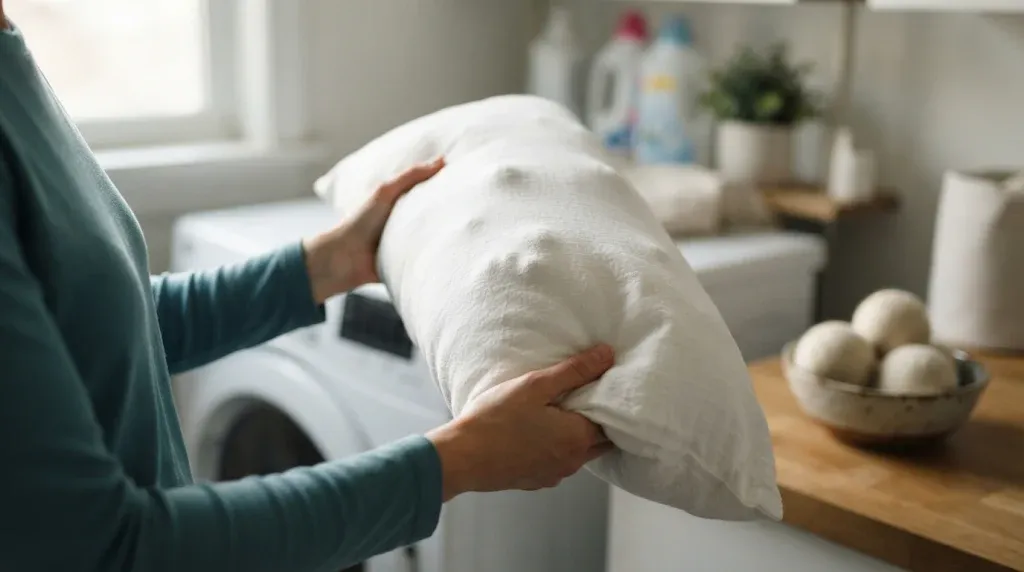
Most pillow damage after washing comes from a few avoidable choices. High heat is the most common one. It feels faster, but it can melt synthetic fill, scorch down, and make clumps harder to break apart.
Overloading the dryer is another. Two large pillows in a small dryer cannot tumble freely, so the outside dries while the inside stays wet. Dry one pillow at a time when space is tight.
Skipping dryer balls also makes a difference. Without them, wet fill settles into dense lumps. With them, the fill keeps separating as it dries. Clean tennis balls work, but wool dryer balls are quieter and do not transfer dye.
Stopping too early is the mistake with the longest consequences. A pillow that goes back on the bed damp can develop a musty smell within a day or two, and the smell often means the fill needs washing and drying again from the start.
Wringing, hanging a heavy wet pillow by one corner, and drying foam on heat all cause shape problems too. Gentle pressing, flat drying, and low heat protect the structure that makes a pillow comfortable.
Warning
Never put a solid memory foam or latex pillow in a heated dryer. Heat can damage the foam and reduce its support. Air-dry foam flat until the center is fully dry.
What to Do If Your Pillow Still Smells or Feels Damp
If the pillow still feels damp after the expected time, do not assume it will dry on the bed. Take the case off, fluff the pillow, and give it more airflow. A fan, an open window, or a dehumidifier can make a bigger difference than another hour in a still room.
If the dryer is allowed, run another low-heat cycle with dryer balls and check again. If air drying is the only option, move the pillow to a rack, turn it more often, and change any damp towels underneath it.
A musty smell after drying usually means the center stayed damp too long. Air the pillow outside on a dry, breezy day if you can. If the smell remains after a full re-dry, the fill may need washing again, this time with a longer, more careful drying plan. A pillow with visible mold inside the fill, or a smell that does not fade after thorough drying, should be replaced rather than kept on the bed.
For a pillow that is only slightly flat after drying, a short no-heat tumble with dryer balls often restores loft. For a pillow that has gone lumpy, break the clumps apart by hand first, then tumble or air-dry it again with regular fluffing.
Related Product
Wool Dryer Balls for Pillows
Wool dryer balls help break up clumps, improve airflow, and restore loft while a pillow dries on low heat.
As an Amazon Associate, we earn from qualifying purchases.
Frequently Asked Questions
Can you put a bed pillow in the dryer?
Yes, if the care label allows it. Most polyester, down-alternative, down, and feather pillows can be dried on low heat or air fluff with dryer balls. Solid memory foam and latex pillows should not go in a heated dryer.
How long does it take to dry a bed pillow?
It depends on the fill and method. A polyester pillow may take 45 to 90 minutes in the dryer. Down and feather pillows often need 2 to 3 hours in several cycles, or 24 to 48 hours to air-dry fully.
Can you dry a pillow without a dryer?
Yes. Lay it flat on a rack or clean towel in a ventilated spot, turn and fluff it every few hours, and use a fan for airflow. Air drying usually takes 8 to 48 hours, depending on the fill and humidity.
Why does my pillow smell musty after washing?
The center likely stayed damp too long. The surface can feel dry while the core is still wet, and that trapped moisture can cause mildew. Dry it again with better airflow until the middle feels dry and smells clean.
Do tennis balls really help dry pillows?
Yes. Two or three clean tennis balls, ideally inside clean socks, bounce against the pillow as it tumbles. They break up clumps, let air reach the center, and help restore loft. Wool dryer balls work the same way and are quieter.
How do I know my pillow is completely dry?
Squeeze the center firmly. It should feel light, springy, and the same temperature as the edges, with no cool or damp spot. It should also smell clean. Only put the case back on when all of those checks pass.
Conclusion
To dry a bed pillow well, match the method to the fill, use low heat or steady airflow, and do not rush the center. Check the label, press out extra water, add dryer balls when you use a dryer, and fluff the pillow between cycles or every few hours while air drying. The final test is simple: a light, springy center that feels dry and smells clean. When that test passes, the pillow is ready for its case and the bed.

I’m a home decor enthusiast who loves discovering beautiful room ideas, creative DIY projects, and Pinterest-worthy decorating inspiration. At DecorMinty, I share simple tips, fresh trends, and practical ideas to help you create a home you’ll truly love—one room at a time.